
As an Amazon Associate, Chasing Cherry Blossoms earns from qualifying purchases. We may also earn from other affiliate links on this page at no extra cost to you.
Cherry Blossoms Galore: Experiencing the Beauty of Hanami in Japan
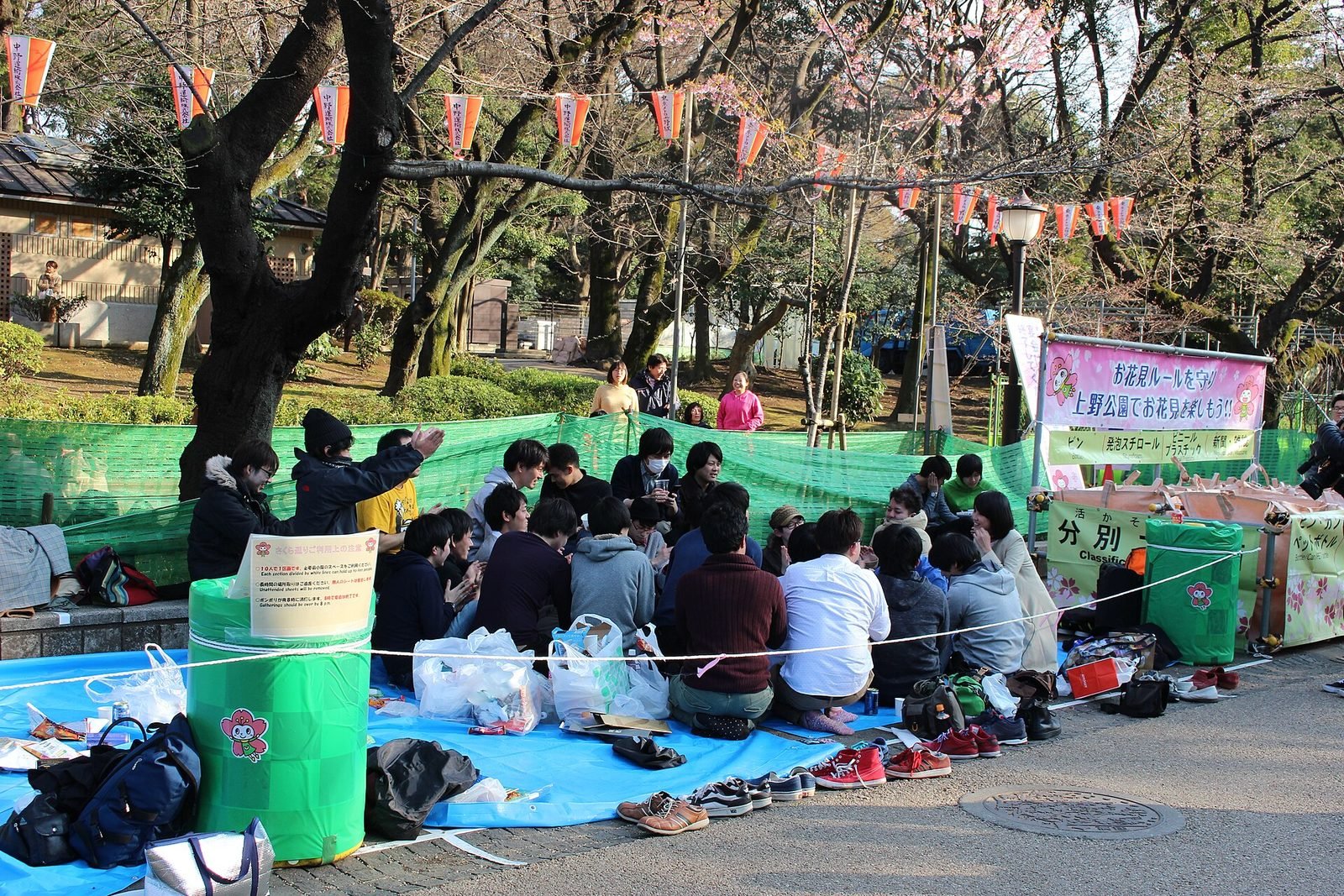
Cherry blossoms, known as sakura, hold a special place in the hearts of the Japanese people. These delicate pink and white flowers symbolize the fleeting beauty of life, and every spring millions of people head to parks, castles and temples to enjoy hanami (flower viewing). I still remember my first picnic under the blossoms: a plastic sheet, a convenience-store bento and petals landing in my tea. It’s a simple tradition, and it’s one of my favorite things about Japan.
This guide covers the history of hanami, the best places to see sakura, how to time your trip, what to eat, the etiquette to follow and a few photography tips. I’ve also included rough costs in yen to help you budget.
The History and Significance of Hanami
Flower viewing in Japan goes back over a thousand years. In the Nara period (710-794) the aristocracy admired plum blossoms, and over the following Heian period cherry blossoms became the favorite. Nobles gathered beneath the trees for poetry and music. The custom spread to samurai and then to ordinary townspeople, especially in the Edo period, when it turned into the picnic-and-party tradition we see today.
Sakura are also tied to the idea of mono no aware, a gentle awareness of the impermanence of things. The blossoms last only about a week or so before the petals fall, and that brevity is exactly why people make time for them. You’ll see this theme again and again in Japanese literature, art and everyday conversation.
Best Places to See Cherry Blossoms in Japan
Tokyo
- Ueno Park: Lively and crowded, with more than 1,000 trees and food stalls. Entry is free.
- Shinjuku Gyoen: A calmer, more spacious garden with a small entry fee (about 500 JPY). Alcohol isn’t allowed inside, and opening hours and closing days vary in sakura season, so check before you go.
- Chidorigafuchi: Sakura branches hang over the moat near the Imperial Palace. Rowboats are available in season.
Kyoto and Osaka
- Philosopher’s Path (Kyoto): A canal-side walk lined with cherry trees. It’s free and best early in the morning.
- Maruyama Park (Kyoto): Home to a famous weeping cherry tree, which is lit up in the evening. Entry is free.
- Osaka Castle Park: Free to walk through, with sakura around the moat and castle walls. Entry to the castle keep costs about 1,200 JPY.
Tohoku and Hokkaido
- Hirosaki Castle Park (Aomori): One of Japan’s most celebrated sakura spots, with a festival around late April to early May. The park grounds are free, but the inner castle areas charge a small fee during the festival; check the official site for current prices.
- Goryokaku Park (Hakodate): Cherry trees surround the star-shaped fort, usually blooming in late April to early May.
- Matsumae Park (Matsumae): A large collection of late-blooming varieties, so it’s a good choice for extending your sakura season.
There are also plenty of hidden gems if you’re willing to leave the big names behind. A local riverbank or neighborhood shrine can be just as lovely, and much quieter.
Planning Your Hanami Trip: When and Where to Go
Timing and the Sakura Forecast
Bloom timing changes every year with the weather. Roughly, the blossoms open in the south (Kyushu) in late March, reach Tokyo, Kyoto and Osaka from late March to early April, and arrive in Hokkaido around late April to early May. Tokyo and Kyoto typically peak somewhere between late March and early April.
The sakura forecast (sakura zensen, the “cherry blossom front”) is published by private weather companies such as the Japan Meteorological Corporation, Weathernews and the Japan Weather Association, not by the national weather agency. Forecasts typically start in the new year and are updated through March. Look for two key dates: kaika (first blooms) and mankai (full bloom). Full bloom usually lasts about a week, and the petals fall in the following days.
My advice is to book flexible, refundable accommodation if you can, and to plan a few days either side of the predicted peak. Spreading your trip across two regions is a good way to hedge against an early or late bloom.
Getting Around and the JR Pass
Since the price rise in October 2023, the Japan Rail Pass is no longer a clear bargain. Bought on the official site, a 7-day ordinary pass costs 50,000 JPY, the 14-day pass 80,000 JPY and the 21-day pass 100,000 JPY (children aged 6-11 pay half, and exchange orders bought through overseas agents cost slightly more). A one-way Tokyo to Kyoto ticket on the Shinkansen costs roughly 13,000 to 14,500 JPY depending on the train and date, so a pass only pays off on a long, multi-city itinerary. Also note that the pass doesn’t cover the fastest Nozomi and Mizuho trains without an extra special ticket. Compare your planned journeys with individual tickets or regional passes before buying. If the pass does fit your route, buy it from the official Japan Rail Pass site.
Mobile data is handy for checking live bloom reports and train times. An eSIM or pocket Wi-Fi is the easiest way to get connected on arrival.
Crowds and Booking
Peak sakura weeks are the busiest and most expensive time of the year to visit Japan. Hotels in Tokyo and Kyoto can sell out many months ahead, so book as early as you can. Comfortable walking shoes help too, since you’ll cover a lot of ground on foot (walking shoes). Arrive at popular parks early in the morning or on weekdays. Don’t forget to bring a picnic sheet, snacks and drinks, and cash for the stalls.
The Different Types of Cherry Blossoms
Japan has hundreds of cherry varieties, so the season is longer than a single week if you know where to look.
- Somei Yoshino: The classic pale pink variety that most people picture, and the one that drives the main forecast.
- Yamazakura: A wild mountain cherry with reddish leaves that appear alongside the flowers. It’s a slightly later and more rustic look.
- Shidarezakura: The weeping cherry, with cascading branches. It often blooms a little before Somei Yoshino.
- Yaezakura: Fluffy, many-petaled blossoms that bloom later, often a week or two after Somei Yoshino.
Hanami Traditions: Food, Drinks and Activities
What to Eat
Sakura mochi is a sweet rice cake wrapped in a salt-pickled cherry leaf. It comes in two regional styles, Kanto (a crepe-like wrapper) and Kansai (made with domyoji rice). Hanami dango are three-colored dumplings on a skewer. Many shops and convenience stores also sell sakura-flavored sweets, lattes and seasonal drinks. For lunch, a bento or a handful of onigiri from a department store basement food hall (depachika) is an inexpensive meal, though prices vary by shop.
Drinks and Activities
Beer, sake and chuhai are common at hanami picnics, though some parks restrict or ban alcohol, so check the rules posted at the entrance. Groups play music, sing and play card games. Large parks in Tokyo and elsewhere also hold evening yozakura (night sakura) events with illuminations, which are lovely if you can handle the cool air.
The Art of Sakura
Cherry blossoms have inspired Japanese art for centuries, from classical poetry (waka and haiku) to screen painting and ukiyo-e woodblock prints. Many poems celebrate the blossoms for how quickly they fall. If you visit a museum during sakura season, look out for special exhibitions with seasonal themes.
Hanami Etiquette: Dos and Don’ts
Do
- Bring a picnic sheet and keep it to a reasonable size.
- Take all your trash with you, or sort it into the bins provided.
- Keep pathways clear and respect other people’s views.
- Keep your voice down, especially in the evening.
Don’t
- Don’t pick blossoms, shake branches or climb the trees.
- Don’t smoke outside designated areas.
- Don’t bring pets unless the park explicitly allows them.
- Don’t leave your sheet or belongings unattended for long, or block a prime spot all day while you’re away.
- Don’t step on tree roots, which are fragile and often fenced off.
Photography Tips for Cherry Blossoms
- Go early: Soft morning light and fewer people make a big difference. Golden hour near sunset also works well.
- Use a wide aperture: A low f-number blurs the background so the flowers stand out.
- Change your angle: Shoot upward through the branches, or look for petals floating on water.
- Add a human element: A person under a tunnel of sakura or a lantern among the flowers adds scale.
- Watch your exposure: Pale pink blossoms against a bright sky can easily be overexposed, so try dialing it down slightly.
Beyond Hanami: Other Springtime Attractions
Spring has plenty more to offer. Gardens like Kenrokuen in Kanazawa are lovely in the blossom season. Cherry blossom festivals (sakura matsuri) take place all over the country, including the Hirosaki Cherry Blossom Festival in Aomori and the Takayama spring festival in Gifu, which is held on April 14 and 15. The Fuji Five Lakes area is also a popular place to combine sakura with views of Mt. Fuji. If you want a local guide to take you beyond the crowds, a guided tour can be worth the money.
The Future of Hanami: Climate Change and Japan’s Cherry Blossoms
Warmer winters and springs are changing sakura timing. In several recent years, bloom dates in major cities have come earlier than the long-term average, and forecasts have become harder to predict; check the latest reports from the forecasting companies. Cherry trees need a cold spell in winter to wake up properly, so unusually warm winters can disrupt the cycle. Many Japanese parks and local groups are also working to protect older trees, which are vulnerable to disease and age, and to replant new ones.
Final Thoughts
Hanami is a tradition that welcomes everyone, whether you’re sitting under a tree with a beer and a bento or walking quietly along a canal at dawn. Pack a sheet, bring your camera, stay flexible with your dates and enjoy the moment. That’s really the whole point.
FAQ
What is hanami?
Hanami is the Japanese custom of enjoying flowers, especially cherry blossoms. People gather with friends, family or coworkers for picnics and parties under the blooming trees.
When is the best time to see cherry blossoms in Japan?
Usually late March to early April for Tokyo, Kyoto and Osaka, and late April to early May for Hokkaido. Timing changes every year, so check the latest sakura forecast before you book anything that can’t be changed.
How long do the blossoms last?
Full bloom lasts around a week, and the whole season at one location (from first flowers to falling petals) is typically one to two weeks, depending on the weather.
Is the JR Pass worth it for a sakura trip?
Only if you plan several long Shinkansen trips. A 7-day ordinary pass costs 50,000 JPY after the October 2023 price rise, so compare it with individual tickets or regional passes first.
Which are the best places to see cherry blossoms?
Ueno Park and Shinjuku Gyoen in Tokyo, the Philosopher’s Path and Maruyama Park in Kyoto, Osaka Castle Park, and Hirosaki Castle Park in Aomori are all popular choices.
Can I drink alcohol at hanami?
Often yes, but some parks restrict or ban it. Always check the signs, drink responsibly and take your trash with you.
What is the significance of cherry blossoms in Japanese culture?
They symbolize the transience of life and the beauty of nature, a theme often described as mono no aware.
Featured photo: EllieBellie25 (Wikimedia Commons), CC BY-SA 4.0, via Wikimedia Commons.