
As an Amazon Associate, Chasing Cherry Blossoms earns from qualifying purchases. We may also earn from other affiliate links on this page at no extra cost to you.
Discovering the Charm of Asakusa: Exploring Tokyo’s Historic District
Asakusa is the part of Tokyo I keep coming back to when I want to feel old Tokyo. It sits in Taito ward, and it is packed with temples, shrines, snack stalls and narrow lanes. It also has plenty of modern touches. In this guide I’ll walk you through what I love most, with practical tips for planning your 2026-27 trip.
Quick Tips Before You Go
- Best time of day: Go early in the morning or after dark. Midday crowds around Kaminarimon are intense.
- Sakura timing: Cherry blossoms in Tokyo usually bloom from late March into early April. Dates shift every year, so check the forecasts from about February. The Sumida River banks near Asakusa are a lovely place to see them.
- Getting around: Asakusa is served by the Tokyo Metro Ginza Line, the Toei Asakusa Line and the Tobu Skytree Line. Note that these are not JR lines. A Japan Rail Pass does not cover the Metro.
- JR Pass: After the October 2023 price rise, the 7-day ordinary pass is about 50,000 JPY. It only pays off if you are making several long-distance trips, so compare it with individual tickets first. Prices are higher if you buy an exchange order through an overseas agent, and Nozomi and Mizuho trains need an extra ticket.
- Packing: Japan uses Type A plugs at 100 V, so bring a travel power adapter if your devices use a different plug.
The Rich History of Asakusa
Asakusa has a long history built around its temple. During the Edo period (1603-1868) it grew into a lively entertainment area with theaters and teahouses. Much of the district was destroyed in the 1945 air raids, and the temple buildings you see today are postwar reconstructions. Even so, the area still feels nostalgic, especially in the backstreets with their small wooden shopfronts.
Sensō-ji Temple: The Heart of Asakusa
Kaminarimon and the Approach
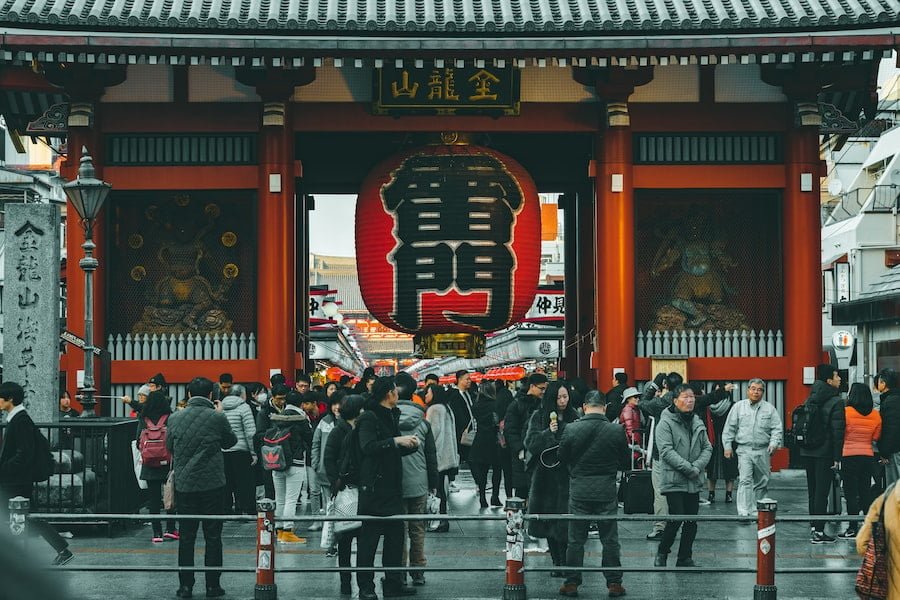
Sensō-ji is Tokyo’s oldest temple and is dedicated to Kannon, the bodhisattva of compassion. According to legend it was founded in 628, when two brothers fished a Kannon statue out of the Sumida River, and the temple was completed in 645. Your visit starts at Kaminarimon, the “Thunder Gate”, with its giant red lantern and the statues of the wind and thunder gods, Fujin and Raijin.
At the Main Hall
Before you step up to the main hall, do what many visitors do and waft the incense smoke over yourself at the large burner. People believe it brings good health and luck. The grounds are always open, and the main hall opens at 6:00 (6:30 from October to March) and closes at 17:00. Entry is free.
The biggest festivals are Hatsumode (the first shrine visit of the New Year) and Sanja Matsuri, held in May around the neighboring Asakusa Shrine. Both are wonderful but very crowded. The Asakusa Samba Carnival in August and the Hagoita-ichi market, which sells decorated battledore paddles, are also worth knowing about.
Hozomon and the Pagoda
Beyond Nakamise stands Hozomon, the temple’s second gate, and past it the main hall and a five-storied pagoda. Both the main hall and the pagoda are postwar reconstructions. Near the incense burner you can also draw an omikuji fortune slip for a small fee.
Nakamise Shopping Street
The covered street between Kaminarimon and the temple’s second gate runs for over 200 m and is lined with dozens of shops. Its roots go back to the Edo period. You’ll find folding fans, yukata, souvenirs and snacks such as senbei (rice crackers) and ningyo-yaki (small cakes with sweet red bean filling).
Bargaining isn’t done here. Prices are fixed, so take a lap before buying, since similar items vary from shop to shop. Many stalls close in the late afternoon or early evening, and hours vary by shop, so go early if you want to see the street before the crowds arrive.
Asakusa Culture and Tourism Center
Across from Kaminarimon, this striking building (designed by architect Kengo Kuma) has a tourist information desk with multilingual staff, maps and event details. I always recommend going up to the free observation terrace on the top floor for a good view over Sensō-ji’s rooftops. The center itself is open until the evening, and the terrace may keep different hours, so check the Taito City site for current times.
Sumida River Cruise
Sightseeing boats leave from the pier near Azumabashi Bridge and run down the Sumida River. Some routes continue as far as Hinode Pier or Odaiba, and you’ll pass under several bridges with a view of the Tokyo Skytree. Daytime sailings give clear views. Evening ones show off the city lights. Schedules, routes and fares vary by operator and season, so check ahead (the regular boat to Hinode Pier takes about 40 minutes and has been listed at around 780 JPY for adults). Booking ahead is wise in peak seasons.
In sakura season, a river cruise is one of the best ways to see blossoms along the banks.
Asakusa Shrine (Sanja-sama)
Right beside Sensō-ji, Asakusa Shrine is a quieter Shinto shrine dedicated to the three men traditionally credited with founding the temple: the brothers Hinokuma Hamanari and Hinokuma Takenari, who pulled a Kannon statue from the Sumida River, and the local landowner Haji no Nakatomo. The main hall is a surviving Edo-period building, which is rare in Asakusa, and it is the center of the May Sanja Matsuri. As at any shrine, you can purify your hands and mouth at the fountain, make an offering, and write a wish on an ema plaque. The shrine was built in 1649 by shogun Tokugawa Iemitsu.
Asakusa’s Food Scene
Asakusa is a great place to eat. Here is what I’d try:
- Tempura: Several long-established tempura restaurants serve Edo-style tempura, usually fried in sesame oil. Lunch sets are the budget-friendly way in.
- Monjayaki: This runny griddle pancake is more closely associated with nearby Tsukishima, but a few Asakusa restaurants serve it too. You cook it yourself on a hot plate.
- Ningyo-yaki and street snacks: Grab a bag fresh from the stall on Nakamise.
Note that many smaller restaurants close in the late afternoon or on a set day each week, so check before you go.
Exploring the Streets of Asakusa
Asakusa is best explored on foot. Kaminarimon-dori, running out from Kaminarimon, is lined with shops, restaurants and cafes mixing old and new. After Nakamise, wander west toward the Denboin-dori area, which has a small-town, old-fashioned feel with craft shops and cafes. Kappabashi Kitchen Town, a short walk away, is great for knives and the plastic food replicas. The backstreets are full of small eateries and wooden houses, and I always find something unexpected there.
Asakusa at Night
After dark, the crowds thin out, Sensō-ji is lit up, and the drinking spots fill up. Around the Rokku area and the nearby lanes of izakaya, you’ll find casual pubs where you can eat and drink with locals. Be mindful of local etiquette, keep noise down on narrow streets, and book ahead on weekends and during festivals. If you stay nearby, you can enjoy a relaxed evening without worrying about the last train.
Conclusion
Asakusa mixes temples, snacks, river views and lively evenings in a small area, which makes it an easy first stop for any Tokyo itinerary. Go early, take your time in the side streets, and leave room for dessert.
FAQ
What is Asakusa known for?
It’s known for Sensō-ji, Tokyo’s oldest temple, Nakamise Shopping Street, traditional food and an old-Tokyo atmosphere.
How do I get to Asakusa?
Take the Tokyo Metro Ginza Line, the Toei Asakusa Line or the Tobu Skytree Line to Asakusa Station. These are not JR lines.
How much time do I need?
Half a day is enough for the main sights. Allow a full day if you add a cruise, shopping and dinner.
Is Sensō-ji free to enter?
Yes, the grounds and main hall are free to enter. Costs come from snacks, souvenirs and optional fortunes (omikuji), for which there is a small fee.
Is Tokyo Skytree in Asakusa?
Not quite. It is in neighboring Sumida ward, across the river and within walking distance of Asakusa. It stands 634 m tall and is recognized by Guinness World Records as the world’s tallest tower.
What is Asakusa Shrine?
A Shinto shrine beside Sensō-ji dedicated to the three men associated with the temple’s founding. It hosts the Sanja Matsuri each May.
What is Nakamise Shopping Street?
A traditional shopping street leading from Kaminarimon to Hozomon, selling souvenirs, snacks and traditional goods.
When can I see cherry blossoms in Asakusa?
Tokyo’s blossoms usually peak from late March to early April, though the exact timing changes yearly. Check the forecast before you book, and consider arranging mobile data before you arrive.