
As an Amazon Associate, Chasing Cherry Blossoms earns from qualifying purchases. We may also earn from other affiliate links on this page at no extra cost to you.
A capsule hotel is one of those Japan experiences people either love or never want to repeat, and the difference usually comes down to knowing what you are booking. Capsule hotels are one of the most-searched quirky Japan stays, and US travel news this month has reportedly put a windowless “pod” room in Manhattan at around $195 a night. In Japan, a capsule bed usually costs a fraction of that – here is how it works, what it costs in 2026, and where first-timers should start.
Hotel booking affiliate links (for example Booking.com) will be added to this guide after publisher approval.
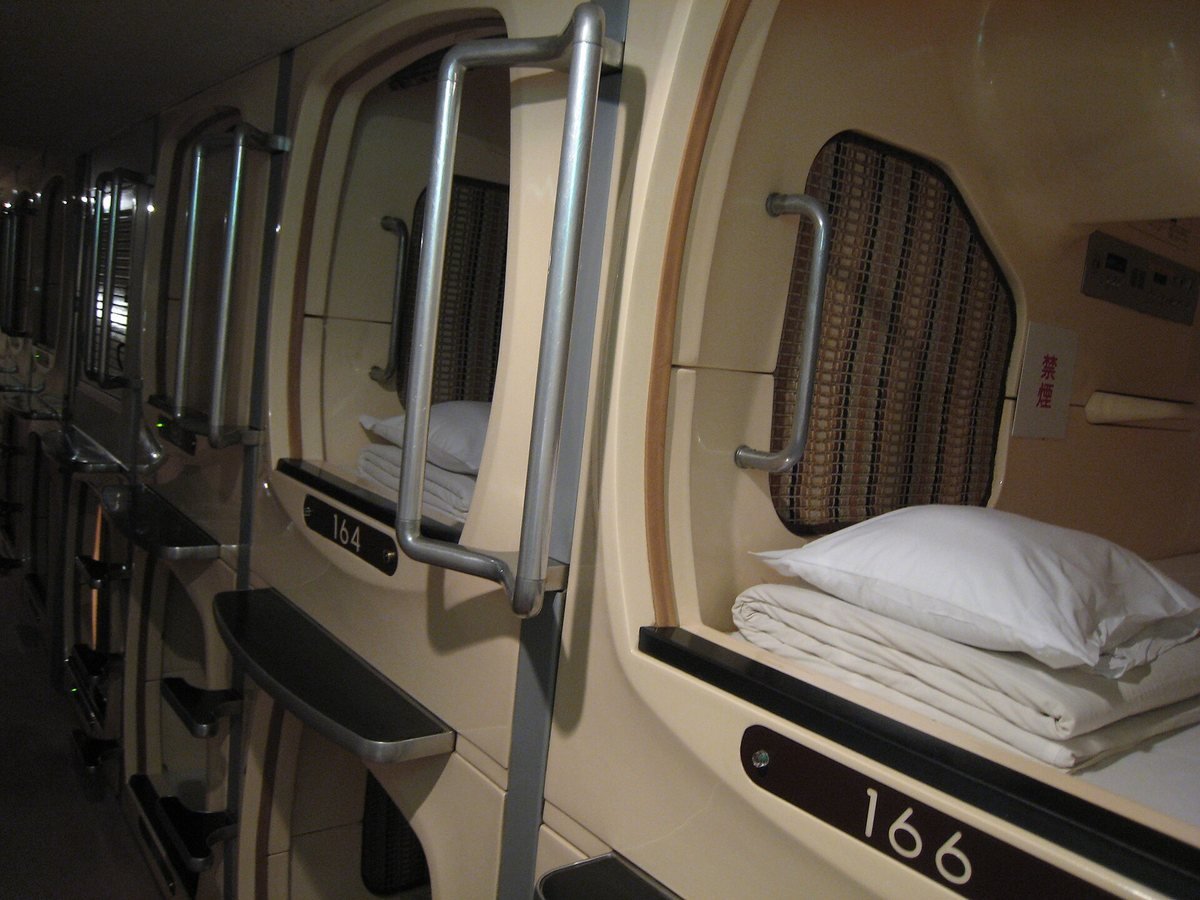
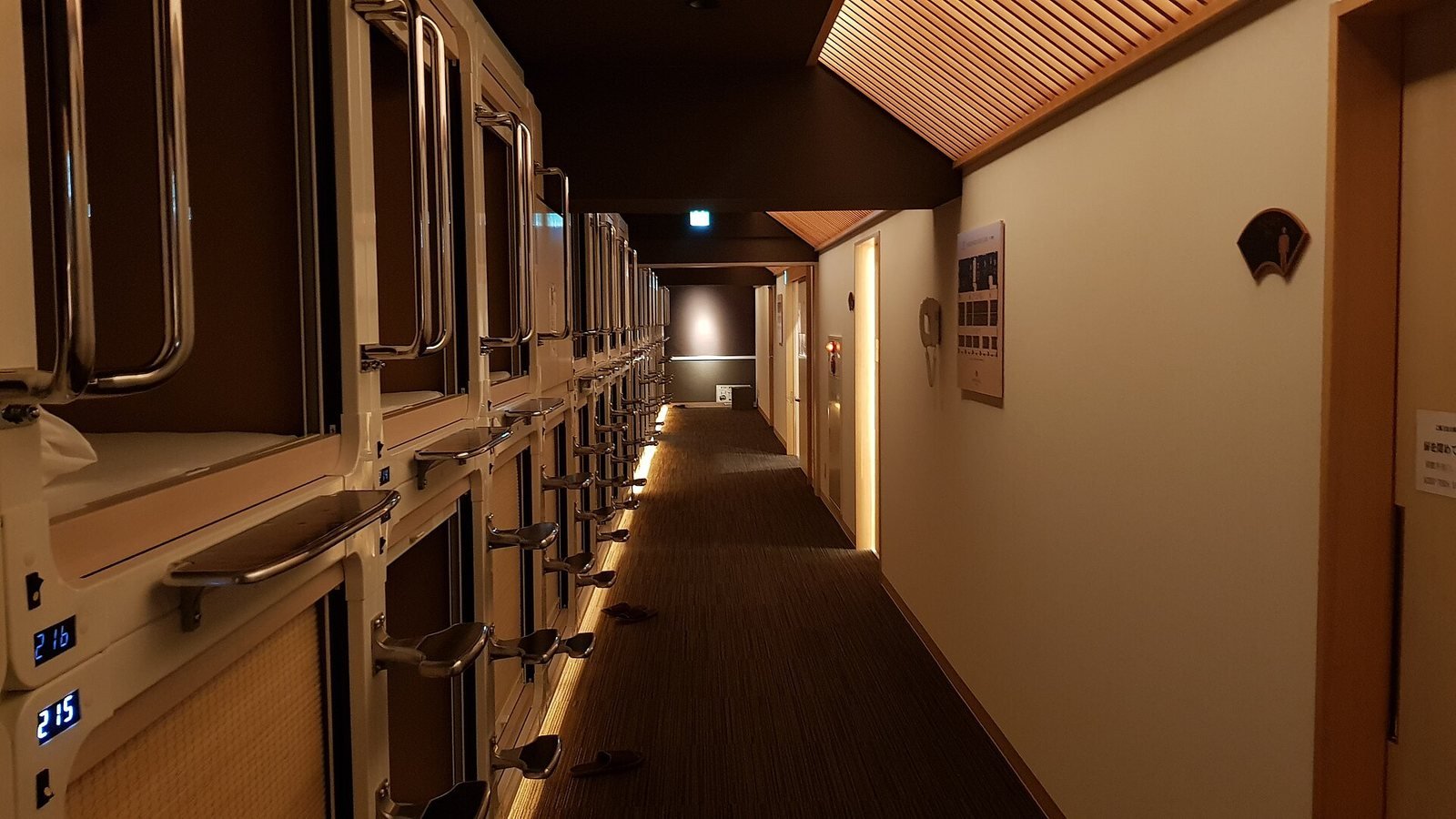
Quick answer: A capsule hotel is a budget hotel where you sleep in your own bed-sized pod, usually about 1.2 m wide, 2 m long and 1 m high, stacked two-high along a corridor. Toilets, showers and often a big shared bath are down the hall, and your bag goes in a locker. Expect roughly 3,000 to 7,500 yen (about $20 to $50) a night for a standard pod in Tokyo or Osaka on an ordinary weeknight, more for “cabin” style rooms, weekends and peak holidays. Capsules suit solo travelers, late arrivals and early flights. The key rules: shoes off at the door, men and women sleep in separate zones, pods do not lock, keep quiet, no phone calls or food in the capsule, and big suitcases rarely fit in lockers.
Capsule hotel types at a glance
Prices are typical 2026 ranges for one adult on an ordinary weeknight, from official chain pages and recent price surveys (roughly $1 = 150 yen). Weekends and holidays run higher, so check the current rate.
| Type | Typical price per night | Who it suits | Women allowed? | Bath/sauna | Luggage | Example (verified open 2026) |
|---|---|---|---|---|---|---|
| Classic sauna-style | Typically 3,000-6,000 yen (about $20-$40) | Solo men who want a big bath and sauna | Often men only | Large bath, sauna, often a spa | Small locker; big bags at the front desk | Capsule Inn Osaka (Umeda, men only) |
| Design / “premium” capsule | Typically 4,000-7,500 yen (about $27-$50) | First-timers, design fans, short stays | Yes, separate zones | Showers; some have a bath | Locker; front desk for large bags | 9h nine hours (various) |
| “Cabin” style (bigger units) | Typically above a standard pod; check current rates | Tall travelers, anyone nervous about tight spaces | Yes, separate zones | Large shared bath plus shower booths | Valuables box in cabin; front desk | First Cabin (Haneda, Kansai Airport, Kyoto) |
| Women-only | Typically 4,000-7,500 yen (about $27-$50) | Solo women who want a women-only building | Women only | Showers and powder room | Locker; check size limits | 9h nine hours woman Shinjuku |
| Airport capsule | Varies; hourly day-use plans exist | Late arrivals, early flights, long layovers | Yes, separate zones | Showers or a large bath | Tight; airport rules limit storage | 9h Narita Airport, First Cabin Haneda T1 |
| Book or theme hostel | Varies; check current rates | Readers, one quirky night | Check the property | Showers | Limited | Book and Bed Tokyo Shinjuku |
| Net cafe / manga kissa (alternative) | Overnight packs are often cheaper; varies | Missed the last train, emergencies | Usually yes | Sometimes a shower (extra fee) | Very limited | Various chains |
Map of capsule hotels mentioned in this guide
- 9h nine hours Narita Airport – Terminal 2 parking building; check-in 14:00, check-out 10:00. Directions
- First Cabin Haneda Terminal 1 – Terminal 1 arrivals floor; day use from two hours. Directions
- First Cabin Kansai Airport – Aeroplaza 3F next to KIX Terminal 1; large shared bath. Directions
- 9h nine hours woman Shinjuku – Women only; about 2 min from Shinjuku-sanchome Station; cashless. Directions
- Anshin Oyado Shinjuku (men only) – Shinjuku 4-2-10; about 90 sec from JR Shinjuku Southeast Exit; sauna and baths. Directions
- The Millennials Shibuya – Jinnan; Smart Pods with room to stand. Directions
- Capsule Inn Osaka (men only) – Usually cited as the first capsule hotel (1979); attached to New Japan Umeda sauna. Directions
- First Cabin Kyoto Nijo Castle – Horikawa-dori near Marutamachi; semi-outdoor large bath. Directions
- Book and Bed Tokyo Shinjuku – Bookshelf-themed beds near Seibu-Shinjuku Station. Directions
What a capsule hotel is (and where the idea came from)
Japan’s tourism board says the world’s first capsule hotel opened in 1979 in Osaka’s Umeda district, aimed at salarymen who had missed the last train home. That hotel is usually identified as Capsule Inn Osaka, designed by architect Kisho Kurokawa, and it still operates as a men-only capsule hotel attached to a sauna. Kurokawa was a leading figure of the Metabolist movement, best known for Tokyo’s Nakagin Capsule Tower (1972). Nakagin was never a hotel – it held apartments and offices built from plug-in capsules – and it was demolished in 2022, with some capsules saved.
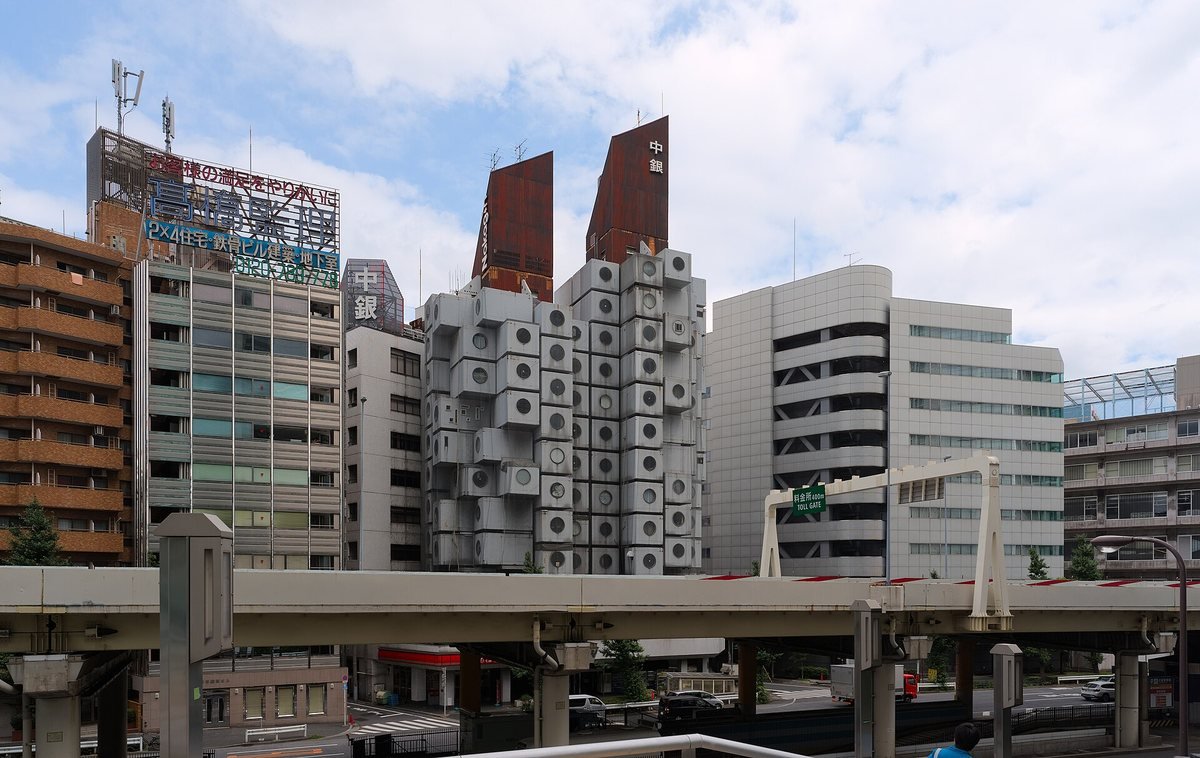
Today there are older, sauna-attached places and newer design-led chains aimed at tourists. If you have read about Japan’s tiny apartments, the logic is familiar: small private space, good shared facilities, great location.
How check-in works, step by step
The first visit can feel like a puzzle, but staff normally walk you through it. The usual order:
- Shoes off. Put your shoes in a small shoe locker at the entrance and keep the key (older places ask you to hand it in at reception).
- Check in and pay. You get a capsule number and a key or wristband for a matching locker. Major chains take cards; nine hours’ FAQ lists cards, e-money, QR payments and cash on site, but its Smart Check-in branches, including 9h woman Shinjuku, are cashless.
- Collect your kit. Expect towels, loungewear and slippers. Nine hours provides these free, and earplugs on request.
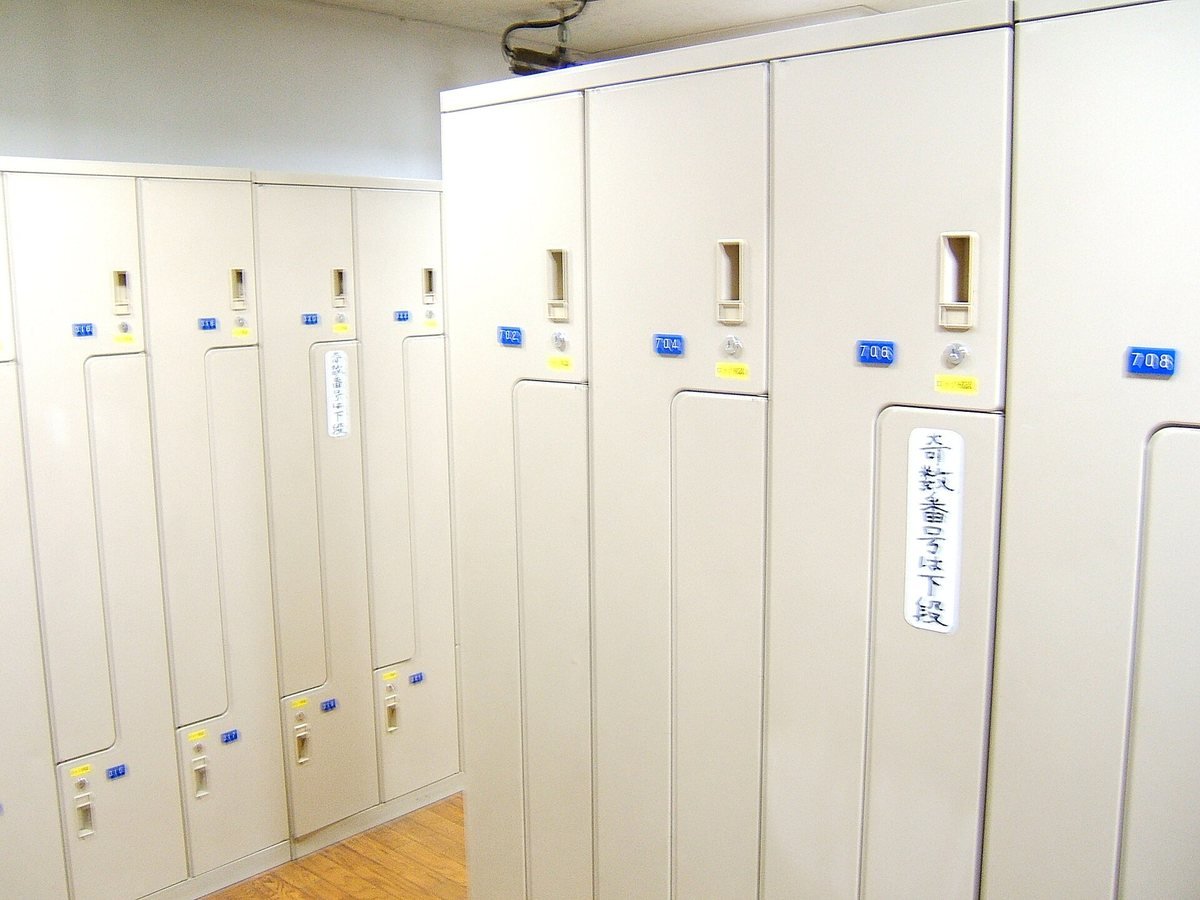
- Locker. Day bag and clothes go in the locker; large suitcases go to the front desk or a luggage room.
- Bath or shower. Most guests wash first, then change into loungewear. Shampoo and soap are normally supplied.
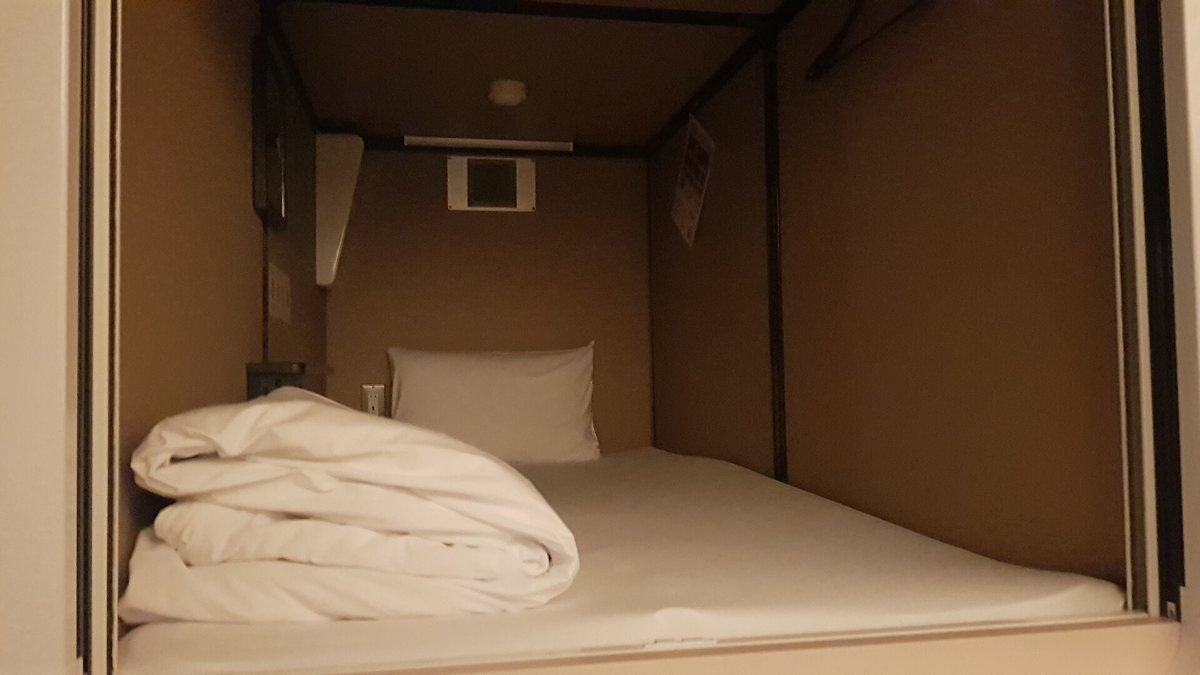
- Capsule. Expect a mattress, pillow, duvet, light, power outlet and a roll-down screen or curtain. It does not lock – GO TOKYO notes this is required by Japanese law – so valuables stay in the locker or safety box.
- Check out. Usually by 10:00 or 11:00. Nine hours offers no late check-out.
Rules and etiquette that actually matter
A capsule floor is a shared bedroom with dozens of strangers. Most rules come down to sound, smell and space.
- Silence in the sleeping area. No phone calls in the capsule zone; take them to the lounge. Phone on silent, headphones for anything with sound.
- Alarms on vibrate. A ringing alarm at 5 a.m. wakes the whole row.
- Pack before bedtime. Rustling plastic convenience-store bags at midnight is the classic capsule sin.
- No food in the pod. Nine hours bans eating and drinking in capsules, and many others do too. Eat in the lounge.
- No smoking in capsules; some properties have a smoking room, many do not.
- Photos. Never in the baths or powder rooms, and keep other guests out of your shots.
- Tattoos. Policies vary. Older sauna-style places may refuse visible tattoos in the bath, while some newer chains only have showers. Ask before booking; our onsen etiquette guide covers bath manners.
- The late-night reality. In nightlife districts, some guests roll in after drinks. Snoring is part of the deal.
8 capsule hotels worth a look for first-timers
Each was listed as operating on its official site or a current booking listing in October 2026. Rates change daily, so check current rates for your dates.
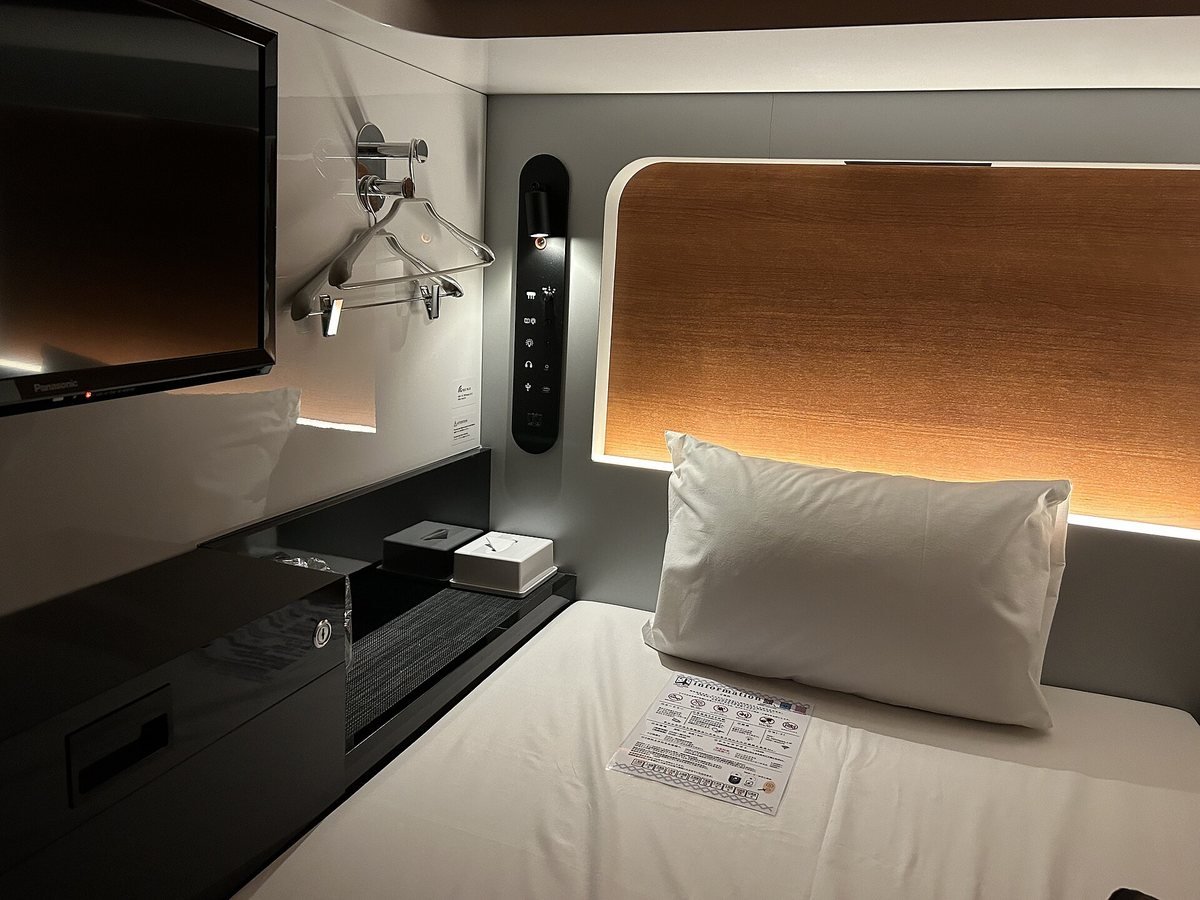
1. 9h nine hours Narita Airport (Narita, Terminal 2)
In the Terminal 2 parking building, a few minutes’ walk from Narita Airport Terminal 2-3 Station; men and women in separate areas. Standout: sleep steps from check-in before an early flight. Check-in starts at 14:00, check-out is 10:00, and large luggage must go to the airport’s own storage.
2. First Cabin Haneda Terminal 1 (Haneda)
On the 1st-floor arrivals level of Haneda Terminal 1, linked to the Keikyu and Monorail stations. First Cabin lists 63 of its 164 cabins for women, plus a women’s lounge. Standout: “Business Class” cabins of 2.5 square meters with a 100 cm bed, and walk-in day use from two hours.
3. First Cabin Kansai Airport (Osaka, KIX)
On the 3rd floor of Aeroplaza, next to Terminal 1 and connected to Kansai Airport Station; Terminal 2 guests can take the free shuttle bus. Women OK, with more women’s cabins than men’s. Standout: a large shared bath at the airport, and advance luggage deliveries are accepted.
4. 9h nine hours woman Shinjuku (Tokyo, women only)
A women-only branch about two minutes’ walk from Shinjuku-sanchome Station. Standout: a calm, all-women building in the middle of Shinjuku. It is cashless; nine hours also runs a women-only branch at Kanda.
5. Anshin Oyado Shinjuku (Tokyo, men only)
A large men-only capsule hotel in Shinjuku 4-chome, which its official page puts about 90 seconds’ walk from the JR Shinjuku Southeast Exit. Standout: the classic men’s experience done in comfort, with a sauna and baths. Listings use several names (currently “Anshin Oyado Tokyo Man Shinjuku Station South” on the official site), so check you are booking the right branch.
6. The Millennials Shibuya (Tokyo)
In Jinnan, roughly six minutes on foot from Shibuya Scramble Crossing; mixed-gender, so check the floor setup when booking. Standout: “Smart Pods” with a 2.3 m ceiling, a 120 cm bed that converts to a sofa so you can stand, suitcase space under the bed, and an alarm that uses light and bed movement instead of sound.
7. Capsule Inn Osaka (Osaka, Umeda, men only)
About ten minutes’ walk east of JR Osaka and Hankyu Osaka-umeda stations, in the Higashi-dori arcade area. Standout: the place usually cited as the first capsule hotel, with sauna and spa access via the attached New Japan Umeda. A fun add-on if you are exploring Osaka.
8. First Cabin Kyoto Nijo Castle (Kyoto)
About eight minutes’ walk from Nijojo-mae and Marutamachi subway stations, with separate men’s and women’s areas. Standout: a choice of sizes, from 1 m-high “Premium Economy” pods to 2.1 m-high “First Class” cabins, plus a semi-outdoor large bath.
Capsule vs business hotel vs hostel vs ryokan
Rough guides for one adult; see our Tokyo accommodation guide for all budgets for more.
| Option | Typical price | Privacy | Space | Bath | Best for |
|---|---|---|---|---|---|
| Capsule hotel | Typically 3,000-7,500 yen (about $20-$50) per person on a weeknight | Own pod, no lock | Bed-sized | Shared showers, often a big bath | Solo travelers, one or two nights, early flights |
| Business hotel | Roughly 7,000-17,000 yen (about $47-$113) per room on an ordinary weeknight; far more at peak | Private, lockable room | Small but a real room | Private unit bath; some chains add a shared bath | Couples, longer stays, travelers with luggage |
| Hostel dorm | Typically 3,000-9,000 yen (about $20-$60) per bed | Bunk with curtain | Bunk in a shared room | Shared showers | Social travelers, kitchens, mixed groups |
| Ryokan | Usually the priciest; rates vary widely and often include dinner and breakfast | Private tatami room | Spacious | Shared or private onsen bath | A special night, couples, families |
Honest pros, cons and who should skip it
The appeal is simple: a clean bed in a central spot for much less than a hotel room, often with a better bath than a business hotel. The downsides are just as real: neighbor noise, no lock on your pod, tiny lockers, shared bathrooms, and at many places no access to your capsule during the day.
Who should not book one: couples who want to share a room (standard pods are single and genders are separated, though some First Cabin branches have lockable “Premium” rooms), anyone with real claustrophobia, very light sleepers, travelers living out of a large suitcase, and families with young children. Nine hours, for example, only accepts guests aged six and up, each in their own capsule, and children 6 to 11 must be with a same-sex guardian.
Tall travelers: a standard pod is about 2 m long (around 6 ft 7 in) and about 1 m high, so you can sit up but not stand. If you are tall or broad, look at First Cabin’s 2.1 m cabins or The Millennials.
Booking tips: luggage, multi-night stays and timing
Book direct when you can: nine hours offers a lowest-price guarantee for member rates on its own site. Booking sites are fine for comparing, but read the small print on gender, age and luggage.
- Weekends and holidays cost more. Peak dates such as Golden Week have been reported at several times the usual rate. Midweek is your friend.
- Last-minute is often possible for one person on a weeknight, less so on a Friday or Saturday.
- Multi-night stays. Japan-guide notes most capsule hotels make you check out during the day and take your belongings, even if you are staying again. Nine hours does not require a full daily check-out, but you must leave your capsule during cleaning (11:00 to 15:00, or 10:00 to 14:00 at Narita).
- Read reviews for noise, air conditioning, locker size, and whether “female floor” means a separate floor or a separate building.
- Forward your suitcase. Send the big bag ahead by takkyubin to your next proper hotel and carry a small overnight bag; our luggage forwarding guide explains how. If you ship to nine hours itself, the parcel must arrive on your check-in date (not available at Narita).
- Taxes. Local accommodation taxes may be added at check-in; in Osaka, First Cabin notes a tax on stays of 5,000 yen or more per person per night.
Notes for visitors from Singapore, Australia, the UK and Canada
- Singapore: if you have stayed in a pod hostel at home, a Japanese capsule will feel familiar, but the bath, shoe-locker and silence rules are stricter. Bring an adapter, as Japan’s two-pin sockets differ from Singapore’s three-pin plugs.
- Australia: overnight flights from Sydney and other cities often land early in the morning, long before capsule check-in. Airport day use, such as First Cabin Haneda Terminal 1, gives you a shower and a nap. Bring a plug adapter.
- UK: after the long haul from London, an airport capsule is a cheap first night. Bring a plug adapter.
- Canada: as for US visitors, two-flat-pin plugs usually fit Japanese sockets, though three-prong plugs may need an adapter.
What to pack for a capsule night
Most chains supply towels, loungewear, slippers and toiletries, so pack light: earplugs and an eye mask, a small pouch or hanging toiletry bag for the walk to the bath, a power bank or long cable (outlet placement varies), and packing cubes or a soft overnight bag so you can get ready quietly. For more ways to stretch your money, see our Tokyo on a budget guide.
Research-based picks for a capsule hotel stay
We have not tested these; they are research-based picks for the usual capsule problems.
Foam earplugs
Soft foam earplugs are the single best defense against snoring neighbors and late arrivals.
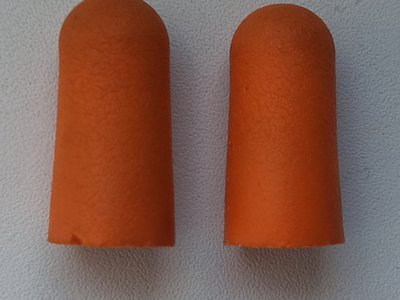
Foam earplugs (item type, not the exact product). Photo: Sokolikmawwer0, CC BY-SA 3.0, via Wikimedia Commons
Mack's Ultra Soft Foam Earplugs (50 pairs)
Soft foam plugs for snoring neighbors and late arrivals; a big pack lasts the whole trip.
Check price on AmazonContoured sleep mask
A contoured mask blocks corridor light leaking around the screen without pressing on your eyes.
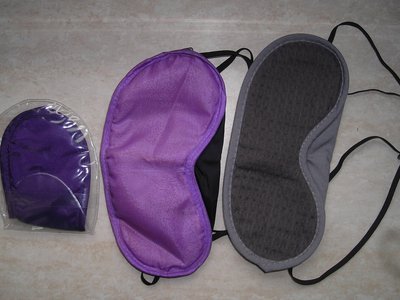
Sleep masks (item type, not the exact product). Photo: Mattes, CC BY-SA 3.0, via Wikimedia Commons
MZOO Contoured Sleep Mask
Contoured cups block corridor light around the pod screen without pressing on your eyes.
Check price on AmazonPacking cubes
Cubes let you pull out one night’s clothes and leave the rest at the front desk or in a forwarded suitcase.
Hanging toiletry bag
A bag with a hook keeps your things off a wet counter on the trip from locker to shower.
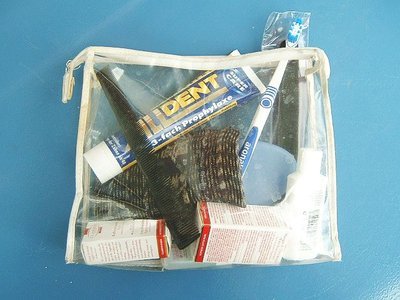
BAGSMART Hanging Toiletry Bag (Medium)
Hook-and-hang wash bag keeps toiletries off a wet counter between locker and shower.
Check price on AmazonCompact power bank
A small power bank with a built-in cable helps when the outlet in your pod is in an awkward spot.
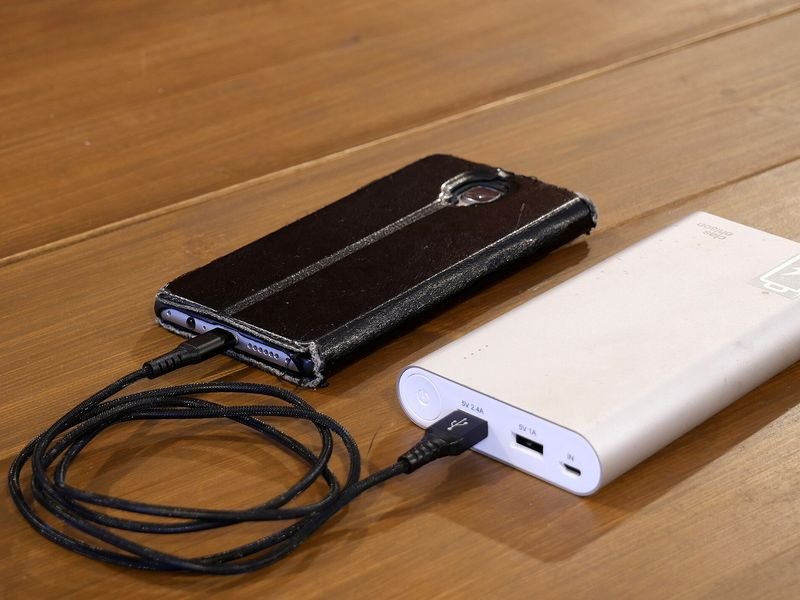
Power bank (item type, not the exact product). Photo: Santeri Viinamäki, CC BY-SA 4.0, via Wikimedia Commons
Anker Nano Power Bank (10,000mAh, 30W)
Compact battery with a built-in cable for when the pod outlet is in an awkward spot.
Check price on AmazonFAQ
Are capsule hotels in Japan safe?
Generally yes. Men and women sleep in separate zones or buildings, staff are on site, and valuables go in a lockable locker or safety box. The pod itself does not lock, so never leave your passport or wallet in it.
Can couples stay together in a capsule hotel?
Usually not. Standard capsules are single and guests are split by gender. Some First Cabin branches have lockable “Premium” rooms for more than one person, but a business hotel is usually easier.
Can women stay in capsule hotels?
Yes, at many. Modern chains have women’s floors or zones, and there are women-only properties such as 9h nine hours woman Shinjuku and woman Kanda. Some older sauna-style places, such as Capsule Inn Osaka, are men only.
How much is a capsule hotel in Tokyo?
A standard pod typically runs about 3,000 to 7,500 yen (about $20 to $50) on an ordinary weeknight in 2026, with bigger cabins, weekends and holidays costing more. Check current rates for your dates.
Is a capsule hotel claustrophobic?
It can be. A standard pod is about 1.2 m wide and 1 m high, and GO TOKYO advises people with severe claustrophobia to avoid them. Cabin-style rooms with a higher ceiling feel far more open.
Can you stay in a capsule hotel with a big suitcase?
Yes, but it will not fit in your locker. Most places hold large bags at the front desk on the day of your stay; airport branches are stricter.
Do capsule hotels have showers?
Yes, shared ones, and many also have a large bath or sauna. Shampoo, soap and towels are normally provided.
What if I have tattoos?
Rules vary by property and are strictest at older sauna-style places with big baths. Check the policy before booking, or choose a place with private shower booths.
Bottom line
A capsule hotel is a great one- or two-night stay in Japan if you are solo, packing light and fine with some background noise. For a first time, a design chain or First Cabin is the gentlest start; save the classic sauna-style places for your second trip. Forward your suitcase, set your alarm to vibrate, and enjoy it for what it is.
