
As an Amazon Associate, Chasing Cherry Blossoms earns from qualifying purchases. We may also earn from other affiliate links on this page at no extra cost to you.
Shop ’til You Drop: Exploring Tokyo’s Top Shopping Districts
Tokyo is a shopper’s paradise, and I say that as someone who has happily lost entire afternoons (and a few suitcases’ worth of luggage space) in its stores. From teen-fashion towers to quiet luxury boulevards, there’s a district for every taste and budget. Here’s my tour of the best shopping areas in Tokyo for 2026-27, with practical tips for planning your visit.
Before You Go: Quick Shopping Tips
Tax-Free Shopping
Many larger stores offer tax-free shopping for foreign visitors on presentation of your passport. The 10% consumption tax is removed at the register, or refunded, depending on the store. Japan is moving to a refund-at-departure system from 1 November 2026, where you pay the tax-inclusive price at the shop and claim the tax back when you leave the country, so check the current rules at the shop or on the official Japan tourism site. Bring your passport every time you shop. From Nov 1, 2026 the rules change – see our guide to Japan tax-free shopping and the new refund system.
Opening Hours
Most department stores and malls open around 10:00 or 11:00 and close around 20:00 or 21:00. Smaller boutiques in Harajuku and Shibuya often open later in the day. Hours vary by shop and season, so check ahead for the places on your must-visit list.
Getting Around
Nearly every district below is on the JR Yamanote Line loop or the Tokyo Metro, so a rechargeable IC card (Suica or PASMO) is all most shoppers need. Is a JR Pass worth it? Since the October 2023 price rise, a 7-day ordinary Japan Rail Pass costs 50,000 JPY when bought on the official site (slightly more through overseas agents), so it only makes sense if you’re also taking long-distance trips, such as a day or two out to Kyoto or Osaka. For a Tokyo-only shopping trip, skip it. You’ll do a lot of walking between shops, so comfortable walking shoes are worth packing.
Staying connected also helps for maps and translation apps while you browse, and a pocket Wi-Fi or travel eSIM are common ways to do that.
Shibuya
Shibuya is one of Tokyo’s best-known shopping districts, packed with department stores, boutiques and streetwear shops aimed at a young, fashion-forward crowd. It’s also home to the famous Shibuya Crossing, where huge numbers of people cross at once. It’s a spectacle even if you don’t buy a thing.
Shibuya 109 is a multi-story fashion building full of boutiques focused on the latest trends, especially for young women. It’s a landmark of Japanese street fashion.
Harajuku
Harajuku is the heart of Tokyo’s youth culture and street style. It’s known for subcultures such as Lolita fashion, plus plenty of vintage shops and trendy boutiques.
Takeshita Street is a narrow, always-busy pedestrian lane lined with quirky fashion shops, accessory stalls and crepe stands. Go on a weekday morning if you want to avoid the worst crowds. Laforet Harajuku is the area’s fashion building, with a mix of small boutiques each offering its own style.
Omotesando
Just a short walk from Harajuku, Omotesando is Tokyo’s tree-lined boulevard of designer fashion and striking architecture. It’s often compared to the Champs-Élysées in Paris.
Omotesando Hills is a long, sloping shopping complex with high-end brands, cafes and restaurants. Architecture fans should also look for the Prada building, designed by Herzog & de Meuron, as well as the many other flagship stores designed by well-known architects.
Ginza
Ginza is Tokyo’s classic luxury shopping district. You’ll find flagship stores for international brands like Chanel, Gucci and Louis Vuitton, along with elegant department stores and galleries. On weekends and holidays, the main street is usually closed to traffic, typically from around noon to late afternoon, and turns into a pedestrian zone, which is lovely for strolling.
Ginza Six is a large complex with high-end fashion, restaurants and art. Wako, with its distinctive clock tower, is a historic department store known for jewelry and watches. The current building dates from 1932, and it is a Ginza landmark; check what’s currently open before you visit.
Shinjuku
Shinjuku is a huge, energetic district with department stores, electronics shops and specialty stores for every budget. It’s also known for its nightlife, so you can easily combine shopping with dinner and drinks.
Isetan Shinjuku is one of Tokyo’s best-known department stores, with a strong fashion selection and an excellent food hall in the basement. Near Shinjuku Station, the Southern Terrace area offers a calmer walk lined with shops and restaurants.
Akihabara
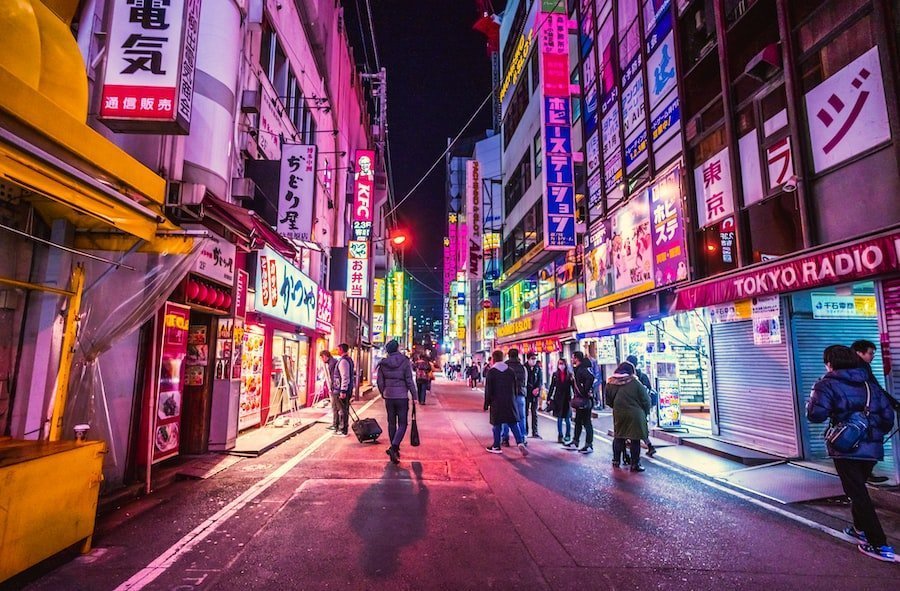
Akihabara is Tokyo’s hub for electronics, anime, manga and gaming culture. It’s a great place for collectibles, figures and gadgets.
Yodobashi Camera is a giant electronics store spread over many floors, with everything from cameras to toys and hobby goods. Mandarake is a multi-floor shop specializing in used manga, anime goods and collectibles. Both are popular with serious fans. Many shops here offer tax-free shopping, so bring your passport.
Asakusa: Nakamise Shopping Street
Nakamise Shopping Street leads to Sensoji Temple in Asakusa and is one of Tokyo’s oldest-feeling shopping streets. Small shops and stalls sell traditional souvenirs such as folding fans, kimono accessories and wooden dolls.
It’s also a good place to snack on senbei (rice crackers) and ningyo-yaki or taiyaki (fish-shaped cakes filled with sweet red bean paste). Many stalls open in the morning and close by late afternoon or early evening (hours vary by shop, typically between about 9:00 and 19:00), so it’s best visited earlier in the day. Guided walking tours of the neighborhood are available if you’d like more local context.
Odaiba
Odaiba is a man-made island in Tokyo Bay, popular for shopping, entertainment and waterfront views, which makes it a good choice for families.
Aqua City Odaiba is a large mall with fashion, restaurants and views of Tokyo Bay and the Rainbow Bridge. DiverCity Tokyo Plaza has long been known for its giant Gundam statue out front, plus anime and character shops. The statue has changed over the years, so check what’s currently on display.
Tokyo Station
Tokyo Station is more than a transport hub. It has extensive shopping areas, both inside and beneath the station. Tokyo Character Street, in the First Avenue complex, is full of shops for popular characters such as Hello Kitty and Pokemon, and the station is also a great place to pick up regional food gifts and bento boxes.
Where to Stay for Shopping
Shinjuku, Shibuya and Ginza all make convenient bases, with plenty of train connections and late-night shopping nearby. Book early if you’re traveling during peak seasons such as late March to early April.
Planning Around the Cherry Blossoms
If you’re visiting in spring, Tokyo’s cherry blossoms generally bloom from late March to early April, though the exact dates change each year, so check the latest forecasts before booking. Shopping and sakura combine nicely, and many shops and cafes launch special seasonal products at that time. Want to know more about Japan’s iconic flower? Read our guide to 18 amazing facts about cherry blossom trees.
Final Thoughts
Whether you’re after trendy streetwear in Harajuku, designer labels in Ginza, anime goods in Akihabara or traditional souvenirs in Asakusa, Tokyo’s shopping districts have you covered. Leave some space in your suitcase. You’ll need it.
FAQ
What are the best shopping districts in Tokyo?
Popular choices include Shibuya, Harajuku, Ginza, Shinjuku, Omotesando, Akihabara and Asakusa. Which is best depends on whether you want fashion, luxury, electronics or souvenirs.
Which area is best for luxury shopping?
Ginza is the classic luxury district, and Omotesando is a great alternative with designer boutiques and striking architecture.
Where should I go for anime and manga merchandise?
Akihabara is the main destination, with Mandarake and big multi-floor stores. Tokyo Station’s Character Street and Odaiba are also good for character goods.
What kind of fashion can I find in Harajuku?
Harajuku is known for eclectic street style, vintage clothing, Lolita fashion and cosplay-inspired looks.
Can tourists shop tax-free in Tokyo?
Yes, many stores offer tax-free shopping for visitors. Bring your passport, and check the current rules and minimum spend at each shop; Japan is moving to a refund-at-departure system from 1 November 2026.
Do I need a JR Pass for a Tokyo shopping trip?
Usually not. Local trains and subways are easy with an IC card. A 7-day JR Pass costs 50,000 JPY on the official site and is mainly worth it if you plan several long-distance trips.
Comment (2)