As an Amazon Associate, Chasing Cherry Blossoms earns from qualifying purchases. We may also earn from other affiliate links on this page at no extra cost to you.
Japan has hundreds of famous cherry blossom spots, and every list picks a different ten. This is our ranking of the ten worth building a spring trip around: big cities you will probably visit anyway, plus places that justify a dedicated day or two.
For each one you get why it earns its place, the typical peak, entry costs, access from Tokyo or Osaka and a crowd tip. Spring 2027 has not been forecast yet, so the windows below are typical ones; check the forecast from late January.
Quick answer: Our top 10 are Hirosaki Park (Aomori), Mt Yoshino (Nara), Kyoto’s canal and temple spots, Himeji Castle, the Chureito Pagoda with Mt Fuji, Tokyo’s moats and riversides, Takato Castle Ruins Park (Nagano), the Kakunodate samurai district (Akita), Hitome Senbon Zakura along the Shiroishi River (Miyagi) and Osaka Castle with the Okawa riverside. Kyoto, Tokyo, Osaka and Himeji usually peak from late March to early April. Yoshino, Takato, the Fuji area and Miyagi follow during April, and Kakunodate and Hirosaki in late April. First-timer tip: base yourself in Tokyo or Kyoto for the late-March window, then chase the bloom north or uphill if your dates slip.
Top 10 cherry blossom destinations at a glance
| # | Destination | Region | Typical peak | Entry (yen / USD) | Getting there (from Tokyo/Osaka) |
|---|---|---|---|---|---|
| 1 | Hirosaki Park | Aomori (Tohoku) | Late April | Park free; Honmaru keep area 320 yen ($2) | Tokyo: Hayabusa shinkansen to Shin-Aomori (about 3.5 hrs), then local train (30-40 min) |
| 2 | Mt Yoshino | Nara (Kansai) | April (moves uphill) | Free (temples and ropeway extra) | Osaka: Kintetsu from Osaka-Abenobashi, about 1 hr by limited express |
| 3 | Kyoto (Philosopher’s Path, Maruyama Park, Daigo-ji, Arashiyama) | Kyoto (Kansai) | Late March to early April | Outdoor spots open to all; Daigo-ji charges admission | Tokyo: Tokaido shinkansen, about 130 min |
| 4 | Himeji Castle | Hyogo (Kansai) | Late March to mid April | Castle ticket (fees changed March 2026; check the official site) | Osaka: JR Special Rapid, about 1 hr |
| 5 | Chureito Pagoda (Arakurayama Sengen Park) | Yamanashi (Mt Fuji area) | Mid April | Outdoor park (check the city site) | Tokyo: Fuji Excursion from Shinjuku to Shimoyoshida, under 2 hrs; 4,010 yen ($26) |
| 6 | Tokyo (Chidorigafuchi, Meguro River, Shinjuku Gyoen) | Tokyo | Late March to early April | Chidorigafuchi and Meguro River free; Shinjuku Gyoen 500 yen ($3) | You are already there: Narita and Haneda both serve the city |
| 7 | Takato Castle Ruins Park | Nagano | April (after the big cities) | About 600 yen ($4) in festival season (2025 rate); free otherwise | Tokyo: highway bus from Busta Shinjuku, about 3.5 hrs; or train via Okaya plus a local bus |
| 8 | Kakunodate samurai district and Hinokinai River | Akita (Tohoku) | Late April to early May | Free | Tokyo: Akita Shinkansen Komachi, a little over 3 hrs |
| 9 | Hitome Senbon Zakura (Shiroishi River) | Miyagi (Tohoku) | Mid April | Riverside paths (check the festival site) | Tokyo: Hayabusa to Sendai, then JR local train to Ogawara |
| 10 | Osaka (Osaka Castle Park, Kema Sakuranomiya, Japan Mint) | Osaka (Kansai) | Late March to early April; Mint passage in April | Park free; Nishinomaru Garden small fee; Mint by advance reservation | You are already there via Kansai Airport; from Tokyo about 2.5 hrs by Nozomi |
Fares are approximate one-way adult fares at the time of writing (late 2026) and use roughly $1 = 155 yen. Check the operator’s site before you travel, because fares and seasonal fees change.
Map: the 10 cherry blossom destinations in this guide
- Hirosaki Park – About 2,600 cherry trees around Hirosaki Castle; typical peak late April. Directions
- Kinpusen-ji (Mt Yoshino, Naka Senbon area) – Temple in the Naka Senbon area of Mt Yoshino, about 30,000 trees; early to mid April. Directions
- Philosopher's Path – About 2 km canal path lined with cherry trees; typical peak late March to early April. Directions
- Maruyama Park – Free park in Gion with a large weeping cherry lit up in the evening. Directions
- Himeji Castle – About 1,000 cherry trees around the castle; 2,500 yen for non-residents from March 2026. Directions
- Chureito Pagoda (Arakurayama Sengen Park) – Pagoda with Mt Fuji view, about 650 trees, 398 steps; free; early to mid April. Directions
- Chidorigafuchi – 700 m moat-side promenade by the Imperial Palace with rowboats; free. Directions
- Meguro River (Nakameguro) – About 800 trees along the canal, pink lanterns in the evening during the bloom; free. Directions
- Takato Castle Ruins Park – About 1,500 Takato kohigan-zakura; festival-season fee about 600 yen; early to mid April. Directions
- Kakunodate Bukeyashiki-dori (samurai district) – About 400 weeping cherries, 162 natural monuments; typical peak late April. Directions
- Funaoka Castle Ruins Park – Hilltop park above the Shiroishi River with 1,000 or more cherry trees; free. Directions
- Osaka Castle Park – About 3,000 trees; Nishinomaru Garden (about 300 trees) is ticketed; late March to early April. Directions
How we picked
We weighted four things: how good the blossoms genuinely are (tree numbers, setting, variety), how different each place feels from the others on the list, how practical it is to reach from Tokyo or Osaka, and how well the spots spread across the season. If your trip lands a week late for Kyoto, you still want something at peak. The three spots often called Japan’s three best cherry blossom sites, Hirosaki, Yoshino and Takato, all make the cut. None of these places paid to be included, and every fact below was checked against official or well-established sources in October 2026.
Which destinations fit your trip
| Trip type / dates | Best picks | Why |
|---|---|---|
| Late March, first trip, Tokyo + Kyoto | Tokyo, Kyoto, Himeji | All three usually peak in the same window and sit on the main shinkansen line. |
| Early April, Kansai base | Kyoto, Osaka, Himeji, Mt Yoshino | Day trips from Osaka or Kyoto; Yoshino’s lower slopes start as the cities finish. |
| Mid April, chasing a late bloom | Mt Yoshino (upper slopes), Takato, Chureito Pagoda, Hitome Senbon Zakura | Higher or further north, so they bloom after the big cities. |
| Late April, north (Tohoku) | Hirosaki, Kakunodate | The classic late-season pair. Golden Week runs 29 April to 5 May 2027, so book trains and rooms early. |
| You want Mt Fuji in the frame | Chureito Pagoda | The pagoda, blossoms and Fuji line up from the upper viewing deck. |
| No car, JR Pass friendly | Hirosaki, Kakunodate, Hitome Senbon Zakura, Himeji, Kyoto | All reachable on JR lines; Yoshino (Kintetsu) and the Fuji area (Fujikyu) need extra tickets. |
The 10 best cherry blossom destinations in Japan
1. Hirosaki Park (Aomori)
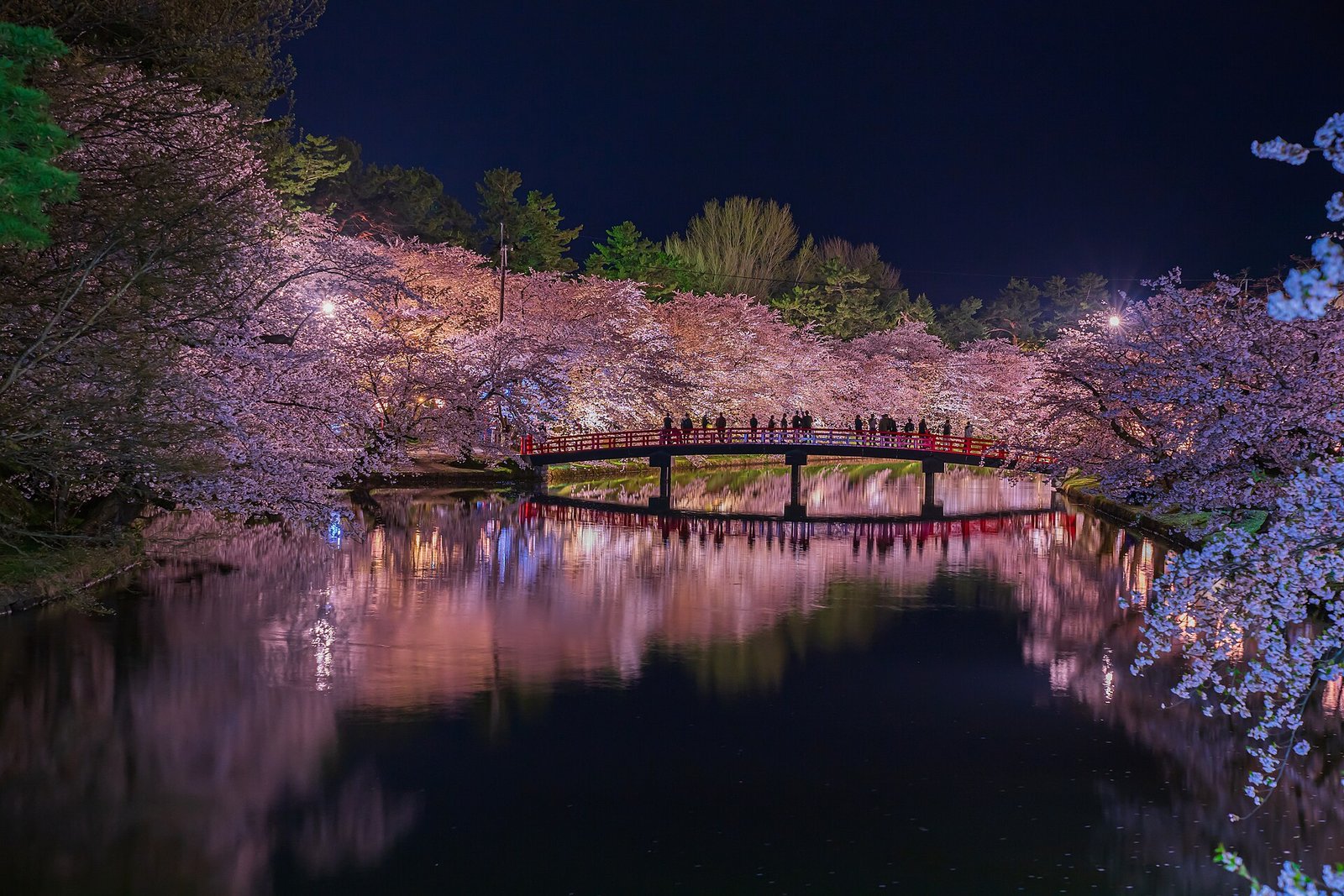
If we had to pick one place for a dedicated sakura trip, it would be Hirosaki. The park around Hirosaki Castle holds about 2,600 cherry trees of 52 varieties, including Somei Yoshino, weeping cherries and double-flowered yaezakura. Moats, bridges, castle walls and the keep give you a new composition every few minutes, and the moats fill with fallen petals as the season ends.
Hirosaki blooms weeks after Tokyo, which makes it the best rescue option if you arrive after the southern cities have finished. The festival dates are set each year to match the bloom, so check the park’s official site for the 2027 dates and for whether the keep is open to visitors.
- Peak: typically late April.
- Entry: the park is free; the Honmaru and Kitanokaku areas cost 320 yen ($2) for adults during the festival.
- Access: Hayabusa shinkansen from Tokyo to Shin-Aomori (about 3.5 hours, reservation required), then a local train to Hirosaki (30-40 minutes). Covered by the JR Pass.
- Night lights: check the festival site for evening opening and light-up hours.
- Crowd tip: go early in the morning on a weekday, and avoid the Golden Week holidays if you can.
2. Mt Yoshino (Nara)
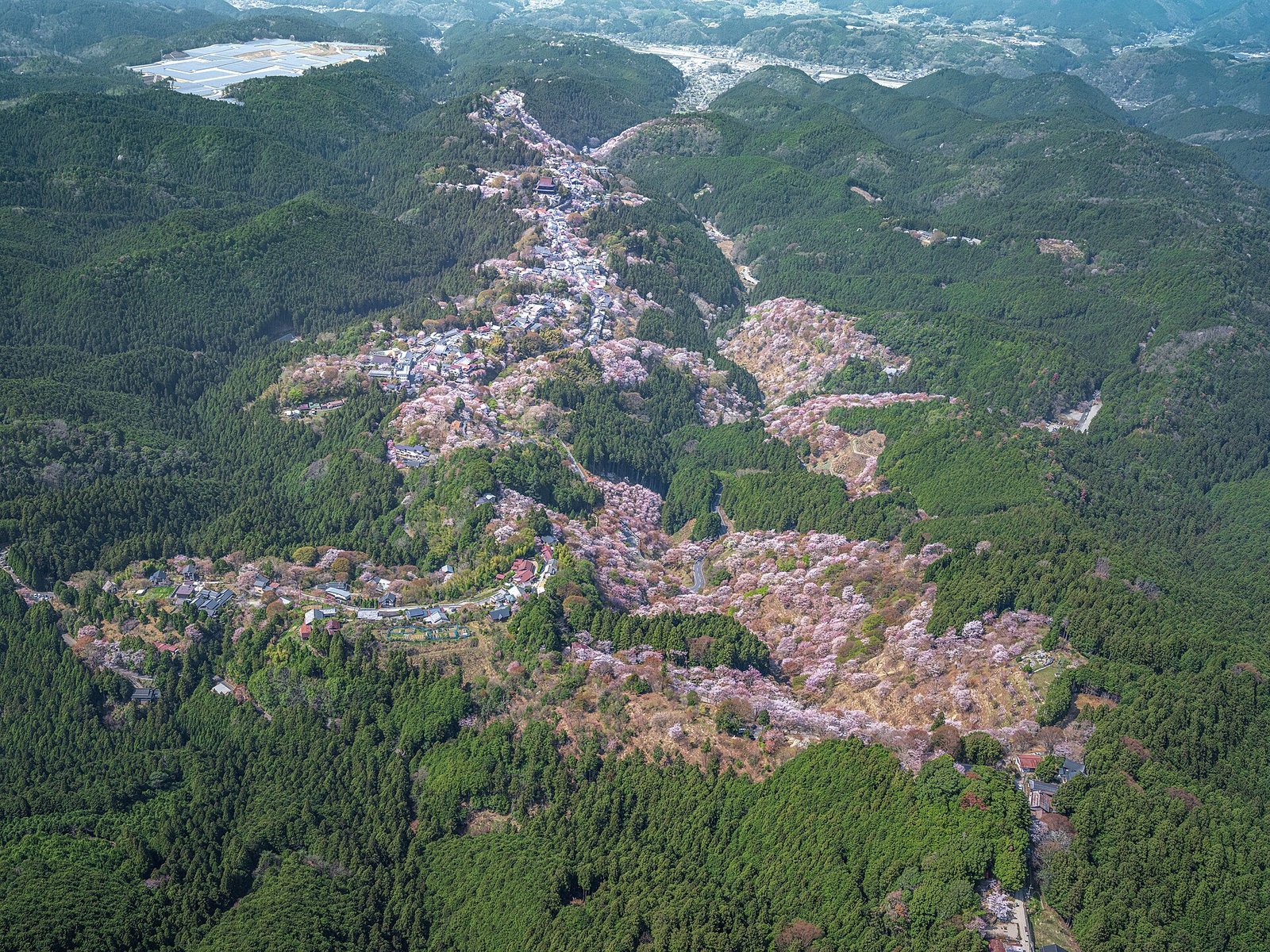
Yoshino has been Japan’s most celebrated cherry blossom mountain for centuries. Around 30,000 trees of about 200 varieties, mainly the native shiro-yamazakura (white wild cherry) rather than city-style Somei Yoshino, cover the slopes in four zones: Shimo Senbon at the bottom, then Naka Senbon, Kami Senbon and Oku Senbon at the top. The trees come into bloom from the bottom of the mountain to the top, so a late arrival still has a chance up high.
The view across the hillside from Naka Senbon and Kami Senbon is unlike any city park. Kinpusen-ji temple, whose huge Zao-do hall is a World Heritage site, sits in the middle of the walk. For the full walking route and where to stay, see our Yoshino cherry blossom guide.
- Peak: April; the lower slopes go first, Oku Senbon last.
- Entry: walking the mountain is free; some temples charge.
- Access: Kintetsu puts Yoshino about an hour from Osaka-Abenobashi. Limited express trains need a limited express ticket on top of the basic fare; check Kintetsu’s site for current fares. Not covered by the JR Pass.
- Night lights: some trees are lit at peak, but Yoshino is mainly a daytime trip.
- Crowd tip: arrive on an early train. In peak season the area is extremely crowded and seasonal buses run up the mountain, so allow extra time and check whether the ropeway is running.
3. Kyoto (Philosopher’s Path, Maruyama Park, Daigo-ji, Arashiyama)
Nowhere else combines blossoms with this much temple, canal and garden scenery in one city. Pick two or three spots a day rather than trying to see them all.
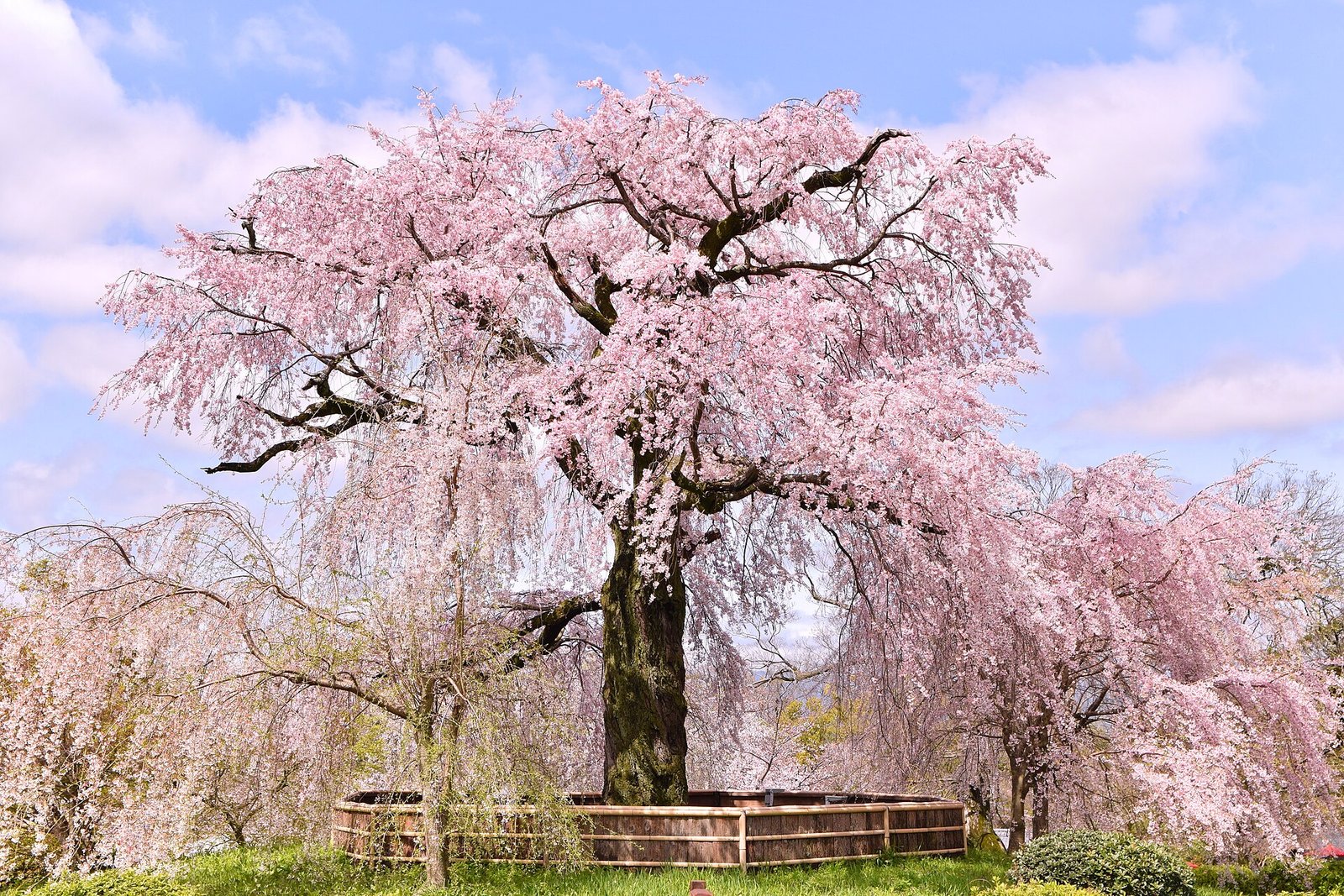
The Philosopher’s Path runs for about 2 km beside a branch of the Lake Biwa Canal, between the Nanzen-ji area and Ginkaku-ji. It is named after the philosopher Nishida Kitaro, who often walked it, and its cherry trees began with saplings planted in the early 1920s by the painter Hashimoto Kansetsu and his wife. Maruyama Park, next to Yasaka Shrine in Gion, centres on a large weeping cherry known as the night cherry of Gion, which is lit up in the evenings during the season. Daigo-ji, in the south-east, is where Toyotomi Hideyoshi held his famous 1598 blossom party; a parade recreating it is held on the second Sunday of April. In Arashiyama, the blossoms are along the river around Togetsukyo Bridge, not in the Bamboo Grove.
For more on the city, see our Kyoto attractions guide.
- Peak: typically late March to early April.
- Entry: the Philosopher’s Path, Maruyama Park and the Arashiyama riverside are outdoor public spaces; Daigo-ji charges admission, so check its site for the spring rate.
- Access: the Tokaido shinkansen from Tokyo takes about 130 minutes, and Nozomi is the fastest service. JR Pass holders need an extra Nozomi ticket to ride Nozomi trains.
- Night lights: Maruyama Park’s weeping cherry is lit in the evenings during the season.
- Crowd tip: walk the Philosopher’s Path before 8am, and save Maruyama for a weeknight.
4. Himeji Castle (Hyogo)
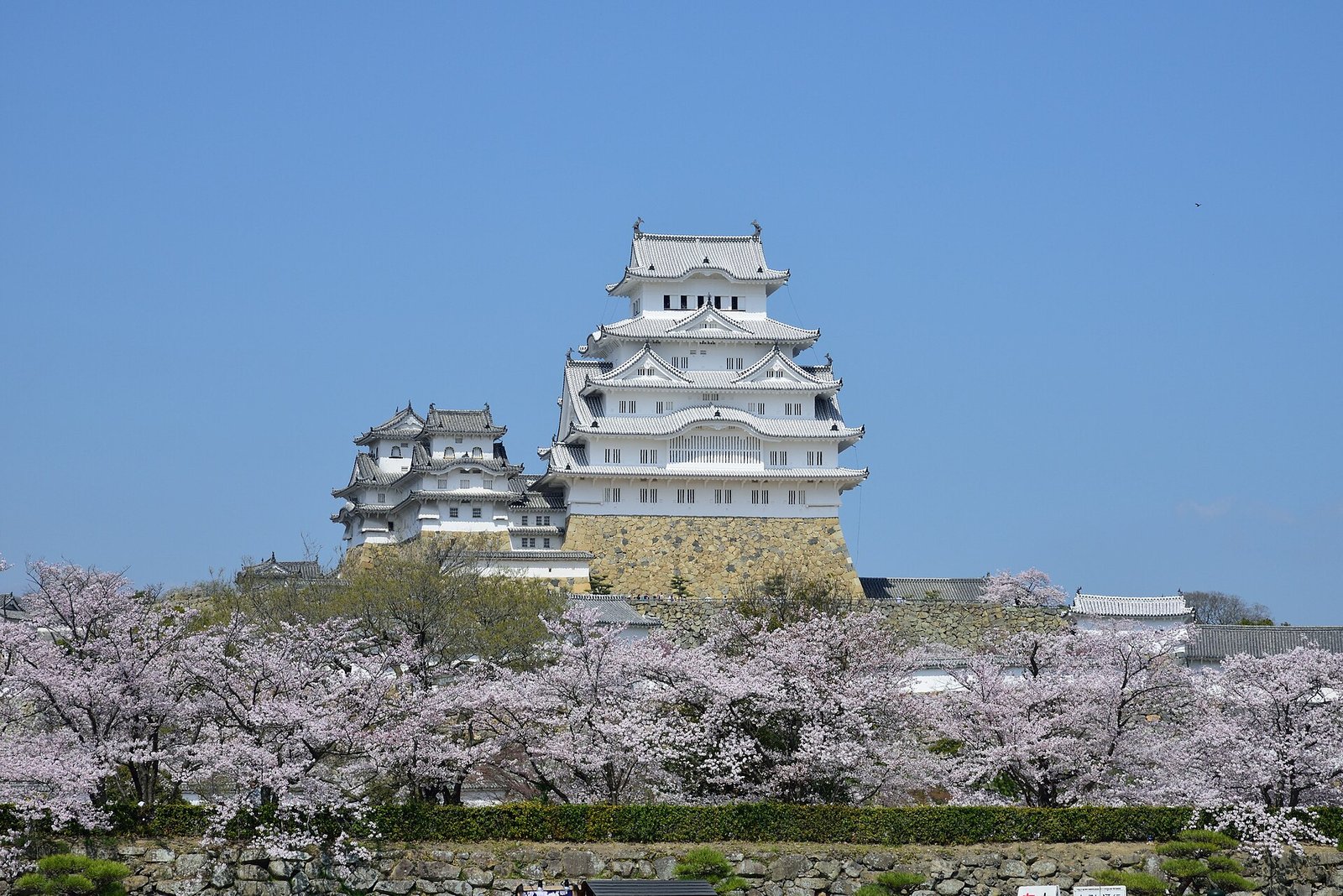
In spring, the white walls of Himeji Castle rise above more than 1,000 cherry trees in the castle grounds. It is also one of the easiest wins: an hour from Osaka by regular train, and a natural stop between Kyoto or Osaka and Hiroshima.
Admission fees changed on 1 March 2026, so check the castle’s official site for the current price before you go. Many of the best blossom views are in the grounds below the keep, so check which areas need a ticket before you queue.
- Peak: typically late March to mid April.
- Entry: the castle keep needs a ticket; fees changed in March 2026, so check the official site.
- Access: JR Special Rapid from Osaka, about 1 hour, covered by the JR Pass. The shinkansen from Shin-Osaka takes 30-45 minutes.
- Night lights: check the castle’s site for any night cherry blossom event in 2027.
- Crowd tip: be at the gate at opening, then photograph the blossoms from the grounds afterwards.
5. Chureito Pagoda (Yamanashi)
This is the classic photograph of Japan: a five-story red pagoda, a cloud of pink blossoms and the cone of Mt Fuji behind. It sits in Arakurayama Sengen Park in Fujiyoshida, which has around 650 cherry trees. You climb 398 steps (or a gentler zigzag path) from the shrine to the viewing deck above the pagoda.
Fuji is not guaranteed: spring haze often hides it by late morning, so go early. Check the Fujiyoshida City tourism site before you plan around a festival, because it is not held every year.
- Peak: typically mid April.
- Entry: an outdoor park; check the Fujiyoshida City tourism site for current access and parking.
- Access: the Fuji Excursion limited express runs direct from Shinjuku via Shimoyoshida to Kawaguchiko, about 1 hour 50 minutes to the terminus (4,010 yen, $26, to Shimoyoshida, reservations required). The JR Pass does not cover the Fujikyu section. Highway buses from Shinjuku are an alternative.
- Night lights: not a night-viewing spot.
- Crowd tip: arrive at sunrise, when Fuji is most often clear and the steps are quiet.
6. Tokyo (Chidorigafuchi, Meguro River, Shinjuku Gyoen)
You will almost certainly pass through Tokyo, and three spots cover the range. Chidorigafuchi is a moat beside the Imperial Palace with a promenade under a few hundred cherry trees, and you can rent rowboats in season. The Meguro River in Nakameguro has some 800 trees along a 3.8 km stretch, with paper lanterns lit after sunset during the bloom. Shinjuku Gyoen National Garden is the best spot for a picnic, with around 900 trees of about 70 varieties and a long season.
For more parks, including Ueno and Sumida, see our Tokyo cherry blossom spots guide.
- Peak: late March to early April. The long-term average first-bloom date in Tokyo is 24 March.
- Entry: Chidorigafuchi and Meguro River are free; Shinjuku Gyoen costs 500 yen ($3). Check the garden’s site for any advance booking rules on peak dates in 2027.
- Access: by subway or JR; an IC card such as Suica covers all three.
- Night lights: Chidorigafuchi was lit from 6pm between 26 March and 6 April 2026, and Meguro River’s lanterns come on after sunset.
- Crowd tip: rowboat queues at Chidorigafuchi get long, so go at opening on a weekday. Avoid Nakameguro on weekend evenings.
7. Takato Castle Ruins Park (Nagano)
Takato is the third of the “big three”, and the most distinctive. Its 1,500-plus trees, some more than 130 years old, are Takato kohigan-zakura, a local variety with small, reddish-tinted petals. Planted densely on the old castle site in the mountains of southern Nagano, they create a deeper pink canopy than almost anywhere else.
Takato is far from a shinkansen line, so it works best as an overnight trip.
- Peak: usually in April, a little after the big cities; check the Ina City bloom report.
- Entry: 600 yen ($4) for adults during the 2025 festival season, free outside it. Check the Ina City festival page for the 2027 rate.
- Access: highway buses from Busta Shinjuku reach Ina in about 3.5 hours. By train, take the Azusa limited express from Shinjuku to Okaya (about 2.5 hours), the local JR Iida Line to Inashi (about 60 minutes), then a local bus to Takato.
- Night lights: check the Ina City festival page for any evening light-up in 2027.
- Crowd tip: weekend traffic into Takato backs up badly at peak. Take the bus or arrive before 8am.
8. Kakunodate (Akita)
Kakunodate pairs blossoms with history better than anywhere else in the north. In the samurai district, more than 400 weeping cherries hang over black wooden fences and old residences, and 162 of them are designated national natural monuments. A short walk away, Somei Yoshino trees planted in 1934 form a 2 km tunnel along the Hinokinai River.
Kakunodate pairs naturally with Hirosaki on one late-April trip north.
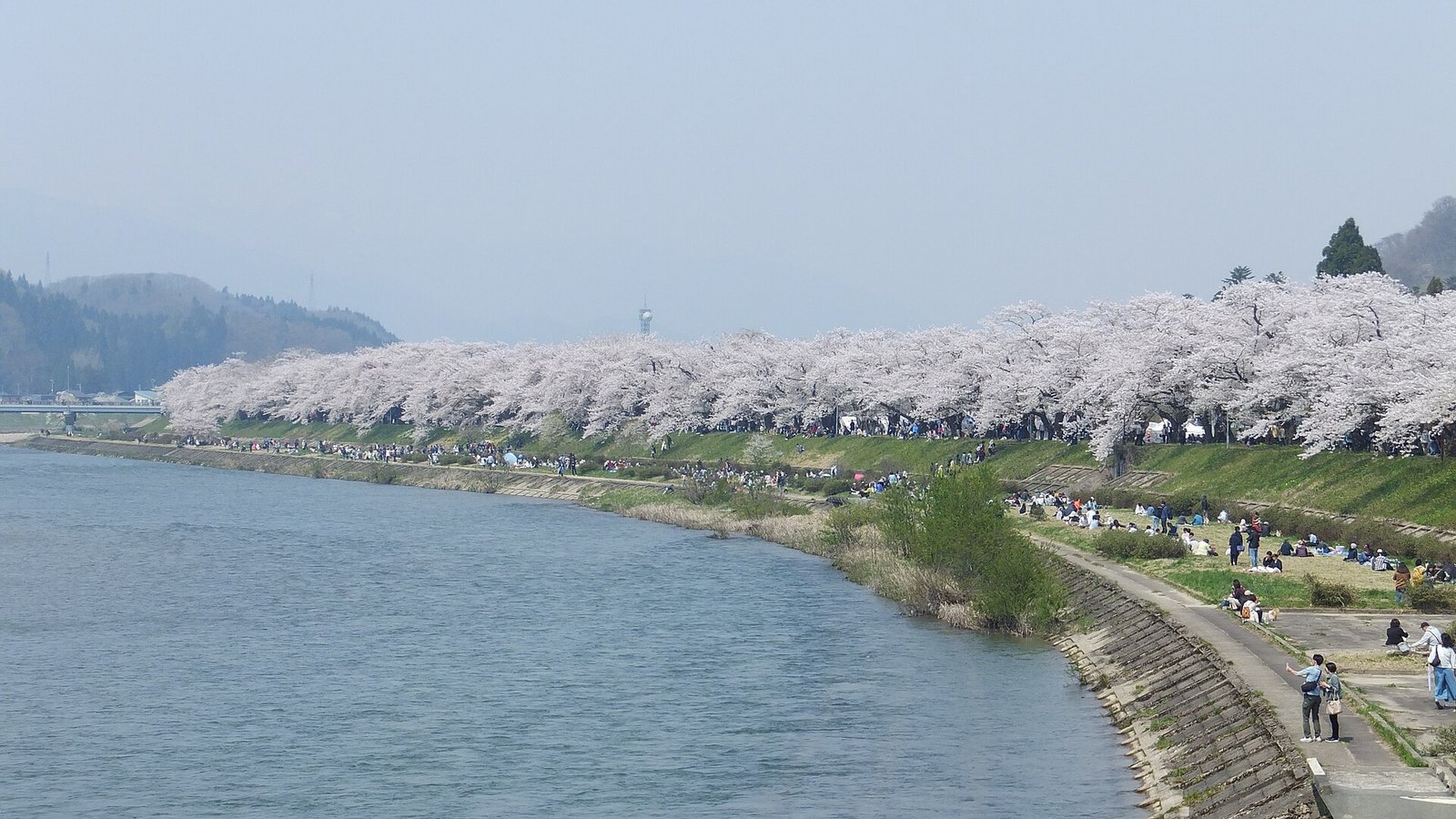
- Peak: typically late April to early May.
- Entry: free (some samurai houses charge).
- Access: the Akita Shinkansen Komachi runs direct from Tokyo in a little over 3 hours. Reserve seats as early as you can in blossom season. Covered by the JR Pass.
- Night lights: check the Senboku City tourism site for any evening light-ups in 2027.
- Crowd tip: tour buses arrive mid-morning. Walk the samurai street at 7am, then do the river.
9. Hitome Senbon Zakura (Miyagi)
The name means “a thousand cherry trees at a glance”, and it is close to literal. The trees line the Shiroishi River for about 8 km from Ogawara to the neighbouring town of Shibata. On the hill above, Funaoka Castle Ruins Park looks down over the river.
It is the easiest northern spot to reach from Tokyo, and a good day trip once Tokyo has finished.
- Peak: typically around mid April; dates vary from year to year.
- Entry: riverside walking paths; check the festival site for parking and any charges.
- Access: Hayabusa shinkansen to Sendai (about 90 minutes, around 11,400 yen, $74), then a JR Tohoku Line local train to Ogawara or Funaoka, both within walking distance of the river. Covered by the JR Pass.
- Night lights: the trees were lit from 6pm to 10pm during the 2026 festival.
- Crowd tip: walk upstream away from Ogawara Station; the crowds thin quickly.
10. Osaka (Osaka Castle Park, Kema Sakuranomiya, Japan Mint)
Osaka Castle Park’s best-known blossom spot is the ticketed Nishinomaru Garden below the keep, where about 300 trees, mainly Somei Yoshino, bloom together. North of the castle, Kema Sakuranomiya Park runs for about 4.2 km along the Okawa River with about 4,800 trees.
The Japan Mint’s cherry blossom passage is the late bonus. For a short period each spring, the Mint opens a 560 m path lined with more than 300 trees of over 100 varieties, many of them double-flowered yaezakura. You need an advance reservation through the Mint’s website. Our Osaka neighbourhood guide covers where to stay.
- Peak: late March to early April; check the Mint’s site for the 2027 passage dates.
- Entry: the park is free (some facilities inside charge); Nishinomaru Garden charges a small fee, with a special price during the evening illumination.
- Access: from Tokyo the Nozomi to Shin-Osaka takes about 2.5 hours; from Kansai Airport take the train into the city.
- Night lights: Nishinomaru Garden had evening illumination from 20 March to 12 April in 2026.
- Crowd tip: walk Kema Sakuranomiya early, then reach the castle as the crowds build.
Honourable mentions
- Hiroshima (Shukkeien Garden and Peace Memorial Park): blossoms along the river beside the Atomic Bomb Dome, and a landscape garden about 10 minutes’ walk from Hiroshima Station. Usually late March to mid April.
- Expo ’70 Commemorative Park (Osaka): some 5,500 cherry trees and lots of picnic space, with a festival from late March to early April.
- Ueno Park (Tokyo): about 800 trees in the park itself, and Tokyo’s liveliest hanami parties.
- Kawazu (Shizuoka): the early-blooming Kawazu-zakura flowers weeks before the main season; check the Kawazu Tourist Association for festival dates if your trip is early.
- Matsumoto Castle (Nagano): cherry trees around the black castle keep; check the castle’s official site for any spring light-up.
How to see several of these in one trip
Follow the bloom rather than fight it. Start in Tokyo or Kyoto in late March. Add Himeji and Osaka while Kansai is at peak, then move uphill to Yoshino or inland to Takato as the cities finish. If your trip runs into mid or late April, go north: Hitome Senbon Zakura, then Kakunodate and Hirosaki. A 7- to 14-day Japan Rail Pass can pay off on a Tokyo-Kansai-Tohoku loop because the northern shinkansen fares add up quickly.
To move fast between cities, send your suitcase ahead with a luggage forwarding service and travel with a day bag. For booking timelines, forecasts and hanami etiquette, see our cherry blossom season planning guide. For city-by-city bloom dates, see when cherry blossoms bloom in Japan. If your dates are still flexible, our best time to visit Japan guide compares spring with the other seasons.
Tips for US travelers
Most US flights land at Tokyo (Narita or Haneda) or Osaka (Kansai). A Tokyo arrival suits a Tokyo, Fuji, Tohoku plan; our Narita arrival guide covers getting into the city. A Kansai arrival suits Kyoto, Osaka, Himeji and Yoshino. Booking open-jaw (into Tokyo, out of Osaka, or the reverse) saves a backtrack.
Driving makes Takato and the Hitome Senbon Zakura area easier, but you need an International Driving Permit issued under the 1949 Geneva Convention, plus your US license. Japan does not accept permits issued under other conventions, so get yours at home before you leave. In the US, two organizations are authorized by the State Department to issue IDPs; AAA is one of them.
Tips for readers from Singapore, Australia, the UK and Canada
Singapore
The MOE March school holidays are set for 13 to 21 March 2027 (check the MOE calendar), which is usually a little early for Tokyo and Kyoto. Families may catch the very first blossoms rather than full bloom, so stay flexible and keep the last days for the latest-opening spots. If you plan to drive, AA Singapore is the sole issuer of International Driving Permits in Singapore.
Australia
Easter falls early in 2027 (Good Friday is 26 March), which lines up with the southern blooms. The NSW autumn school holidays (12 to 23 April 2027) fit the later picks better: Yoshino’s upper slopes, Takato, Hitome Senbon Zakura and, at the end, Kakunodate and Hirosaki. Australian IDPs are issued through the state motoring clubs, such as NRMA, RACV and RACQ, under the Australian Automobile Association.
United Kingdom
British Airways flies nonstop between Heathrow and Haneda; check JAL and ANA for their own London schedules. With Easter in late March 2027, school Easter holidays should overlap the Tokyo and Kyoto peak, but check your council’s term dates. In the UK, IDPs are issued over the counter at Post Office branches.
Canada
March break in Ontario is scheduled for 15 to 19 March 2027 (check your school board’s calendar), which is early for most of Japan. Treat it as a gamble on the first blossoms, or travel in early April instead. Check nonstop options to Tokyo from your nearest hub. The Canadian Automobile Association (CAA) is the only authorized IDP issuer in Canada.
Photography tips
- Go early: weekday mornings give soft light, clear paths and, at Chureito, the best odds of seeing Fuji.
- Use golden hour: the hour after sunrise and before sunset warms the pink, especially against white walls like Himeji’s.
- Find water: moats and rivers (Hirosaki, Chidorigafuchi, Hinokinai, Shiroishi) give you reflections and floating petals.
- Try night shots: illuminated trees look best just after dusk, when the sky still has some blue. Our night cherry blossom guide lists more lit-up spots.
A little culture before you go
Cherry blossom viewing took hold at the imperial court in Kyoto, where Emperor Saga held flower-viewing parties with sake and feasts under the blossoming trees. Today the blossoms stand for renewal and for how quickly beautiful things pass. For the history, science and symbolism, see our 18 cherry blossom facts.
What to pack
We chose these three from research, not hands-on testing, for the usual problems on a multi-stop blossom trip.
A compact, windproof umbrella is worth carrying because April weather in Japan changes fast, especially in the mountains and up north.
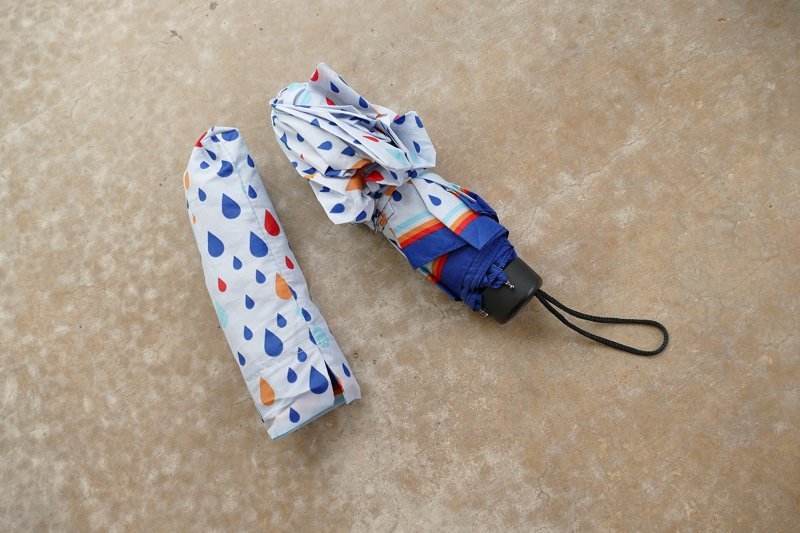
Compact folding umbrellas (item type, not the exact product). Photo: Kritzolina, CC BY-SA 4.0, via Wikimedia Commons
Repel Windproof Travel Umbrella
Compact auto open/close umbrella for sudden spring showers between blossom spots.
Check price on AmazonA slim power bank keeps maps, train apps and your camera going through a 12-hour day. Since 24 April 2026, Japan’s rules ban using power banks to charge devices on board and limit you to two per person, so pack it in your carry-on and check your airline’s limits.

A portable power bank (item type, not the exact product). Photo: Fastily, CC BY-SA 4.0, via Wikimedia Commons
Anker Nano Power Bank 10,000mAh (built-in USB-C cable)
Slim power bank (about 37 Wh) to keep maps and train apps running; Japan bans using power banks in flight.
Check price on AmazonA current guidebook helps fill the days between blossom spots. Check the publication date on the listing so you get the newest edition.

Travel guidebooks (item type, not the exact edition). Photo: Vyacheslav Argenberg, CC BY 4.0, via Wikimedia Commons
Lonely Planet Japan
The classic multi-week Japan guidebook; check the publication date on the listing for the latest edition.
Check price on AmazonFAQ
Where is the best place to see cherry blossoms in Japan?
For one dedicated trip, we rank Hirosaki Park first for its scale, castle setting and late bloom. For a first trip that also covers temples and cities, Kyoto is the best all-round choice, with Mt Yoshino an easy day trip from Osaka.
What are Japan’s three great cherry blossom spots?
Hirosaki Park in Aomori, Mt Yoshino in Nara and Takato Castle Ruins Park in Nagano are commonly grouped as Japan’s three best cherry blossom viewing spots. Lists vary, though, and some swap in other sites.
What is the best cherry blossom spot near Tokyo with Mt Fuji?
The Chureito Pagoda in Fujiyoshida, under two hours from Shinjuku on the Fuji Excursion train. It usually peaks a week or two after central Tokyo, and Fuji is clearest early in the morning.
Can I see cherry blossoms in late April or May?
Yes, if you go north. Hirosaki and Kakunodate typically peak in late April, and Kakunodate often runs into early May. Expect heavier crowds during Golden Week (29 April to 5 May 2027).
Is Kyoto or Tokyo better for cherry blossoms?
Kyoto has more variety and more traditional settings, so it photographs better. Tokyo has bigger parks and livelier hanami parties, and it is easier to reach on arrival. They usually peak within a few days of each other, so many travelers do both.
How many days do I need?
Allow 7 to 10 days to see four or five of these spots without rushing, and up to two weeks to follow the bloom from Kansai into Tohoku. Full bloom is brief at any one spot, so leave yourself some slack.