
Disclosure: this post may contain affiliate links. If you buy through them, Chasing Cherry Blossoms may earn a commission at no extra cost to you. Affiliate disclosure.
Tokyo on a Budget: Navigating the City Like a Pro – A Guide to Affordable Transportation in Japan’s Capital
Tokyo has a reputation for being expensive, but getting around doesn’t have to eat your travel budget. After plenty of trips, I’ve found that a little planning on transport saves a surprising amount of money. In this guide I’ll walk you through trains, subways, buses, bikes, taxis, discount passes and a few budget-friendly day trips, with prices updated for 2026-27.
Prices below are approximate and change from time to time, so please double-check official operator sites before you go.
Public Transportation in Tokyo: Your Ticket to Affordable Travel
Tokyo’s train and subway network is efficient, punctual and far cheaper than taxis or a rental car. Most single rides within central Tokyo start from around 150 JPY and rise with distance, and fares differ by operator; check the operator’s fare table or a route app for exact prices.
Trains and the JR Yamanote Line
The JR Yamanote Line loops around central Tokyo and connects hubs like Tokyo, Shinjuku, Shibuya, Ikebukuro and Ueno. It’s the easiest line to learn first, and it’s my go-to for sightseeing in the city centre.
Suica, Pasmo and IC Cards
Rather than buying paper tickets, use a rechargeable IC card such as Suica or Pasmo. You tap in and out at the gates, and the card also works on buses and at many convenience stores and vending machines. Cards from different regions are interchangeable across most of Japan’s transit systems. Note that physical card availability for visitors has been limited at times in recent years, so check what’s on sale when you arrive. Mobile versions are another option: iPhone users can add Suica or Pasmo in the Wallet app, and JR East’s Welcome Suica Mobile app is aimed at visitors, though Android support is more limited, so check the current situation before you travel.
Be aware that IC cards give you convenience rather than a discount, since fares are essentially the same as paper tickets (IC fares are a yen or so cheaper on some routes). The real savings come from skipping wrong-ticket mistakes and from passes (see below).
Navigating Tokyo’s Subway System: Tips and Tricks
The subway can feel overwhelming at first, with two main operators (Tokyo Metro and Toei) plus JR and private lines. A few habits make it easy:
- Study the map beforehand. Lines are colour-coded and stations have letter-and-number codes, which helps a lot when you can’t read the names.
- Use a navigation app. Google Maps or similar apps give real-time routes, platforms and transfer details. A mobile data connection or pocket Wi-Fi helps here.
- Tap in with your IC card. Transfers between Tokyo Metro and Toei lines cost a bit more than staying on a single operator, so a route that stays on one operator is often cheaper.
- Avoid rush hour (roughly 7:30-9:30 am on weekdays) if you’re carrying luggage.
Bus Travel in Tokyo: A Budget-Friendly Alternative
Buses are slower than trains, but they reach neighbourhoods that the rail network misses, and the views are better. Toei Bus operates a large network in the city, and many bus routes in central Tokyo charge a flat fare of about 210 JPY for adults (slightly less with an IC card).
Most buses accept IC cards, and many also accept cash in exact or near-exact change (they have a change machine on board). Board at the rear and pay at the front on flat-fare routes; on distance-based routes the process differs, so watch what other passengers do.
Exploring Tokyo on Foot: Free and Affordable Walking Tours
Walking is free, and it’s how I’ve found some of my favourite little shrines and cafés. Tokyo has many walking tours, some tip-based and some paid, and they’re a good way to learn the history and culture of an area.
- Asakusa: Senso-ji and the old-town streets around it.
- Harajuku: youth culture, Meiji Shrine and Takeshita Street.
- Shinjuku: neon streets, Golden Gai and the skyscraper district.
If you’d prefer a guide, look for tip-based or paid walking tours run by local organisations.
Biking in Tokyo: An Eco-Friendly and Budget-Friendly Option
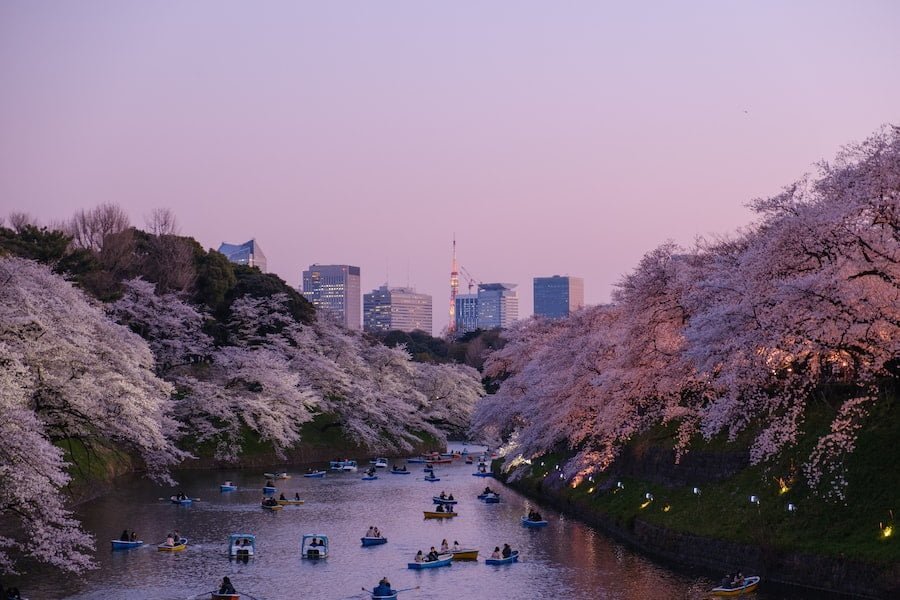
Renting a bike is a fun way to cover areas like the waterfront, the Imperial Palace loop or quiet residential neighbourhoods. Tokyo has bike-share services (such as Docomo Bike Share / Hello Cycling) with short-term rental rates, and there are also bike rental shops and guided cycling tours. Rates vary, so check the provider’s current prices.
A few rules to remember: ride on the left, don’t ride on the pavement except where permitted, don’t use headphones or a phone while riding, and park only in designated bike parking areas (illegally parked bikes get removed). Since April 2023, wearing a helmet is a legal “effort obligation” for all cyclists (without a penalty), so it’s worth wearing one.
Taxis in Tokyo: When to Use Them and How to Save Money
Taxis are a lot more expensive than trains. Starting fares are typically around 500 JPY (Tokyo taxi fares were revised upward in 2026) and rise with distance and time, with a surcharge at night. They make sense when you have heavy luggage, are travelling in a group of three or four, or need to get somewhere after the last trains (which usually stop around midnight).
To save money, split the fare in a group, and use a taxi app such as GO or Uber to book a ride; promotions come and go, so check what’s available. The “share taxi” idea in the older version of this post is not something I’d rely on as a tourist, so I’ve removed it. Most taxis accept credit cards and IC cards, but it’s good to have some cash as a backup.
Tokyo’s Discount Transportation Passes: Which One is Right for You?
Tokyo Subway Ticket
The Tokyo Subway Ticket gives unlimited rides on Tokyo Metro and Toei Subway lines for 24, 48 or 72 hours. Tokyo Metro currently lists it at 1,000 JPY (24 hours), 1,500 JPY (48 hours) and 2,000 JPY (72 hours) for adults, with children at half price, and it’s sold to visitors with a passport. It’s good value if you’re riding the subway several times a day.
JR Pass
The JR Pass (Japan Rail Pass) covers JR trains across Japan, including most Shinkansen except the fastest Nozomi and Mizuho services. After the big price increase in October 2023, a 7-day ordinary pass bought on the official site costs 50,000 JPY, with 14-day and 21-day versions at 80,000 and 100,000 JPY (Green car passes cost more, children aged 6-11 pay half, and exchange orders from overseas agents are slightly higher). Nozomi and Mizuho trains need an extra special ticket. At those prices it only pays off if you’re making several long-distance trips in a short period. For a Tokyo-focused trip with a day trip or two, you’re usually better off buying individual tickets or a regional pass. It’s worth running your itinerary through a fare calculator before buying. If it works out, buy it from the official site or an authorised agent.
Choosing a Pass
Think about where you’re going and how often you’ll ride. Some passes only cover certain lines or areas, and for a few days of mostly central sightseeing, a simple IC card plus a Tokyo Subway Ticket is often the cheapest combination.
Day Trips from Tokyo: Affordable Excursions Outside the City
Yokohama
Yokohama is a short train ride from Tokyo (roughly 30 minutes from Tokyo or Shibuya on a direct train). You can visit the Red Brick Warehouse, walk around the Minato Mirai waterfront, and look out from the Landmark Tower.
Kamakura
Kamakura is known for its temples and shrines, including the Great Buddha (Kotoku-in) and Tsurugaoka Hachimangu Shrine, and for Yuigahama beach. Get there by JR from Tokyo or Shinagawa, typically about an hour. The Enoden line is a scenic way to see the coast.
If you’d like to extend your stay and see more of the region, consider a night or two outside Tokyo.
Cherry Blossom Season: A Quick Note on Timing
If you’re planning a spring trip, Tokyo’s cherry blossoms typically bloom from late March to early April, and forecasts are published each year, so check them closer to your dates. Hotels and trains get busy during this period, so book early.
Enjoying Tokyo Without Breaking the Bank
Getting around Tokyo cheaply comes down to picking the right tool for each day: an IC card for everyday rides, a Tokyo Subway Ticket on heavy subway days, buses and bikes for variety, and taxis only when you really need them. Be careful with the JR Pass, as it’s much less of a bargain than it used to be.
If you enjoy cultural experiences, you might also like my article on the beauty of the kimono and traditional Japanese clothing.
FAQ
What is the cheapest way to get around Tokyo?
Public transport, meaning trains, subways and buses, is the cheapest option for most visitors, and walking is free.
What is the best way to pay for public transportation in Tokyo?
An IC card like Suica or Pasmo, or a mobile version on your phone. It works on trains, subways and buses and at many shops. It’s convenient rather than discounted.
Is the JR Pass worth it in 2026-27?
Usually only if you’re making several long-distance trips. After the October 2023 price rise, a 7-day ordinary pass is 50,000 JPY on the official site, so compare it against individual tickets first.
Are taxis expensive in Tokyo?
Yes, they cost much more than trains, especially in traffic and late at night. They’re best used for luggage, groups or late-night trips.
Do I need to tip in Tokyo?
No. Tipping isn’t customary in Japan and can cause confusion.
What are some free things to do in Tokyo?
Visit shrines and temples, walk through parks and gardens, browse markets and shopping streets, and check museums and attractions for free-admission days, as policies vary by venue.
Comment (2)