
Educational / informational only. This page is not health, medical, or safety advice and is not a substitute for professional guidance. Regulations and agency guidance can change — do your own research and check current local food-safety advice before deciding how to use any bottle.
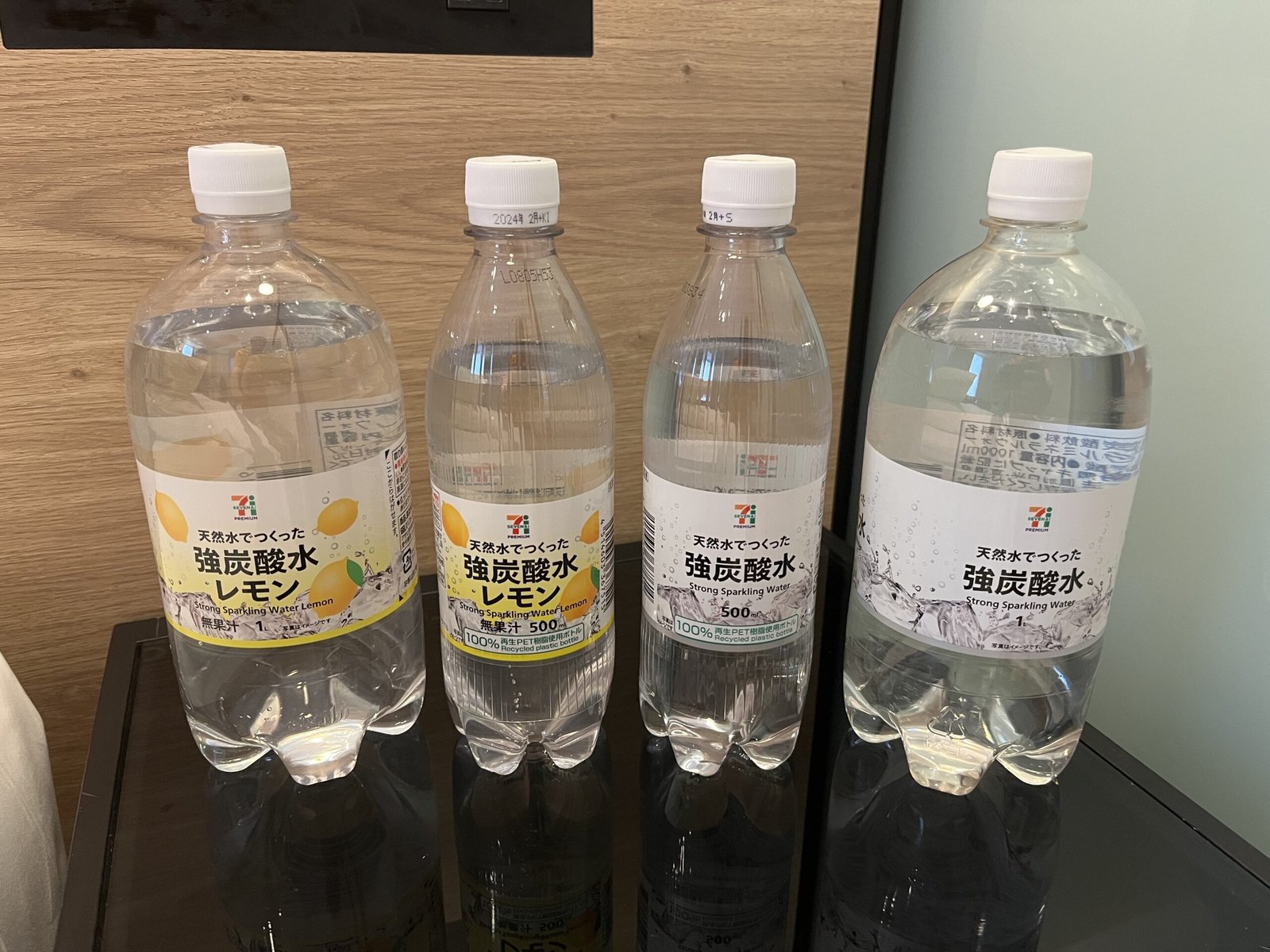
I bought Japan 7-Eleven Premium (7-i) Strong Sparkling Water — plain and lemon — in clear PET bottles with white caps (the kind that fog with condensation the second you leave the konbini fridge aisle), and I have been refilling the large bottle ever since. The lineup in the photo below is the same family: 1L and 500ml Strong Sparkling Water (plain + lemon). Some 500ml labels even call out “100% Recycled plastic bottle” — that is still food-contact PET (#1), not a different or “toxic” polymer; recycled content does not change the polymer family. The size is fantastic for everyday water: one fill covers a desk day, a train hop, or a long walk without buying three small bottles. Then a colleague told me the plastic is toxic and I should stop using it for filling and drinking. So I dug into what PET (#1) bottles actually are, what regulators say about reuse, and whether “toxic” holds up.
Quick answer: A typical Japan soft-drink bottle like this is polyethylene terephthalate (PET / PETE, recycling code #1). PET is a food-contact plastic; it is not made with BPA, and reputable agencies (including Health Canada and Germany’s BfR) say there is no evidence that ordinary cold-water reuse of PET releases harmful levels of “toxins.” The stronger, evidence-based caution is hygiene: bacteria from your hands and mouth can grow if the bottle stays damp and warm. Wash it, dry it fully, keep liquids cool, avoid dishwashers and hot fills, and retire the bottle when it is scratched, cloudy, warped, or smelly. A purpose-made reusable bottle is still smarter for years of daily use — but the absolute “toxic, never reuse” claim overstates the chemical risk. This article is educational, not medical advice.
What my Japan 7-Eleven bottle is made of
These are Japan 7-Eleven Premium (7-i) Strong Sparkling Water bottles — plain and lemon — sold as soft drinks. Look at the bottom or label and you will see the triangular arrows with a 1, or the Japanese PET identification mark. That means polyethylene terephthalate — the same family of plastic used for water and sparkling soft drinks worldwide. On some 500ml sizes the front label also says “100% Recycled plastic bottle”; recycled PET is still PET (#1), not a different polymer.
In Japan, beverage PET bottles (清涼飲料 / soft drinks, including carbonated drinks sold at 7-Eleven, Lawson, and FamilyMart) fall under designated PET bottle rules for recycling identification. Caps and labels are often marked as other plastics and sorted separately. None of that means the bottle was designed as a lifetime thermos — these remain single-use-style PET bottles designed for beverages; manufacturers label many for single fill — but chemically it is still food-grade PET, not polycarbonate, and not the BPA story many people remember from older hard sports bottles. Reuse caveats stay the same: hygiene, cool liquids only, and discard when worn.
Colleague claim vs evidence: is reused PET “toxic”?
Here is a plain comparison of the common scare lines against what public health and food-safety sources actually say.
| Claim | What the evidence / agencies say | Practical takeaway |
|---|---|---|
| “The plastic is toxic” | PET is approved for food contact. Health Canada reports no scientific evidence that reusing PET contributes harmful chemical toxin levels to water; the agency’s main reuse concern is microbes if you do not clean properly. | Cold, careful reuse is not the same as “poison plastic.” |
| “It has BPA” | BPA is not used to manufacture PET. BfR and Health Canada both separate PET from polycarbonate BPA bottles. | Do not confuse #1 PET with old #7 polycarbonate. |
| “Phthalates / DEHP leach out” | Hong Kong’s Centre for Food Safety: plasticisers such as DEHP/DEHA are not needed for PET production; that leaching allegation is unfounded. | Phthalate panic usually belongs to other plastics. |
| “Antimony poisons the water” | Trace antimony (a PET catalyst) can migrate; measured levels in bottled drinks are typically far below the WHO drinking-water guideline of 0.02 mg/L (20 µg/L). Migration rises with heat and time. | Keep the bottle cool; do not bake it in a hot car for days. |
| “Never reuse single-use bottles” | Agencies often discourage long, casual reuse of narrow-neck disposables mainly for cleaning difficulty and bacteria — not because PET suddenly becomes toxic after fill #2. | Wash, dry, inspect; upgrade to a wide-mouth reusable for long-term use. |
Industry groups such as NAPCOR also state that PET itself is not a danger when refilled and that commercial refillable PET soft-drink systems have operated for years with industrial washing. Treat industry sources as one voice among regulators, not the final word — but they align with Health Canada and CFS on the core chemical point.
What actually goes wrong when you reuse a PET bottle
1. Bacteria and biofilm (the real everyday risk)
Once you drink from the bottle, saliva, skin, and air introduce microbes. Warm rooms and leftover water give them a place to multiply. Health Canada therefore prefers wide-neck bottles you can scrub with hot soapy water. Hong Kong CFS and CHP advice is the same idea: wash thoroughly, air-dry completely, do not share bottles, and do not leave damp bottles sitting around.
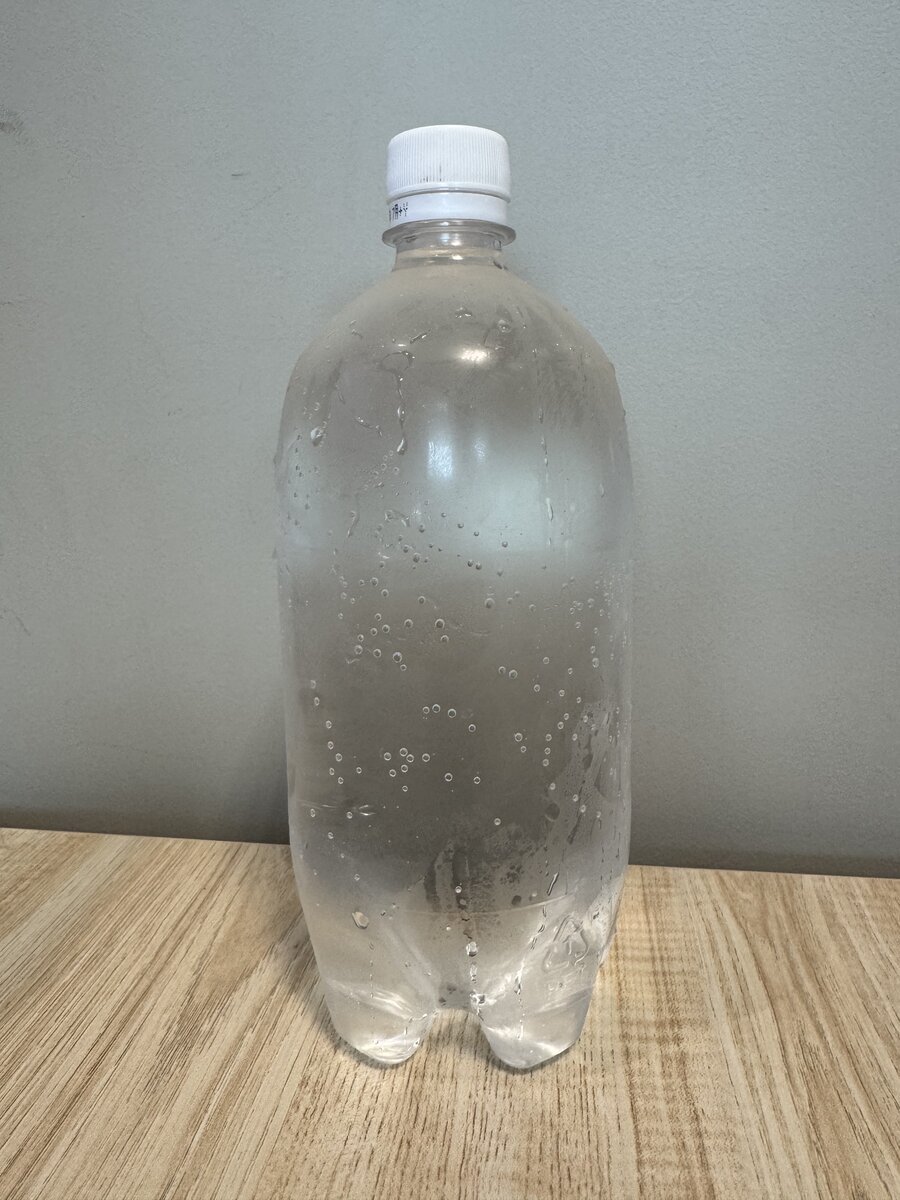
My 2L 7-Eleven bottle has a fairly narrow neck — fine for pouring, awkward for scrubbing the shoulder. That is why I rinse often, let it dry upside-down, and do not treat it as a forever bottle.
2. Heat, sun, dishwasher, and hot drinks
Chemical migration from plastics generally increases with temperature and contact time. CFS notes PET can physically deform around 70°C, so hot tea, coffee, or a dishwasher cycle are the wrong jobs for this bottle. Direct sun on a full bottle is also a bad habit — not because it instantly becomes “toxic,” but because heat drives migration and can change taste and smell.
I refill with cool tap or filtered water only. No car dashboard storage. No dishwasher.
3. Scratches, cloudiness, smell, and wear
Single-use PET is thinner than a travel flask. Scratches and haze make cleaning harder and are a good discard signal. If the bottle smells permanently, warps, cracks, or feels sticky inside after washing, retire it. Microplastic shedding from abraded plastic is an active research area; even without dramatic headlines, a scratched bottle is past its best.
4. Carbonated original vs still refills
The bottle was built for sparkling soft drink. Refilling with still water is the “like-for-like” water use CFS recommends (do not switch a water bottle to vinegar, oil, or harsh chemicals). I am not trying to re-carbonate at home; still water only.
When I discard a konbini PET bottle
- Cloudy, heavily scratched, cracked, or warped
- Persistent smell after washing and drying
- It held something other than water / soft drink
- It went through heat (dishwasher, hot fill, long sun bake) and no longer looks sound
- I simply want a cleaner long-term habit → switch to a wide-mouth reusable
Why travellers still love a big konbini bottle
Japan’s scarce public rubbish bins and excellent konbini network shape daily hydration. Buying one large PET drink, finishing it, then refilling from the hotel sink or a public fountain cuts waste and cost compared with a trail of 500 ml bottles — useful on a budget Osaka day or a packed train itinerary. Vending machines are everywhere too (see our vending-machine guide), but a 2L desk bottle at home or in the hotel still wins for volume.
When you finally recycle in Japan, local rules usually want the bottle rinsed, often with cap and label removed, and crushed — the same PET stream that makes Japan’s recycling culture famous.
So… was my colleague right?
Partly on caution, not on chemistry. Absolute “this plastic is toxic, stop drinking from it” does not match what Health Canada, Hong Kong CFS, or Germany’s BfR report about PET and cold-water reuse. The fairer advice is: PET is not BPA plastic; chemical leaching under cool, short-term reuse is not shown to hit harmful levels in the agency summaries above; clean it properly; avoid heat; and graduate to a bottle designed for reuse if this becomes a years-long habit.
I am still using mine for cool water, with regular washes — and I will toss it the day it clouds or smells. That is a hydration and hygiene decision, not a panic decision.
Educational / informational summary only. This is not health, medical, or safety advice and is not a substitute for professional guidance. If you have a specific health condition or concern about plastics exposure, talk to a qualified clinician or local food-safety authority. Regulations and guidance can change — do your own research.
FAQ
Is a Japan 7-Eleven soft-drink bottle PET?
Yes — Japan 7-Eleven Premium (7-i) Strong Sparkling Water (plain and lemon) uses clear PET (#1). Check the recycling mark on the base or label. Some 500ml labels also say “100% Recycled plastic bottle”; that recycled content is still PET, not a different plastic.
Does reusing a PET bottle release BPA?
No — BPA is not used to make PET. BPA concerns belong mainly to polycarbonate and some other plastics, not standard #1 water and soft-drink bottles.
What is the biggest risk of refilling a disposable bottle?
Bacterial growth from incomplete cleaning and warm, damp storage — not a sudden dump of “toxins” into cold water.
Can I put hot coffee in my konbini PET bottle?
No. PET can deform around 70°C. Cool liquids only.
Is leaving a PET bottle in a hot car dangerous?
Heat increases migration and can ruin taste. Do not store drinking water in a baking car as a habit. Agency and study data still place typical antimony levels under drinking-water guidelines in normal conditions; heat is still a reason to be sensible, not theatrical.
Should travellers bring a reusable bottle to Japan?
Yes, if you can. A wide-mouth reusable is easier to clean. A big konbini PET bottle remains a practical backup for short trips — especially when you want volume without buying many small bottles. Pair it with konbini snacks and budget Tokyo eats and you will hydrate for less.
When should I throw the bottle away?
When it is scratched, cloudy, warped, cracked, or smelly, or after any heat damage. Recycle according to local rules.
