
As an Amazon Associate, Chasing Cherry Blossoms earns from qualifying purchases. We may also earn from other affiliate links on this page at no extra cost to you.
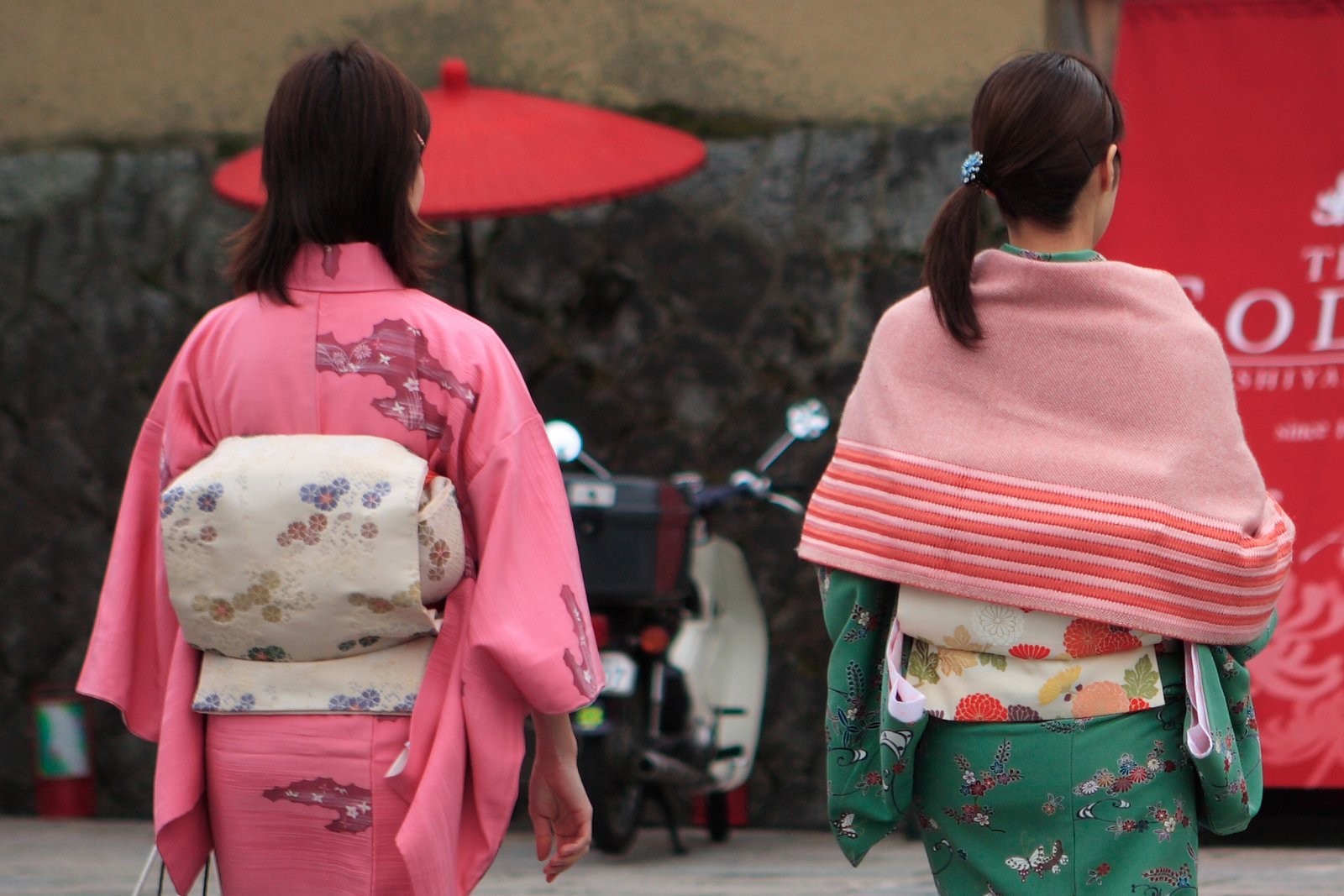
Few things say “Japan” quite like a kimono. You will see them on a quiet Kyoto lane at dusk, at a shrine in November when small children are dressed up for Shichi-Go-San, and in their thousands each January on Coming of Age Day. This guide covers what the kimono actually is, the main types, how it is worn, and how to rent one yourself.
Quick answer: A kimono (着物) is Japan’s traditional T-shaped wrapped robe, tied with a wide sash called an obi. A yukata is the light, casual cotton version worn in summer and at onsen inns. Always wrap the left side over the right (right over left is how the dead are dressed). Basic rental plans in Kyoto and Asakusa usually cost about 3,000-5,000 yen, more with hair styling or a premium kimono. And yes, visitors are welcome to wear one.
Map: kimono rental areas and kimono museums in this guide
- Ninenzaka (Higashiyama, Kyoto) – Stone-paved slope of old wooden shops, the classic kimono-strolling route towards Kiyomizu-dera. Directions
- Sannenzaka (Higashiyama, Kyoto) – Stepped lane up to Kiyomizu-dera, with many kimono rental shops nearby. Directions
- Yasaka Shrine (Gion, Kyoto) – Landmark at the heart of Gion; many rental shops sit around Gion-Shijo and Yasaka. Directions
- Senso-ji Kaminarimon (Asakusa, Tokyo) – Tokyo's best-known kimono rental area, with shops clustered around Senso-ji's front gate. Directions
- Higashi Chaya District (Kanazawa, Ishikawa) – Preserved teahouse district with kimono rental shops close by. Directions
- Toki no Kane bell tower (Kawagoe, Saitama) – Landmark of Kawagoe's 'Little Edo' warehouse district, an easy kimono day trip from Tokyo. Directions
- Nishijin Textile Center (Kyoto) – Free exhibitions on Nishijin-ori silk brocade, shops and bookable hands-on experiences. Directions
- Itchiku Kubota Art Museum (Lake Kawaguchi, Yamanashi) – Museum of Itchiku Kubota's tsujigahana-dyed kimono, including his 'Symphony of Light' series. Directions
- Tokyo National Museum (Ueno, Tokyo) – Large collection of Edo-period kosode; textiles rotate through the Honkan galleries. Directions
What is a kimono?
The word kimono is written 着物: ki from kiru (“to wear”) and mono (“thing”). Literally, it means “thing to wear”, and for a long time it simply meant clothing.
Today it refers to a specific garment: a straight-seamed robe made from long, narrow panels of fabric, with wide sleeves, wrapped around the body and held in place with ties and an obi. Unlike Western tailoring, a kimono is flat and largely unshaped. The fit comes from how it is folded, tucked and tied on the body.
A short history
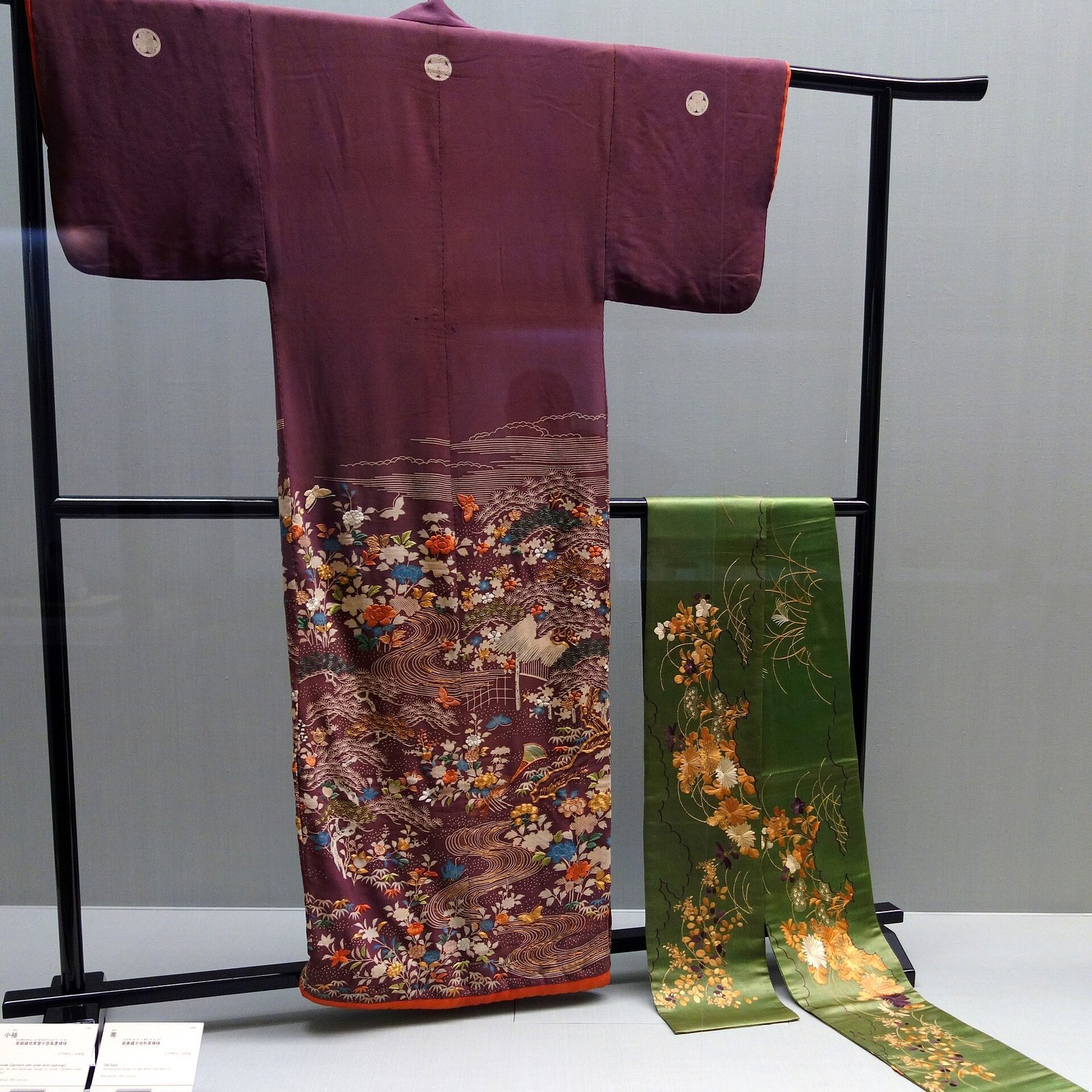
The kimono’s direct ancestor is the kosode (“small sleeve”, named for the small wrist opening). In the Heian period (794-1185), court aristocrats wore the kosode as a plain undergarment beneath many layers of robes.
Over the following centuries the outer layers fell away, and by the Muromachi period (1336-1573) the kosode had become the main outer garment for most people. During the Edo period (1603-1868) it settled into roughly the proportions we know today. Merchants in cities like Edo and Kyoto spent heavily on dyed and embroidered kosode, and techniques such as yuzen dyeing developed in Kyoto.
The word “kimono” for this specific garment only took hold in the late Edo and Meiji eras (1868-1912). As Western clothes arrived, Japanese began separating yofuku (Western clothing) from wafuku (Japanese clothing). Over the 20th century, Western dress became everyday wear and the kimono shifted to ceremonies, hobbies and special days.
Types of kimono
Kimono follow a formality scale, much like the difference between a tuxedo, a suit and jeans. Pattern placement, sleeve length and the number of family crests (kamon) all matter. Sources differ a little on the middle ranks, but this is the broad picture:
| Type | Formality | What it looks like | Typically worn |
|---|---|---|---|
| Kurotomesode (黒留袖) | Most formal (married women) | Black, five crests, pattern only below the waist | By mothers and close female relatives of the bride and groom at weddings |
| Furisode (振袖) | Most formal (young unmarried women) | Very long, swinging sleeves, bold all-over designs | Coming of Age Day, weddings as a guest, formal parties |
| Irotomesode (色留袖) | Formal | Like kurotomesode, but on a coloured background | Weddings and formal ceremonies |
| Homongi (訪問着) | Semi-formal to formal | Pattern flows across seams over the shoulders, sleeves and hem | Weddings as a guest, formal tea ceremonies, parties |
| Tsukesage (付け下げ) | Semi-formal | Similar to homongi, but motifs stay within each panel | Parties, tea ceremonies, smart outings |
| Iromuji (色無地) | Semi-formal (more formal with a crest) | A single solid colour, no dyed pattern | Tea ceremonies, school ceremonies |
| Komon (小紋) | Casual | Small repeating pattern all over | Lunches, theatre, shopping, everyday outings |
| Tsumugi (紬) | Casual | Sturdy silk woven from pre-dyed threads | Everyday wear, strolling |
| Yukata (浴衣) | Most casual | Unlined cotton or cotton-linen, worn without layers | Summer festivals, fireworks, onsen inns |
Men’s kimono are much simpler. The most formal outfit is a black kimono with five crests, worn with a crested haori jacket and striped hakama. Everyday men’s kimono are usually plain, subdued colours.
Rental shops mostly offer casual komon-style kimono, often in easy-care polyester. Furisode and homongi are usually premium plans.
Yukata vs kimono
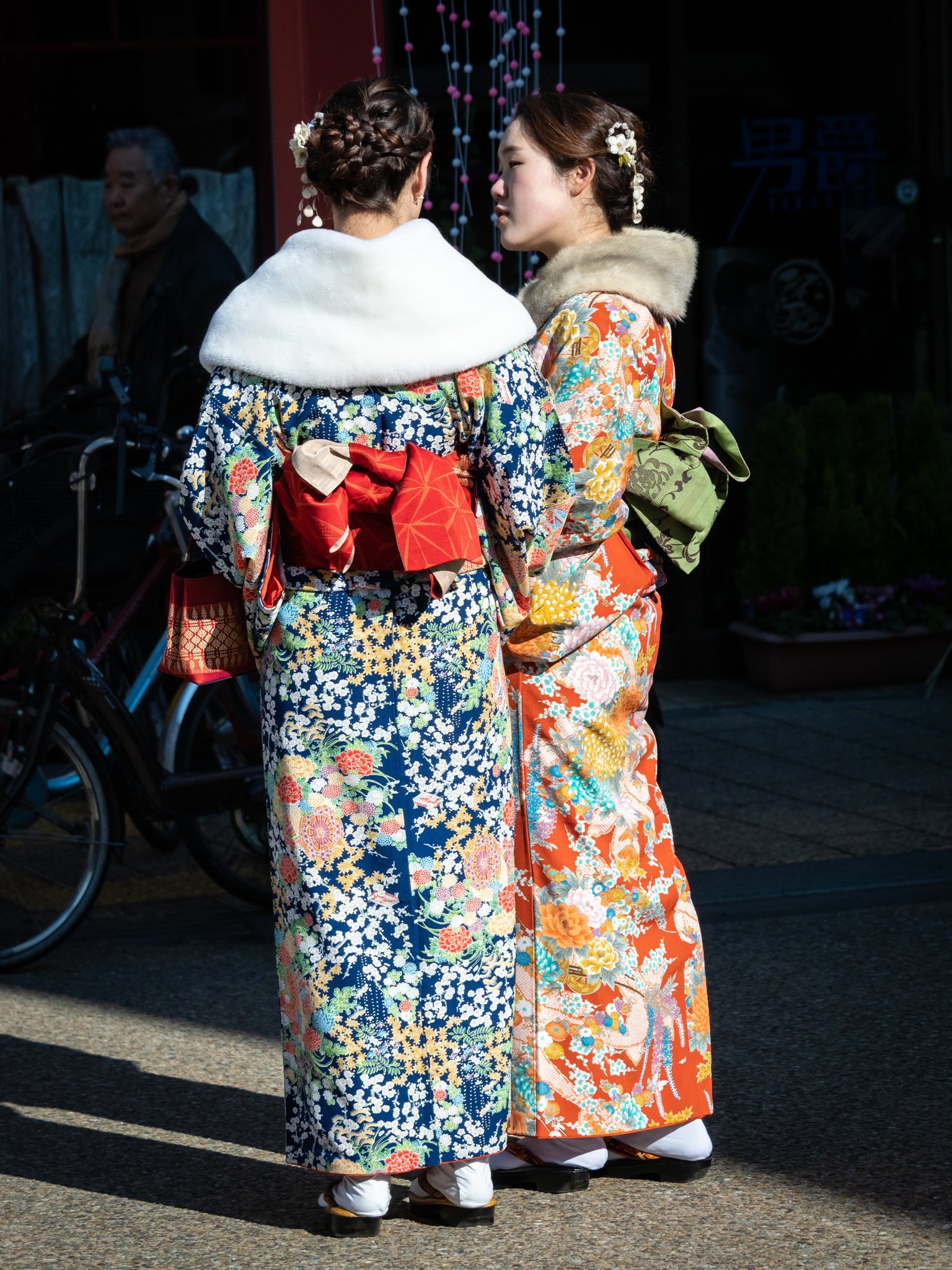
The yukata is a type of kimono, but the most casual one. The key differences:
- Fabric: yukata are usually cotton or a cotton-linen blend. Kimono are often silk, wool or synthetics.
- Layers: a yukata is worn over simple underwear with no nagajuban (under-kimono), so you won’t see a second collar at the neck.
- Feet: yukata go with bare feet and wooden geta. Kimono are worn with white tabi socks and zori.
- When: yukata are for summer, festivals and relaxing. Wearing one to an indoor formal event would be a faux pas.
Yukata started out as bathrobes, and they still serve that role at ryokan. Most inns lay out a yukata for each guest to wear to the bath, around the inn and often out on the streets of an onsen town. In Western-style hotels, the robe provided is usually meant only for your room and the bath. Our onsen etiquette guide covers the rest of the bathing rules.
Other traditional Japanese clothing
Several garments get lumped in with “kimono” by Western shops, but they are separate items.
Hakama
Hakama are wide, pleated trousers or a divided skirt tied over a kimono at the waist. They are not a type of kimono. Men wear them for formal occasions and in martial arts such as kendo, aikido and kyudo. Women’s hakama date from the Meiji era, when they were adopted as a practical school uniform for girls. Today, women in a short-sleeved kimono and hakama, often with boots, are a common sight at university graduation ceremonies in March.
Haori
A haori is a hip- or thigh-length jacket worn over a kimono. It is left open at the front and loosely tied with cords. Men’s formal haori carry family crests, and the linings are sometimes beautifully decorated.
Jinbei
Jinbei are two-piece summer loungewear: a short wrap-over top tied with strings, plus matching shorts. They were originally men’s wear but are now worn by everyone, including children. You’ll see them at home, at summer festivals and at some inns.
Happi and samue
Happi are straight-sleeved festival coats, often printed with a shop or neighbourhood crest. They are the jackets you’ll see on people carrying portable shrines at matsuri. Samue are simple work clothes (jacket and trousers) traditionally worn by Buddhist monks for temple chores, and now popular as comfortable home wear.
What about “kimono cardigans” and “duster kimonos”?
Those are Western fashion terms for loose open-front robes and cover-ups. They borrow the shape of the sleeves, but they aren’t Japanese garments and you won’t find them in a Japanese kimono shop.
Kimono accessories
- Obi (帯): the sash. Women’s obi can be long and stiff and tied in elaborate bows at the back (the taiko knot is the most common). Men’s obi are narrow and tied low on the hips.
- Obiage and obijime: the obiage is a silk scarf tucked along the top edge of the obi. The obijime is a braided cord tied around the middle of the obi to hold the knot in place.
- Haneri: the replaceable collar on the under-kimono that shows at the neckline.
- Tabi (足袋): ankle socks with a split between the big toe and the others, so they work with thonged sandals. White tabi are standard with formal kimono.
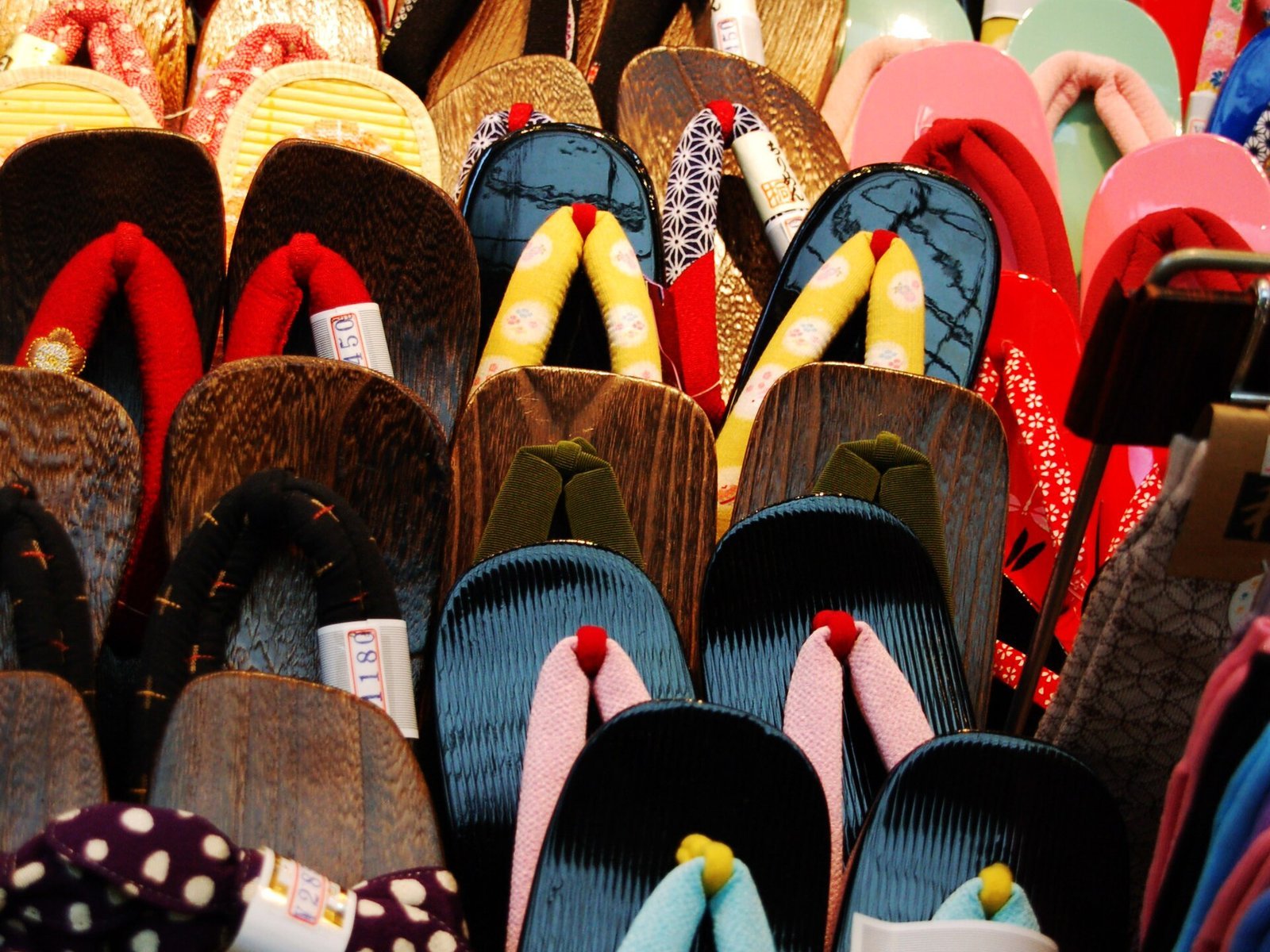
- Zori (草履): flat, thonged sandals with a smooth sole, worn with kimono.
- Geta (下駄): raised wooden sandals, worn with yukata and casual outfits. They clack on the pavement and take a little practice.
- Kanzashi (簪): hair ornaments, from simple pins and combs to dangling silk flowers.
- Kinchaku: a small drawstring bag, since kimono don’t have pockets (although the sleeves and the front fold can hold a phone or tissues).
If you bring home a pair of zori or geta, split-toe tabi socks make them far more comfortable to wear outside yukata season.
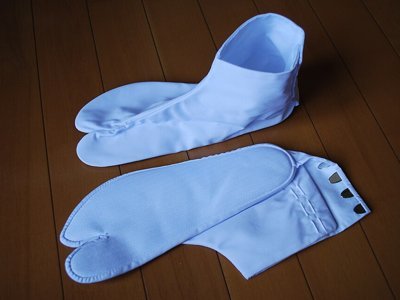
Tabi socks (item type, not the exact product). Photo: katorisi, CC BY-SA 3.0, via Wikimedia Commons
Cotton Split-Toe Tabi Socks (3 pairs)
Split-toe socks that make zori or geta comfortable to wear, even outside yukata season.
Check price on AmazonHow to wear a kimono
Professional dressing is called kitsuke, and plenty of Japanese people take classes to learn it. You won’t need to dress yourself at a rental shop, but it helps to know what’s going on.
- Underwear layer: a thin cotton top called a hadajuban and a wrap skirt (susoyoke), or a one-piece version. These soak up sweat and protect the kimono.
- Nagajuban: the under-kimono, whose collar shows as a neat white or coloured line at the neckline.
- Padding: towels or pads may be tied around the waist to make the body more cylindrical, so the obi sits flat.
- The kimono: wrapped left side over right, adjusted for length (women’s kimono are folded up at the waist), and tied with cords.
- The obi: wrapped and tied, then secured with the obiage and obijime.
Left over right, always. The left front panel goes on top for everyone, men and women alike. A handy check: if you can slip your right hand into the front of the kimono, it’s correct. Right over left is reserved for dressing the deceased, so getting it wrong is the one mistake people will notice.
What about bras? The kimono looks best on a straight, flat silhouette, so push-up or underwired bras tend to work against it. Kimono guides suggest a dedicated kimono (wafuku) bra if you have one, otherwise a soft non-wired or sports bra that flattens rather than lifts, in a plain light colour that won’t show at the collar. Seamless underwear avoids visible lines. Rental shops supply the hadajuban and nagajuban, so ask yours what to wear underneath when you book.
When people wear kimono in Japan today
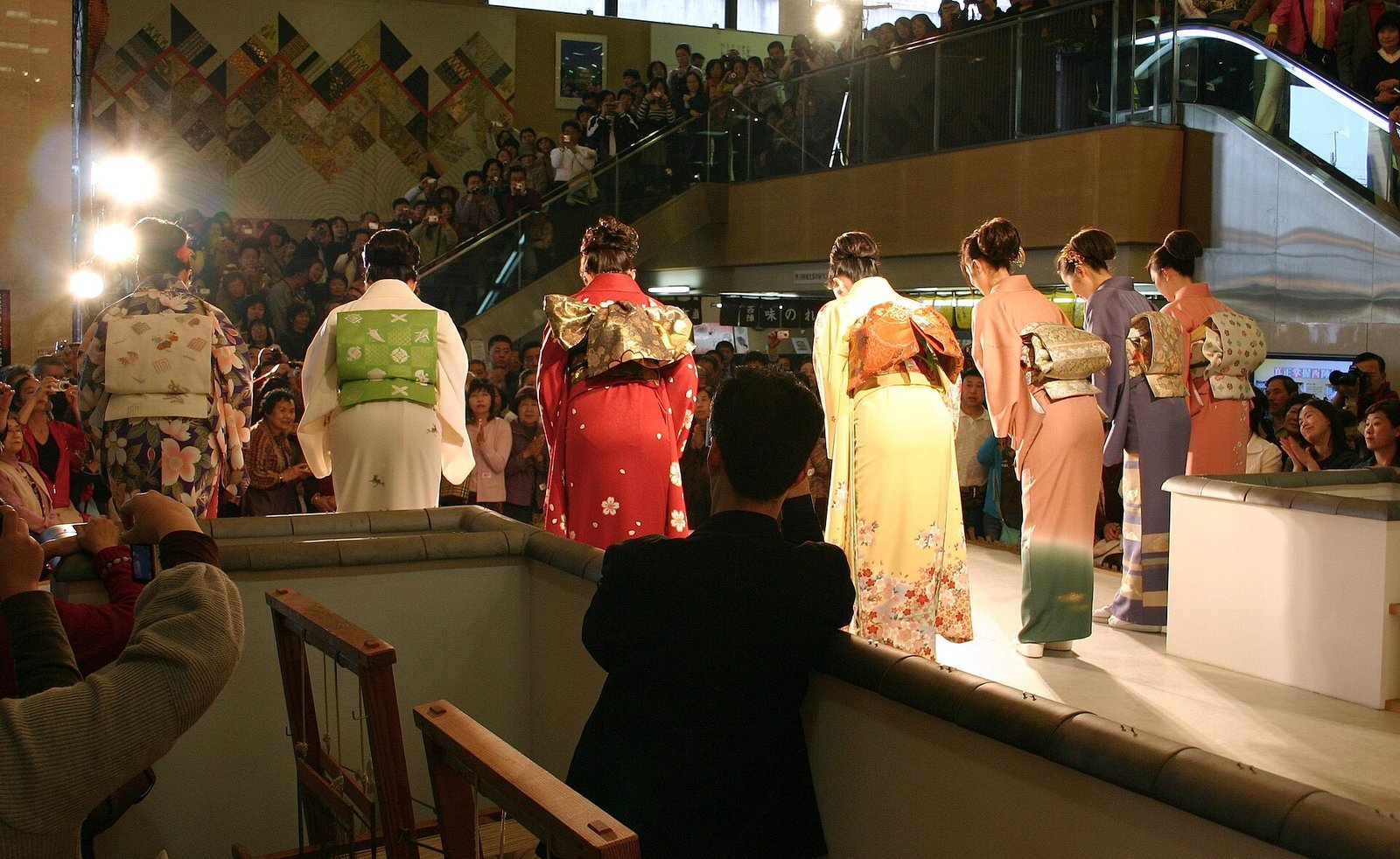
- Coming of Age Day (second Monday of January): young women in furisode are the classic sight. The legal age of adulthood dropped to 18 in 2022, but most cities still hold the ceremony for 20-year-olds. Many men wear suits, some wear haori and hakama.
- Shichi-Go-San (around 15 November): girls aged three and seven and boys aged five (sometimes three) visit shrines in kimono.
- Weddings: Shinto brides wear white shiromuku, and mothers often wear kurotomesode.
- Graduations: women in hakama at university ceremonies in March.
- New Year: some people wear kimono for the first shrine visit of the year (hatsumode).
- Summer festivals and fireworks: yukata season, roughly July and August.
- Tea ceremony, traditional arts and theatre: practitioners often wear kimono, and you can see this at a Kyoto tea ceremony.
Renting a kimono in Japan
Renting a kimono for a day is one of the easiest ways to try it. Shops dress you in about 30 minutes to an hour, longer if you add hair styling. Then you head out and return everything by a set time, usually late afternoon or early evening.
Where to rent
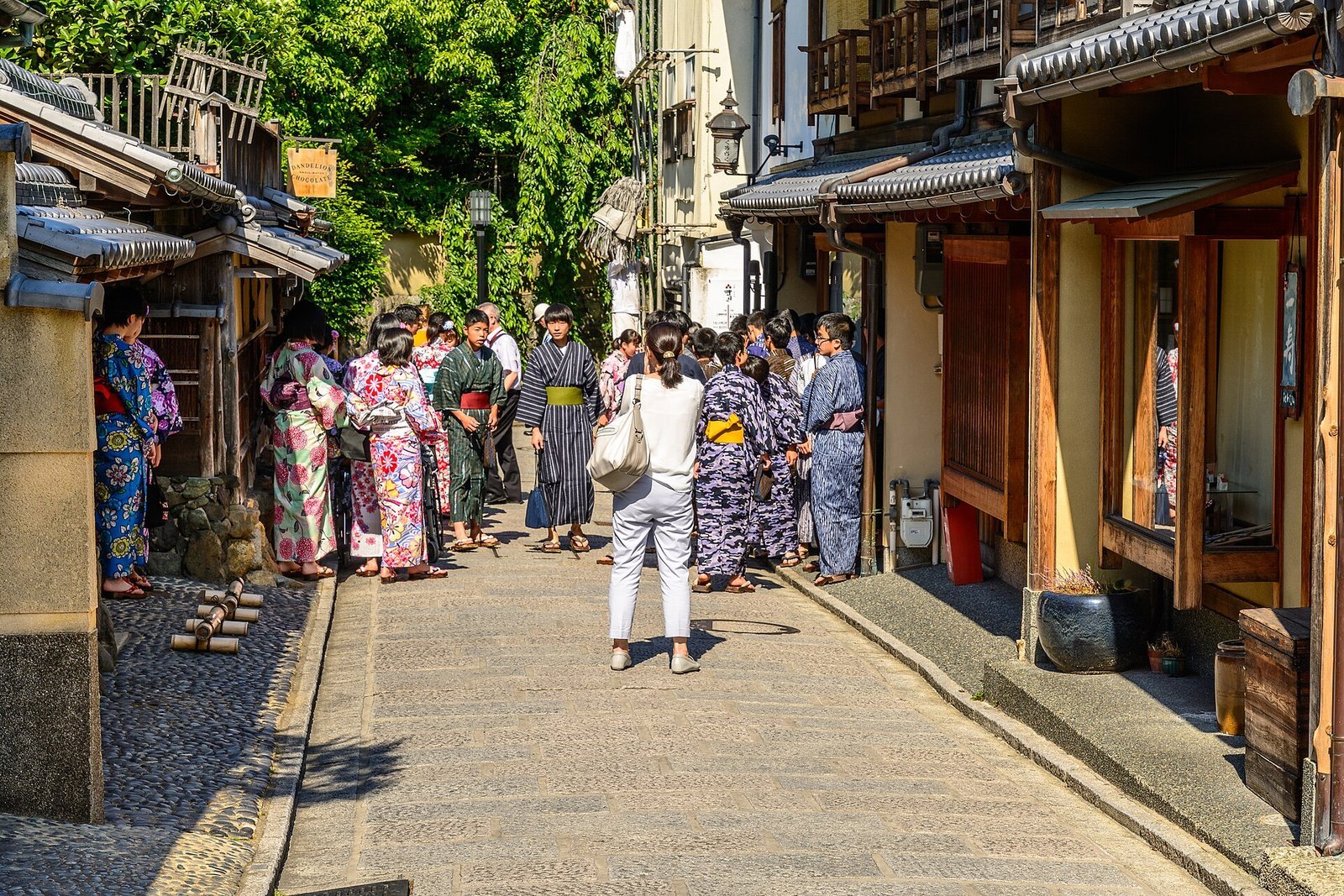
- Kyoto, Higashiyama and Gion: the stone lanes of Ninenzaka and Sannenzaka leading up to Kiyomizu-dera, and the Gion area around Yasaka Shrine, have dozens of rental shops. Our Kyoto attractions guide will help you plan a route.
- Tokyo, Asakusa: shops cluster around Senso-ji and the Kaminarimon gate. See our Asakusa guide.
- Kanazawa, Higashi Chaya District: a beautifully preserved teahouse district with rental shops close by. Our Kanazawa guide has more.
- Kawagoe, Saitama: “Little Edo” is an easy day trip from Tokyo, with clay-walled kurazukuri merchant houses and the Toki no Kane bell tower.
How much does it cost?
Prices change often, so treat these as rough 2026 guides:
- Basic plans: usually about 3,000-5,000 yen, including kimono, obi, undergarments, tabi, zori and a bag. Some shops advertise plans from around 2,000 yen, but these usually have limited choice, no hair styling or online-only booking.
- Hair styling: sometimes included, otherwise usually an add-on of roughly 500-2,000 yen.
- Premium, antique or furisode plans: from around 10,000 yen up to 30,000 yen or more.
- Extras: next-day return, larger sizes and photo shoots usually cost more.
Tips from our trips
We’ve driven through more than 20 prefectures since 2019, and kimono-clad visitors are a fixture of the old quarters in Kyoto and Kanazawa. A few things make the day go better:
- Book ahead during cherry blossom season, autumn colours and weekends, and choose an early slot. Morning light is softer and the lanes are quieter.
- Check the weather. Many shops sell or lend a raincoat and umbrella, and some switch to yukata in summer. Silk and polyester are hot in July and August. In winter, ask about a haori or shawl and wear thermals underneath.
- Walk small. Take short steps with your toes slightly turned in, and go slowly on stone steps. Zori and geta are hard work on Kyoto’s slopes, so plan a compact route rather than a 15 km day.
- Travel light. Leave luggage at the shop (most offer storage) and keep valuables in the small bag provided.
- Watch your sleeves around food and toilets. Clip them up or hold them when washing hands.
- Be considerate with photos. In Gion, don’t follow or photograph maiko and geiko without permission, and respect the no-photography signs on private lanes.
Is it OK for foreigners to wear a kimono?
Yes. Visitors in kimono are a normal, welcome sight in Japan, and rental shops exist precisely to share the experience. What people appreciate is wearing it properly and respectfully: left over right, not as a joke costume, and with reasonably calm behaviour. Keep in mind that you may be in plenty of other people’s photos too.
Buying a kimono or yukata
A new silk kimono, especially a handmade one, can cost hundreds of thousands of yen once you add the obi and accessories. There are friendlier options:
- Yukata sets: department stores and shops sell new cotton yukata with an obi and sometimes geta from early summer. They make the most wearable souvenir.
- Second-hand and vintage: used kimono, obi and haori from recycle shops, temple flea markets and antique dealers can be very good value. A vintage haori is easy to wear over Western clothes.
- Sizing: vintage kimono were made for smaller frames, so check the sleeve and body length if you are tall.
Purchases of 5,000 yen or more (before tax) at a registered shop can be tax-free for visitors. The system switches to a refund model from 1 November 2026. Our tax-free shopping guide explains how it works.
If you’d like to understand what you’re looking at before you buy, Liza Dalby’s book is one of the best-known English-language histories of the kimono. It’s written by an anthropologist who lived and studied in Japan.
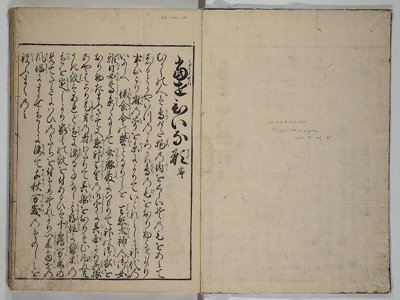
A book on kimono (item type, not the exact product). Photo: Hishikawa Moronobu / The Metropolitan Museum of Art, CC0, via Wikimedia Commons
Kimono: Fashioning Culture by Liza Dalby
An anthropologist’s well-known English-language history of the kimono, from court robes to modern wear.
Check price on AmazonWhere to see kimono culture
- Nishijin Textile Center (Kyoto): in Kyoto’s historic silk-weaving district, with free exhibitions on Nishijin-ori brocade, shops and bookable hands-on experiences. Check the official site for current exhibitions and whether the kimono show is running.
- Itchiku Kubota Art Museum (Lake Kawaguchi): devoted to kimono artist Itchiku Kubota, who revived the lost tsujigahana dyeing technique. His unfinished “Symphony of Light” series of kimono forms a landscape across the garments. Admission is around 1,500 yen and closing days are irregular, so check before you go.
- Tokyo National Museum (Ueno): its collection includes hundreds of Edo-period kosode, and textiles rotate through the Japanese galleries in the Honkan (main building). Displays change regularly to protect fragile fabrics.
For a broader planning guide covering Kyoto, Tokyo and Kanazawa, a current guidebook is still handy to have.

Lonely Planet guidebooks (item type, not the exact product). Photo: Vyacheslav Argenberg, CC BY 4.0, via Wikimedia Commons
Lonely Planet Japan (latest edition)
A full planning guide covering Kyoto, Tokyo, Kanazawa and beyond, with maps and itineraries.
Check price on AmazonFAQ
What does kimono mean?
Kimono (着物) means “thing to wear”, from kiru (to wear) and mono (thing). It originally meant clothing in general.
What is the difference between a kimono and a yukata?
A yukata is a casual, unlined cotton kimono worn in summer and at onsen inns, with bare feet and geta. A kimono is usually silk or synthetic, worn over a nagajuban with tabi and zori.
Which side goes on top?
Left over right, for both men and women. Right over left is used only when dressing the dead.
Can men wear kimono?
Yes. Men’s kimono are simpler and more subdued, with a narrow obi. Formal men’s dress adds a crested haori and hakama, and most rental shops offer men’s plans.
How much does it cost to rent a kimono in Kyoto or Tokyo?
Basic plans typically cost about 3,000-5,000 yen, with hair styling and premium or furisode plans costing more. Check the shop’s current prices and book ahead in peak seasons.
Is it disrespectful for tourists to wear a kimono?
No. It is generally welcomed. Wear it correctly (left over right), behave considerately, and don’t treat it as a costume.
What should I wear under a rental kimono?
The shop provides the kimono underlayers. A soft non-wired bra or camisole and seamless underwear work best, but confirm with your shop when you book.
Do Japanese people still wear kimono?
Yes, but mostly for special occasions: Coming of Age Day, weddings, Shichi-Go-San, graduations, tea ceremonies and summer festivals in yukata.
Comment (5)