
As an Amazon Associate, Chasing Cherry Blossoms earns from qualifying purchases. We may also earn from other affiliate links on this page at no extra cost to you.
Quick answer: The best Japanese gifts depend on the occasion. For weddings in Japan, give cash (goshugi) in crisp notes inside a shugibukuro envelope, usually in an odd-numbered amount such as 30,000 yen for a friend. For hosts, bring a modest temiyage such as good sweets or tea in the 1,000-5,000 yen range. To bring home from Japan, regional sweets, tea, tenugui, furoshiki and stationery travel well and rarely miss. Hand gifts over with both hands, skip sets of four, and expect the recipient to open it later. If you shop tax-free, note that from 1 November 2026 Japan switches to a refund system: you pay the full price and get the tax back after a customs check when you leave.
I’ve been travelling to Japan from Singapore since 2019 and have driven through more than 20 prefectures, and gift shopping is part of every trip. This guide is organised by occasion and checked against Japanese etiquette sources. One caveat: etiquette varies by region, family and generation, and many “rules” are softer than older guidebooks suggest. A gift given with care counts for more than getting every detail right. Treat the budgets below as rough guides.
Japanese gifts by occasion: the cheat sheet
| Occasion | Good gifts | Avoid / note | Typical budget (hedged) |
|---|---|---|---|
| Wedding (in Japan) | Cash (goshugi) in a shugibukuro | Even amounts, used notes; glassware and knives are traditionally avoided as physical gifts | Often around 30,000 yen for a friend or colleague; more for close family or a boss |
| Visiting a home (temiyage) | Boxed sweets, tea, a treat from your home country | Potted plants; anything that needs cooking that day | Roughly 1,000-5,000 yen |
| Omiyage for colleagues | Individually wrapped regional sweets or snacks | Things that can’t be shared easily | A box that covers everyone, often 1,000-3,000 yen |
| Birth of a baby | Clothes, towels, practical baby items | Give after the birth, not before; expect a return gift (uchiiwai) | Varies widely by relationship |
| Hospital visit | Cut flowers in cheerful colours, light reading, sweets if allowed | Potted plants; white flowers; check hospital rules on flowers and food | Small |
| Ochugen / oseibo | Food, drinks, household staples | Public servants and teachers may have to refuse | Often around 3,000-5,000 yen |
| Kids | Kit Kat flavours, kendama, origami, character goods | Choking hazards for small children | 500-3,000 yen |
| Japan-lovers back home | Tea, tenugui, furoshiki, stationery, sunscreen | Meat products; check your home country’s food rules | Anything from 500 yen up |
Weddings: goshugi, shugibukuro and hikidemono
If you’re invited to a wedding reception in Japan, the expected gift is cash, called goshugi. A physical present from a registry is not the norm the way it can be elsewhere. The cash goes into a decorated envelope called a shugibukuro, which you’ll find at convenience stores, stationery shops and Loft or Hands. Wedding envelopes use a mizuhiki cord tied in a knot that doesn’t come undone (musubikiri or awaji-musubi), because a wedding is meant to happen once. The bow-style knot is used for happy events that can repeat, such as births.
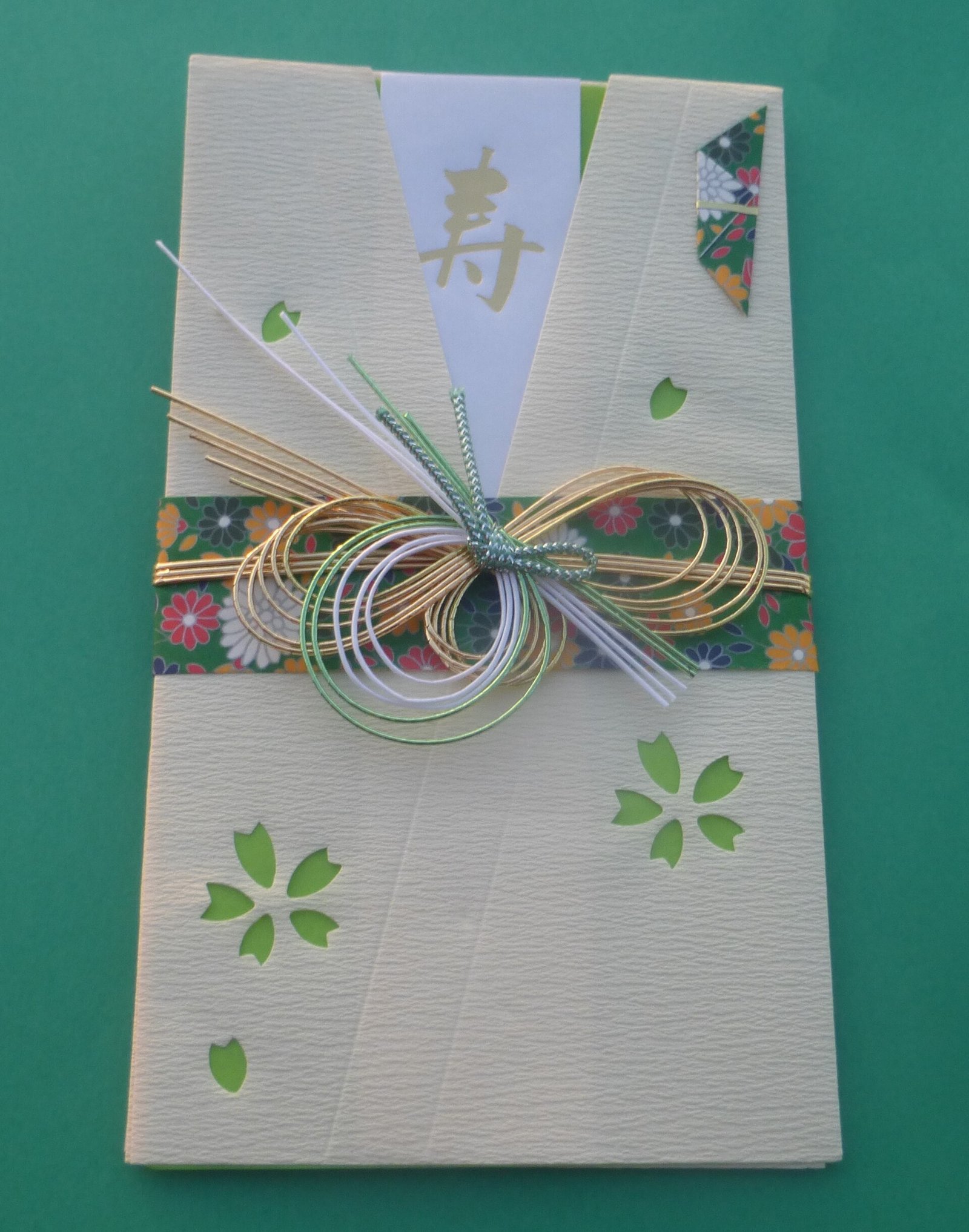
A few conventions most guides agree on:
- Odd numbers. The amount usually starts with an odd digit, since an even amount can suggest the couple splitting. The usual figure for a friend or colleague is around 30,000 yen. Close relatives and bosses often give 50,000 yen or more. Some people give 20,000 yen and make it “odd” with one 10,000 yen note and two 5,000 yen notes. Customs vary by region and age group, so if you can, ask a Japanese friend who is also attending.
- New notes. Crisp, unused notes are traditional for celebrations. Many people get them from a bank counter a few days before. It’s the condition that matters, not the series: older-design notes are still legal tender, so you don’t need the 2024 designs.
- Avoid 4 and 9. Shi (four) can sound like “death” and ku (nine) like “suffering”, so amounts and items in those numbers are traditionally avoided.
- Hand it in at reception. Guests usually give the envelope to the reception desk on arrival, not to the couple directly.
In return, the couple gives guests hikidemono: a bag of thank-you gifts that may hold sweets, tableware or, increasingly, a catalogue you can order a gift from. Spending varies a lot, and I couldn’t find a reliable typical figure.
Funerals are the opposite case. Condolence money (koden) goes in a black-and-white envelope, traditionally in used rather than new notes, so the death doesn’t look expected. If that ever applies to you, ask a local friend.
Thank-you and host gifts: temiyage and omiyage
Two words you’ll hear a lot:
- Temiyage is a small gift you bring when visiting someone’s home or meeting someone. It’s a thank-you for their time and doesn’t need to be tied to a place.
- Omiyage is the gift you bring back from a trip for family, friends or colleagues. It’s usually a regional food speciality, and often a box of individually wrapped sweets that can be shared around the office.
If you’re visiting Japan and staying with a host family or meeting a friend’s parents, something from your home country works well. japan-guide.com suggests roughly 1,000-5,000 yen. From Singapore, I think of shelf-stable things like local biscuits or tea in nice packaging. Japan restricts some food, meat and plant products coming in, so check before packing anything fresh or meat-based.
For buying omiyage in the capital, my guide to the best souvenir shopping spots in Tokyo covers where to go. If you’re in Asakusa, Nakamise Shopping Street is good for traditional snacks, fans and small crafts.
Food and drink gifts
Food is the safest gift in Japan: it gets used up and doesn’t clutter anyone’s home, which is why it dominates omiyage and seasonal gifts.
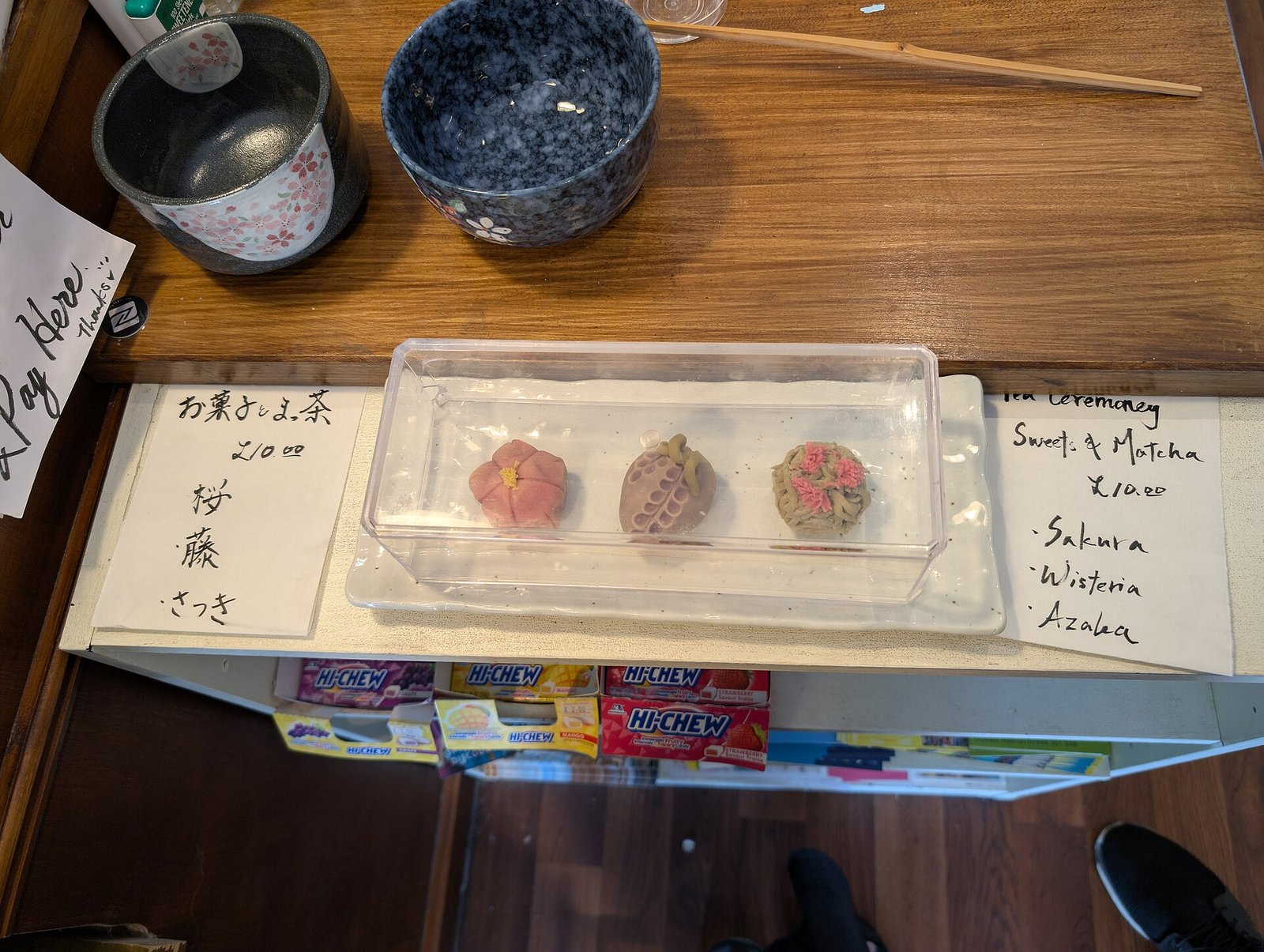
- Wagashi and regional meibutsu. Every region has its signature sweet or snack (meibutsu), and buying the local one is the classic omiyage. Look for boxes of individually wrapped pieces. Fresh wagashi are beautiful but often last only a day or two, so for travel, baked or dried sweets are the practical choice.
- Tokyo Banana-type omiyage. Big-brand sweets like Tokyo Banana are on sale at almost every station and airport. They’re reliable, shareable and well packaged, if not very adventurous.
- Matcha and sencha. Good loose-leaf tea is light, keeps well and suits almost anyone. For a tea lover, add a matcha bowl and whisk. If you’d like the full experience, read my piece on traditional tea ceremonies in Kyoto.
- Sake. A bottle from a local brewery makes a great gift. Most sake is around 15% alcohol. Under US FAA rules, drinks of 24% or less have no quantity limit in checked bags, and spirits of 24-70% are capped at 5 litres per passenger. Cabin bags fall under liquid limits, and your home country’s duty-free allowance is separate (Singapore’s is currently 2 litres in set combinations). Wrap bottles well.
A note on meat: wagyu jerky looks like a great gift, but many countries restrict meat products in passenger luggage. Australia and the US are strict, and Singapore allows limited quantities from approved sources. Check your country’s official rules, and declare when in doubt.
For a hands-on tea gift, a starter matcha kit with a bamboo whisk, scoop, bowl, whisk holder and sifter is a nice way in:

- These matcha start up kit include all the accessories will need to make a delicious matcha and experience the wonderful …
- The bamboo whisk (chasen) handmade from a single piece of natural bamboo.The perfect authentic tea tool for achieving a …
- The bamboo tea scoop (chashaku) are perfect for measuring out matcha powder and scooping tea out of a round tin.
Kitchen gifts: knives, chopsticks and bento
Japanese kitchen knives are among the most coveted things you can buy in Japan. Towns like Sakai and Seki are famous for them, and Kappabashi in Tokyo has whole streets of kitchenware shops. One caveat: knives and scissors are traditionally seen as “cutting ties”, so many people avoid giving them at weddings or housewarmings. Other people take the opposite view, that a blade helps “cut a path forward”. For a keen cook who asks for one, it’s usually fine. Knives must go in checked luggage.
Chopsticks are lower-stakes: lacquered pairs are light and pretty, and matching “meoto-bashi” pairs suit couples. A bento box suits anyone who packs lunch. My guide to the Japanese bento box explains what to look for.
Stationery, furoshiki and tenugui
Japanese stationery is affordable, good quality and easy to pack. Loft, Hands (formerly Tokyu Hands, renamed in 2022) and Ginza’s Itoya are all worth an hour of browsing.
- Pens. Pilot, Zebra, Uni and Pentel make excellent everyday pens, gel pens and brush pens at low prices. The Pilot Kakuno is a friendly first fountain pen.
- Notebooks. Midori MD notebooks and the Hobonichi Techo planner have devoted fans worldwide. Hobonichi planners for the coming year usually go on sale in autumn.
- Washi tape. Light, cheap and collectable, so it’s ideal for journallers.
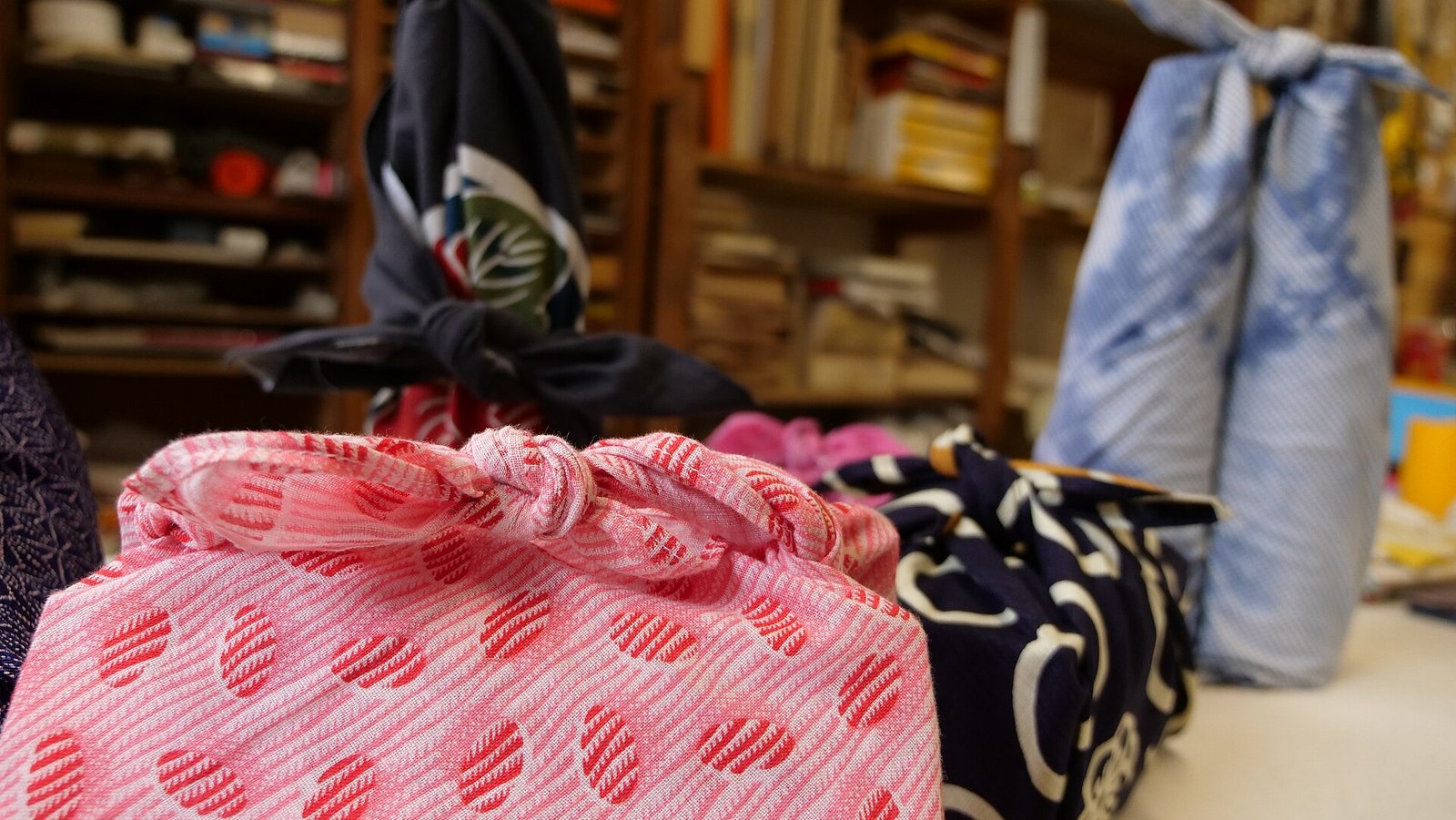
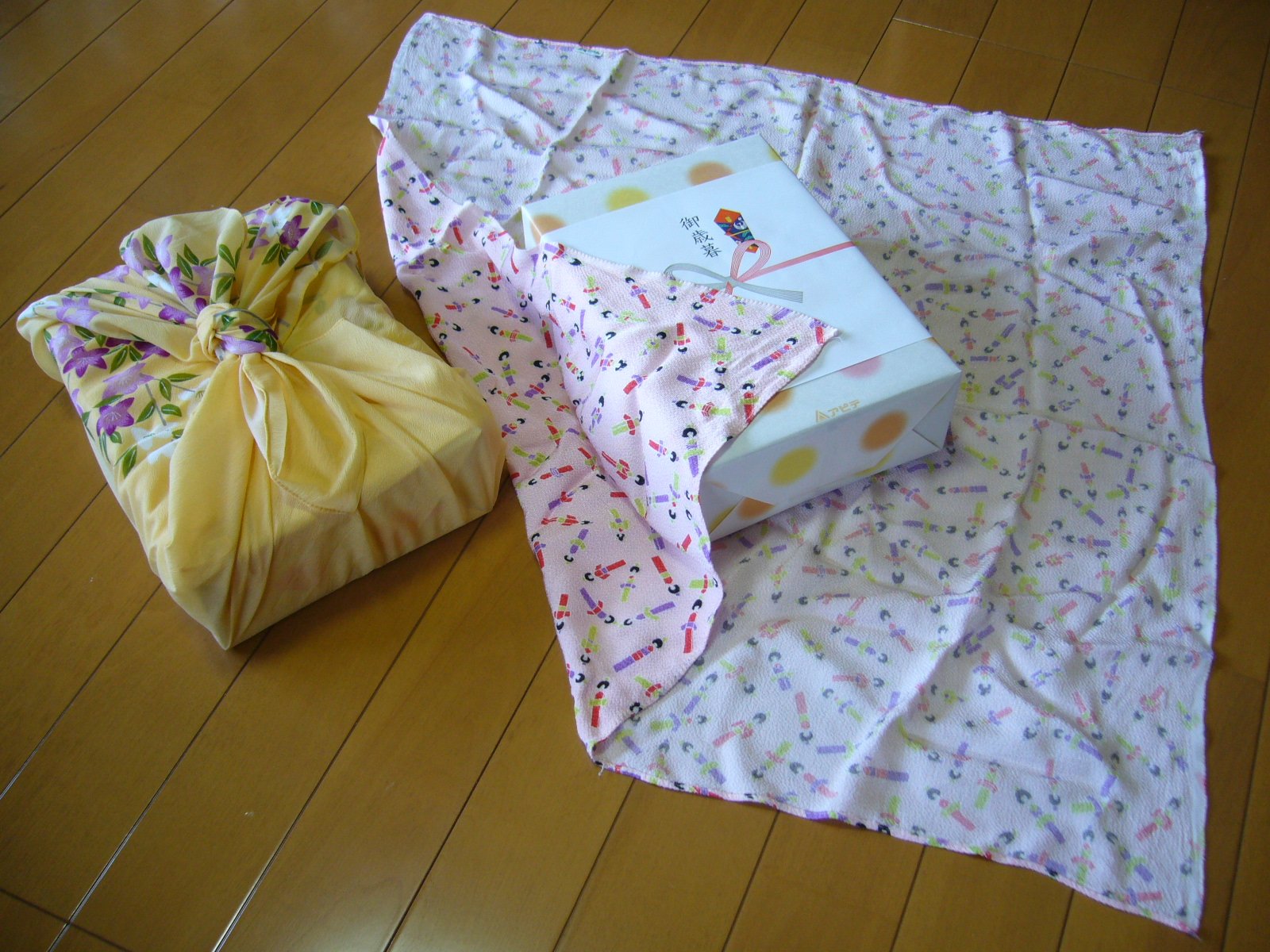
- Furoshiki. A square wrapping cloth that is both gift and wrapping, and reusable as a bag.
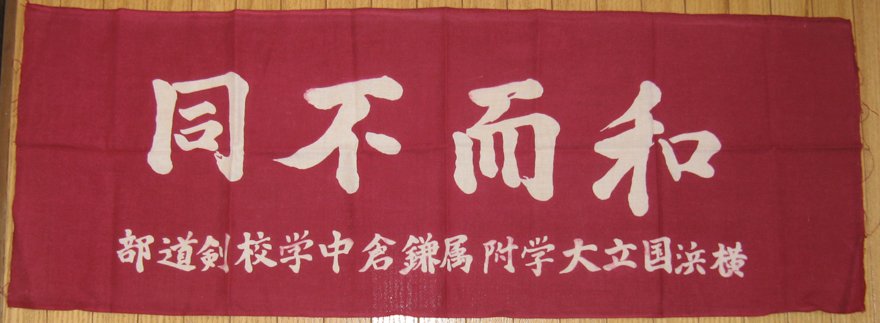
- Tenugui. Thin printed cotton cloths that work as a hand towel, gift wrap or wall hanging.
If the person you’re buying for is learning Japanese, pair a brush pen with my introduction to hiragana and katakana.
The Midori MD notebook’s smooth, fountain-pen-friendly paper and plain design make it an easy gift for any writer:
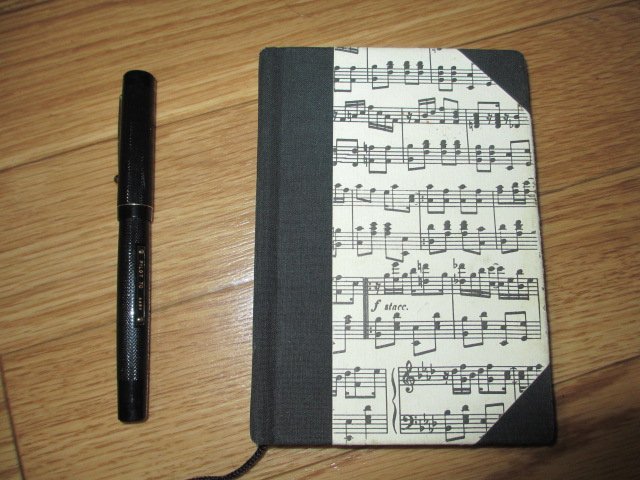
Notebook and pen (item type, not the exact product). Photo: Kaori Kita, CC BY-SA 3.0, via Wikimedia Commons
Midori MD A5 Notebook
Minimalist Japanese notebook with smooth, fountain-pen-friendly cream paper; an easy gift for writers.
Check price on AmazonThis Anbo tenugui is 100% cotton and made in Japan, so it’s an authentic, light gift that’s easy to post:
Tenugui cloth (item type, not the exact product). Photo: Rikaris, CC BY-SA 3.0, via Wikimedia Commons
Anbo Tenugui, Cherry Blossoms by the Lake
Hand-dyed 100% cotton tenugui made in Japan by an Asakusa tenugui shop; a towel, wrap or wall hanging.
Check price on AmazonA large reversible Honjien furoshiki, made in Japan, can wrap a gift, a wine bottle or a bento:
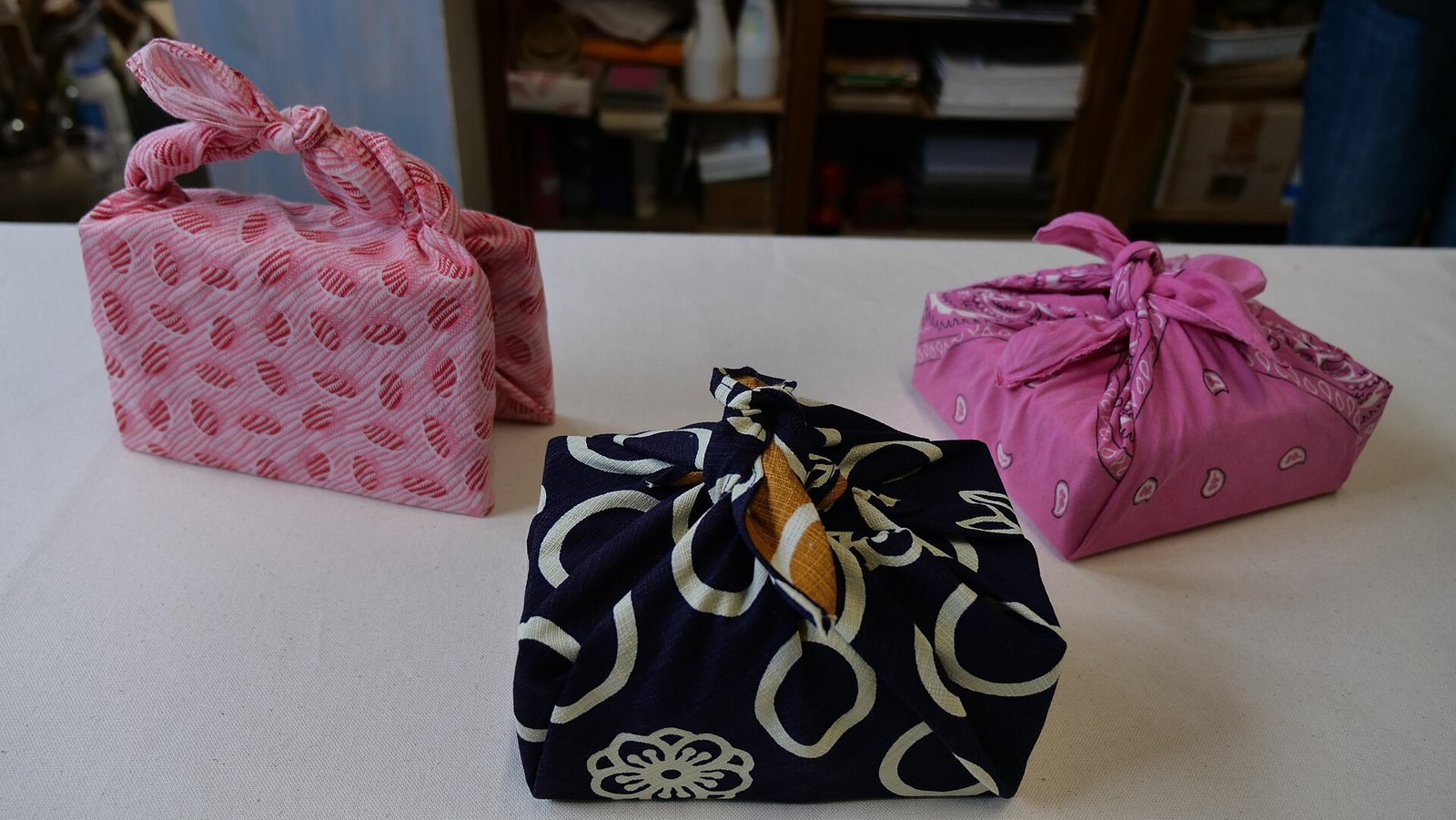
Furoshiki wrapping cloths (item type, not the exact product). Photo: Culture Japon, CC BY-SA 4.0, via Wikimedia Commons
Honjien Reversible Furoshiki, Extra Large
Large 104 cm reversible cotton furoshiki made in Japan; wraps a gift, a bottle or a bento.
Check price on AmazonBeauty: sunscreen and skincare
Japanese sunscreen has a big international following. Drugstore lines such as Biore, Anessa and Skin Aqua are light, good value and stocked by chains like Matsumoto Kiyoshi. Cleansing oils and sheet masks are popular too. Buy in Japan if you can, since overseas listings aren’t always genuine. For the routine behind these products, see my guide to Japanese makeup and skincare.
Gifts for kids
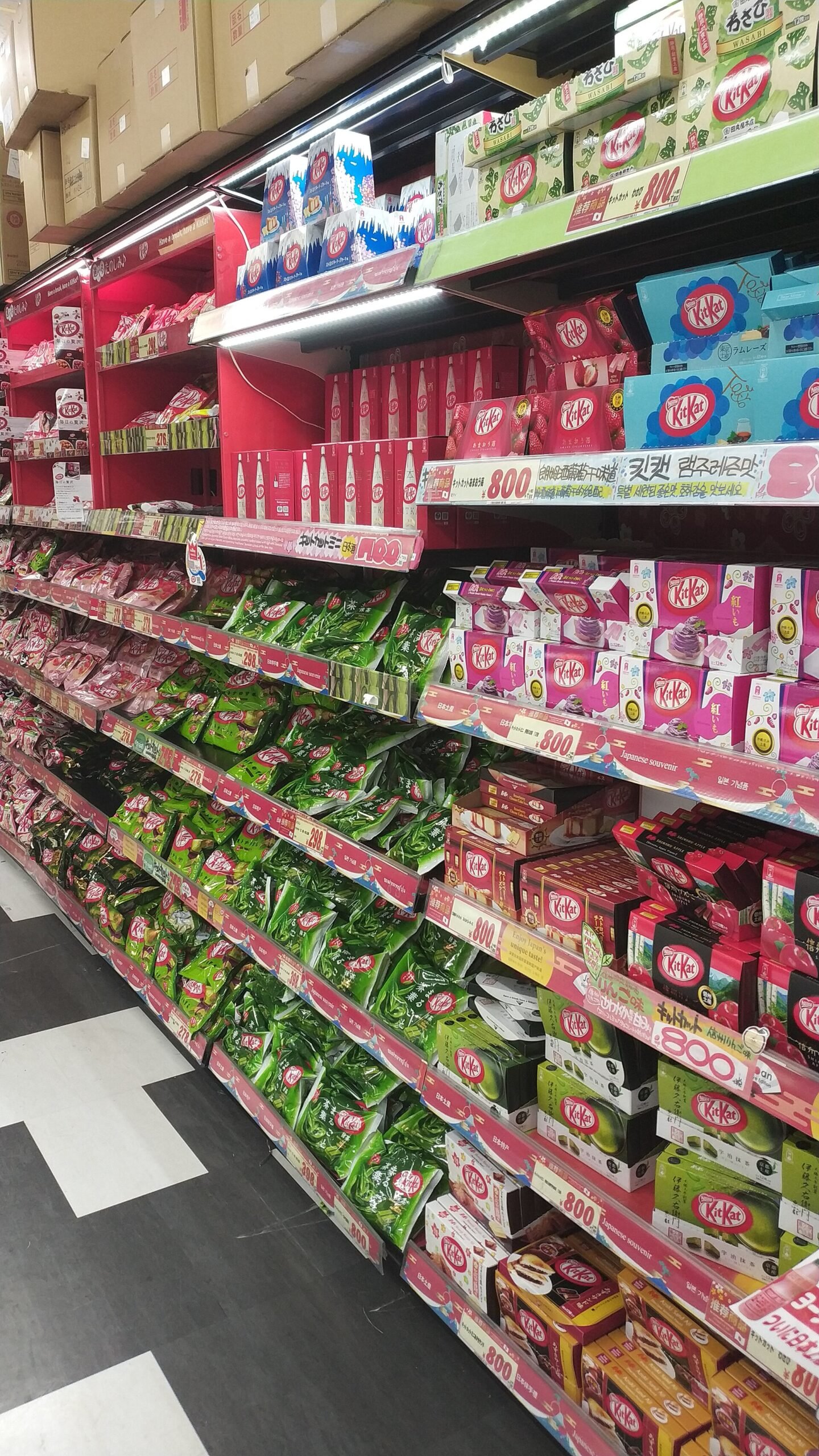
- Kit Kat flavours. Japan has released a long list of regional and seasonal Kit Kats, from matcha to sake to local fruits. The name also sounds like “kitto katsu” (“you’ll surely win”), which is why Kit Kats are a popular good-luck gift during exam season.
- Kendama. A wooden cup-and-ball toy that’s cheap, sturdy and addictive for kids and adults.
- Origami paper. Packs of patterned paper and an origami book make an inexpensive, screen-free present.
- Character goods. Pokémon, Sanrio and Ghibli goods are everywhere, and gachapon capsule toys are fun small gifts.
Seasonal gift customs
- Ochugen (summer) and oseibo (year-end). These are thank-you gifts to people you’re indebted to, such as clients, bosses or relatives. They’re traditionally food, drinks or household staples, and timing differs between eastern and western Japan. japan-guide.com notes the custom is fading. Public servants and school teachers are often required to decline them.
- Valentine’s Day and White Day. In Japan, women traditionally give chocolate to men on 14 February. That includes “giri choco” (obligation chocolate) for colleagues as well as romantic “honmei choco”. On White Day, 14 March, men return the favour. The old saying that the return gift should be worth “three times” as much is a joke more than a rule. Practices vary, and plenty of people also buy chocolate for friends or themselves.
- Okaeshi (return gifts). Japan has a strong culture of reciprocity. For gifts like wedding or birth presents, the recipient often sends back something worth roughly a third to a half of the original. For a new baby, this return gift is called uchiiwai. Visitors are rarely expected to keep up with this.
Gift etiquette in Japan
Giving
- Use both hands. Hold the gift with both hands, facing the recipient, with a small bow. Receive gifts the same way.
- Keep the phrasing modest. The classic line is “tsumaranai mono desu ga” (“it’s just a little something”). It’s still heard in formal settings, but some younger people find it old-fashioned. “Yoroshikereba dozo” (“please, if you’d like”) or a simple “hope you like it” works fine.
- Mind the numbers. Sets of four (and, for some people, nine) are traditionally avoided. Pairs are fine for couples, but many people avoid even numbers specifically for weddings.
- Mind the bag. Many people take the gift out of its shop bag before handing it over.
Items some people avoid
None of these are hard rules, but the associations still come up, especially with older people:
- Combs (kushi), because the sound echoes the words for suffering and death.
- Knives and scissors at weddings or housewarmings, because they can symbolise cutting ties.
- Glassware and ceramics at weddings, because breakable things can suggest a broken marriage.
- Handkerchiefs, which in some contexts are linked to partings or funerals.
- Potted plants for someone sick, because the illness might “take root”, and white flowers, which are linked to funerals.
- Socks or shoes for a superior, which some people see as implying you’d “step on” them.
Wrapping and noshi
Japanese wrapping is careful and precise, but it rarely uses the big ribbon bows common in the West. Department stores typically do a neat diagonal wrap with no ribbon at all. Formal gifts get a noshi paper: a printed sheet with mizuhiki cords and the purpose of the gift (for example “oiwai” for a celebration or “oseibo”), with the giver’s name below. Mizuhiki colours and knots carry meaning. Red-and-white is for celebrations, and black-and-white or similar sombre colours are for condolences. You don’t need to do this yourself: tell the shop what the gift is for and staff will usually wrap it correctly.
Receiving and opening
Gifts are often put aside and opened later rather than in front of the giver, so don’t be surprised if yours disappears unopened. If you’re given something, it’s fine to ask “may I open it?” Some people politely decline once before accepting, out of modesty rather than real refusal. A thank-you message the next day goes a long way.
Where to buy gifts in Japan
- Depachika (department-store food halls). These are the best one-stop shop for beautifully boxed sweets, tea and seasonal gifts, with gift wrapping and noshi on request.
- Loft and Hands. Stationery, beauty, gadgets and quirky small gifts.
- Nakamise and temple shopping streets. Traditional snacks, crafts and souvenirs, though prices can be touristy.
- Airports and major stations. Huge omiyage ranges for last-minute shopping, though some regional items are only sold locally.
- Drugstores. Sunscreen, skincare and snacks, often with tax-free counters.
If you have more time, my ultimate guide to Tokyo shopping goes district by district. For something special, a cotton yukata or a second-hand kimono makes a memorable gift. See my guide to the kimono and traditional Japanese clothing.
Tax-free shopping in 2026: what changes
For goods bought on or after 1 November 2026, Japan’s tax-free system for visitors becomes a refund system. You pay the full price, including consumption tax, at the till. The tax is then refunded once customs confirms at your departure airport or seaport that the goods are leaving Japan. According to the Japan Tourism Agency, purchases need to total 5,000 yen or more (before tax) per store per day, and the departure check must be done within 90 days of purchase, with your passport and the goods. The sealed-bag rule for food and cosmetics is being dropped, but anything consumed in Japan doesn’t qualify. Refunds come from the shop or its refund agent, so procedures can differ. Keep your receipts, allow extra time at the airport, and check official guidance before you fly.
FAQ
What is a good gift to bring to Japan from overseas?
A food or drink speciality from your home country, nicely packaged and ideally individually wrapped, in the 1,000-5,000 yen range. Avoid fresh food and meat products, which Japan restricts.
How much money do you give at a Japanese wedding?
A common amount for a friend or colleague is 30,000 yen in new notes, in a shugibukuro. Relatives and bosses often give more. Amounts usually start with an odd digit, and many people avoid 4 and 9.
Is it rude to open a gift in front of the giver in Japan?
Not rude, exactly, but gifts are traditionally opened later in private. If you want to open one, ask first.
What are the best cheap Japanese souvenirs?
Regional Kit Kats, washi tape, tenugui, Japanese pens, tea bags, origami paper and drugstore sunscreen. All are light, affordable and widely loved.
How does tax-free shopping work in Japan from November 2026?
You pay tax at the till and get it refunded after a customs check when you leave Japan, within 90 days of purchase. Spend 5,000 yen or more per store per day, and keep your receipts.
Can I take sake home from Japan?
Usually, yes. Most sake is under 24% alcohol, so under FAA rules there is no quantity limit in checked bags. Your home country’s duty-free allowance still applies, though, so you may pay duty on anything over it.