Disclosure: this post may contain affiliate links. If you buy through them, Chasing Cherry Blossoms may earn a commission at no extra cost to you. Affiliate disclosure.
Exploring the Beauty of Japanese Calligraphy: An Introduction to the Hiragana and Katakana Alphabets
Japanese calligraphy, known as shodo (書道, “the way of writing”), is one of the most graceful traditional arts in Japan. Using a brush and ink on paper, calligraphers turn simple characters into something that feels alive. When I first watched someone write a single character in one confident movement, I realised that writing in Japan is as much about spirit and rhythm as it is about meaning. In this guide I’ll introduce the basics, focusing on the two phonetic scripts, hiragana and katakana, and share some tips for trying it yourself on a trip to Japan.
The Artistic Tradition of Japanese Calligraphy
Shodo is considered one of the great visual arts in Japan, closely tied to painting and poetry. Each brush stroke carries meaning, but it is also seen as a reflection of the writer’s state of mind in that moment.
Chinese calligraphy had a major influence. Chinese characters (kanji) reached Japan many centuries ago, traditionally dated to around the 4th to 5th century. Early Japanese calligraphers imitated Chinese styles, but over time they developed their own distinct aesthetic, especially once the Japanese phonetic scripts appeared.
Understanding Hiragana and Katakana
Three scripts working together
Written Japanese combines three scripts: kanji, hiragana and katakana. Kanji are characters borrowed from Chinese that represent words or ideas. Hiragana and katakana are phonetic scripts, where each symbol represents a sound (technically a mora, or beat).
- Hiragana is used for native Japanese words, verb endings and grammatical particles.
- Katakana is used mainly for foreign loanwords, foreign names, onomatopoeia, emphasis, and many scientific terms.
Hiragana has soft, rounded, flowing lines, while katakana is more angular, with short, straight strokes. You’ll see both all over Japan, from restaurant menus to station signs, so learning them is one of the most useful things you can do before a trip.
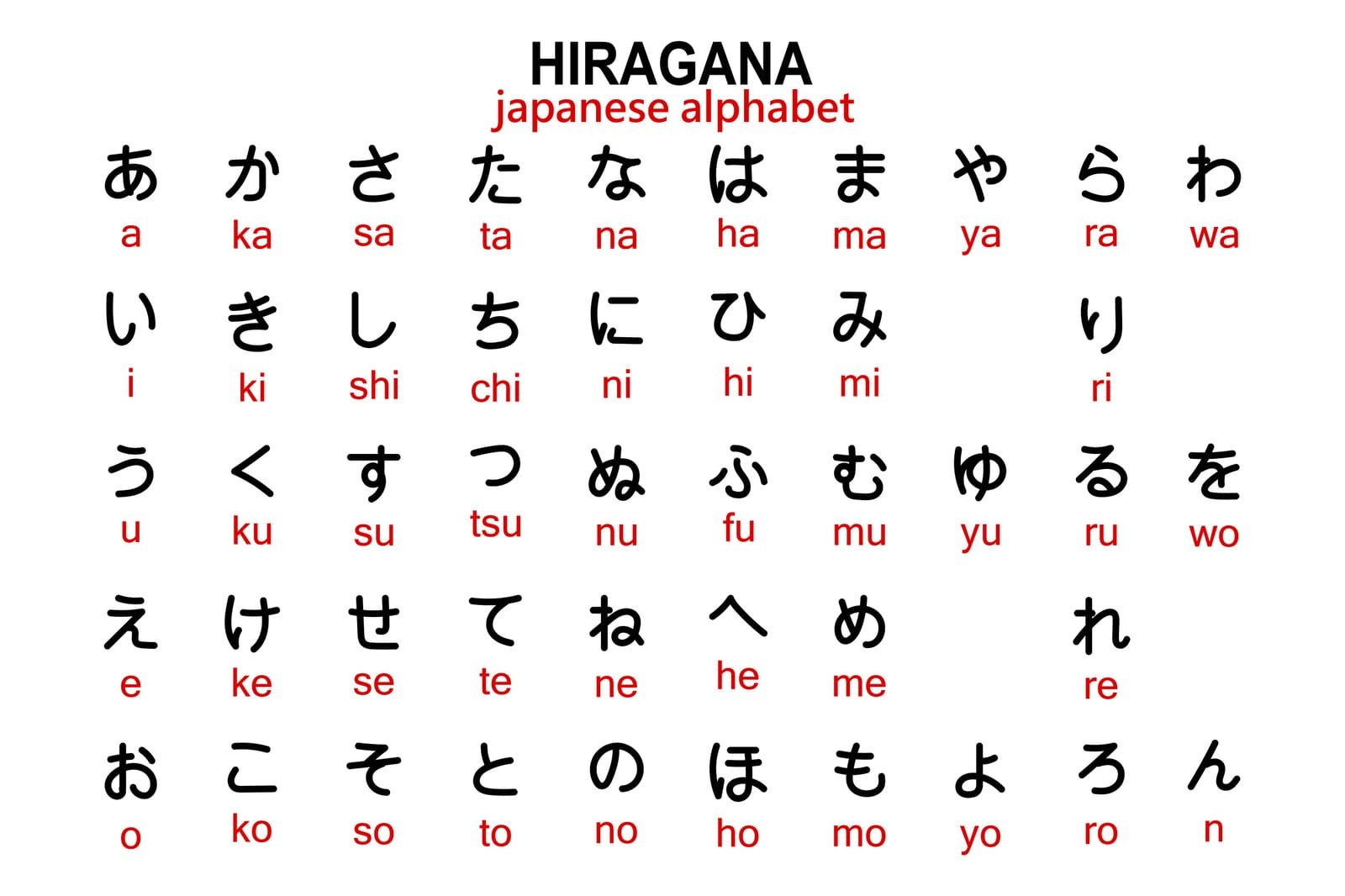
Hiragana chart with English transcription.
The Origins and History of Japanese Writing
Japan first wrote using Chinese characters, but Japanese is a very different language from Chinese, so a way to write its sounds and grammar was needed. The answer came in the Heian period (794 to 1185), when kana developed from simplified kanji:
- Hiragana developed from cursive forms of kanji. It became closely associated with women writers at the Heian court, which is why so much classic literature, including The Tale of Genji, was written in it.
- Katakana developed from fragments of kanji and was used early on by Buddhist monks to annotate texts.
Today both scripts are essential parts of everyday Japanese.
The Aesthetic Qualities of Shodo
Three elements define the look of a piece:
- Brush strokes: Pressure, speed and the moment you lift the brush all shape a stroke, and every stroke is meant to feel deliberate.
- Ink: Traditional sumi ink is made from soot and animal glue. It is prized for its deep black colour and subtle gradations.
- Negative space: The empty space around and between characters matters as much as the lines. The balance between ink and blank paper is what gives a piece its harmony.
Calligraphy in Japanese Culture and Society
Calligraphy has long been part of both religious and everyday life. It is often described as a form of meditation, a way to quiet the mind and focus. You’ll commonly see calligraphy scrolls in tea rooms, in temples, and at New Year, when many people (and children at school) practise kakizome, the first calligraphy of the year.
If you visit temples, look out for goshuin, hand-brushed temple stamps and calligraphy that pilgrims collect in a special book. Watching the monk or staff member write yours is a small, memorable piece of living shodo.
Today calligraphy is still taught in schools and enjoyed as a hobby, and exhibitions and competitions are held throughout the year.
Learning the Basics of Hiragana and Katakana Writing
Whether you want to write with a brush or just read signs, start with the basics:
- Learn the characters. Both scripts have 46 basic characters, plus extra marks (dakuten and handakuten) and small characters that expand the sounds.
- Learn stroke order. Correct order and direction are what make characters balanced, and they’re essential for brush writing.
- Practise often. Repeating each character builds muscle memory and brush control. Even ten minutes a day helps.
- Use good resources. Textbooks, apps, online tutorials and, best of all, a teacher who can correct your strokes.
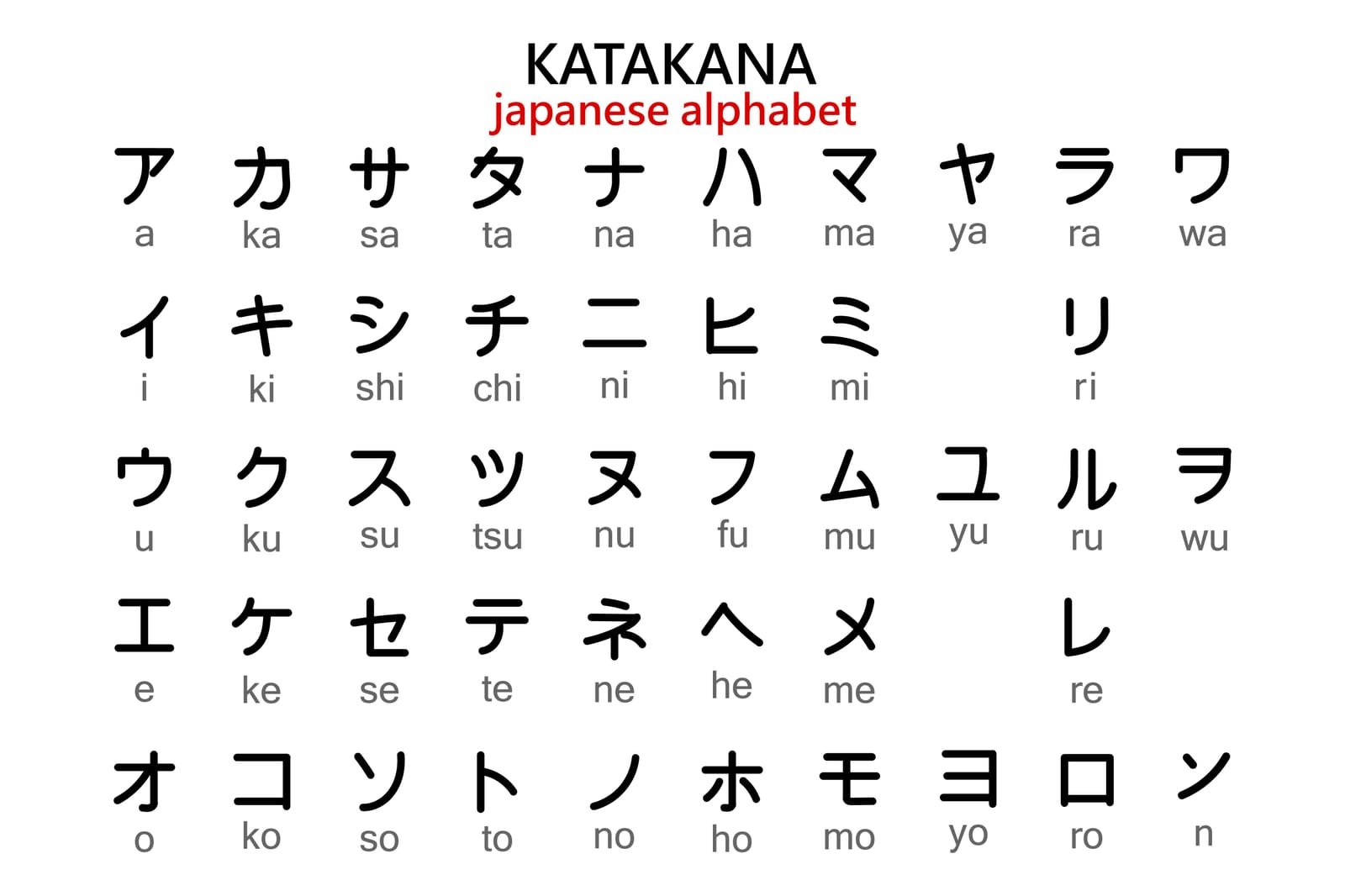
Katakana chart with English transcription.
The Main Styles of Japanese Calligraphy
- Kaisho (block style): The most basic and formal style, with clear, separate strokes. It’s the best place for beginners to start.
- Gyosho (semi-cursive): A more flowing style in which strokes begin to connect and vary in thickness.
- Sosho (cursive): The most expressive and abstract style, with highly simplified, linked strokes that can be hard for beginners to read.
Each style has its own conventions, but calligraphers are also encouraged to develop a personal voice, choosing a style to suit the message or mood.
Tools and Materials
- Fude (brush): Made from animal hair, such as goat, horse or weasel, in many sizes and shapes.
- Sumi (ink): Sold as a solid stick that you grind with water, or as ready-made liquid ink, which is handy for beginners.
- Suzuri (inkstone): Used to grind the ink stick with water.
- Bunchin (paperweight): Holds the paper flat while you write.
- Paper: Practice paper is inexpensive, while quality washi is used for finished pieces.
Patience and Practice
Calligraphy rewards patience. Your first characters will probably look wobbly, and that’s completely normal. Set aside regular time, even if it’s short, and try to get feedback from a teacher. A class or workshop is also a lovely way to learn alongside others.
Calligraphy in Contemporary Art and Design
Shodo is not stuck in the past. Modern artists and designers use calligraphy in paintings, installations, fashion, logos and graphic design, and “avant-garde” calligraphy pushes the form well beyond traditional text. Its elegance also appeals to people far outside Japan, which makes it a lovely way to connect with the culture.
Trying Calligraphy on Your Trip to Japan
A calligraphy lesson is one of my favourite cultural activities for first-time visitors. Many are short, beginner-friendly sessions of an hour or two (lengths vary), often held in cities like Tokyo and Kyoto. Prices vary by studio, so check the provider’s current fee, and book ahead in busy seasons. Many classes are taught in English, but confirm this when booking. You can browse options on the studios’ own websites or local tourist information sites.
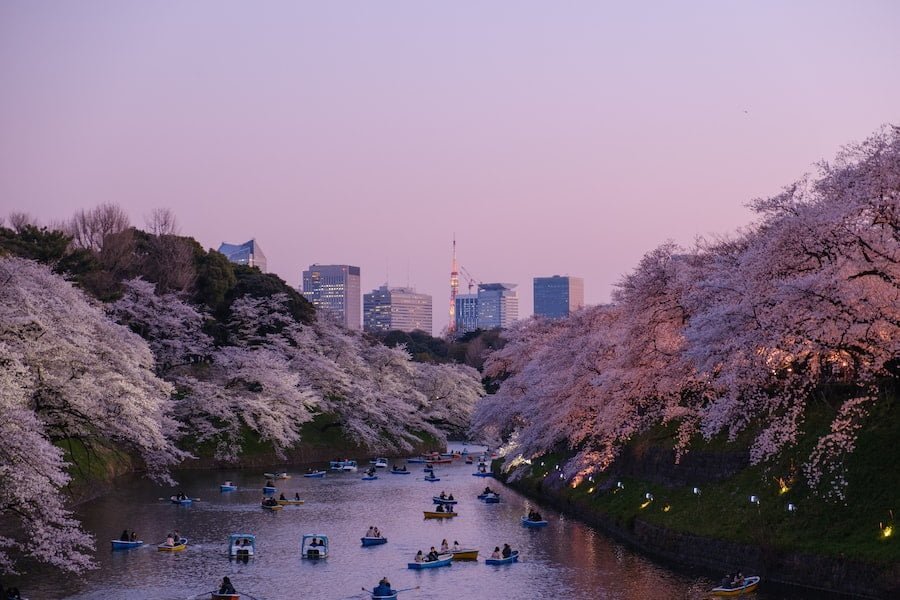
If you’re planning your trip for cherry blossom season, remember that sakura usually bloom from late March to early April in Tokyo and Kyoto, with exact dates changing each year, so check the latest forecast before you fix your plans. Hotels fill up quickly then, so book early. If you’ll be travelling widely by rail, compare options first. After the October 2023 price rise, a 7-day ordinary JR Pass costs 50,000 JPY when bought on the official site, so it only pays off with several long-distance trips.
Wrapping Up
Japanese calligraphy is much more than beautiful handwriting. It’s a way of seeing, built on brush, ink, space and patience. Learning hiragana and katakana is the perfect starting point, and trying a brush yourself, even for an hour, will change how you look at every sign and scroll you see in Japan.
FAQ
What is the Japanese alphabet?
Japanese doesn’t have an alphabet in the strict sense. It uses three scripts together: hiragana, katakana and kanji.
What is hiragana?
Hiragana is a phonetic syllabary used for native Japanese words, verb endings and grammatical particles.
What is katakana?
Katakana is a phonetic syllabary used mainly for foreign loanwords and names, onomatopoeia, emphasis, and many technical or scientific terms.
What is kanji?
Kanji are Chinese-origin characters that represent words and ideas.
How many characters are there in hiragana and katakana?
Each has 46 basic characters, plus variations made with diacritical marks and small characters.
How many kanji do I need to know?
Dictionaries list tens of thousands of kanji, but everyday reading relies on the official list of 2,136 jōyō kanji.
Is it hard to learn hiragana and katakana?
They’re the easiest part of Japanese to learn. Many travellers can learn the basics of each with regular practice in a fairly short time, though everyone learns at their own pace.
Do I need to speak Japanese to take a calligraphy class?
Not necessarily. Many classes aimed at visitors are taught in English or with simple demonstrations, but check when you book. If you want to stay connected while you search for classes and navigate, consider arranging an eSIM or pocket Wi-Fi before you travel.