
As an Amazon Associate, Chasing Cherry Blossoms earns from qualifying purchases. We may also earn from other affiliate links on this page at no extra cost to you.
Japanese New Year is famous for packed shrines, but most of the holiday actually happens at home. Families clean, decorate, cook (or unpack) osechi, give children money envelopes, watch Kohaku on TV and welcome the year deity into a quiet house. This guide is about those at-home customs for Oshogatsu / Shogatsu in 2026-2027.
It is written mainly for US readers who want to celebrate at home, host a Japan-themed New Year, or understand what a Japanese host family or Airbnb will be doing. For travel timing, hatsumode etiquette, shrine crowds and what is open or closed in Japan, use our companion Japanese New Year (Oshogatsu) 2026-2027 travel guide.
Quick answer: At home, Japanese New Year starts with osoji (year-end cleaning) and decorations such as kadomatsu, shimekazari and kagami mochi, usually up by 28 December. On 31 December families eat toshikoshi soba, watch NHK’s Kohaku song contest and often follow temple bells on TV. From 1 January they open osechi boxes, eat ozoni, give children otoshidama in pochi-bukuro envelopes and open nengajo New Year cards. Hatsumode (the first shrine visit) is important but separate; this page sticks to the household. US readers can recreate most of it with a deep clean, soba, a small osechi set from a Japanese grocer and a few Amazon-friendly decorations.
At-home New Year calendar (2026-2027)
These dates are for what happens inside the house. Weekdays are for the 2026-2027 season (1 January 2027 falls on a Friday).
| Date | Home ritual | Japanese | What to do |
|---|---|---|---|
| From 13 Dec (Sun) | Start of New Year prep; deep clean begins | 正月事始め / 大錄除 (osoji) | Clear clutter, wash windows and kitchen; offices and schools do this too |
| By 28 Dec (Mon) | Put up decorations | 門松 / しめ飾り | Traditional lucky day; avoid the 29th (“ku” sounds like suffering) and the 31st (too last-minute) |
| 31 Dec (Thu) | New Year’s Eve at home | 大最日 (omisoka) | Toshikoshi soba, Kohaku on TV (7:20-11:45 pm JST), bells at midnight on TV or radio |
| 1 Jan (Fri) | New Year’s Day family table | 元日 (ganjitsu) | Ozoni breakfast, osechi from the jubako, otoshidama for kids, nengajo arrive |
| 1-3 Jan | Sanganichi, quiet family days | 三が日 | Visit relatives, keep eating osechi, light household chores only |
| 7 Jan (Thu) | Seven-herb porridge; Kanto decorations down | 七草糊 / 松の内 | Nanakusa-gayu rests the stomach; matsu-no-uchi ends around Tokyo |
| 11 Jan (Mon) | Break and eat kagami mochi | 鏡開き (kagami-biraki) | Also Coming of Age Day 2027; some regions use other dates |
| Around 15 Jan | Little New Year; Kansai decorations down | 小正月 / どんど爆き | Burn old decorations and charms at a local shrine if you are in Japan |
What “at home” New Year is really about
Shogatsu (正月) means the first month; the “o” in Oshogatsu is honorific. The household customs grew around welcoming the toshigami (年神), a year deity linked to the harvest and to family ancestors. That is why the house is cleaned before the deity arrives, why pine and bamboo stand by the door as a landing place, and why food is set out as an offering before the family shares it.
Japan has celebrated New Year on 1 January since adopting the Gregorian calendar in 1873, so this is not a lunar new year holiday. The main stretch is omisoka (31 December) through sanganichi (1-3 January). Decorations usually stay up until 7 January in the Kanto region and until around 15 January in parts of Kansai.
Compared with a Western countdown party, a Japanese home New Year is quieter: less fireworks, more kitchen, living room and front door.
Osoji: the year-end deep clean
Osoji (大錄除) is not ordinary Saturday cleaning. Families, schools and offices clear out a year’s worth of dust and clutter so the new year starts in a purified space. Traditional timing starts around 13 December (shogatsu koto-hajime), with a final push in late December.
- Empty and wipe cupboards, fridge and stove; wash curtains and bedding if you can.
- Clear the entryway (genkan) and the area where decorations will go.
- Throw out or recycle broken charms and last year’s paper goods (old omamori are usually returned to a shrine later, not dumped).
- Do not leave the whole job for 31 December; that evening is for food and family, not vacuuming.
For US readers, treat osoji as a dedicated pre-New-Year reset day (or weekend). If you are in a Japan Airbnb over New Year, expect hosts to have already cleaned thoroughly; leave the place as tidy as you found it.
Decorations: kadomatsu, shimekazari and kagami mochi
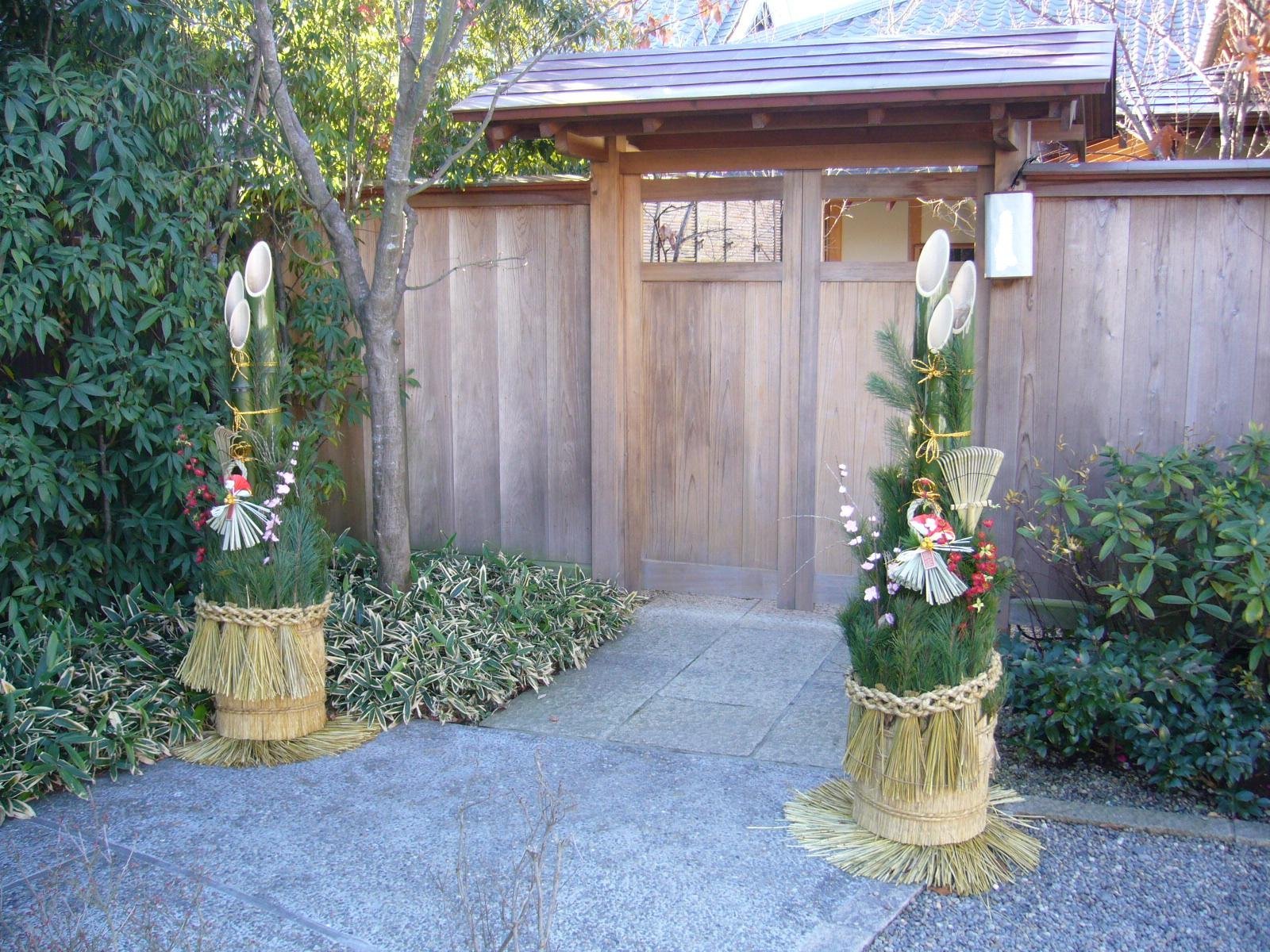
Decorations traditionally go up by 28 December. Eight is a lucky number in Japanese wordplay, the 29th is avoided because “ku” (nine) sounds like suffering, and putting things up on the 31st is seen as disrespectful to the arriving deity.
- Kadomatsu (門松): a pair of cut bamboo and pine placed either side of the entrance to invite the year deity. Hotels and shops put large ones out; homes use smaller pairs, or a single arrangement where space is tight.
- Shimekazari (しめ飾り): a twisted straw rope with white paper streamers, hung above the door to mark a purified boundary. Related to the longer shimenawa ropes you see at shrines.
- Kagami mochi (鏡飯): two stacked rounds of mochi topped with a bitter orange (daidai), whose name sounds like “generation after generation”. It sits in the tokonoma or a place of honour as an offering, then is broken (not cut) and eaten at kagami-biraki.
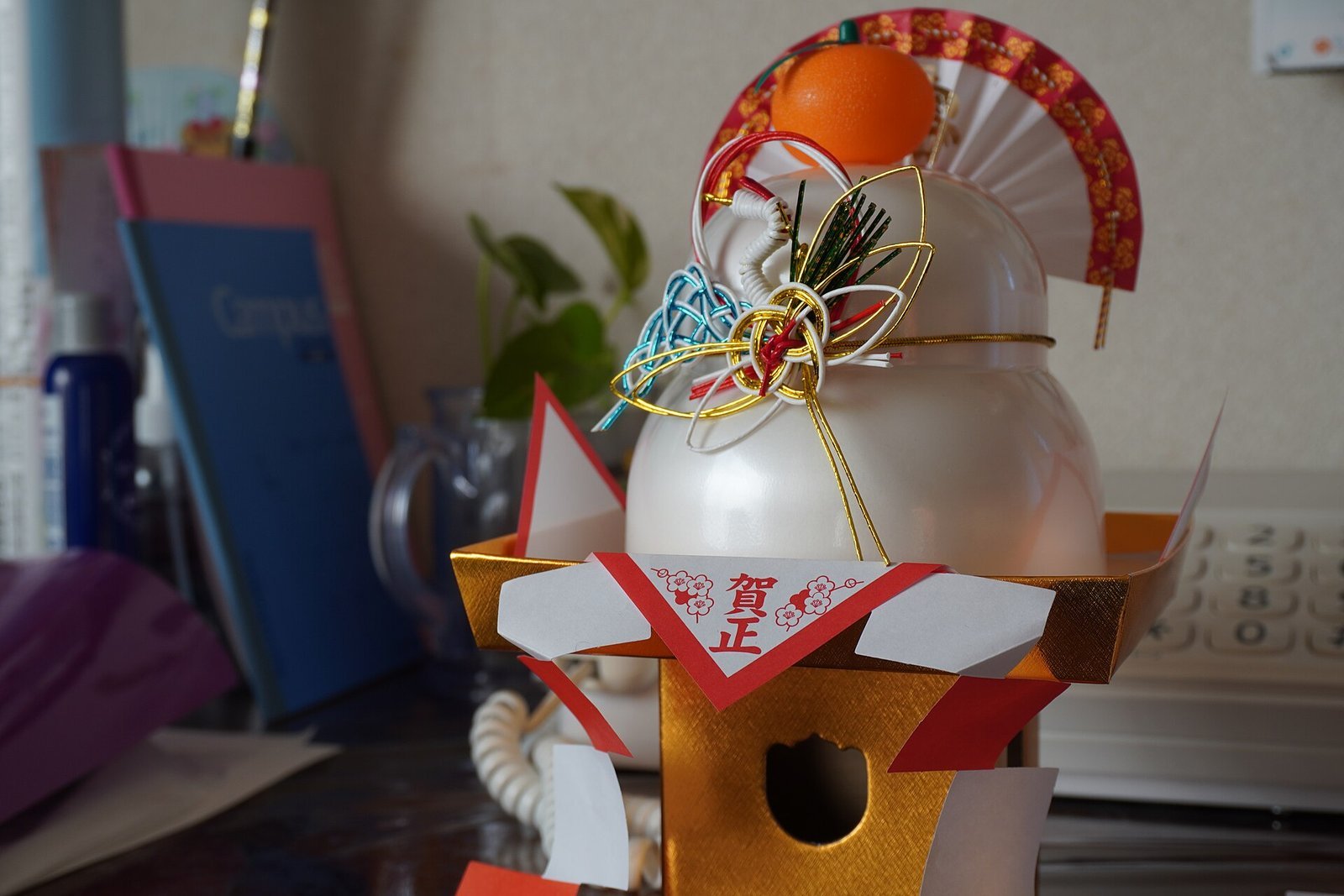
Plastic or foam versions are common in apartments, and Japanese grocery stores in the US often stock compact shimekazari and plastic kagami mochi in December. Take decorations down with the local matsu-no-uchi end date (7 or 15 January), not on New Year’s Day itself.
New Year’s Eve at home: soba, Kohaku and bells on TV
Toshikoshi soba
On 31 December most households eat toshikoshi soba (年越しそば), “year-crossing” buckwheat noodles. The long noodles stand for a long life; because soba breaks easily it also stands for cutting away the past year’s troubles. Most people eat them at dinner or during the evening, not necessarily at the stroke of midnight, and some families prefer to finish before the year turns.
Standing soba chains in Japan charge around 400 yen (about $2.50-3 at roughly $1 = 155 yen). At home in the US, dried soba plus a simple dashi or store broth is enough; add green onion and a sheet of nori if you have them.
Kohaku Uta Gassen
NHK’s Kohaku Uta Gassen (紅白歌合戦), the Red and White Song Battle, is the living-room soundtrack of omisoka. It began on radio on 3 January 1951 and has aired on 31 December since 1953. Broadly, the red team is female artists and the white team male. NHK has scheduled the 77th edition for Thursday 31 December 2026, 7:20 pm-11:45 pm Japan time; performers were still being announced as of late October 2026. Overseas viewers often catch clips on NHK World or official streams where licensed.
US time zones: Japan is 14 hours ahead of Eastern and 17 ahead of Pacific in winter, so the broadcast starts around 5:20 am ET / 2:20 am PT on 31 December. Many people watch a recording later.
Joya-no-kane from the sofa
Around midnight, Buddhist temples ring their bells 108 times in joya-no-kane (除夜の鐵), a cleansing of 108 earthly desires. You do not have to stand in a temple courtyard to take part: NHK and local stations cover the bells, and many families simply listen at home after Kohaku ends. If you do want to go out for the real thing, use the shrine and temple notes in our Oshogatsu travel guide.
New Year’s Day at the table: osechi and ozoni
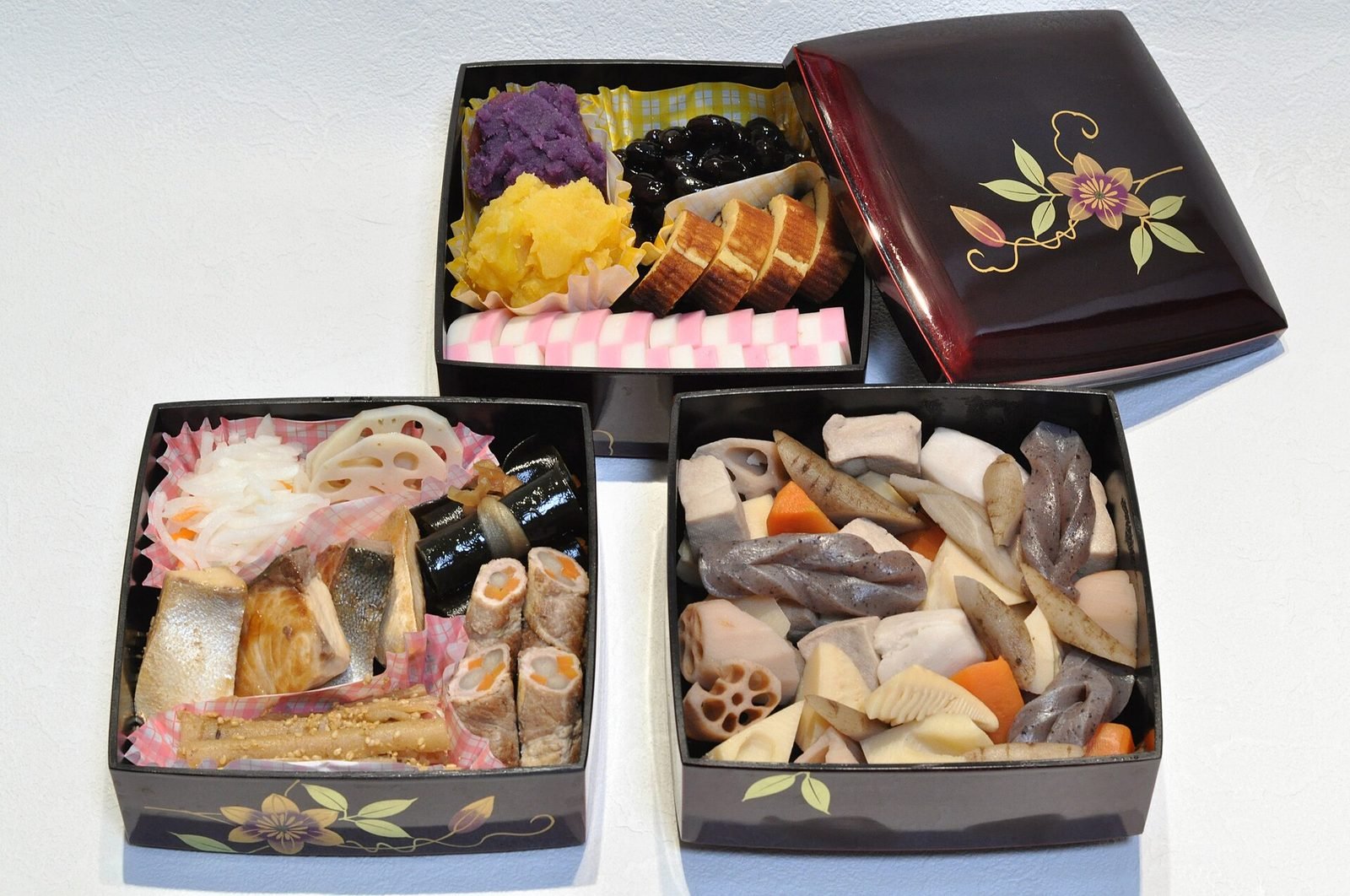
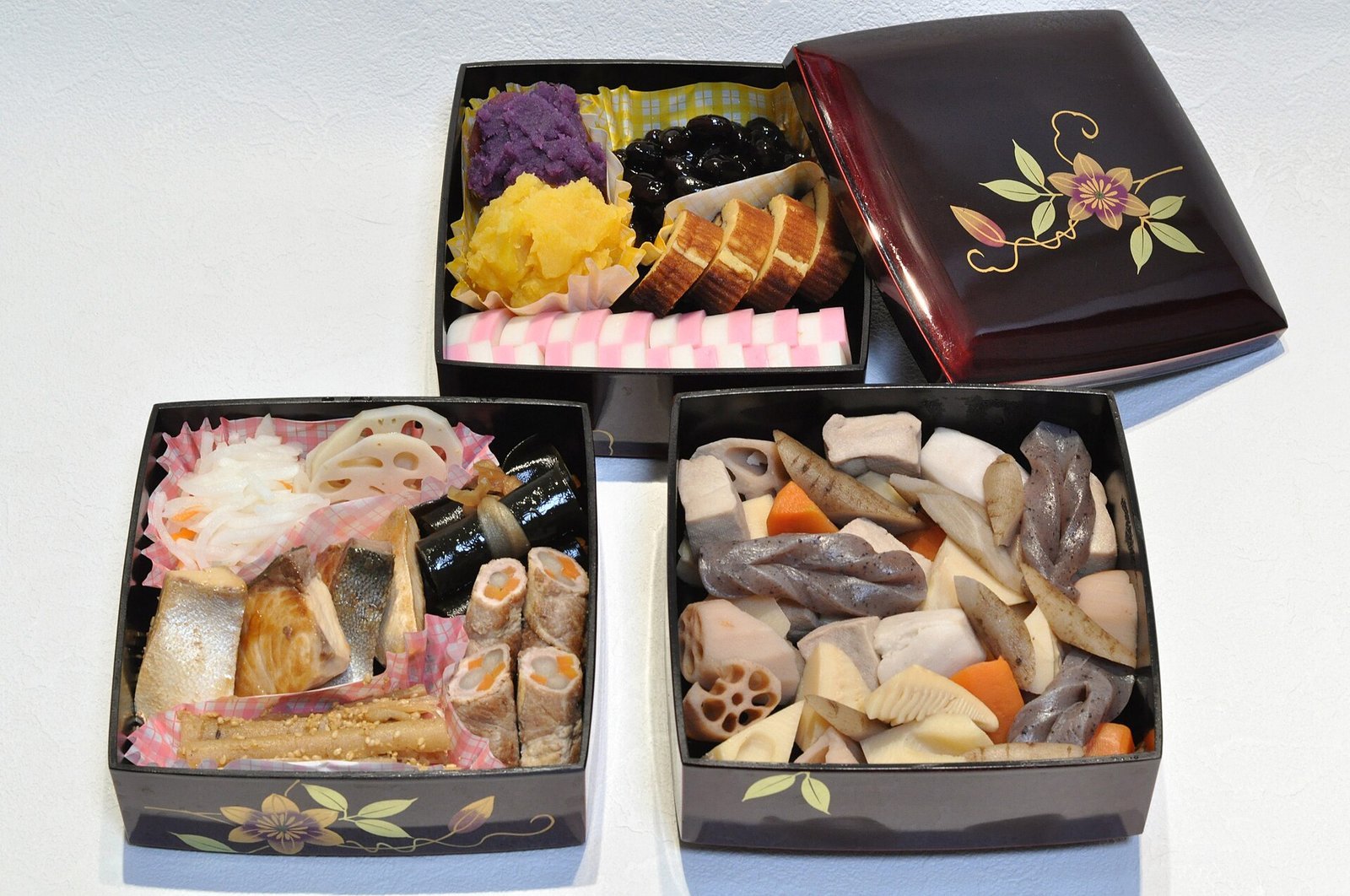
Osechi ryori (おせち旳理) is the boxed New Year feast packed into stacked lacquer jubako. Dishes keep for days so the household cook (and, traditionally, the kitchen fire deity) can rest. Today most families buy at least part of their osechi; Teikoku Databank put the average ready-made set for New Year 2026 at 29,098 yen (about $190 at $1 = 155 yen).
Ozoni (お雜煦) is the mochi soup eaten from the morning of 1 January. Around Tokyo, square mochi are usually grilled and served in clear dashi-soy broth; in Kansai, especially Kyoto, round mochi often go into white miso soup. One real safety note: mochi is very sticky. The Tokyo Fire Department warns every winter about choking, mostly among people aged 65 or older, with January the worst month. Cut pieces small and eat slowly.
| Food | Japanese | Symbolism | When | Typical price (yen / USD) |
|---|---|---|---|---|
| Osechi box (convenience / mid-range) | おせち旳理 | Whole feast: health, prosperity, family | 1-3 Jan | About 6,000-40,000 yen ($40-260) for 2027 preorders |
| Osechi box (department store) | おせち | Premium ingredients | 1-3 Jan | Commonly 20,000-50,000+ yen ($130-320+) |
| Sweet black soybeans | 黒豆 (kuromame) | Health and hard work (“mame” = diligent) | 1-3 Jan | Part of osechi |
| Herring roe | 数の子 (kazunoko) | Many children, thriving family line | 1-3 Jan | Part of osechi |
| Sweet rolled omelette | 伊達布 (datemaki) | Looks like a scroll; learning and culture | 1-3 Jan | Part of osechi |
| Sweet potato and chestnut mash | 格きんとん (kurikinton) | Golden colour; wealth | 1-3 Jan | Part of osechi |
| Prawns | 海老 (ebi) | Long life (bent back like a prawn) | 1-3 Jan | Part of osechi |
| Ozoni mochi soup | お雜煦 | Shared after offering to the year deity | From morning of 1 Jan | Usually homemade |
| Toshikoshi soba | 年越しそば | Long life; cut off old troubles | 31 Dec evening | ~400 yen ($3) at chains; homemade cheaper |
Prices above are based on the 2025-2026 season and 2027 preorder catalogues, converted at roughly $1 = 155 yen (the rate was nearer 158 in late October 2026, so check before you buy). For a deeper travel-side food and price table, see the main Oshogatsu guide. Our Japanese bento box guide is useful if you already like packing layered Japanese meals.
Otoshidama: New Year money for children
Otoshidama (お年玈) is cash given to children by parents, grandparents and relatives in small decorated envelopes called pochi-bukuro (ぽち袋). Amounts rise with age. In market researcher Intage’s 2026 survey (5,000 people, November 2025), the most common amount per child was:
| Child’s age | Most common amount (yen) | About USD ($1 = 155 yen) |
|---|---|---|
| Preschool | Up to 1,000 | Up to ~$6 |
| Lower elementary | 2,001-3,000 | ~$13-19 |
| Upper elementary / junior high | 4,001-5,000 | ~$26-32 |
| High school / university | 9,001-10,000 | ~$58-65 |
Those are the most common answers, not averages. The same survey put the average total budget per giver at 24,039 yen (about $155). Nobody expects otoshidama from foreign guests. If you are hosting Japanese children in the US, a few dollars in a cute envelope is a kind gesture, not a rule.
Nengajo: New Year cards that arrive on 1 January
Nengajo (年賀状) are New Year postcards, delivered in a special New Year batch on 1 January. For 2027 cards (the Year of the Sheep, hitsuji), Japan Post put them on sale from 2 November 2026, accepts them into the New Year batch from 20 December, and asks senders to post by 27 December for 1 January delivery. A plain card costs 85 yen. Official cards carry a lottery number drawn in mid-to-late January.
Volumes keep falling as people switch to LINE and email, but opening a stack of cards on New Year’s morning is still a classic living-room scene. From the US you can send digital greetings, or mail cards early as ordinary international post (they will not join Japan Post’s 1 January drop).
Hatsumode: keep it brief, then come home
Most families still make hatsumode (初読), the first shrine or temple visit of the year, sometime in the first week of January. It does not have to be at midnight on 1 January. After praying, people often buy a new omamori charm, return last year’s charms, and stop for amazake or a snack before heading home to more osechi.
This page does not cover shrine maps, crowd tips or etiquette step-by-step. That belongs in our Oshogatsu travel and hatsumode guide. If you are staying in a Japan Airbnb, ask the host which neighbourhood shrine they use; a quiet local visit on 2 or 3 January is often nicer than Meiji Jingu at peak.
After the first three days
- 7 January: Nanakusa-gayu, rice porridge with seven spring herbs, to rest the stomach after the feast. Supermarkets sell herb sets. Around Tokyo, decorations usually come down.
- 11 January 2027: Kagami-biraki, when kagami mochi is broken and eaten (often in sweet red-bean soup). It coincides with Coming of Age Day, the second Monday of January.
- Around 15 January: Koshogatsu (Little New Year) and dondo-yaki bonfires where shrines burn old decorations and charms. In parts of Kansai, matsu-no-uchi ends around now.
For the wider public-holiday calendar, see our guide to public holidays in Japan.
Useful New Year phrases at home
- Yoi otoshi o (良いお年を): “Have a good year-end,” said when you part before New Year.
- Akemashite omedeto gozaimasu (明けましておめでとうございます): “Happy New Year,” from 1 January.
- Kotoshi mo yoroshiku onegaishimasu (今年もよろしくお願いします): “I look forward to your kindness this year,” said right after the greeting.
How US readers (and Japan Airbnb guests) can join in
You do not need a full jubako to feel the season. A practical at-home checklist:
- Pick a clean day in late December and do a real osoji of kitchen, entry and living room.
- Add one decoration: a small shimekazari on the door, a plastic kagami mochi on a shelf, or even a pine sprig in a vase.
- Cook or buy soba for 31 December, then watch Kohaku clips or a quiet film instead of a loud party.
- Make a mini osechi: kuromame, datemaki and kazunoko recipes are widely published in English; or order a small set from Mitsuwa, Nijiya or another Japanese grocer (in the 2025-2026 season they took preorders from November for pickup around 31 December).
- Serve ozoni on 1 January morning; cut the mochi small.
- Write a few cards or messages to friends; sheep motifs fit 2027.
- If you are in Japan in an Airbnb: expect quiet neighbourhoods 1-3 January, buy convenience-store osechi or soba if restaurants are closed, and save big-shrine plans for our travel guide. Leave decorations alone if the host put them up.
Gift ideas for a Japan-loving household also appear in our Japanese gifts guide.
Useful buys for Oshogatsu at home
These are research-based picks; we have not tested every item ourselves. Affiliate links use our Amazon tag.
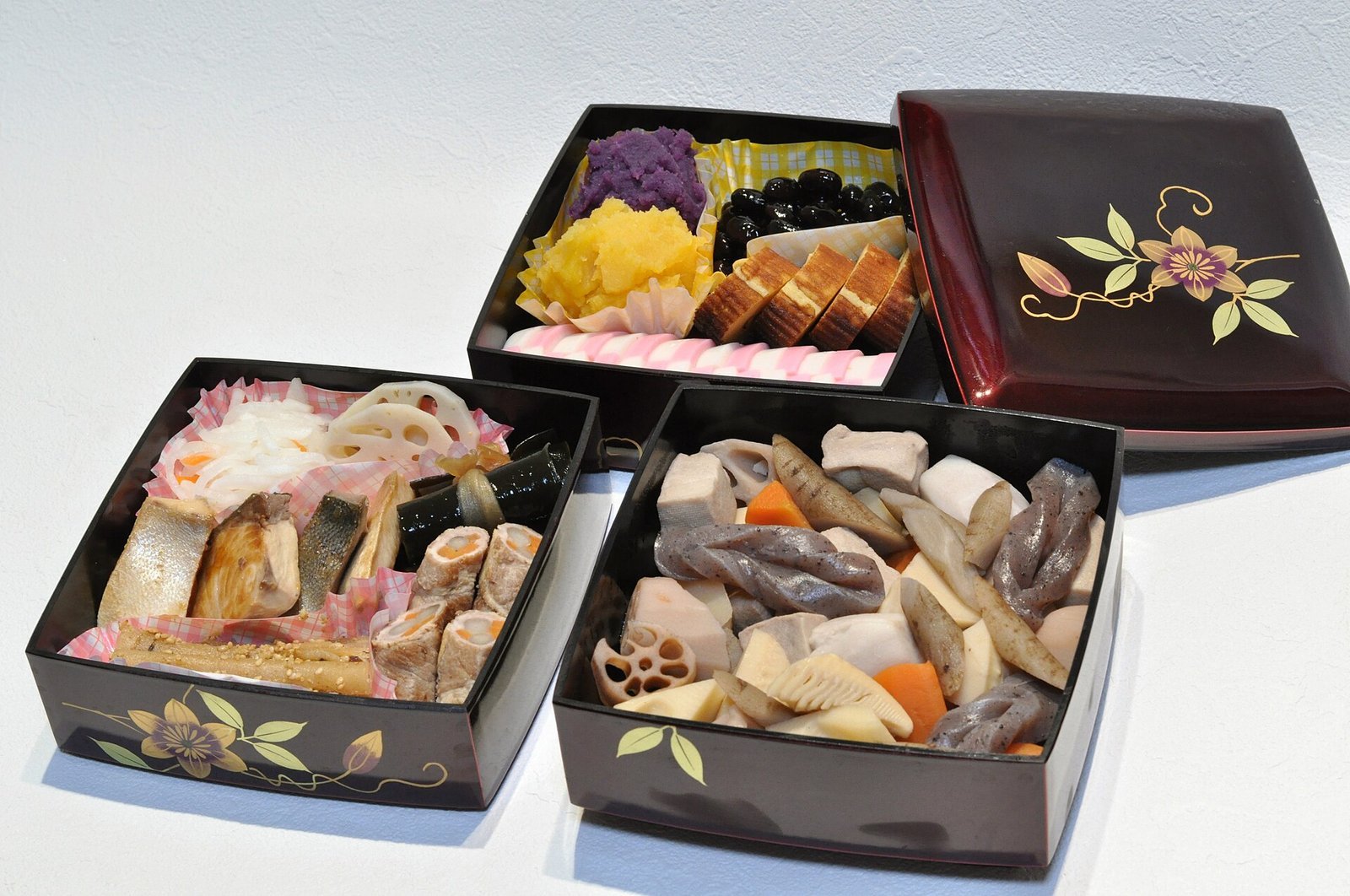
Osechi dishes (illustrative photo of the food, not the book cover). Photo: Ocdp, CC0, via Wikimedia Commons
Just One Cookbook Vol 3: Osechi Japanese New Year Recipes
English cookbook devoted to osechi: kuromame, tazukuri, ozoni and tips for packing a jubako.
Check price on Amazon
A traditional jubako stacking box (item type; museum piece, not the exact product). Photo: The Metropolitan Museum of Art, CC0, via Wikimedia Commons
Japanese 3-tier jubako stacking box
Three-tier jubako for serving homemade or store-bought osechi; lacquer-finish plastic, made in Japan.
Check price on Amazon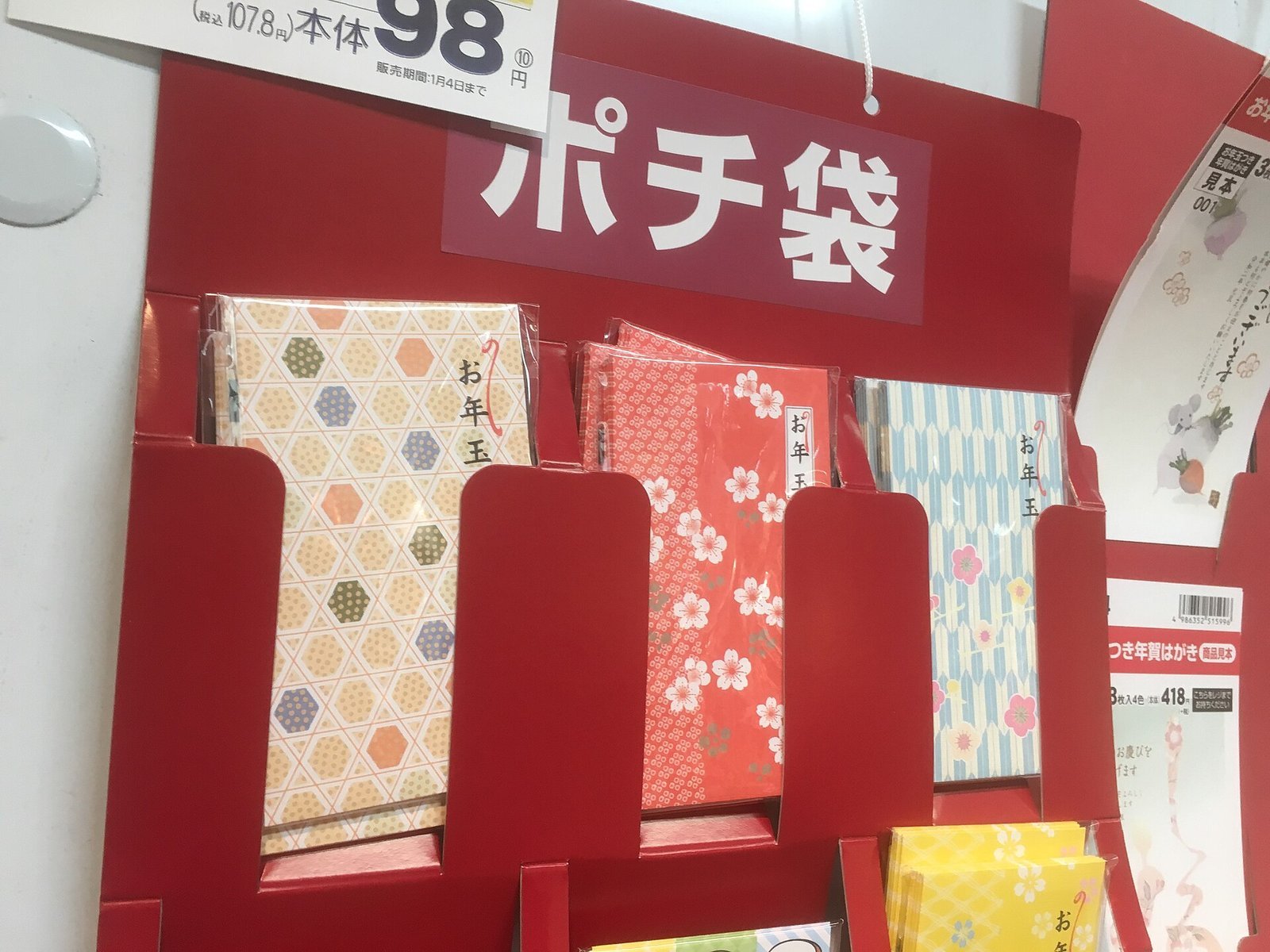
Pochi-bukuro envelopes on sale in Japan (item type, not the exact pack). Photo: Nesnad, CC BY 4.0, via Wikimedia Commons
Japanese pochi-bukuro money envelopes (15 pack)
Made-in-Japan pochi-bukuro for otoshidama, tips and small thank-you cash gifts.
Check price on AmazonFAQ: Japanese New Year at home
What do Japanese families do at home for New Year?
They deep-clean (osoji), put up kadomatsu and shimekazari, eat toshikoshi soba and watch Kohaku on 31 December, then spend 1-3 January on osechi, ozoni, otoshidama and nengajo. Hatsumode is usually a short outing; most of the holiday is domestic.
When should I put up and take down New Year decorations?
Put them up by 28 December if you can; avoid the 29th and 31st. Take them down when matsu-no-uchi ends: around 7 January near Tokyo, or around 15 January in parts of Kansai.
What is osechi ryori?
It is the New Year feast of symbolic dishes packed in stacked jubako boxes. Families eat it over 1-3 January. Many sets are pre-ordered in autumn; average ready-made prices for 2026 were about 29,000 yen.
How much otoshidama should I give?
It rises with age. Intage’s 2026 survey found the most common amounts were up to 1,000 yen for preschoolers, 2,001-3,000 for lower elementary, 4,001-5,000 for upper elementary and junior high, and 9,001-10,000 for high school and university students. Foreign guests are not expected to give it.
When do nengajo go out for New Year 2027?
Japan Post sold 2027 cards from 2 November 2026. Post them from 20 December, ideally by 27 December, for 1 January delivery. A plain card is 85 yen.
Can I celebrate Oshogatsu at home in the US?
Yes. Do a year-end clean, cook soba on the 31st, make or buy a small osechi set from a Japanese grocer, serve ozoni on 1 January and send a few New Year messages. Full shrine travel tips live in our companion guide.
What time is Kohaku 2026 in the US?
The 77th Kohaku is scheduled for 31 December 2026, 7:20-11:45 pm Japan time, which is about 5:20-9:45 am Eastern or 2:20-6:45 am Pacific on the same calendar date. Many viewers watch later.
Is hatsumode required to celebrate New Year?
No. It is very common, but the household customs (cleaning, food, decorations, gifts, cards) stand on their own. If you do visit a shrine, follow the etiquette in our Oshogatsu travel guide.
Shogatsu at home is quieter than the shrine queues suggest: a clean house, a few symbolic dishes, money envelopes for kids and a long evening in front of the TV. Pair this page with our 2026-2027 Oshogatsu travel guide when you need dates, hatsumode maps and closure tips for a trip to Japan.
Comment (1)