
As an Amazon Associate, Chasing Cherry Blossoms earns from qualifying purchases. We may also earn from other affiliate links on this page at no extra cost to you.
You do not need to be fluent to travel well in Japan, but a handful of polite words changes how a lot of small moments go. This guide covers the Japanese phrases for travelers that are actually worth learning, how to say them, and what to do when the conversation stalls.
Quick answer: Six phrases do most of the work: sumimasen (excuse me), arigatou gozaimasu (thank you), onegaishimasu (please), [place] wa doko desu ka? (where is…?), eigo wa hanasemasu ka? (do you speak English?) and wakarimasen (I don’t understand). Open with sumimasen, ask your question, then thank them. Show, don’t spell: keep the name or address of where you’re going saved in Japanese script on your phone and point to it. A translation app can fill in everything else.
Why a few words matter (and why you don’t need to be fluent)
In November 2026 a viral post on X sparked a big debate about visitors asking for directions in English. The practical takeaway is simple: a few polite Japanese words, then English or a translation app if needed, usually goes down well, and most people are happy to help a traveler who makes a small effort.
JNTO, Japan’s national tourism organization, publishes a short list of greetings and simple questions on its Japanese language page. Aim for polite and understandable, not perfect.
The table below is the starting kit. The “say it like” column is a rough English-sound guide, with hyphens between beats.
The 12 Japanese phrases worth learning first
| Phrase (romaji) | Japanese | Say it like | Meaning | When to use |
|---|---|---|---|---|
| Sumimasen | すみません | su-mi-ma-sen | Excuse me / sorry / thanks for the trouble | Getting attention, squeezing past, small apologies |
| Arigatou gozaimasu | ありがとうございます | a-ri-ga-toh go-zai-mas | Thank you (polite) | Any time someone helps you |
| Onegaishimasu | お願いします | o-neh-gai-shi-mas | Please (making a request) | Ordering, asking for a favor or service |
| [Place] wa doko desu ka? | ~はどこですか | wa do-ko dess ka | Where is [place]? | Directions, finding anything |
| Eigo wa hanasemasu ka? | 英語は話せますか | eh-go wa ha-na-se-mas ka | Can you speak English? | When you need to switch languages |
| Wakarimasen | わかりません | wa-ka-ri-ma-sen | I don’t understand | When an answer goes over your head |
| Mou ichido onegaishimasu | もう一度お願いします | moh i-chi-do o-neh-gai-shi-mas | One more time, please | Asking someone to repeat |
| Yukkuri onegaishimasu | ゆっくりお願いします | yuk-ku-ri o-neh-gai-shi-mas | Slowly, please | When speech is too fast to follow |
| Ikura desu ka? | いくらですか | i-ku-ra dess ka | How much is it? | Shops, markets, menus without prices |
| Kore o kudasai | これをください | ko-re o ku-da-sai | This one, please | Pointing at an item to buy or order |
| Toire wa doko desu ka? | トイレはどこですか | toy-reh wa do-ko dess ka | Where is the restroom? | Anywhere you need one |
| Daijoubu desu | 大丈夫です | dai-joh-bu dess | I’m fine / no thank you | Politely declining (see the note below) |
A few more everyday words are worth recognizing: konnichiwa (こんにちは, hello), ohayou gozaimasu (おはようございます, good morning), konbanwa (こんばんは, good evening), and hai (はい, yes). JNTO’s list also includes iie (いいえ, no), but a polite “daijoubu desu” with a small head shake is a softer way to decline. It can be ambiguous (“no thanks” or “that’s fine, go ahead”), so add a gesture.
The magic word: sumimasen
Sumimasen (すみません) is the most useful word you can learn. It means excuse me, and also sorry, and also a kind of “thank you for going to the trouble”. Use it to catch a staff member’s attention, to squeeze past someone, or to apologize for a small bump. JNTO also lists gomen nasai (ごめんなさい), “I am sorry”, a more personal apology that is used more with people you know; with strangers, sumimasen is the safer choice.
It is especially handy in busy places. At busy temples such as Senso-ji, a quiet “sumimasen” when you need to pass is much better than a shove; our Senso-ji guide covers what to expect there. The same goes for packed trains, where our train etiquette guide explains the unwritten rules.
How to ask for directions politely
Here is a simple four-step script that works almost anywhere.
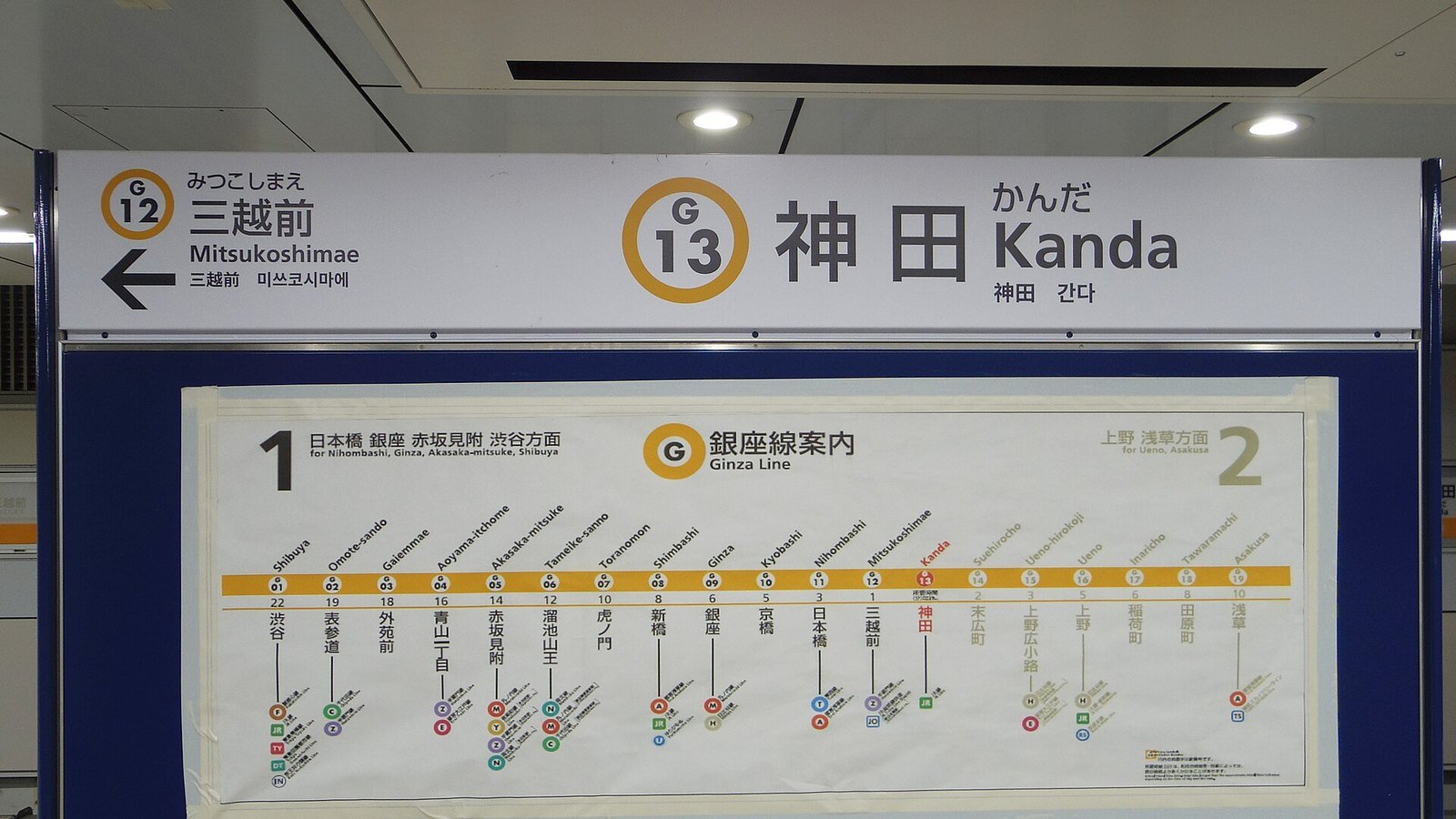
- Step 1: get attention. Say “Sumimasen” (すみません) with a slight nod.
- Step 2: ask. Say the place, then “wa doko desu ka?” For example: “Eki wa doko desu ka?” (駅はどこですか), meaning “Where is the station?” If you don’t know the Japanese word, say the name you have, or just hold up your phone.
- Step 3: show, don’t spell. Show the written name or a map on your screen. A screenshot of the name in Japanese script avoids misunderstandings. Use “yukkuri onegaishimasu” (ゆっくりお願いします) if they answer quickly.
- Step 4: thank them. “Arigatou gozaimasu” (ありがとうございます), with a small nod.
Answers often come with hand gestures, so listen for the words in the table below.
Directions vocabulary cheat sheet
| Word (romaji) | Japanese | Meaning |
|---|---|---|
| Migi | 右 | Right |
| Hidari | 左 | Left |
| Massugu | まっすぐ | Straight ahead |
| Kado | 角 | Corner |
| Eki | 駅 | Station |
| Chikatetsu | 地下鉄 | Subway |
| Deguchi | 出口 | Exit |
| Iriguchi | 入口 | Entrance |
| Chizu | 地図 | Map |
A tip for stations: the exit you choose matters as much as the station. If you have an exit name or number from your map, show it and ask “Deguchi wa doko desu ka?” (出口はどこですか).
Phrases for restaurants and cafes
When you walk in, staff will often call out irasshaimase (いらっしゃいませ), meaning “welcome”. You don’t need to reply; a nod or a smile is fine. For what to eat once you sit down, see our guide to ordering at a Japanese restaurant.
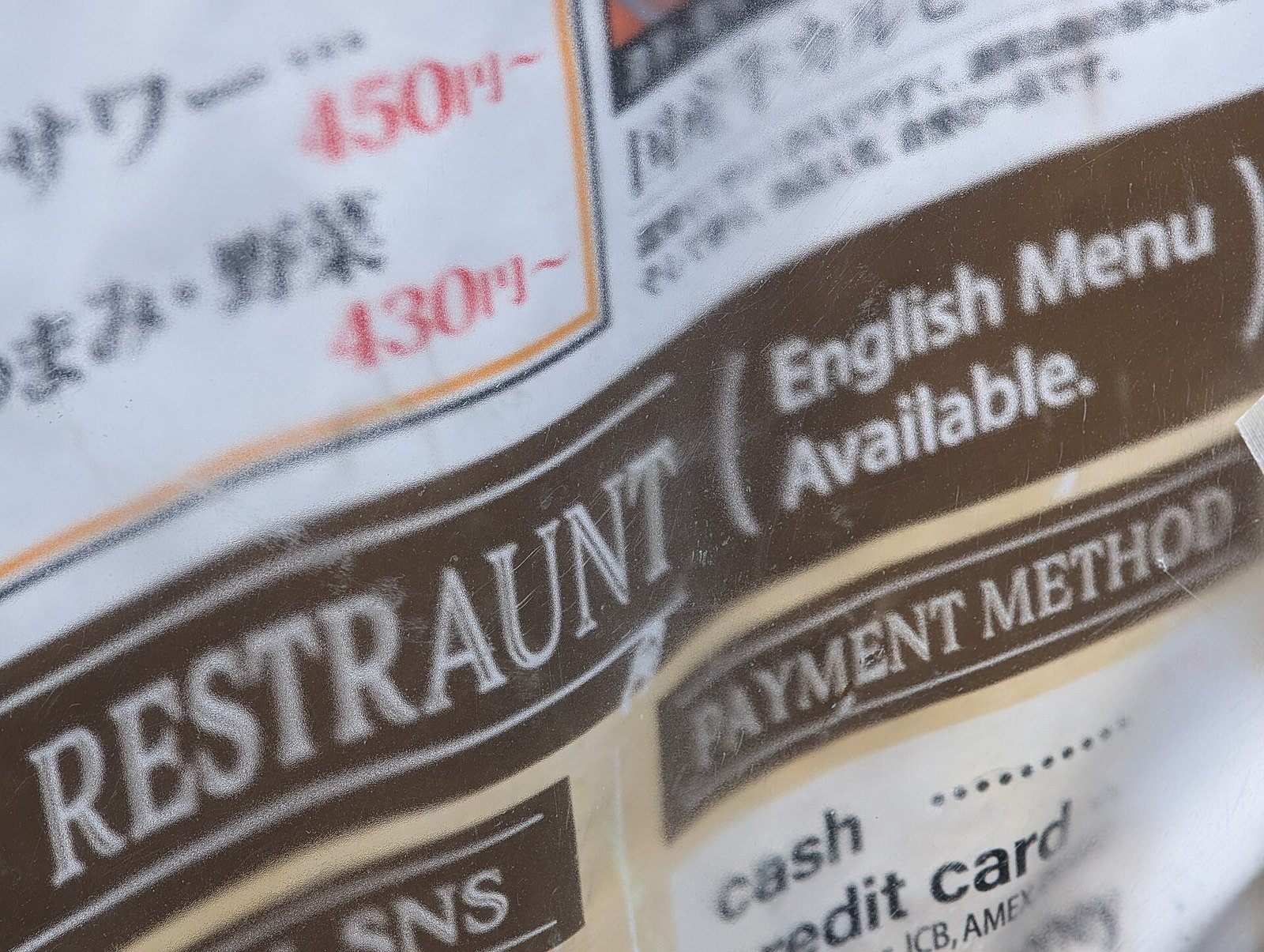
- Kore o kudasai (これをください): “This one, please.” Point to the menu item or the plastic display.
- Onegaishimasu (お願いします): add it to anything you request, such as “O-mizu onegaishimasu” (お水お願いします) for water.
- Itadakimasu (いただきます): said before eating, a small thank-you for the meal.
- Gochisousama deshita (ごちそうさまでした): said after eating, to thank the cook and host.
- Okaikei onegaishimasu (お会計お願いします): “The bill, please.”
- Arerugii ga arimasu (アレルギーがあります): “I have an allergy”; put the food name in front, as in “[food] arerugii ga arimasu”. For anything that matters, carry a written card in Japanese rather than relying on a spoken phrase.
Phrases for shops and convenience stores
Shopping needs few words: point, hold up the item, and use the phrases below. Our travel money guide covers cash and cards in more detail.
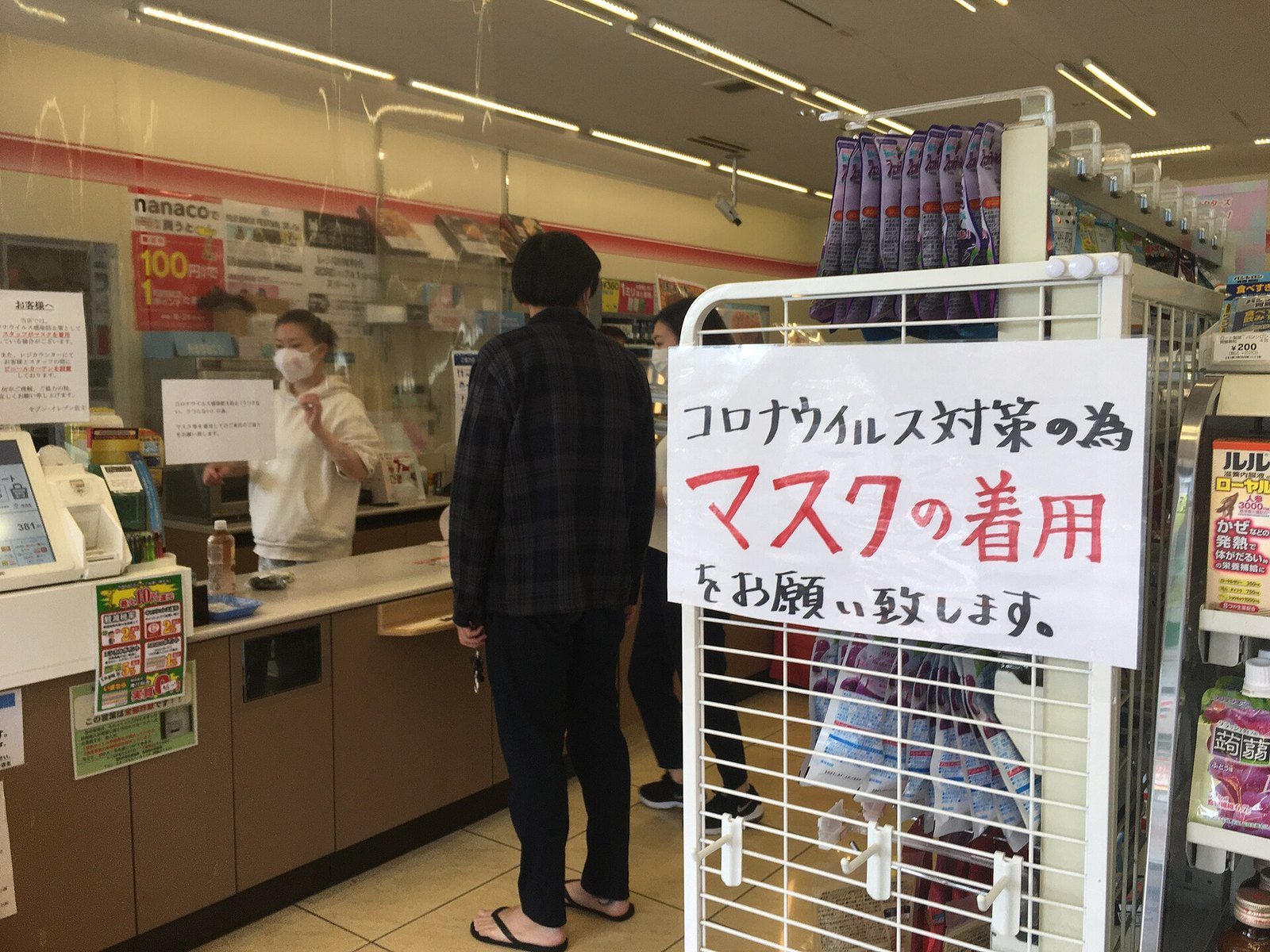
- Ikura desu ka? (いくらですか): “How much is it?”
- Kaado wa tsukaemasu ka? (カードは使えますか): “Can I use a card?” This is a natural way to ask; a card symbol on the door is also a hint.
- Fukuro wa daijoubu desu (袋は大丈夫です): “I don’t need a bag.”
- Kore o kudasai (これをください): “I’ll take this one.”
Other situations have their own phrases and rules. For hot springs, see our onsen etiquette guide, and for a broader view of manners, our Japanese culture overview. Visiting around the holidays? The standard New Year greeting is akemashite omedetou gozaimasu (あけましておめでとうございます), used from January 1, with yoi otoshi o (良いお年を) said before the year ends. Details on the season are in our Oshogatsu guide.
When you’re stuck: apps, writing it down and switching to English
Conversations stall, and that is fine. Three tools help.
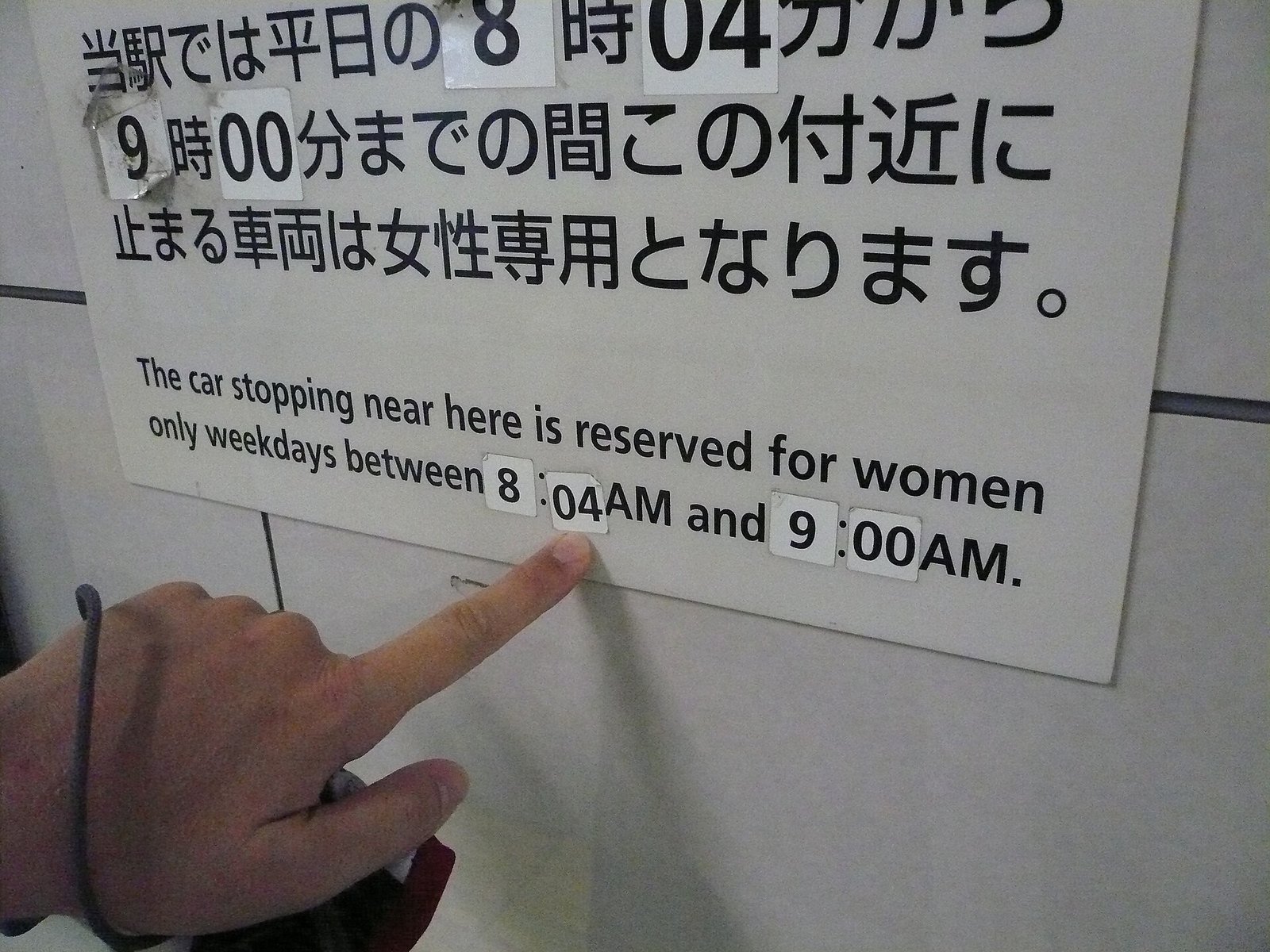
- Write it down or show it. Keep addresses, hotel names and station names saved in Japanese script as screenshots or notes. Point to the text instead of reading it aloud.
- Use camera translation for signs and menus. Google’s help page says you can use your phone’s camera to translate text in the Translate app, and warns that small, unclear or stylized text may not translate accurately (see Google’s page on translating images).
- Download Japanese for offline use. Google says downloaded languages let you translate without an internet connection, and that camera translations work for downloaded languages when you’re offline (see Google’s page on offline languages). Do it on Wi-Fi before you fly.
If you want data on the go for maps and translation, our Japan eSIM guide compares the options. JNTO’s language page also points to VoiceTra, a free speech translation app from Japan’s NICT research institute (it needs an internet connection). If speech or text still isn’t working, say “Eigo wa hanasemasu ka?”, and switch to simple English with a smile.
Pronunciation tips that make you easier to understand
- Keep vowels short and pure. Japanese has five: a (ah), i (ee), u (oo), e (eh), o (oh). Don’t turn them into English diphthongs.
- Don’t stress “desu” and “masu”. The final “u” is often very soft, so they sound close to “dess” and “mahss”.
- Hold long vowels slightly. The “ou” in “arigatou” is a longer “oh”, and the double “k” in “yukkuri” has a tiny pause.
- Stay flat and calm. A steady, polite tone is clear enough. Questions end in “ka”, and a slight rise on it helps.
Research-based picks
We have not tested these; they are optional research-based picks for practice.
A travel phrasebook with romaji and Japanese script is handy for pointing at when your phone battery is low.
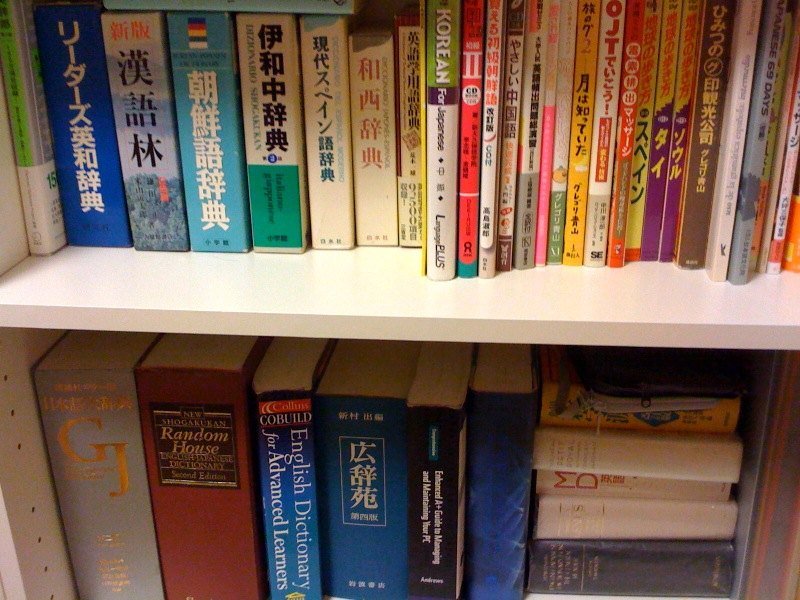
Japanese dictionaries (item type, not the exact product). Photo: yosshi, CC BY-SA 2.0, via Wikimedia Commons
Japanese phrasebook for travelers
Romaji plus Japanese script, so you can point at a phrase when your phone battery runs low.
Search on AmazonA pocket two-way voice translator is a dedicated device for people who would rather not pass their phone around.
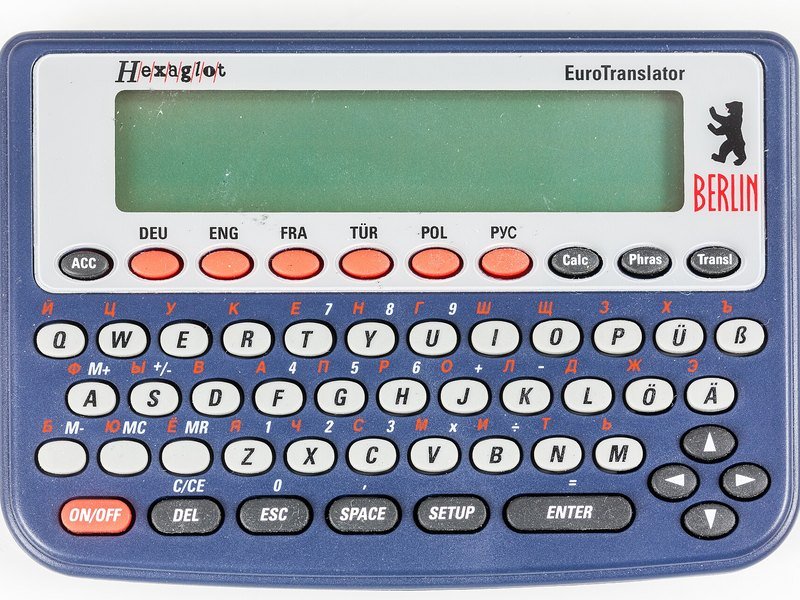
Handheld translator (item type, not the exact product). Photo: Raimond Spekking, CC BY-SA 4.0, via Wikimedia Commons
Pocket two-way voice translator
A dedicated handheld device if you would rather not pass your phone around.
Search on AmazonHiragana and katakana flashcards can help you recognize station signs and menu words before you go.
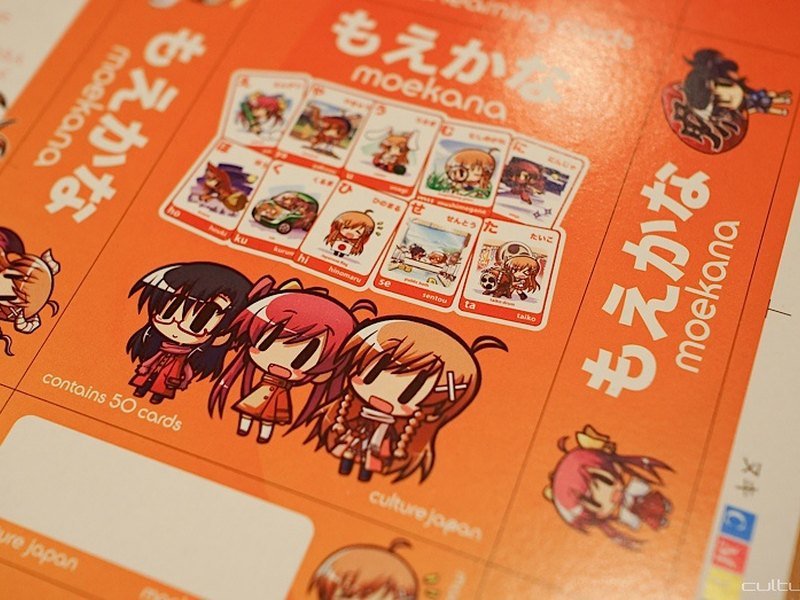
Kana flashcards (item type, not the exact product). Photo: Danny Choo, CC BY-SA 2.0, via Wikimedia Commons
Hiragana and katakana flashcards
Learn the two kana scripts before you go and station signs and menus start to look familiar.
Search on AmazonFAQ
Do I need to speak Japanese to visit Japan?
No. Many travelers manage with a few polite phrases, written place names and a translation app. A handful of polite words is a courtesy most people appreciate.
What does sumimasen mean?
Sumimasen (すみません) means excuse me, and also sorry, and a gentle thank-you for someone’s trouble. It is the best way to start a question to a stranger.
How do you say thank you in Japanese politely?
Say “arigatou gozaimasu” (ありがとうございます). Plain “arigatou” (ありがとう) is the shorter, more casual form and is what JNTO lists. For a past favor, you may hear “arigatou gozaimashita” (ありがとうございました).
Is it rude to ask for directions in English in Japan?
It isn’t rude as such, but opening with “sumimasen” first is friendlier, and trying a phrase before switching to English or an app is appreciated. The courteous approach is easy: greet, ask, show your map, thank them.
How do I ask “where is the bathroom” in Japanese?
Say “Sumimasen, toire wa doko desu ka?” (すみません、トイレはどこですか). You may also see お手洗い (otearai) on signs, which also means restroom.
Should I bow when I say thank you?
A small nod of the head is enough for visitors, and nobody expects a deep bow. Pair it with “arigatou gozaimasu” and you are polite in any everyday situation.
What is the best app for translating Japanese while traveling?
Google Translate is a common choice because it offers camera translation for signs and menus and lets you download Japanese for offline use, per Google’s help pages. JNTO also points visitors to VoiceTra, a free speech translation app that works online. Try whichever you choose before you leave home.
Sources
These are the pages we relied on for language and app details.
- JNTO (Travel Japan): Japanese Language – basic greetings and questions (seen Nov 2026)
- Google Translate Help: Translate images – camera translation (seen Nov 2026)
- Google Translate Help: Download languages to use offline – offline use (seen Nov 2026)
- NICT: VoiceTra speech translation app – free, internet required (seen Nov 2026)
- Shinjuku Japanese Language Institute: How to wish a happy new year in Japanese – New Year greetings (seen Nov 2026)
Bottom line
You don’t need fluency, just a few polite words. Open with sumimasen, try one simple phrase, show the place name in Japanese on your phone, and say arigatou gozaimasu. If the conversation stalls, a translation app or simple English fills the gap.
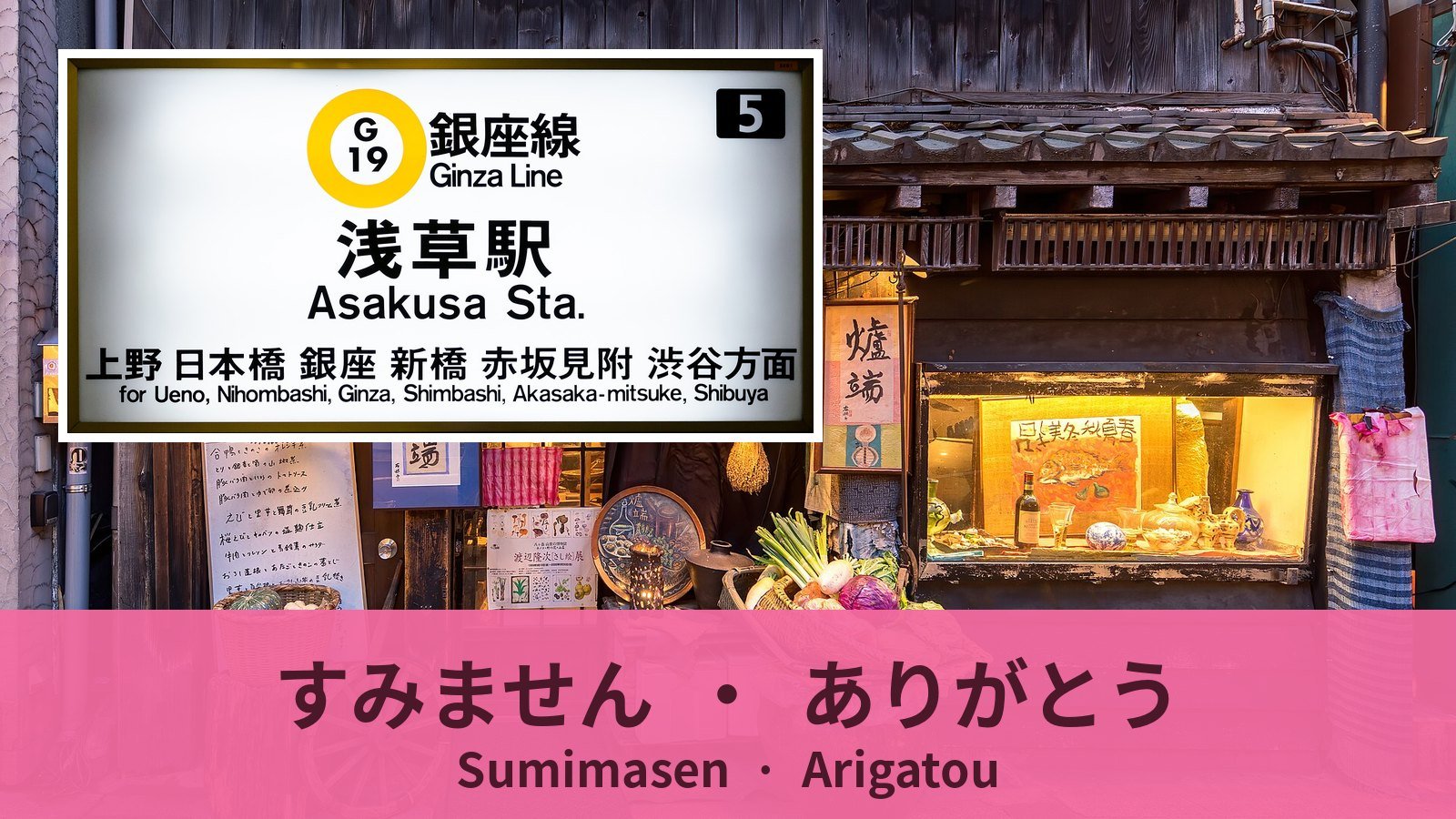
Top photo: Asakusa Station sign on the Tokyo Metro Ginza Line and a traditional restaurant front in Chiyoda, Tokyo, with a text overlay. Photo: DXR, CC BY-SA 3.0, via Wikimedia Commons; Photo: Basile Morin, CC BY-SA 4.0, via Wikimedia Commons.
Comment (1)