
Disclosure: this post may contain affiliate links. If you buy through them, Chasing Cherry Blossoms may earn a commission at no extra cost to you. Affiliate disclosure.
Captivating Beauty: Exploring Tokyo’s Enchanting Cherry Blossoms
Cherry blossoms, known as sakura in Japanese, are the great symbol of spring in Tokyo. These delicate pink and white flowers bloom for only a week or two, and for that short window the whole city feels a little bit magical. Every year I’m struck by how people stop, look up and simply smile. In this guide I’ll share what I’ve learned about the best places to see sakura in Tokyo, when to go, and how to plan a smooth trip for the 2026-27 season and beyond.
The History and Significance of Cherry Blossoms in Tokyo
Cherry blossoms have been admired in Japan for well over a thousand years. Over the centuries they became tied to the idea of impermanence, the beauty of something precisely because it doesn’t last.
In Tokyo (then called Edo), the Edo period (1603-1868) saw cherry trees planted in public spaces, including along the Sumida River, so ordinary townspeople could enjoy flower viewing. That tradition, hanami, is still very much alive today.
The Best Places to See Cherry Blossoms in Tokyo
The Famous Favorites
- Ueno Park: Roughly a thousand trees line the main path, and it’s lively, social and busy. Perfect if you want the full hanami atmosphere.
- Shinjuku Gyoen National Garden: A calm, spacious garden with many varieties, so the season stretches longer here. There is an entrance fee (about 500 JPY for adults; check the official site for current prices) and alcohol is not allowed inside.
- Chidorigafuchi: Cherry branches arching over the Imperial Palace moat. Rowing boats are available to rent in season (reservations or same-day tickets, with prices changing yearly), and the area is lit up in the evening during the blossom period.
Quieter Alternatives
- Rikugien Garden: Known for its large weeping cherry tree and special evening illuminations in spring; check the official site for dates, hours and admission.
- Koishikawa Korakuen: A traditional landscape garden with a gentler crowd.
- Meguro River: A canal lined with cherry trees, beautiful by day and especially at night when lanterns glow. It gets very crowded at peak, so go early.
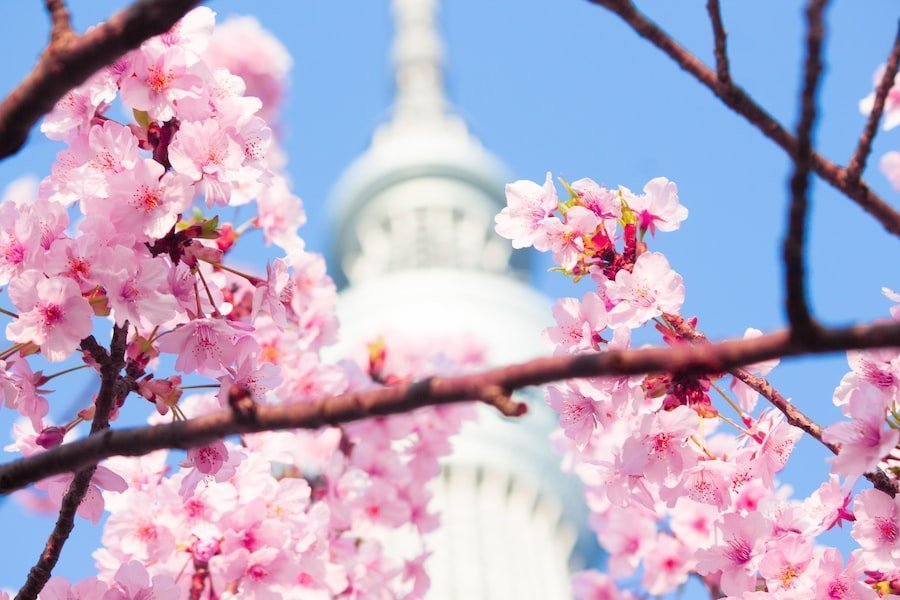
- Sumida Park: A riverside stroll with a view of Tokyo Skytree.
Entrance fees and opening hours at paid gardens change, and many extend their hours during the season, so check each official website before you go.
Cherry Blossom Varieties You’ll See
- Somei Yoshino: The classic variety. Pale, almost white pink flowers that appear before the leaves. This is what most people mean by “peak bloom” in Tokyo.
- Yamazakura (mountain cherry): Flowers appear together with reddish leaves, with a more understated look.
- Shidarezakura (weeping cherry): Cascading branches and deeper pink flowers, often blooming a bit earlier than Somei Yoshino.
There are also later-blooming varieties, so even if you miss the main peak you can often still find blossoms in parts of the city.
The Best Time to Visit Tokyo for Cherry Blossoms
Tokyo’s first blooms usually open in the second half of March, with full bloom typically arriving in late March to early April. Exact dates shift by a week or more depending on winter and spring temperatures, and the forecasts from the Japan Meteorological Corporation and others are usually published from around January and updated frequently.
Once the flowers reach full bloom, they last about a week, and rain or wind can shorten that. Petals falling like snow (hanafubuki) is its own kind of beautiful, so don’t write off a trip that arrives just after peak.
My advice: stay flexible, aim for the last days of March and the first week of April, and be ready to adjust plans as the forecast firms up.
Hanami Culture: Picnics, Poetry and Night Viewing
Hanami is a time to gather with friends, family and colleagues under the trees. People bring a tarp, food and drinks, and often arrive hours early (or send someone) to reserve a spot. Evening viewing, called yozakura, is also loved, with trees lit by lanterns or lights.
Hanami also carries a more reflective side. Many people see it as a moment of renewal at the start of the new school and business year in April, and as a reminder to enjoy fleeting things.
Cherry Blossom Festivals and Events
- Chidorigafuchi events: Evening illuminations and boat rental on the moat in season; dates and prices change each year.
- Ueno Sakura Matsuri: Festival events at Ueno Park with stalls and cultural performances; schedule varies yearly.
- Meguro River Cherry Blossom Festival: Lanterns along the river and local food stalls and events, usually concentrated around one weekend; check the ward’s official site for details.
- Sumida Park area: Seasonal events nearby; the big Sumida River fireworks show is held in summer, not spring.
Dates, programs and illumination hours are announced each year, so confirm with the official ward or park sites close to your trip. For a guided option, a local walking or food tour can take the stress out of navigating the crowds.
Photographing Tokyo’s Cherry Blossoms
- Shoot in the early morning or late afternoon for soft light and fewer people.
- Try low angles looking up through the branches, or reflections on water at Chidorigafuchi and Meguro River.
- Include a landmark such as Tokyo Skytree from Sumida Park to give a sense of place.
- Keep your tripod use considerate; many busy spots discourage it.
Sakura Food and Drinks
Spring in Tokyo brings a flood of sakura-flavored treats. Look for sakura mochi (a sweet rice cake with red bean paste wrapped in a salted cherry leaf), sakura lattes and seasonal sweets from convenience stores and cafes. Sakura tea is made from salted blossoms, and many bars and shops offer sakura-themed sake and drinks. Most items are limited edition and appear in early spring, so grab them when you see them.
Cherry Blossoms in Japanese Art and Literature
Sakura have inspired poets and painters for centuries. They’re tied to the idea of mono no aware, a gentle sadness at the passing of things, and the same motif turns up today in fashion, packaging and design.
Planning Your Tokyo Cherry Blossom Trip
Book Early
Late March and early April is one of the busiest, most expensive periods in Tokyo. Book flights and hotels as soon as your dates are firm, ideally several months ahead, choosing refundable rates if you want to adjust for the forecast.
Getting Around and the JR Pass
Tokyo’s trains and subways are excellent, and a rechargeable IC card (Suica or PASMO) covers most city travel. The JR Pass is much less of a bargain since the October 2023 price rise: the 7-day ordinary pass is about 50,000 JPY, so it mainly pays off if you’re making several long-distance trips, for example to Kyoto and Hiroshima. For a Tokyo-only trip, you almost certainly don’t need it. Compare your itinerary’s actual fares before you buy.
Beating the Crowds
- Visit early in the morning or on weekdays.
- Try quieter spots like Koishikawa Korakuen or Rikugien.
- Bring a picnic sheet and snacks, and take your trash with you.
- Respect the rules: stay off flower beds, don’t shake or climb the trees, and follow any no-alcohol or no-barbecue signs.
Final Thoughts
Whether you love photography, food, history or just a lazy afternoon under the blossoms, Tokyo in sakura season has something for you. Plan ahead, stay flexible with your dates, and give yourself time to simply sit and look up. It’s a memory you’ll keep for years.
FAQ
When do Tokyo’s cherry blossoms bloom?
Usually first blooms appear in mid-to-late March, with full bloom in late March to early April. The exact timing varies each year, so follow the forecast.
How long do the blossoms last?
Roughly one to two weeks from first bloom to the end, with full bloom lasting about a week, depending on weather.
Where are the best places to see them?
Ueno Park, Shinjuku Gyoen, Chidorigafuchi and Meguro River are the classics. Rikugien and Koishikawa Korakuen are good quieter options.
What is hanami?
Hanami is the Japanese tradition of viewing flowers, especially cherry blossoms, usually with a picnic under the trees.
Do I need a JR Pass for a Tokyo cherry blossom trip?
Probably not for Tokyo alone. After the October 2023 price increase, the 7-day ordinary pass costs around 50,000 JPY, so it only makes sense with multiple long-distance trips.
Do I need mobile data in Japan?
It’s very helpful for maps, translation and checking bloom updates. An eSIM is an easy way to get connected as soon as you land.
Comment (1)