
As an Amazon Associate, Chasing Cherry Blossoms earns from qualifying purchases. We may also earn from other affiliate links on this page at no extra cost to you.
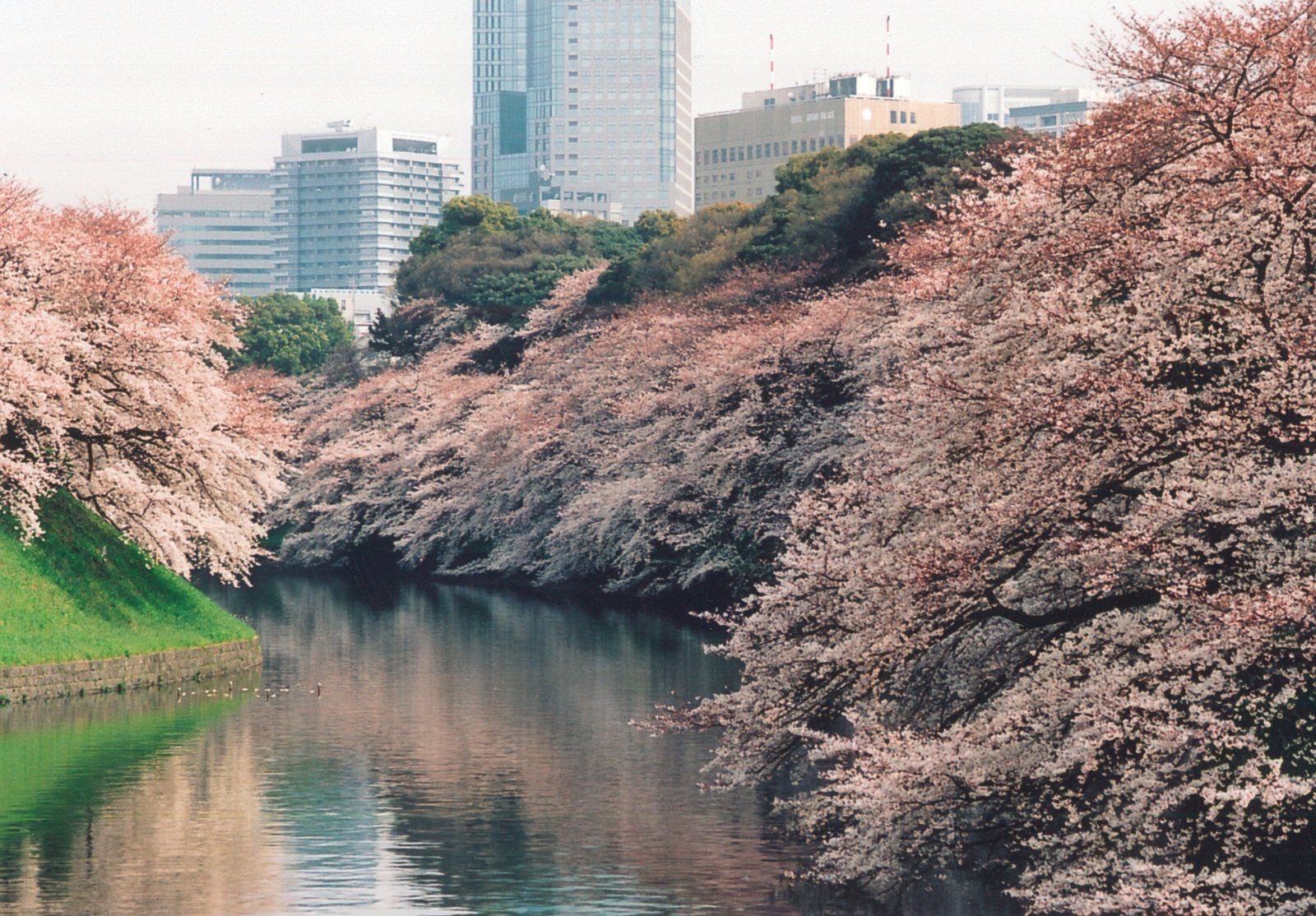
Cherry blossom season is the most beautiful time to be in Japan and also the hardest trip to plan. The blossoms in any one city peak for roughly a week, the dates move from year to year, and half the country is trying to sit under the same trees as you.
This guide is about the practical side of a spring 2027 sakura trip: when to book, how to read the bloom forecasts, how much flexibility to build in, how hanami picnics and night viewing actually work, and how to avoid the worst of the crowds. For detailed bloom dates by city, see our guide to when cherry blossoms bloom in Japan.
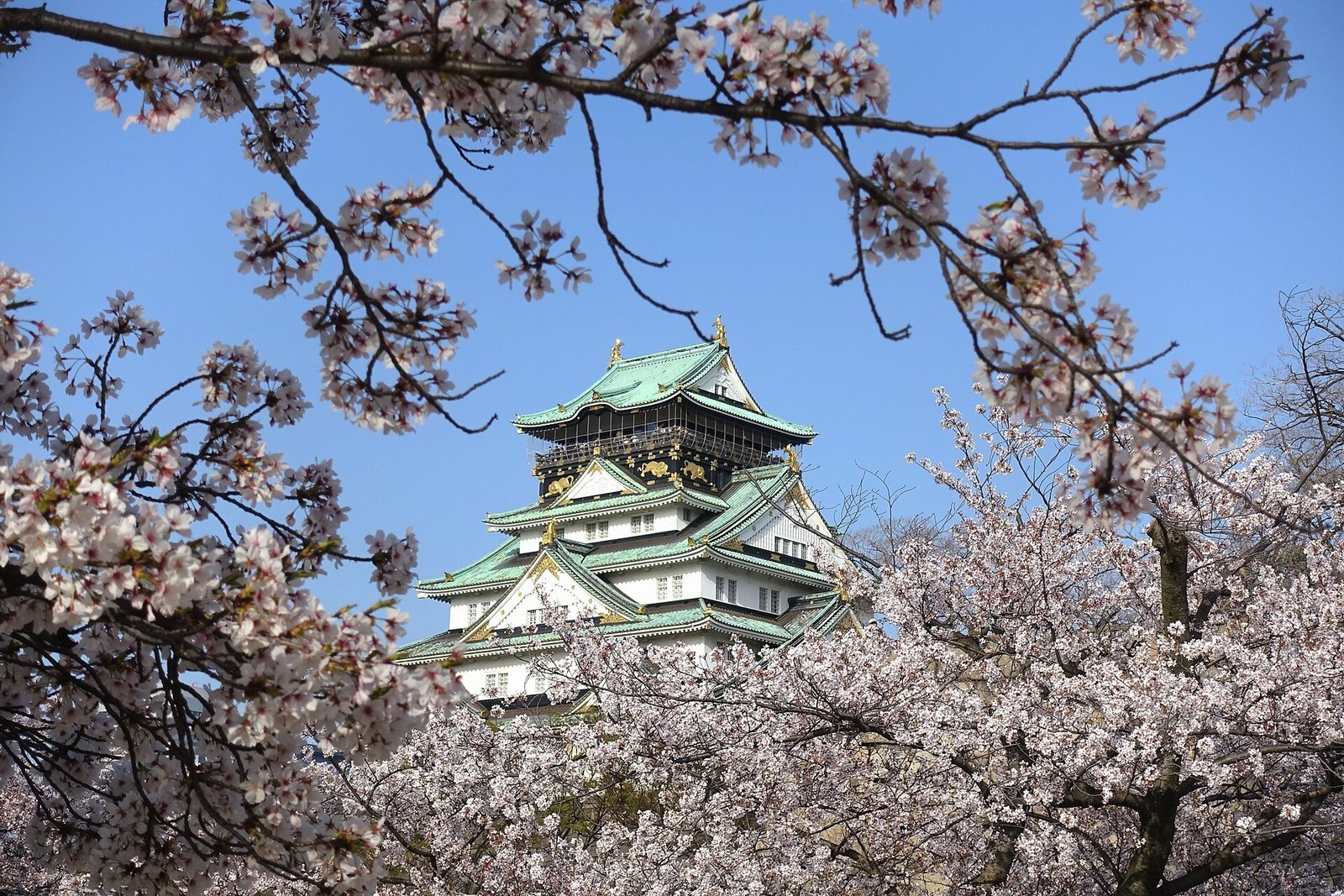
Quick answer: In a typical year, cherry blossoms reach full bloom in Tokyo, Kyoto and Osaka between late March and early April. Okinawa blooms in January and February, and Tohoku and Hokkaido follow from mid-April into early May. 2027 dates are not forecast yet, so book refundable hotels now, plan a flexible 10-14 day window around your main city, and follow the forecasts as they come out between December and late January. On the ground, see the famous spots on weekday mornings, go back after dark for yozakura (night illuminations), and picnic properly: follow each park’s rules on sheets and alcohol, never touch the branches, and carry your rubbish home. Pack layers, a rain shell, a small mat and a power bank.
Cherry blossom timing by region (typical dates, 2027 planning)
The dates below are Japan Meteorological Agency (JMA) averages for 1991-2020, which is the most reliable planning baseline until the 2027 forecasts appear. Recent springs have often run early: in 2026 Tokyo’s first bloom came on 19 March, five days ahead of average. Treat every row as a starting point, not a promise.
| Region / city | Typical first bloom | Typical full bloom | Best bet for a 2027 trip | Note |
|---|---|---|---|---|
| Okinawa (Naha) | 16 Jan | 4 Feb | Mid-January to early February | Deep-pink hikan-zakura, not Somei Yoshino |
| Kawazu (Izu, Shizuoka) | Early February | Mid-to-late February | Mid-to-late February | Early kawazu-zakura; the festival ran 7 Feb – 8 Mar in 2026 |
| Kyushu (Fukuoka) | 22 Mar | 31 Mar | Late March | Often among the first big cities to bloom |
| Tokyo | 24 Mar | 31 Mar | About 25 March – 5 April | 2026 actuals: 19 Mar first bloom, 28 Mar full bloom |
| Nagoya / Chubu | 24 Mar | 2 Apr | Late March – early April | Convenient stop between Tokyo and Kyoto |
| Kansai (Kyoto / Osaka) | 26-27 Mar | 4 Apr | About 28 March – 8 April | 2026: Kyoto full bloom 30 Mar, Osaka 3 Apr |
| Tohoku (Sendai / Aomori) | 8 Apr / 22 Apr | 13 Apr / 26 Apr | Mid-to-late April | Hirosaki (near Aomori) usually peaks in late April |
| Hokkaido (Hakodate / Sapporo) | 28 Apr / 1 May | 2 May / 6 May | Late April – early May | Overlaps Golden Week; 2026 Sapporo bloomed on 18 Apr, very early |
Source: JMA 1991-2020 normals and 2026 observations. 2027 dates depend on the forecasts, so check them from January.
Map: classic hanami spots in this guide
- Ueno Park (Ueno Onshi Park) – Tokyo. Free; about 1,200 cherry trees; picnics in designated areas only; evening lanterns. Directions
- Shinjuku Gyoen National Garden – Tokyo. 500 yen adults; alcohol banned; many varieties into mid-April; peak weekends may need booking. Directions
- Chidorigafuchi Ryokudo – Tokyo. Moat-side promenade about 700 m; rowboats in season; evening light-up; no parties. Directions
- Meguro River (Shukuyama Bridge, Nakameguro) – Tokyo. Canal lined with cherries near Nakameguro Station; evening lanterns; walking only. Directions
- Sumida Park – Tokyo. Riverside cherries with Tokyo Skytree views next to Asakusa; lit after dark in the festival. Directions
- Maruyama Park – Kyoto. Famous weeping cherry, lit at night in season (free); hanami parties and food stalls. Directions
- Philosopher's Path – Kyoto. About 2 km canal-side path lined with cherries; free; best at dawn from the Ginkakuji end. Directions
- Nijo Castle – Kyoto. 1,300 yen incl. Ninomaru Palace (higher non-resident fee proposed for 2027); paid night event. Directions
- Osaka Castle Park – Osaka. About 3,000 trees; park free; Nishinomaru Garden 200 yen, with spring night viewing. Directions
- Kema Sakuranomiya Park – Osaka. About 4,800 trees along the Okawa river; free picnics; no BBQ or advance spot-saving. Directions
- Japan Mint Osaka (sakura passage) – Osaka. About one week in mid-April; free but timed online booking required; about 140 varieties. Directions
- Hirosaki Park – Hirosaki, Aomori. About 2,600 trees around Hirosaki Castle; Sakura Festival late April – early May. Directions
- Mt Yoshino (Yoshinoyama) – Yoshino, Nara. About 30,000 mostly wild yamazakura blooming uphill in early-to-mid April. Directions
Classic hanami spots: costs and practical notes
These are well-known, easy-to-reach spots, chosen because they cover the different ways to enjoy sakura: picnic parks, strolling paths, castles and night lights. They are not a ranking. For our favourite destinations nationwide, see the top 10 sakura destinations in Japan. Fees are as of late 2026 at roughly $1 = 155 yen; check before you go.
| Spot | City | Entry (yen / USD) | Picnic / alcohol | Night lights | Tip |
|---|---|---|---|---|---|
| Ueno Park | Tokyo | Free | Picnics yes, but only in designated areas in recent seasons; no fires | Lanterns in the evening during the sakura festival | About 1,200 trees across the park and temple grounds; go before 8am |
| Shinjuku Gyoen | Tokyo | 500 yen (~$3.20) adults; junior high and under free | Picnics yes; alcohol banned | No regular night viewing | Peak weekends needed a timed online booking in 2026 |
| Chidorigafuchi | Tokyo | Free to walk; rowboats about 800 yen (~$5.20) per 30 min in season | No parties on the promenade | Light-up (26 Mar – 6 Apr in 2026) | Join the boat queue early; the path is about 700 m |
| Meguro River (Nakameguro) | Tokyo | Free | Walking only, no room to picnic | Lanterns in the evening in season | About 800 trees on the Meguro section; weekend evenings are packed |
| Sumida Park | Tokyo | Free | Follow posted rules | Lit after sunset during the festival | Skytree views; easy to combine with Asakusa |
| Maruyama Park | Kyoto | Free | Hanami parties and food stalls | Weeping cherry lit 18:00-22:00 (2026) | The famous tree is a second-generation shidare-zakura |
| Philosopher’s Path | Kyoto | Free | Narrow canal path, not a picnic spot | No | About 2 km; start at the Ginkakuji end early |
| Nijo Castle | Kyoto | 1,300 yen (~$8.40) including Ninomaru Palace; rise to 2,000 yen proposed for non-residents in 2027 | Not a picnic spot | Paid evening event in 2026 (from 2,400 yen / ~$15.50) | Check the new fee before you go |
| Osaka Castle Park | Osaka | Park free; Nishinomaru Garden 200 yen (~$1.30), 350 yen at night (2026) | Picnics yes; no BBQ or fires | Nishinomaru Garden night viewing | About 3,000 trees around the castle |
| Kema Sakuranomiya Park | Osaka | Free | Picnics yes; no saving spots in advance; no BBQ | Not a major light-up spot | About 4,800 trees along the Okawa river |
| Japan Mint sakura passage | Osaka | Free, but a timed online booking is required | No; one-way walk | Open into the evening | Mid-April, about 140 late-blooming varieties |
| Hirosaki Park | Hirosaki | Park free; castle Honmaru area 320 yen (~$2.10) | Food stalls during the festival | Illuminated in the evening during the festival | About 2,600 trees; the festival ran 17 Apr – 5 May in 2026 |
| Mt Yoshino | Nara | Free; seasonal shuttle and parking fees | Mostly a hike and stroll | No | About 30,000 trees, blooming uphill in early-to-mid April |
Tokyo has many more options; see our Tokyo cherry blossom spots guide.
How cherry blossom season works
JMA watches a designated sample tree (hyouhon-boku, 標本木) in each city. Tokyo’s stands at Yasukuni Shrine. When five or six blossoms open on that tree, JMA declares kaika (開花, first bloom). When about 80% of the buds are open, it declares mankai (満開, full bloom). In most cities, full bloom comes about a week after first bloom.
Full bloom is the peak, and the good viewing lasts about a week after it, often less if rain or strong wind arrive. Then come hanafubuki (花吹雪, “blossom blizzards”) of falling petals and pink rafts of petals on moats and rivers, which many people love as much as the peak itself.
Most of the trees you see are Somei Yoshino, the pale pink variety that blooms all at once before its leaves come out. Other varieties stretch the season at both ends. Kawazu-zakura blooms in February. Double-petalled yaezakura usually peak one to two weeks after Somei Yoshino, which is why gardens with many varieties, such as Shinjuku Gyoen, stay pretty into mid-April.
The culture runs deep. Flower viewing in the Nara period centred mostly on plum blossoms, and cherry blossoms took over in the Heian court. Emperor Saga’s flower banquet of 812 is often cited as the earliest recorded cherry-blossom party. The brevity of the bloom is tied to mono no aware, a gentle awareness of the transience of things. That’s all the history we have room for here; for the science and symbolism, see our 18 cherry blossom facts.
Bloom forecasts: who publishes them and how to use them
One correction to a common claim: JMA stopped publishing cherry blossom forecasts after the 2009 season. It still observes and announces first and full bloom at its sample trees, but forecasts now come from private weather companies. For the 2026 season, the main ones started:
- Japan Meteorological Corporation (n-kishou.com, English page available): first forecast in mid-December 2025, then 14 updates through April.
- Weathernews: first forecast on 8 January 2026, then regular updates and spot-by-spot bloom reports.
- Japan Weather Association (tenki.jp): first forecast on 29 January 2026 for over 50 locations, rising to about 80 in March. JNTO’s English cherry blossom forecast page at japan.travel uses this data.
Expect a similar pattern for 2027, with the first forecasts likely around December 2026 and January 2027 (not yet confirmed). Here is how to use them:
- Don’t over-trust the first forecast. Early forecasts can shift by several days as February and March temperatures come in. Look for agreement between two or three forecasters.
- Plan for full bloom, not first bloom. If a forecast says Tokyo kaika is 22 March, the best viewing is roughly 27 March to early April.
- Follow the sakura front. The bloom moves north (and uphill) through spring. If you arrive late in Tokyo, Tohoku may only be starting. If you arrive early, Kyushu or Shizuoka may already be at their peak.
- Use the live reports on the ground. Weathernews and tenki.jp post spot-level status (buds, opening, full bloom, falling), which is more useful than the city-wide date once you’re there.
When to book and how flexible to be
You’ll have to book before anyone knows the 2027 dates, so the strategy is to book early but flexibly. For more on how spring compares with other seasons, see our best time to visit Japan guide.
| When | What to book or do |
|---|---|
| Now to January (6+ months out) | Book flights. Book refundable hotels in Kyoto and Tokyo for your whole possible window. Buy travel insurance. |
| December – late January | First forecasts appear. Compare them and narrow your target dates. |
| February – March | Cancel the hotel nights you won’t need. Watch for 2027 announcements on Shinjuku Gyoen bookings, the Mint passage and light-up events. |
| 1 month out, 10:00 JST | Standard shinkansen reserved seats go on sale. Book seats with an oversized-baggage area if you have large suitcases. |
| 1-2 weeks out | Use updated forecasts to put the cities in order. Arrange luggage forwarding if you’re moving between hotels. |
| On the day | Check spot-level bloom reports and the weather; switch spots if rain or wind is coming. |
Hotels
Kyoto is the tightest market in late March and early April, with Tokyo close behind, and rates rise sharply during peak bloom. Book free-cancellation rates early, even holding two overlapping options if your dates aren’t fixed, then cancel the ones you won’t use once forecasts settle. Note each property’s cancellation deadline, which can be several days before arrival in peak season.
A flexible plan
The safest plan is a 10-14 day trip covering Tokyo and Kyoto/Osaka. They bloom only a few days apart, so between them you’re likely to catch full bloom somewhere. Keep at least one or two flex days you can move between cities. If you can only go for a week, aim for the last days of March and the first days of April, the period that has been closest to full bloom in recent years in both regions.
Crowds you’re competing with
Japan’s school year and fiscal year both start on 1 April, so late March and early April bring school spring holidays, graduation trips and company welcome parties under the trees. Easter 2027 falls on 28 March, and many Western school holidays fall around then too. In the north, the late-April bloom overlaps Golden Week (29 April and 3-5 May in 2027), when domestic travel peaks and prices rise.
Hanami etiquette and how to picnic properly
Hanami (花見) is a picnic under the blossoms with food, drinks and friends. Locals take it seriously, and park rules have tightened in recent years. Here’s how to fit in:
- Never touch the trees. Don’t shake branches for petal photos, climb, hang anything or pick flowers. Cherry trees are fragile and the roots are easily damaged, so keep sheets off exposed roots where signs ask.
- Use a sheet, in the right place. A thin leisure sheet (cheap at 100-yen shops) is standard. Ueno Park has limited picnicking to designated areas in recent seasons, and Chidorigafuchi’s promenade bans parties entirely. Look for the signs at each entrance.
- Spot-saving. Groups traditionally send someone ahead to hold a space, but leaving tarps unattended or reserving spots in advance is banned at many parks, including Kema Sakuranomiya in Osaka. Bring a small group and arrive early.
- Know the alcohol rule for each park. Shinjuku Gyoen bans alcohol outright. Many other parks allow drinking but ban fires, BBQ, amplified music and tables or chairs.
- Take your rubbish home. Bins are rare in Japan, and the temporary ones at hanami spots overflow fast. Bring a bag and sort cans and bottles at your hotel or convenience store. Our guide on why there are no rubbish bins in Japan explains the system.
- Plan for toilets. Toilet queues at big parks get long at peak times; use station or department-store toilets on the way in.
- No drones. Tokyo’s metropolitan parks have banned drones since 2015, Shinjuku Gyoen bans them too, and most other parks have similar rules.
- Keep the noise reasonable, especially at temples, shrines and in residential streets such as Nakameguro.
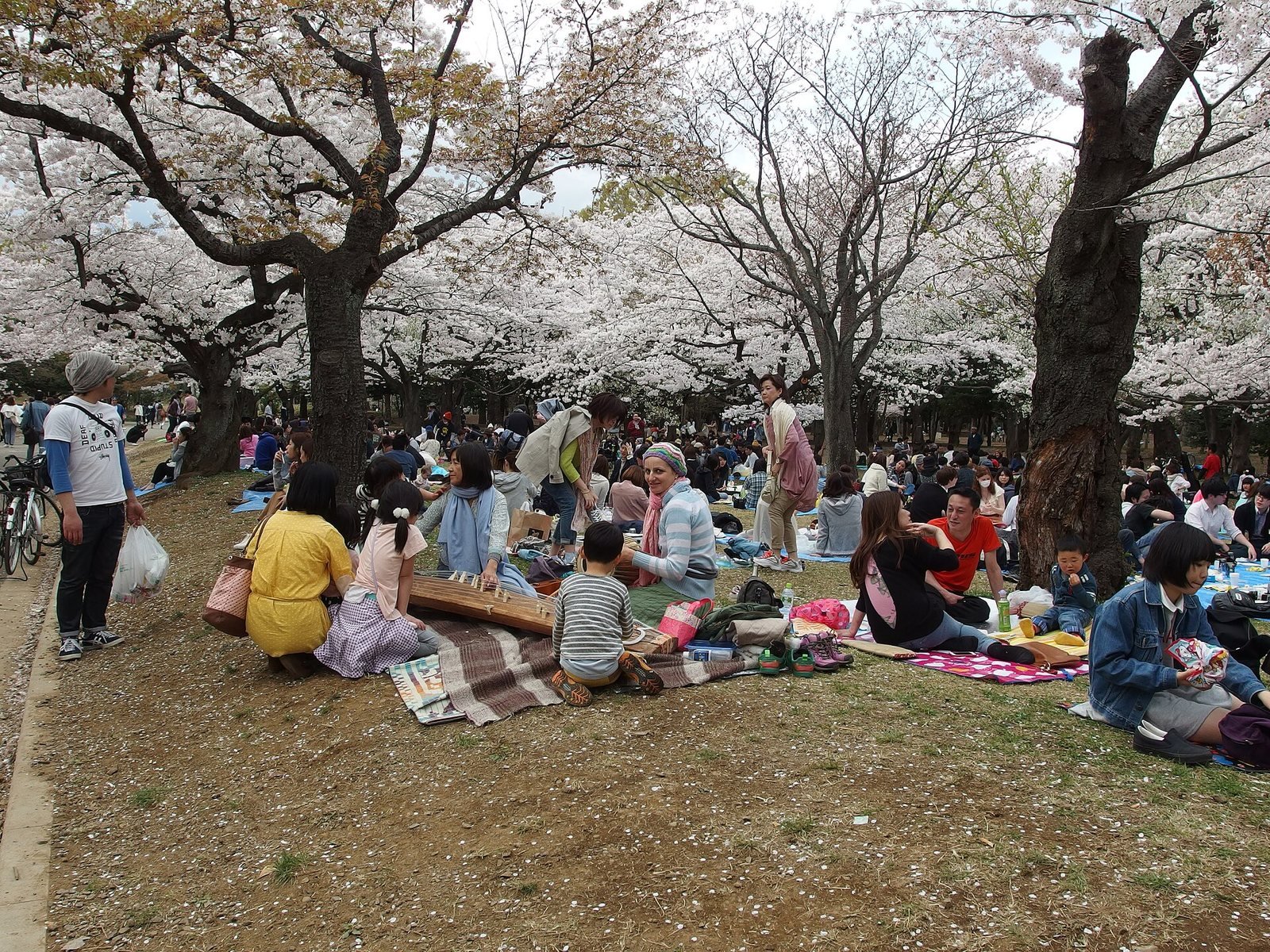
A simple picnic works well: pick up onigiri, karaage, sandwiches and drinks from a convenience store or department-store food hall on the way, and bring wet wipes and a bag for rubbish. Two people need surprisingly little space; it’s large groups that struggle to find room.
Night viewing (yozakura)
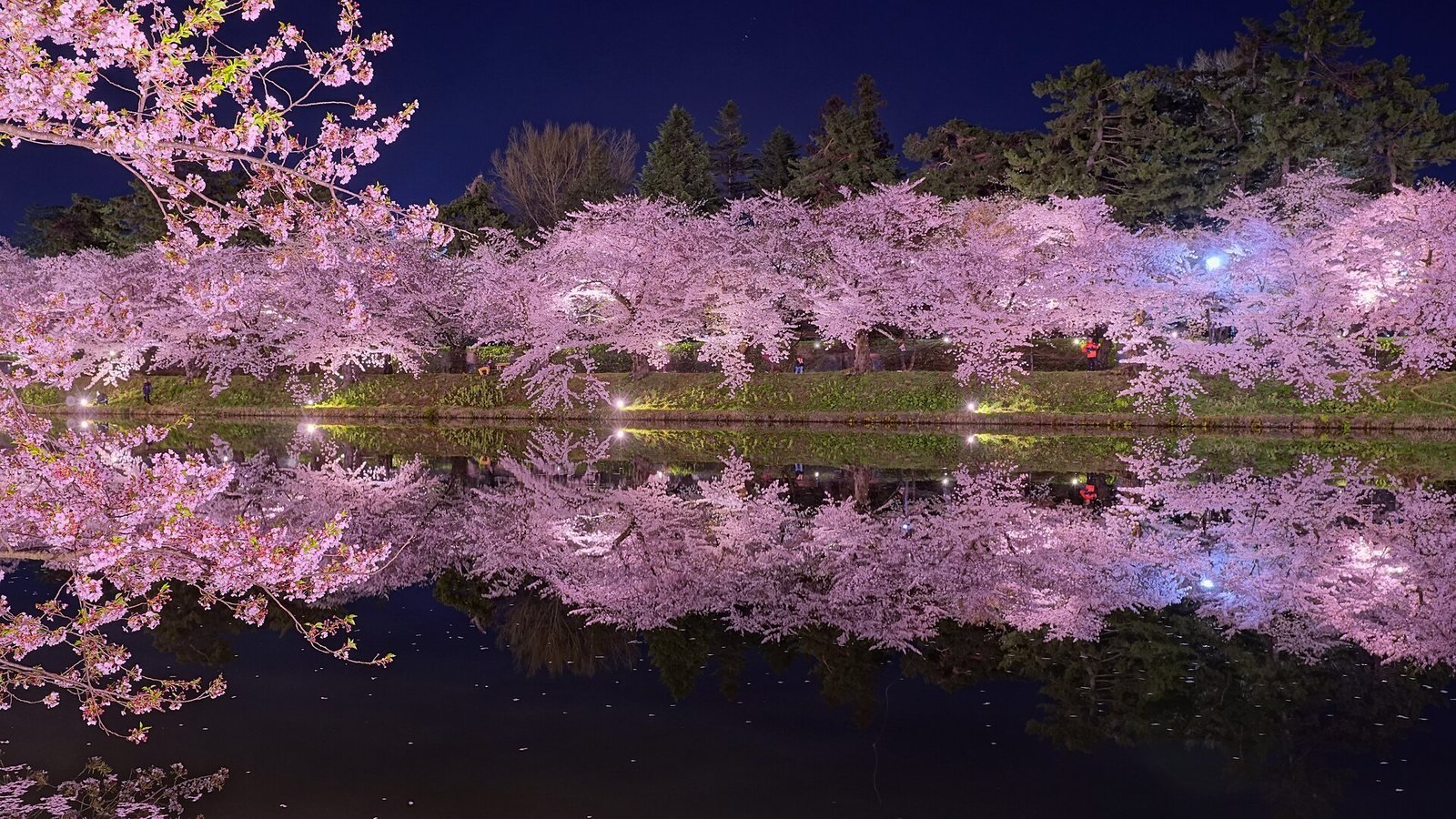
Yozakura (夜桜) means cherry blossoms after dark, usually lit by lanterns or floodlights. It’s a completely different experience from the daytime, and it’s a good way to see famous spots after the day-trip crowds have gone home. What 2026 looked like (2027 dates are still to be announced):
- Chidorigafuchi (Tokyo): light-up from 18:00, 26 March – 6 April, with extended boat hours in the evenings.
- Meguro River (Tokyo): lanterns along the canal in the evenings for about two weeks from first bloom.
- Ueno Park (Tokyo): lanterns along Sakura-dori during the Ueno Sakura Matsuri (14 March – 5 April).
- Maruyama Park (Kyoto): the weeping cherry was lit 18:00-22:00, 24 March – 8 April, free.
- Nijo Castle (Kyoto): a paid evening event, SAKURA NIGHTS, ran 19 March – 19 April, with tickets from about 2,400 yen.
- Osaka Castle Nishinomaru Garden: night viewing for 350 yen, with lights from around 18:00.
- Hirosaki Park: illuminations every evening during the Sakura Festival in late April.
Most public-park illuminations are free; paid events are usually inside castles and gardens. Nights in late March can be cold, so bring an extra layer. Note that Kyoto’s Arashiyama Hanatouro was a December lantern event, not a sakura event, and it last ran in 2021. For more night spots and photo tips, see our guide to night cherry blossoms.
How to beat the crowds
- Go early. Between 6am and 8am, even the Philosopher’s Path and Chidorigafuchi feel calm. Ueno Park opens at 5am.
- Go on weekdays. Weekends at full bloom are the busiest days of the year at the famous spots. Shinjuku Gyoen needed timed bookings on peak weekends in 2026.
- Go a few days after full bloom. Many visitors aim only for the “full bloom” date. Two or three days later the crowds thin, and you may get the falling petals as a bonus.
- Use quieter alternatives. Neighbourhood parks, riverbanks and temple grounds near your hotel often have beautiful trees and almost no tourists. In Osaka, the long riverside at Kema Sakuranomiya spreads people out.
- Follow the front north. If your dates are flexible, Tohoku in mid-to-late April is less crowded than Kyoto in early April, though not during Golden Week.
What to bring and wear
Spring weather in Japan changes fast. JMA’s 1991-2020 averages put Tokyo’s daily high at 14.2°C (58°F) in March and 19.4°C (67°F) in April. Kyoto is similar by day (14.1°C in March) but colder at night, with average March lows around 4°C (39°F). Sitting on the ground in the evening feels colder still.
- Layers: a warm mid-layer, a light down or fleece jacket for evenings, and a scarf.
- A rain shell or compact umbrella. Spring showers are common, and rain is what ends the bloom early.
- A leisure sheet or compact picnic blanket, wet wipes and a couple of rubbish bags.
- Comfortable shoes. A sakura day involves a lot of walking and standing.
- A power bank. Maps, bloom reports and photos drain phones quickly.
- An IC card such as Suica on your phone for trains and convenience stores, plus some cash for food stalls.
If you’re packing a power bank, check the airline rules. Since 24 April 2026, Japan’s transport ministry has limited passengers to two power banks (160 Wh or less each, carry-on only), banned charging them on board, and asked passengers not to use them in flight. JAL has warned the limit may tighten to 100 Wh from January 2027. Keep yours where you can see it, not in the overhead bin.
These are research-based picks we haven’t tested ourselves. Choose based on how you travel.
A waterproof, sand-resistant blanket is more comfortable than a thin 100-yen sheet if you plan several picnics. This one is a generous 8 x 7 ft size, so check the packed size suits your bag.
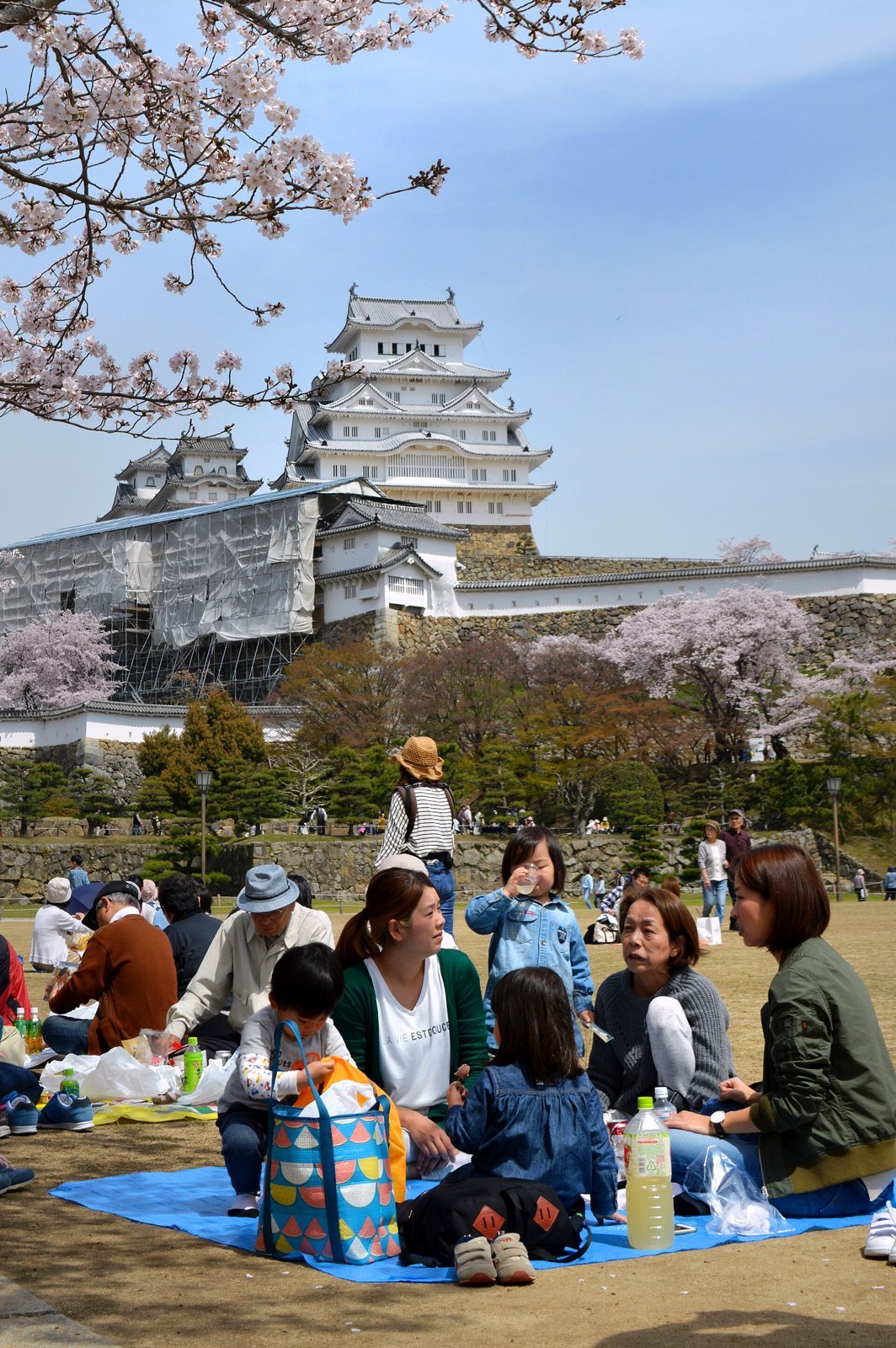
Hanami ground sheets (item type, not the exact product). Photo: DimiTalen, CC0, via Wikimedia Commons
WEKAPO waterproof outdoor blanket
Waterproof, sand-resistant picnic blanket for hanami; at about 8 x 7 ft it seats a group, so check the packed size fits your bag.
Check price on AmazonA packable waterproof jacket covers both spring showers and chilly evenings over a mid-layer; choose your size and colour on the product page.

A hooded rain jacket (item type, not the exact product). Photo: Joe Mabel, CC BY-SA 4.0, via Wikimedia Commons
Columbia Watertight II rain jacket
Packable waterproof shell for spring showers and chilly evenings at night viewings; wear it over a mid-layer.
Check price on AmazonA slim 10,000 mAh power bank (about 37 Wh) is well within airline limits and enough for a long day of maps and photos.

A portable power bank (item type, not the exact product). Photo: Fastily, CC BY-SA 4.0, via Wikimedia Commons
Anker Nano Power Bank 10,000mAh
Slim carry-on power bank (about 37 Wh) for long days of maps and photos; Japan now bans charging power banks in flight.
Check price on AmazonIf you like a printed guide for the rest of your trip, the 2026 Lonely Planet Japan is the current edition as of late 2026.
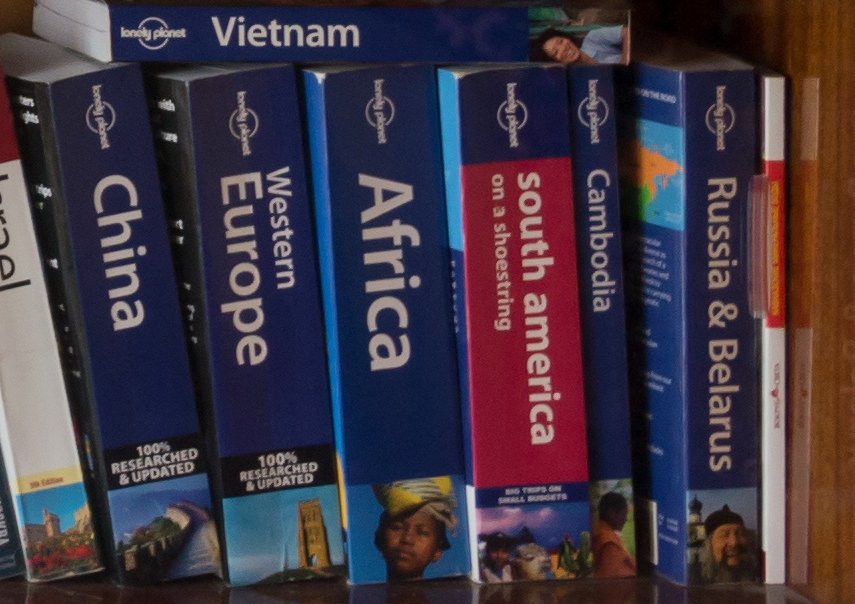
Travel guidebooks (item type, not the exact edition). Photo: Vyacheslav Argenberg, CC BY 4.0, via Wikimedia Commons
Lonely Planet Japan
Current 2026 edition, for planning the rest of your trip around the blossoms.
Check price on AmazonSakura food to try (briefly)
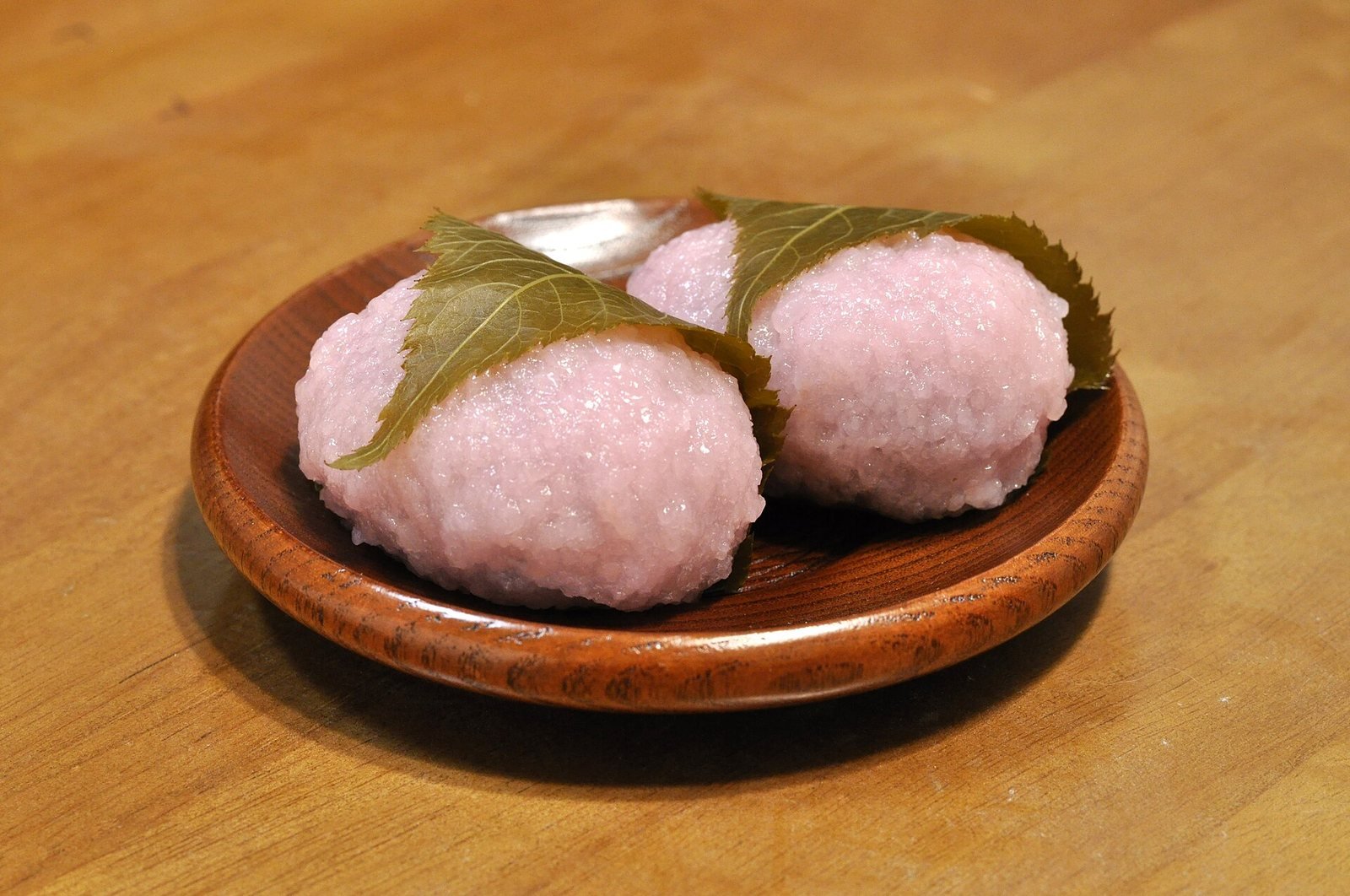
Konbini, cafes and department-store food halls all go pink in spring. Look for sakura mochi, which comes in two styles. Kanto’s chomeiji style wraps bean paste in a thin pink crepe; it was created near Chomeiji temple on the Sumida River in the 1700s. Kansai’s domyoji style uses coarse-ground glutinous rice. Both come wrapped in a salted cherry leaf. Also try sakura lattes, hanami dango (three-coloured dumplings) and limited-edition spring drinks. For more, see our guide to what to order in Japan, including sakura-season treats.
Sample sakura itinerary (9-10 days)
This is a classic first-timer plan built around a typical late-March bloom. Swap the order of Tokyo and Kyoto/Osaka if the forecasts favour one.
- Day 1: Arrive in Tokyo. Evening yozakura at Chidorigafuchi or Meguro River.
- Day 2: Early Ueno Park, then Sumida Park and Asakusa; picnic lunch.
- Day 3: Shinjuku Gyoen (weekday if possible) and a quieter neighbourhood park.
- Day 4: Flex day: repeat your favourite spot at full bloom, or take a day trip.
- Day 5: Shinkansen to Kyoto (send big bags ahead). Evening at Maruyama Park.
- Day 6: Philosopher’s Path at dawn, then temples in Higashiyama.
- Day 7: Nijo Castle, Arashiyama, or a day trip to Yoshino if it’s in bloom (usually a little later).
- Day 8: Osaka: Osaka Castle Park and the riverside at Kema Sakuranomiya; Nishinomaru Garden at night.
- Day 9-10: Flex or depart from Kansai Airport (KIX).
Follow-the-front version: if you’re travelling in mid-to-late April, or the bloom comes early and you miss Tokyo’s peak, head north. Spend two days in Tokyo for the late yaezakura at Shinjuku Gyoen, then take the shinkansen to Sendai and on to Hirosaki for the castle festival, and finish in Hakodate in late April. Avoid Golden Week if you can.
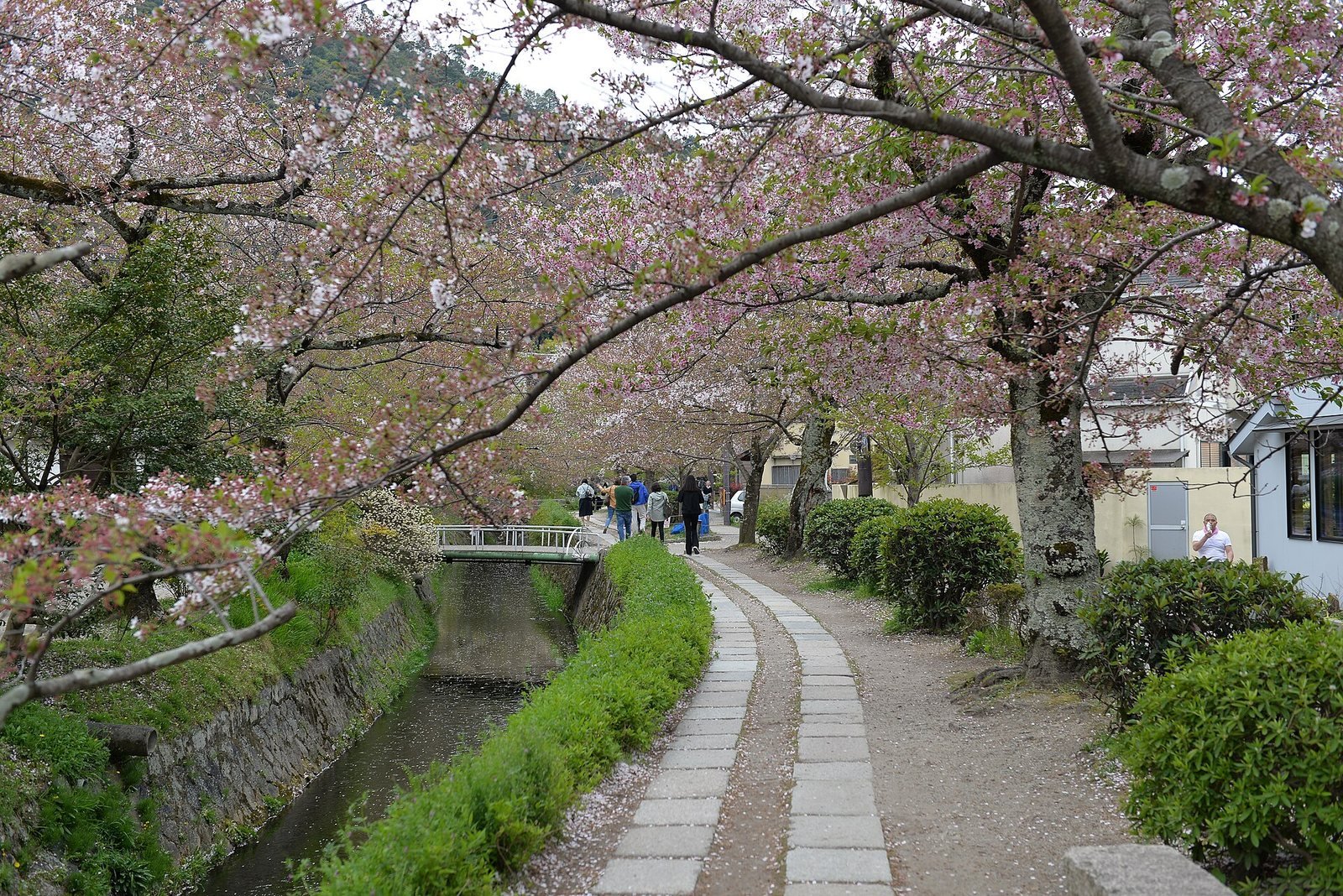
Moving between hotels in peak season with suitcases is painful on crowded trains, so luggage forwarding (takkyubin) is worth considering. Our train etiquette and luggage forwarding guide explains how it works.
Money and getting around
As of late 2026, the 7-day ordinary Japan Rail Pass costs 50,000 yen (~$323) on the official website for a limited time, or 53,000 yen (~$342) through overseas agents for purchases from 1 October 2026. 14-day passes are 80,000 / 84,000 yen and 21-day passes 100,000 / 105,000 yen. Pass holders can ride Nozomi trains by buying an extra Nozomi ticket (4,960 yen, ~$32, Tokyo to Kyoto or Shin-Osaka), sold only at stations. A simple Tokyo-Kyoto-Osaka trip often costs less with individual tickets: a one-way Tokyo-Kyoto Nozomi reserved seat costs roughly 14,000 yen (~$90). The pass pays off if you also head north to Tohoku. Read our Japan Rail Pass guide before buying. JR has announced higher Nozomi express charges for tickets bought from 1 July 2027, which won’t affect spring 2027 trips.
Seats normally go on sale at 10:00 JST one month before travel. JR Central’s smartEX also takes some early requests up to a year ahead, but those seats aren’t confirmed until a month before. On the Tokaido Shinkansen, bags with total dimensions of 160-250 cm need a seat with an oversized-baggage area, which you must reserve. For local trains and konbini, use Suica or PASMO; see our Suica card guide for Apple Wallet and Welcome Suica options.
Planning from the United States
- Flights: Tokyo (Narita and Haneda) has nonstops from many US gateways on United, American, Delta, JAL and ANA. For Kansai (KIX), United flies from San Francisco and JAL from Los Angeles, and United has announced Los Angeles-Kansai from 27 March 2027. Book late-March flights by around November-January; fares and award seats get scarce as spring approaches.
- Open-jaw tickets (into Tokyo, out of Osaka, or the reverse) save you a backtrack and suit the Tokyo-to-Kyoto bloom order.
- Spring break and Easter: many US school spring breaks fall in March, and Easter is 28 March 2027, close to the average full-bloom dates in Tokyo and Kyoto. That’s lucky for families, but expect busy flights.
- Insurance: look for trip cancellation and interruption cover for illness or disruption, but don’t expect any policy to pay out because the blossoms came early.
- Payments: Visa and Mastercard are widely accepted in cities. Carry some yen for festival stalls and small temples. iPhone users can add Suica to Apple Wallet.
Planning from Singapore, Australia, the UK and Canada
Singapore
Singapore’s 2027 March school holidays run 13-21 March, usually a week or more before average full bloom in Tokyo and Kyoto. They suit Kyushu, a lucky early year, or an early-bloom variety. Good Friday (26 March 2027) falls after the holidays, closer to peak timing, so a long weekend plus leave works well for adults. Singapore Airlines and Scoot both fly to Tokyo and Osaka; Scoot added Haneda in March 2026.
Australia
Term 1 holidays fall differently in each state. Victoria’s 2027 break (26 March – 11 April) covers Easter and the typical Tokyo and Kyoto peak, so it’s ideal. New South Wales’ break (12-23 April) is late for Tokyo and Kyoto but good for Tohoku, Hirosaki or late varieties. Qantas, JAL, ANA and Jetstar fly to Tokyo from several Australian cities; check current routes from your city.
United Kingdom
English school Easter holidays in 2027 mostly fall between late March and mid-April, depending on your council. The earlier half is better for Tokyo and Kyoto; a mid-April break points you north. British Airways, JAL and ANA fly nonstop between London Heathrow and Tokyo Haneda (check current schedules), and booking from November gives the best choice.
Canada
Ontario’s March break is 15-19 March 2027, and most British Columbia districts take two weeks in mid-to-late March. Both tend to fall before the typical Tokyo peak, so add a few days at the end if you can. Air Canada flies year-round from Vancouver to Narita and Haneda, with eastern Canada connections; check current Toronto and Montreal services.
Mistakes to avoid
- Booking non-refundable hotels for exact dates before the forecasts are out.
- Planning around the first-bloom date instead of full bloom.
- Trying to see every famous spot. Choose two or three per day and stay a while.
- Arriving at famous spots at midday on a peak weekend.
- Assuming every park allows picnics or alcohol. Rules differ by park.
- Forgetting that rain and wind can end the bloom early. Go on the first clear day at full bloom; don’t wait.
- Dragging big suitcases through crowded stations instead of forwarding them.
FAQ
When is cherry blossom season 2027 in Japan?
Nobody knows exact dates yet. Based on JMA averages, expect Tokyo full bloom around the end of March and Kyoto/Osaka in early April. Okinawa blooms in January and February, and Hokkaido in late April and early May. Recent years have often been early. Forecasts for 2027 should start appearing from around December 2026, with more by late January 2027.
How far ahead should I book a cherry blossom trip?
Book flights and refundable hotels as early as possible, ideally 4-6 months ahead, covering a 10-14 day window. Fine-tune once the forecasts are out, and book shinkansen seats when they go on sale one month before travel.
Can you drink alcohol at hanami?
At many public parks, yes, as long as you drink moderately and follow local rules. But some places ban it. Shinjuku Gyoen bans alcohol, and some promenades ban parties altogether. Check the signs at the entrance and always take your cans and bottles with you.
What’s the best place to see cherry blossoms on a first trip?
Tokyo and Kyoto together are the classic choice: their peaks are only a few days apart and they’re linked by fast trains. Combine one picnic park (Ueno or Shinjuku Gyoen), one strolling spot (Chidorigafuchi or the Philosopher’s Path) and one night illumination.
Is it worth going to Japan for cherry blossoms, given the crowds?
Yes, if you plan around them. Mornings, weekdays, the days just after full bloom and neighbourhood parks are all far calmer than famous spots at midday on a weekend. If you hate crowds, consider Tohoku in late April (outside Golden Week).
What should I wear for hanami?
Layers. Daytime highs in Tokyo average about 14°C in March and 19°C in April, but evenings are cold, especially sitting on the ground. Wear comfortable shoes and bring a rain shell and a warm layer for night viewing.
What if I miss the full bloom?
Go north or uphill, where the bloom comes later, or look for late varieties such as yaezakura, which peak a week or two after Somei Yoshino. Arriving a few days after full bloom isn’t a disaster either: falling petals are beautiful.
Are night illuminations free?
Most illuminations in public parks and along rivers are free, including Maruyama Park, Meguro River and Ueno in 2026. Events inside castles and gardens, such as Nijo Castle and Osaka Castle’s Nishinomaru Garden, charge admission.
Comment (1)