
As an Amazon Associate, Chasing Cherry Blossoms earns from qualifying purchases. We may earn a commission from links on this page at no extra cost to you.
Quick answer
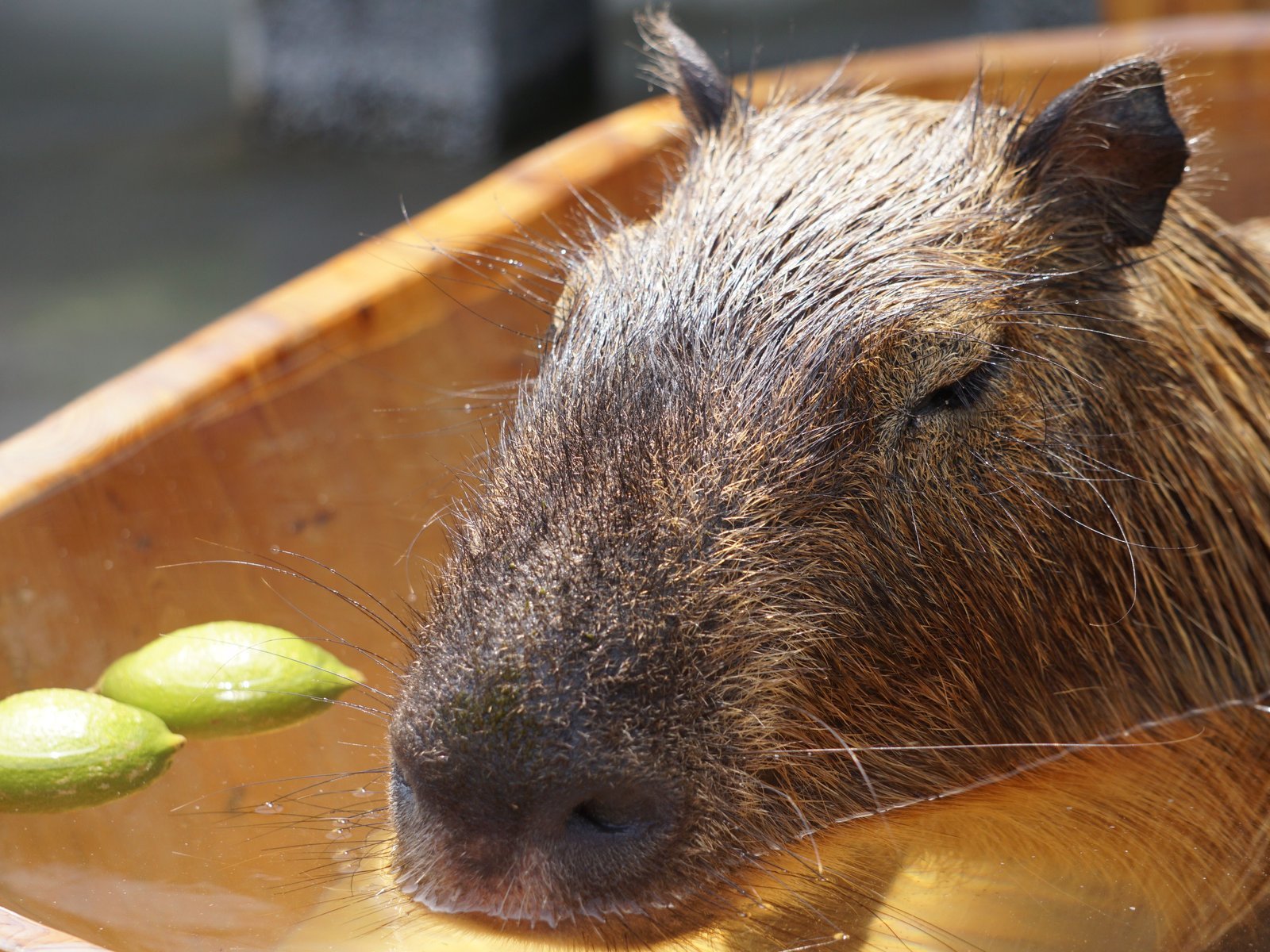
Every winter, a handful of Japanese zoos fill a pool with warm water and let their capybaras soak, eyes half closed, sometimes with citrus bobbing past their noses.
For 2026-27, the best pick from Tokyo is Izu Shaboten Zoo in Ito, Shizuoka. The capybara bath started there in 1982, and it is the only zoo on this list that has published its new dates: November 21, 2026 to April 4, 2027. If you only have half a day, Saitama Children’s Zoo is closer and runs its “capybara onsen” in winter, roughly December to March.
Capybara onsen at a glance
| Place | Prefecture | Bath season (latest official dates) | Getting there | Best for |
|---|---|---|---|---|
| Izu Shaboten Zoo | Shizuoka | Nov 21, 2026 – Apr 4, 2027 (announced) | Tokaido Shinkansen to Atami, JR Ito Line to Ito, Tokai Bus about 35 min | The original bath, yuzu bath days |
| Saitama Children’s Zoo | Saitama | 2025-26 ran Dec 2, 2025 – Mar 15, 2026; 2026-27 not yet posted | Tobu Tojo Line from Ikebukuro to Takasaka (about 50 min), bus about 5 min | Easy, low-cost half day from Tokyo |
| Nasu Animal Kingdom | Tochigi | Winter; 2026-27 dates not yet posted | Tohoku Shinkansen to Nasushiobara, then reserved free shuttle or taxi | Pairing with a Nasu hot spring stay |
| Nagasaki Bio Park | Nagasaki | Usually Nov 26 – end of Feb; 2025-26 ran to Mar 1, 2026 | Reserved free shuttle from near JR Huis Ten Bosch Station (about 45 min) | Getting up close; touching allowed |
Where to see capybaras in hot springs in Japan
Quick background: San Diego Zoo Wildlife Alliance calls the capybara the world’s largest rodent. It lives along rivers and swampy grasslands in Central and South America, has partly webbed feet, and can stay underwater for up to five minutes.
Izu Shaboten Zoo (Shizuoka): the original capybara bath
What to expect: According to the zoo, keepers were cleaning the capybara enclosure with hot water in the winter of 1982 when they noticed the animals lounging in the warm puddles. That became the “Ganso Capybara no Rotenburo” (the original capybara open-air bath), and the zoo has held it every winter since.
Dates and times: The official capybara bath page lists the season as November 21, 2026 to April 4, 2027. On weekdays, the bath runs once a day, from 13:30 to 14:30. There are two sessions, 10:30 to 11:30 and 13:30 to 14:30, on weekends, holidays, December 19 to January 11, and March 20 to April 4. Times may change because of the weather or the animals’ health.
Special baths: The capybara yuzu bath began here in 1996 and turns 30 this winter. The zoo’s press release lists yuzu bath days from December 22, 2026 to January 11, 2027, plus a seven-herb (nanakusa) bath on January 7. The opening three-day weekend features giant “oni yuzu”, and on weekends, holidays and school breaks the zoo runs themed baths with things like maple leaves, roses, apples and vegetables.
Fun extra: Izu Shaboten and four other zoos hold a “capybara long-bath showdown.” On January 10, 2026, Purun from Nagasaki Bio Park won with a soak of 1 hour, 45 minutes and 18 seconds. The next date had not been announced as of October 2026.
Admission and hours: 2,800 yen on weekdays and 3,000 yen on weekends and holidays (adult, as listed on the official site in Oct 2026). The zoo is open daily from 9:30 to 17:00, with last entry at 16:30, though hours vary by season.
Access: Take the Tokaido Shinkansen or Tokaido Line to Atami, then the JR Ito Line to Ito. From there, the Tokai Bus takes about 35 minutes; from Izu-Kogen Station, it takes about 20. To make a weekend of it, add a night in Hakone’s lakes and hot springs on the way.
Saitama Children’s Zoo (Saitama): the easy one from Tokyo
What to expect: This big, affordable park in Higashimatsuyama runs its “capybara onsen” in the Capybara and Wallaby area of the East Garden. Look for seasonal baths and capybaras squeezed into wooden tubs. Past themes have included mandarin, yuzu, seven-herb and pine baths.
Dates and times: The 2025-26 season ran from December 2, 2025 to March 15, 2026, and the zoo describes the event as winter-only, December to March. Before you go, check the official capybara page for the 2026-27 dates. In past seasons, staff started filling the bath around 14:00 and it ran until 16:00; on very cold days, the capybaras may bathe from the morning.
Admission and hours: 900 yen (adult, as listed on the official site in Oct 2026). From November 15 to January 31, the zoo is open 9:30 to 16:30, with last entry at 15:30. It is closed on Mondays (open if Monday is a holiday) and from December 30 to January 1.
Access: From Ikebukuro, take the Tobu Tojo Line to Takasaka, about 50 minutes. Then take the bus for Hatoyama New Town from the west exit for about 5 minutes. It is one of the easiest day trips from Tokyo.
Nasu Animal Kingdom (Tochigi): capybaras plus a hot spring town
What to expect: Nasu Animal Kingdom sits in the highland hot spring area of Nasu. Its Capybara Forest is an area where capybaras and maras wander freely. The official Capybara Forest page says that in winter you can watch them soaking in a hot spring.
Dates: Nasu has not posted its 2026-27 bath dates, and we could not find official dates for last season either. The park runs a winter schedule with several weekday closures each week from December, so check its opening calendar. Feeding sessions are currently suspended.
Admission: 2,900 yen in the regular period and 2,000 yen in the winter period (adult, as listed on the official site in Oct 2026).
Access: Take the Tohoku Shinkansen to Nasushiobara. A free shuttle leaves the station at 9:15 and arrives at 10:25. It must be reserved by 17:00 the day before. A taxi or rental car takes about 50 minutes.
Nagasaki Bio Park (Nagasaki): the up-close option
What to expect: According to the official capybara bath page, the bath sits inside the capybara area with no barrier, so you are free to touch the capybaras. Feed is sold on site. The only thing you can’t do is get in the bath with them, for hygiene reasons. On the solstice the park floats zabon, a big local citrus, instead of yuzu. In 2025 the zabon bath ran from December 20 to 28.
Dates and times: The official page gives the season as November 26 (a pun on “good bath day” in Japanese) to the end of February, with the bath open 12:00 to 15:00. The Nagasaki Shimbun reported that the 2025-26 season ran until March 1, 2026, with the water at around 35°C (95°F). The 2026-27 dates have not been posted yet.
Admission and hours: 2,100 yen (adult, as listed on the official site in Oct 2026). The park is open 10:00 to 17:00, with last entry at 16:00.
Access: A free shuttle leaves Hotel Lorelei, about 3 minutes’ walk from JR Huis Ten Bosch Station, for the roughly 45-minute ride. It must be reserved. Buses also run from Nagasaki Station. It slots neatly into a trip around Kyushu, Japan’s southern island.
The yuzu bath and the winter solstice
In Japan, the winter solstice (toji) is the traditional night for yuzuyu: whole yuzu, a fragrant yellow citrus, floated in the bath. As Nippon.com explains, the scent was once believed to drive off “bad air” and prevent colds. Many families also eat kabocha squash that day.
In 2026, the solstice falls on Tuesday, December 22, according to NAOJ’s 2026 calendar. Izu Shaboten’s yuzu baths start that day, and Nagasaki Bio Park held its zabon bath the same week in 2025. If you want capybaras with citrus, plan for late December.
How to get there from Tokyo and Osaka
- From Tokyo: Saitama is quickest (about 50 minutes from Ikebukuro plus a short bus). Izu Shaboten is a long day trip or an overnight via Atami.
- From Osaka: Izu Shaboten is the most practical of the four: take the Tokaido Shinkansen east to Atami. Nagasaki Bio Park fits a Kyushu trip; its access page lists routes from Nagasaki Airport and Nagasaki Station.
- Book shuttles early: the Nasu and Nagasaki shuttles are reservation-only.
- Travel light: rural buses have little room for suitcases. Our guide to train etiquette and luggage forwarding in Japan explains how to send big bags ahead.
Best times to visit and capybara bath etiquette
When to go
- Time it to the bath. Bath times are set: 13:30 on weekdays at Izu Shaboten, from about 14:00 at Saitama, and 12:00 to 15:00 at Nagasaki.
- Pick a cold day. Saitama’s keepers say the capybaras stay in quietly when it’s cold but get out quickly on warm days, and Nagasaki Bio Park says the colder the day, the better.
- Weekdays are calmer; weekends at Izu Shaboten have two sessions.
- New Year is busy but festive, with yuzu and seven-herb baths at Izu. Saitama closes December 30 to January 1.
- Don’t rush the start. Izu Shaboten says its capybaras may stay in the water for about an hour, and it is less crowded a little after the bath begins.
Etiquette
- Feed the animals only food the zoo sells, and only where it allows feeding. Saitama prohibits feeding without permission.
- Touch only where it’s officially allowed, as at Nagasaki. Saitama does not allow touching.
- Follow staff directions; sessions can change or stop for the animals’ sake.
- Keep kids off railings and fences, and don’t lean into the enclosure.
- Keep your voice down (Izu Shaboten asks visitors not to shout), and once you have your photo, let the next person have the spot.
- Capybaras are big animals: Izu Shaboten notes they can reach about 50 kg (110 lb). Where touching is allowed, be gentle and let them come to you.
Research-based picks: capybara gifts and onsen travel gear
Note: we have not hands-on tested these products. These picks are based on Amazon listings and manufacturer information.
Wild Republic Cuddlekins Capybara Plush
A good gift for kids who have fallen for capybaras. The listing describes it as about 12 inches long and surface washable.
Check price on Amazon – Wild Republic Capybara Plush
Capybara Is Friends with Everyone by Maddie Frost
This 32-page HarperCollins hardcover is a picture book for ages 4 to 8 about friendship and boundaries. It makes a sweet read-aloud before the trip.
Check price on Amazon – Capybara Is Friends with Everyone
Lonely Planet Japan (19th edition, July 2026)
A current guidebook for planning a winter route. The listing shows the 19th edition, a July 14, 2026 paperback with 856 pages, covering Tokyo, Mt Fuji, Kyoto, Kansai, Sapporo, Shikoku and more.
Check price on Amazon – Lonely Planet Japan 2026
Japanese Tenugui Towel, Seigaiha Pattern
A tenugui is the thin cotton towel many bathers bring to the onsen. It dries fast and packs flat. This one is listed as made in Japan from 100% cotton, about 34.6 by 13 inches, with hand washing recommended. Before your own soak, read our guide to Japanese onsen etiquette.
Check price on Amazon – Japanese Tenugui Towel Seigaiha
HotHands Hand Warmers Value Pack
Standing at an outdoor enclosure in January gets cold. This pack has 10 pairs of air-activated warmers, and the listing says each lasts up to 10 hours.
Check price on Amazon – HotHands Hand Warmers 10 Pairs
FAQ
When can you see capybaras in hot springs in Japan?
In winter, roughly late November to March or early April, depending on the zoo. Izu Shaboten’s 2026-27 season runs November 21, 2026 to April 4, 2027. The other zoos had not posted 2026-27 dates as of October 2026.
Where did the capybara onsen start?
At Izu Shaboten Zoo in Ito, Shizuoka, in the winter of 1982. Keepers noticed the capybaras relaxing in hot water left over from cleaning the enclosure.
Can you touch or feed the capybaras?
It depends on the zoo. Nagasaki Bio Park allows touching and sells feed, while Saitama does not allow touching. Nasu’s feeding sessions are currently suspended.
Is the water actually hot spring water?
The events are called onsen or rotenburo, but the official pages we checked describe heated water, not natural spring water. Nagasaki’s bath was reported at around 35°C (95°F).
What is a yuzu bath?
A winter solstice custom of floating yuzu citrus in the bath. The 2026 solstice is December 22.
Which capybara onsen is easiest from Tokyo or Osaka?
From Tokyo, Saitama is quickest; Izu Shaboten is the classic. From Osaka, take the Tokaido Shinkansen to Atami for Izu Shaboten.
Plan your capybara soak
For 2026-27, start with Izu Shaboten: the original bath, confirmed dates and yuzu baths from December 22. Add Saitama for an easy afternoon out of Tokyo, and save Nasu or Nagasaki for a longer route. Times can change, so check each zoo’s page before you go. And if you can’t get enough of animals in hot water, meet Japan’s other famous bathers in our guide to the snow monkeys soaking in hot springs.
