As an Amazon Associate, Chasing Cherry Blossoms earns from qualifying purchases. We may also earn from other affiliate links on this page at no extra cost to you.
Much of what gets repeated about cherry blossoms online is half true, and the real story is more interesting: Japan’s favourite cherry is a clone, a 1,200-year-old record tracks climate change, and a seed that orbited Earth grew into a tree that flowered years early. Here are 18 facts we’ve checked against Japanese and international sources, plus where to see them for yourself.
Quick facts:
- Sakura covers all of Japan’s flowering cherries: about 10 wild species and a few hundred garden cultivars.
- Somei-yoshino, the classic pale-pink cherry, is a single clone spread by grafting.
- The season runs from January in Okinawa to May in Hokkaido.
- The Japan Meteorological Agency (JMA) declares a city’s blossoms “open” when 5-6 flowers open on its official specimen tree.
- In 1912 Tokyo gave Washington, DC 3,020 cherry trees.
- Japan’s oldest cherries, such as Jindai-zakura and Usuzumi-zakura, are said to be 1,500 to 2,000 years old.
Travelling with children? Our kids’ version of these cherry blossom facts keeps things simple and adds some crafts.
Map: the cherry trees and places behind these facts
- Somei-Yoshino Sakura Memorial Park (Komagome, Tokyo) – Small park by JR Komagome Station marking the birthplace of the Somei-yoshino cherry (fact 2). Directions
- Kenroku-en Garden (Kanazawa, Ishikawa) – Home of the Kenroku-en Kiku-zakura, with over 300 petals per flower on old trees (fact 3). Directions
- Yasukuni Shrine (Chiyoda, Tokyo) – Its specimen tree has decided when Tokyo's cherry season officially opens since 1966 (fact 5). Directions
- Shikizakura Park (Obara, Toyota, Aichi) – Obara's four-seasons cherries flower with the autumn leaves in November (fact 8). Directions
- Shinsen-en (Nakagyo, Kyoto) – Garden where Emperor Saga's cherry party of 812 is said to have been the first hanami (fact 9). Directions
- Daigo-ji Temple (Fushimi, Kyoto) – Scene of Toyotomi Hideyoshi's lavish hanami of 1598 (fact 9). Directions
- Asukayama Park (Kita, Tokyo) – Cherry hill opened to ordinary people by shogun Yoshimune in the 1720s (fact 9). Directions
- Chomei-ji Temple (Mukojima, Tokyo) – Tokyo-style sakura-mochi has been made here since 1717 (fact 11). Directions
- Jindai-zakura at Jisso-ji (Hokuto, Yamanashi) – Edohigan cherry said to be 1,800-2,000 years old, one of Japan's three great cherries (fact 13). Directions
- Usuzumi-zakura, Usuzumi Park (Motosu, Gifu) – Edohigan said to be over 1,500 years old; its petals fade to a pale grey (fact 13). Directions
- Miharu Takizakura (Miharu, Fukushima) – Weeping 'waterfall cherry' more than 1,000 years old (fact 13). Directions
- Hirosaki Park (Hirosaki, Aomori) – Castle park with a Somei-yoshino planted in 1882 and the famous Hirosaki pruning method (facts 13-14). Directions
- Kaiseizan Park (Koriyama, Fukushima) – Its Somei-yoshino, planted in 1878, are older than Hirosaki's (fact 14). Directions
- Koganei Park (Koganei, Tokyo) – Big hanami park that asks visitors to keep sheets and bikes off the cherry roots (fact 15). Directions
- Ganjo-ji Temple (Gifu city) – Home of the Chujo-hime Seigan-zakura, whose space-flown seed bloomed years early (fact 17). Directions
- Mount Yoshino (Yoshino, Nara) – About 30,000 mostly wild cherries climb the mountain around Kinpusen-ji (where to see them). Directions
The botany: what a sakura actually is
1. Sakura means every Japanese flowering cherry, not one species
You’ll often read that “sakura” means Prunus serrulata. It doesn’t. In Japanese, sakura (桜) is the whole group of flowering cherries, which botanists now usually put in the genus Cerasus (or Prunus subgenus Cerasus).
Japan has about 10 wild species, including Yamazakura (C. jamasakura), Oshima-zakura (C. speciosa) and Edohigan (C. spachiana). The list is still growing: in 2018 the Forestry and Forest Products Research Institute described Kumano-zakura from the Kii Peninsula, Japan’s first new wild cherry species in about 100 years. Add the garden cultivars (sato-zakura), and you get anywhere from 200 to over 300 kinds, depending on who is counting.
2. Most of the cherry trees you see are clones of one tree
Somei-yoshino (Cerasus × yedoensis ‘Somei-yoshino’) is the pale-pink cherry in nearly every Japanese park and school yard. Nurserymen in Somei village, now Komagome in Tokyo, sold it from around the end of the Edo period, and it got its name in 1900.
A 2019 genome study led by the Kazusa DNA Research Institute confirmed it is a hybrid of Edohigan and Oshima-zakura (or a close relative). It can’t pollinate itself, so every Somei-yoshino is a graft or cutting of the original, and that’s why a whole city’s trees open within days of each other. The often-quoted “70-80% of Japan’s cherries” is a popular estimate, not a census. A stone marking the variety’s birthplace stands in a small park by JR Komagome Station’s north exit.
Naoko Abe’s history tells the story of the English plant hunter who worried that this one clone was crowding out Japan’s older varieties:

Paperback books (item type, not the exact product). Photo: Ginny (Flickr), CC BY-SA 2.0, via Wikimedia Commons
The Sakura Obsession by Naoko Abe (paperback)
The true story of Collingwood Ingram, the English plant hunter who helped save Japan's rarer cherry varieties.
Check price on Amazon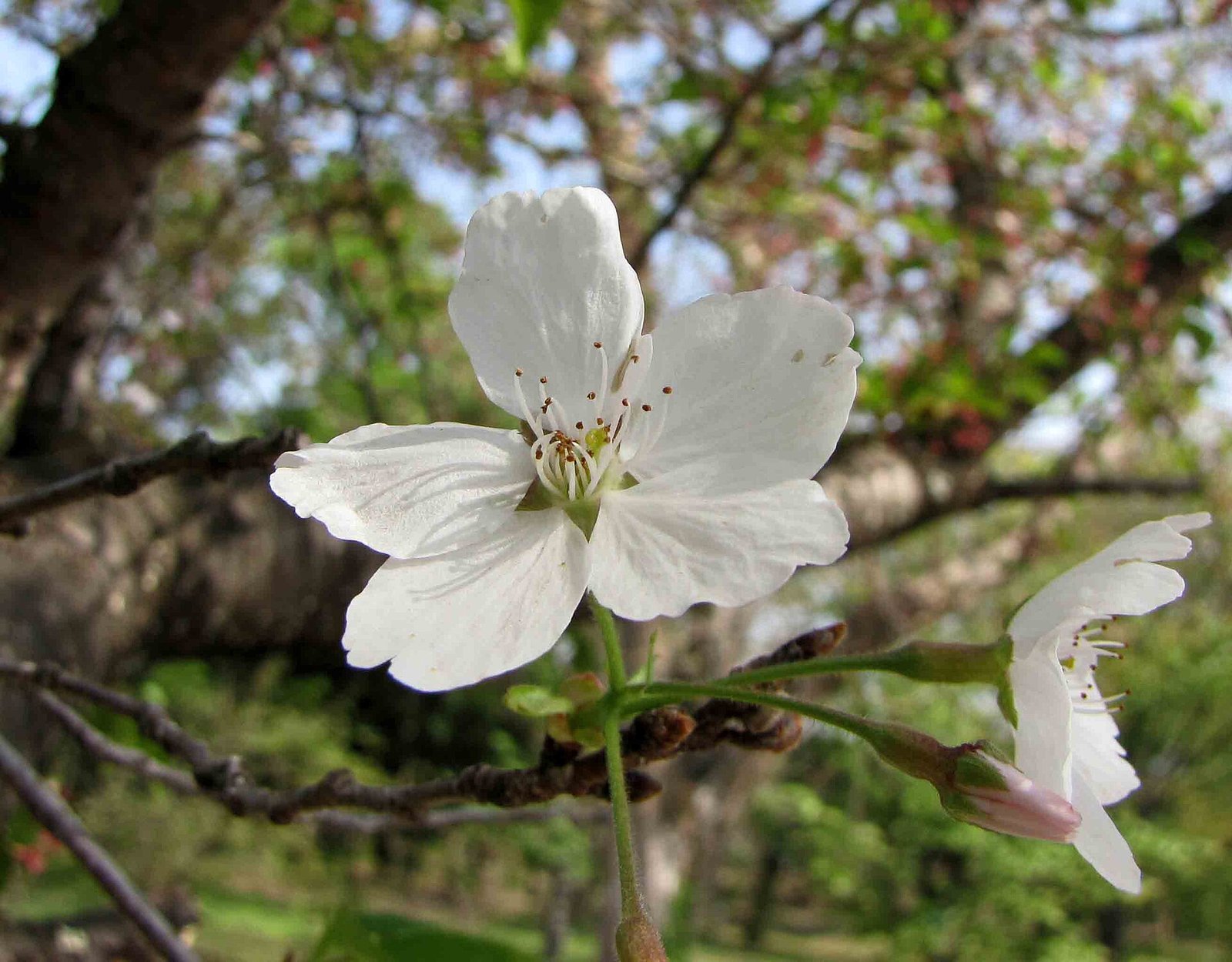
3. Five petals – or more than 300
Somei-yoshino and most wild cherries have five petals, not four as some sites claim. Double-flowered yae-zakura have far more: Kanzan (‘Kwanzan’ abroad), the deep-pink cherry that flowers a week or two after Somei-yoshino, has around 20-30. The extreme is Kenroku-en Kiku-zakura, a “chrysanthemum cherry” in Kanazawa’s Kenroku-en garden, with over 300 petals per flower on old trees.
The season: timing, forecasts and records
4. Cherry season in Japan runs from January to May
Okinawa opens first, around 16 January in Naha (JMA’s normal date), with Kanhi-zakura, a deep-pink, bell-shaped species, not Somei-yoshino. Somei-yoshino then moves north: Fukuoka around 22 March, Tokyo 24 March, Kyoto 26 March. Sapporo’s normal is 1 May, where JMA tracks Ezo-yamazakura. Full bloom usually follows about a week after opening. Our guide on when cherry blossoms bloom in Japan breaks this down region by region.
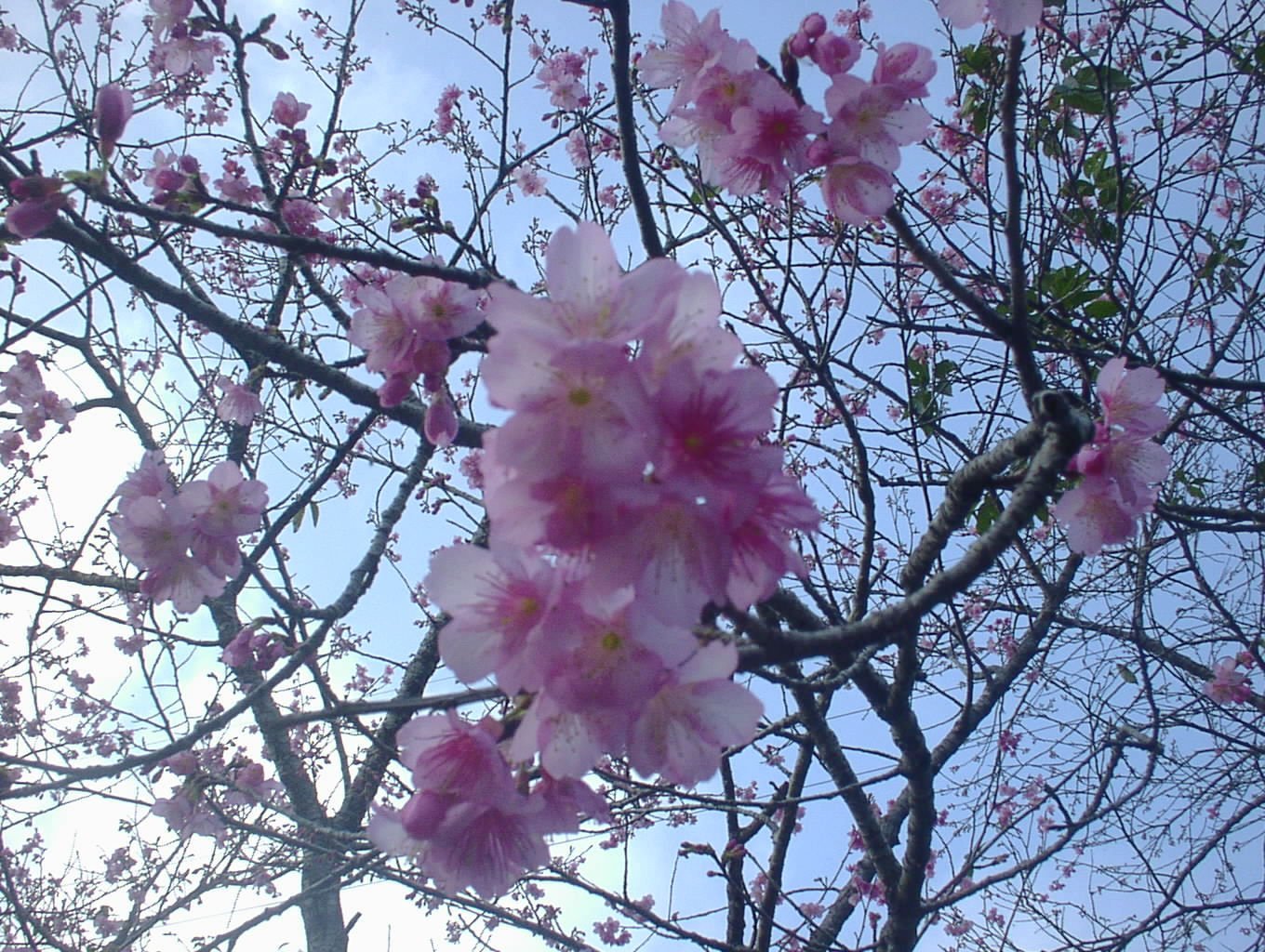
5. One tree at Yasukuni Shrine decides when Tokyo’s season officially starts
Each JMA observatory watches a specimen tree (hyohon-boku). Kaika (opening) is declared when 5-6 or more flowers are open on it, and mankai (full bloom) when about 80% of its buds are open. Tokyo’s specimen tree has been at Yasukuni Shrine since 1966, and the TV cameras gather there every March.
When JMA cut back its nature observations in 2021, it dropped every animal and most plants, but cherry was one of six plants kept. Tokyo’s earliest kaika on record is 14 March (2020, 2021 and 2023).
6. Next spring’s buds form the summer before
Cherry flower buds form the previous summer, then go dormant, and they need a spell of winter cold to wake up (kyumin daha, “breaking dormancy”). That’s why a warm winter can make southern Kyushu bloom later, not earlier. In spring 2026, researchers blamed a lack of winter chill for Kagoshima’s blossoms still being only about 10% open in early April.
JMA stopped issuing cherry forecasts after the 2009 season; private firms such as the Japan Weather Association (tenki.jp) and Weathernews publish them now. Behind their models sit two classic rules of thumb for Tokyo. Add up daily maximum temperatures from 1 February, and the cherries tend to open at about 600°C. Or add up daily means until they reach about 400°C. Both usually land within a few days.
7. Kyoto has a cherry blossom record going back 1,200 years
Using court diaries, poems and temple records, the late climate scientist Yasuyuki Aono reconstructed Kyoto’s full-bloom dates back to 812 AD. It’s one of the world’s longest plant records, and it shows blooming moving sharply earlier since the 1800s as the city warms. In 2021 Kyoto reached full bloom on 26 March, then the earliest in the series; in 2023 JMA recorded an even earlier 24 March. (“Sakura zensen”, the cherry blossom front, is the modern forecast map, not the old record.)
8. Some cherries bloom in autumn
Not every sakura waits for spring. Cultivars such as Jugatsu-zakura (“October cherry”) and Shiki-zakura (“four-seasons cherry”) flower lightly from autumn into winter, then again in spring. In Obara, in Toyota city (Aichi), about 10,000 Shiki-zakura bloom among the autumn leaves in November.
Ordinary cherries sometimes do it too, which the Japanese call kuruizaki, “crazy blooming”. Leaves keep the buds dormant, so when a typhoon strips them and warm days follow, some buds open months early. After the typhoons of autumn 2018, Weathernews received more than 350 reports from Kyushu to Hokkaido. Spot a few flowers on a bare branch this October and that’s what you’re seeing.
The culture: hanami, poetry, food and money
9. Hanami was originally about plum blossoms
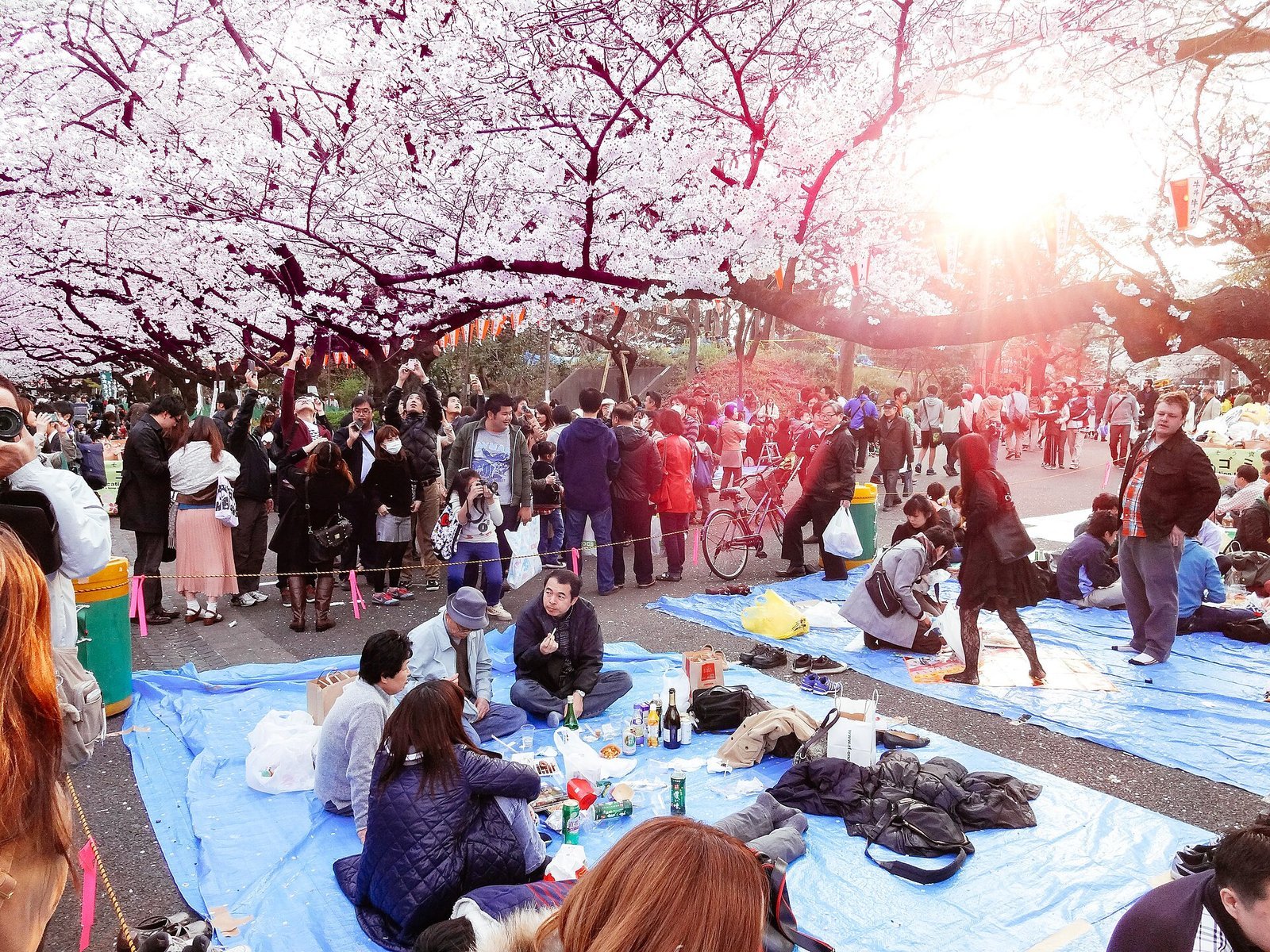
In the 8th-century Man’yoshu poetry anthology, plum (ume) poems outnumber cherry poems by roughly three to one. In the Heian period, tastes shifted to cherries, and Emperor Saga’s cherry party at Shinsen-en in Kyoto in 812 is traditionally called the first cherry hanami.
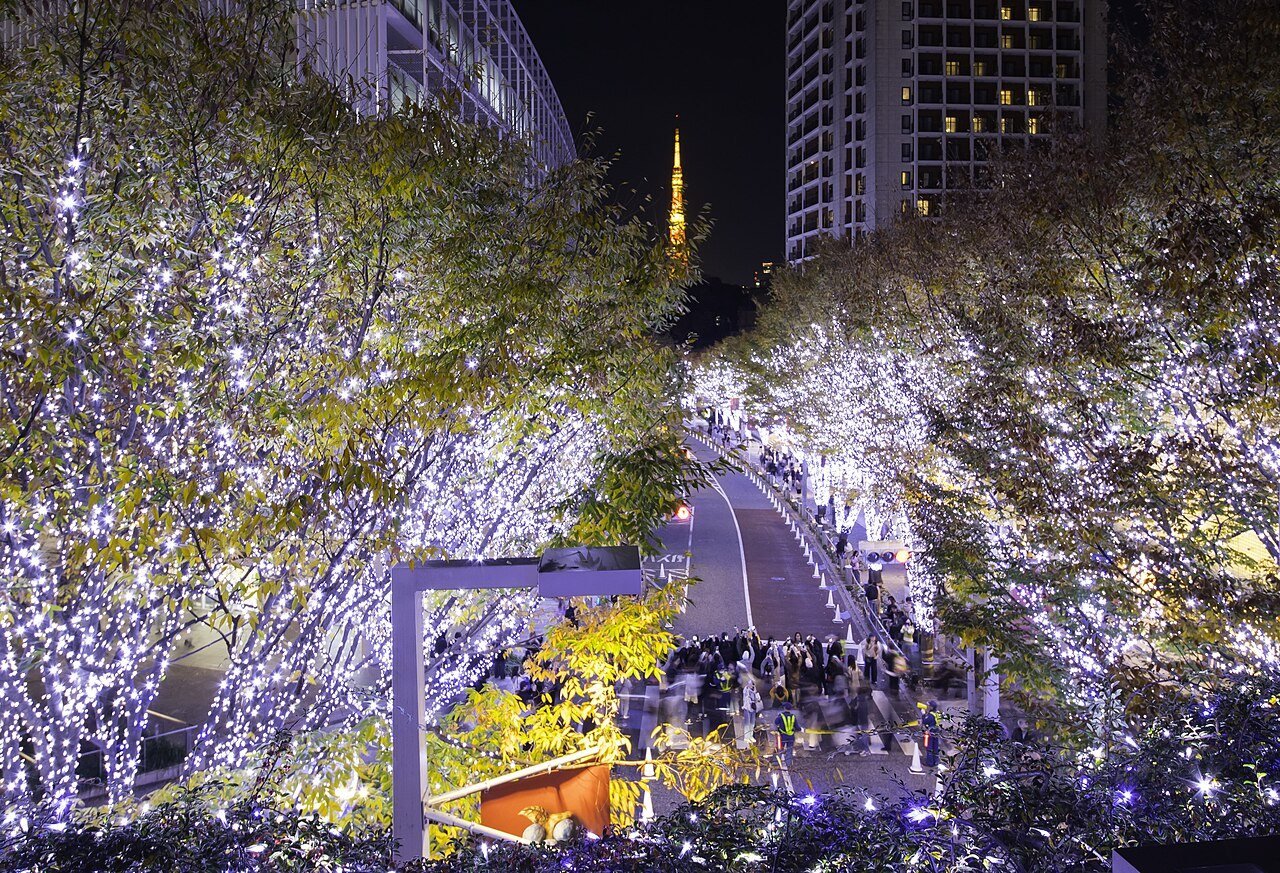
The most lavish was Toyotomi Hideyoshi’s hanami at Daigo-ji in Kyoto in 1598: the temple says 700 cherry trees were planted for it and about 1,300 guests came. Hanami for everyone arrived in the 1720s, when shogun Tokugawa Yoshimune planted cherries on Asukayama hill in Edo and opened it to the public. Yozakura, night viewing under lanterns, is now just as popular.
10. A poet asked to die under the cherry blossoms – and got his wish
The monk-poet Saigyo wrote one of Japan’s best-known poems: negawaku wa / hana no shita nite / haru shinan / sono kisaragi no / mochizuki no koro. In our own translation: “If I may wish it, let me die in spring beneath the blossoms, around the full moon of the second month.” He died in 1190 on the 16th day of the second month, just after that full moon.
The 18th-century scholar Motoori Norinaga called this feeling mono no aware, a sensitivity to the sadness of things. It had a darker side: in the Second World War, falling blossoms were used to glorify dying for the emperor, and the Ohka suicide rocket plane was literally named “cherry blossom”. Our article on what cherry blossoms symbolize goes further.
11. Cherry blossoms barely smell – the famous scent is in the salted leaves
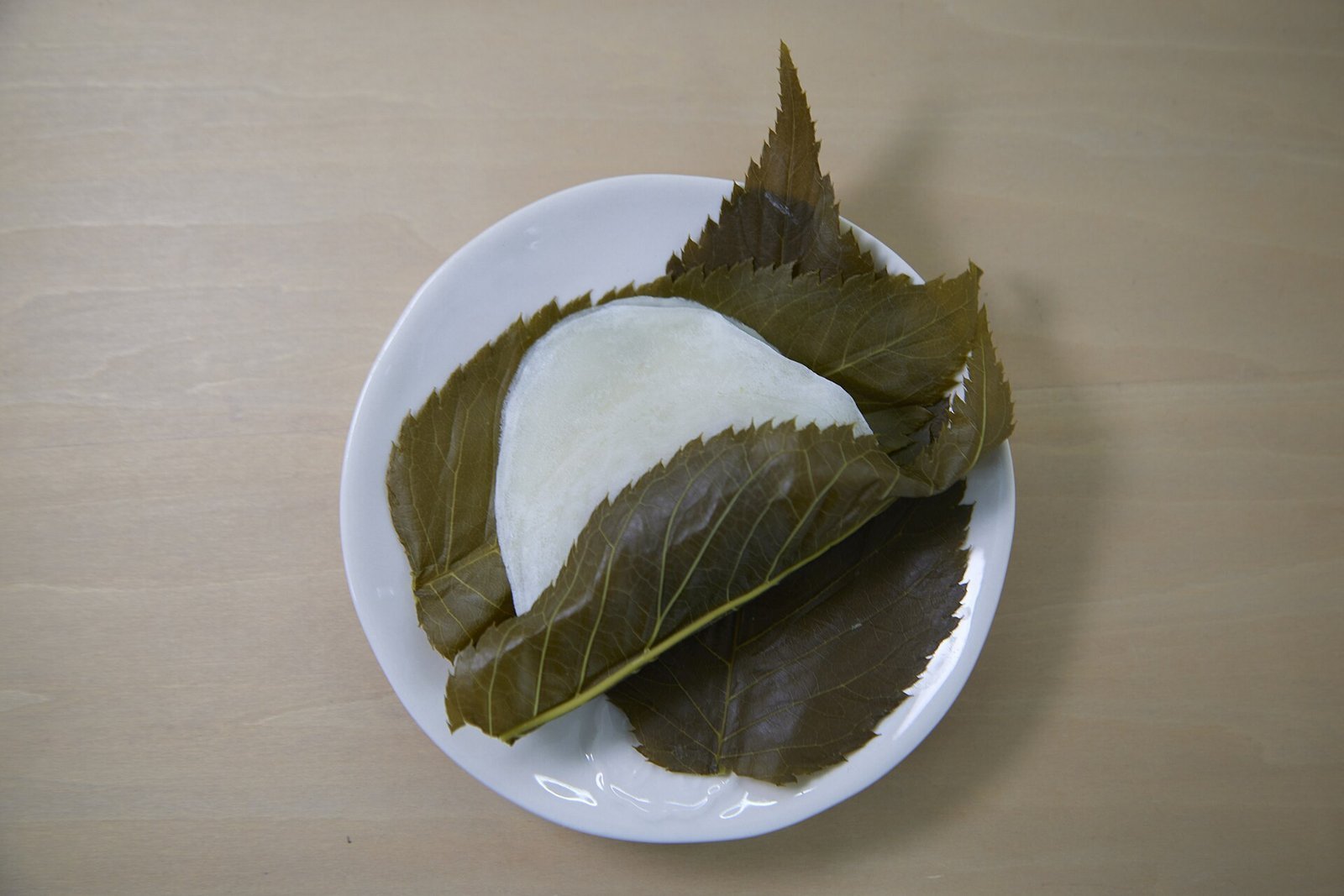
A Somei-yoshino in full bloom has almost no scent, and most “cherry blossom” perfumes are synthetic (fragrant cultivars such as Surugadai-nioi are the exception). The smell people associate with sakura is coumarin, which stays locked inside the leaves until salting or crushing breaks the cells and releases it.
That’s why sakura-mochi comes wrapped in salt-pickled Oshima-zakura leaves, about 70% of them from Matsuzaki on the Izu Peninsula. The Tokyo style, with a thin pancake, dates from 1717 at Chomei-ji temple in Mukojima; the Kansai style uses grainy Domyoji rice. Salt-pickled blossoms, usually double-flowered Kanzan, are steeped in hot water to make sakura-yu, served at engagements and weddings because the flower opens in the cup.
If you’d like to try it at home, this pack of salt-pickled blossoms is made in Japan:
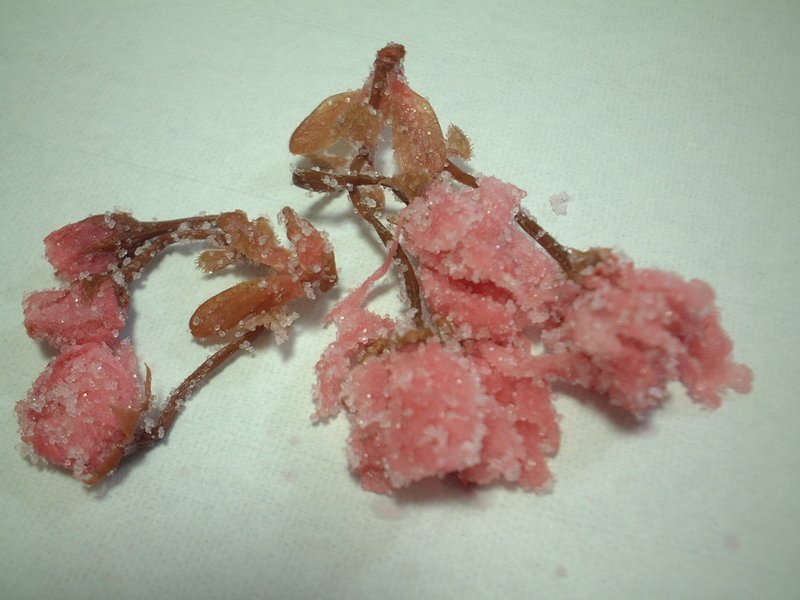
Salt-pickled cherry blossoms (item type, not the exact product). Photo: Suguri F, CC BY-SA 2.5, via Wikimedia Commons
IPPINKA Salt-Pickled Cherry Blossoms, 40 g (made in Japan)
Salt-pickled blossoms for making sakura-yu tea or decorating sweets at home.
Check price on AmazonOrnamental cherries produce only small, sour fruit. The sweet sakuranbo you buy in June are a different species, Prunus avium, and Yamagata grows about three-quarters of Japan’s crop. Cherry bark (ohi) does have a real medicinal use, though: it is an ingredient in some Japanese cough syrups.
12. Sakura is on the 100 yen coin, but it isn’t Japan’s official national flower
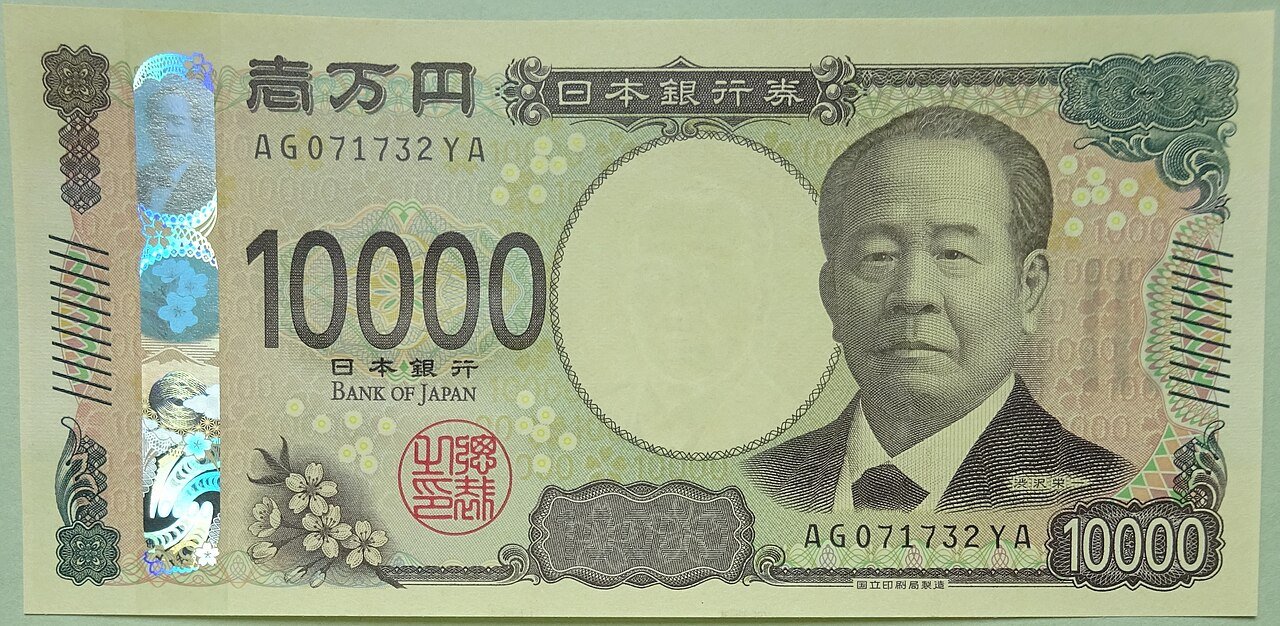
The cherry blossom 100 yen coin dates from 1967, when cupronickel replaced silver coins showing a phoenix (1957) and ears of rice (1959). (The smallest coin is the 1 yen, not the 100.) Japan has no national flower set by law; cherry and chrysanthemum share the role unofficially. And 27 March is Sakura Day (sakura no hi), created in 1992 by the Flowering Cherry Association of Japan. It’s a celebration, not a public holiday.
The trees: ancient giants and how to treat them
13. Japan’s oldest cherries are over 1,000 years old, and none of them is Somei-yoshino
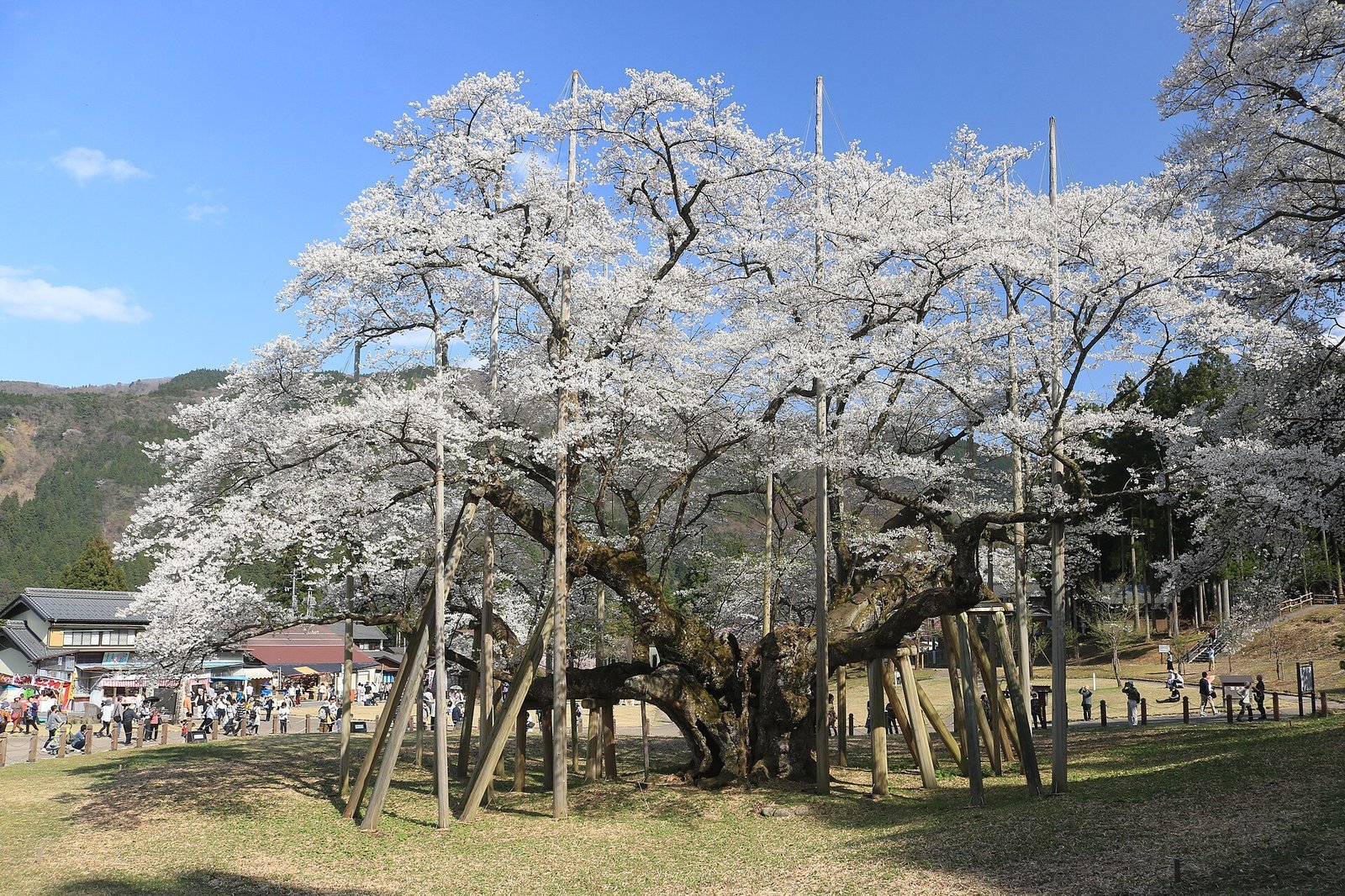
Long life belongs mainly to wild species, especially Edohigan. Japan’s “three great cherry trees” (Nihon sandai-zakura) are all Edohigan-type trees, and all three were designated National Natural Monuments in 1922. Ages for trees this old are traditional estimates, not measurements.
| Tree | Type | Location | Said to be | Status |
|---|---|---|---|---|
| Jindai-zakura | Edohigan | Jisso-ji temple, Hokuto, Yamanashi | 1,800-2,000 years | National Natural Monument (1922) |
| Usuzumi-zakura | Edohigan | Neo, Motosu, Gifu | 1,500+ years | National Natural Monument (1922) |
| Miharu Takizakura | Weeping Edohigan (beni-shidare) | Miharu, Fukushima | 1,000+ years | National Natural Monument (1922) |
| Hirosaki Park’s oldest Somei-yoshino | Somei-yoshino | Hirosaki, Aomori | Planted 1882 | Prefectural Natural Monument (2016) |
Miharu Takizakura, the “waterfall cherry”, is often called a national treasure, but strictly it’s a Natural Monument; “National Treasure” is a category for buildings and artworks.
14. Somei-yoshino don’t die at 60
For decades Japan believed Somei-yoshino lived only about 60 years, and some towns felled healthy trees because of it. Hirosaki Park in Aomori, with about 2,600 cherries, proved otherwise: its oldest Somei-yoshino, planted in 1882, still flowers. In this apple country, gardeners borrowed orchard methods for the “Hirosaki method” of bold pruning, sealed cuts and generous feeding. A Somei-yoshino planted in 1878 at Kaiseizan Park in Koriyama is older still.
15. “A fool cuts a cherry” – and damaging one can be a crime
The gardener’s proverb sakura kiru baka, ume kiranu baka means “a fool cuts a cherry; a fool doesn’t cut a plum”. Cherry wood heals poorly and rots easily, while plums need pruning. (Hirosaki’s skilled pruners are the exception that proves the rule.)
Despite claims online, damaging an ordinary cherry won’t get you 10 years in prison, because most cherries aren’t cultural properties. Breaking branches on a park or private tree can count as property damage under Article 261 of the Penal Code (up to three years or a 300,000 yen fine). Damaging a designated Natural Monument like the trees above falls under Article 196 of the Law for the Protection of Cultural Properties (up to five years or a 1,000,000 yen fine). In practice, just follow park etiquette:
- Don’t climb trees, pick flowers or break branches for photos.
- Keep sheets and bikes off the roots. Trampled roots can kill a tree, which is why parks such as Koganei Park in Tokyo ask you to stay off them.
- Save hanami spots only where and when the park allows it, and never leave a sheet unattended.
- Take your rubbish home and leave open flames and loudspeakers behind.
Sakura around the world (and beyond)
16. Washington, DC’s cherries were a gift of 3,020 trees – after the first batch was burned
The first 2,000 trees from Tokyo reached Washington in January 1910 riddled with insects and nematodes, and President Taft approved burning them. Tokyo mayor Yukio Ozaki sent a replacement: 3,020 healthy trees of 12 varieties, including 1,800 Somei-yoshino. First Lady Helen Taft and Viscountess Chinda planted the first two by the Tidal Basin on 27 March 1912, the date Japan now marks as Sakura Day. Another 3,800 Yoshino followed in 1965. Today about 70% of the park’s roughly 3,800 cherries are Yoshino, and the National Cherry Blossom Festival runs from late March to mid-April.
17. A cherry tree that went to space bloomed six years early
In November 2008, seeds from 14 famous old cherry trees were flown to the International Space Station in a project run by Japan Manned Space Systems. They spent about eight months inside the station, not out in the vacuum of space, and returned in July 2009 with astronaut Koichi Wakata.
The surprise came from the Chujo-hime Seigan-zakura at Ganjo-ji temple in Gifu city, a tree said to be about 1,250 years old whose seeds had never been known to sprout. One did, and on 1 April 2014 the four-year-old sapling produced nine flowers, about six years ahead of normal. Saplings at four sites flowered early. With no proper control group, treat it as a curiosity, not a proven space effect.
18. The world’s largest LEGO cherry tree used over 800,000 bricks
Guinness World Records certified it in April 2018: a 4.38 m LEGO cherry tree built from over 800,000 bricks for LEGOLAND Japan in Nagoya. It’s the largest LEGO cherry tree, not the largest LEGO model ever.
LEGO’s small Cherry Blossoms set (40725) builds two branches that never drop their petals:
LEGO brick flowers (item type; the cherry blossom set is not shown). Photo: Suwm HorC POONZ, CC0, via Wikimedia Commons
LEGO Cherry Blossoms (40725)
A small brick-built set that makes two pink and white cherry blossom branches that never drop their petals.
Check price on AmazonWhere to see these facts for yourself
You can see most of these facts in one spring. Chasing the front by car through 20-plus prefectures, we’ve found the trick is to start south and follow the dates north:
- Tokyo (late March): visit the Yasukuni Shrine specimen tree, then take the train a few stops to Komagome for the Somei-yoshino birthplace stone.
- Kyoto and Nara (late March to early April): go to Daigo-ji for Hideyoshi’s hanami, then Mount Yoshino, where about 30,000 mostly wild Yamazakura climb the mountain in stages.
- The three great trees (early to mid-April, depending on the year): Jindai-zakura, Usuzumi-zakura and Miharu Takizakura are far apart and best reached by car.
- Hirosaki (late April): the park’s 2,600 trees, including the 1882 Somei-yoshino.
- Autumn: Obara’s Shiki-zakura in November, with autumn leaves.
Any one tree flowers for only a week or two, so keep your plans flexible (see how long cherry blossoms last) and browse our top 10 sakura destinations in Japan. A current guidebook helps with the logistics:
Travel guidebooks (item type, not the exact product). Photo: 松岡明芳, public domain, via Wikimedia Commons
Lonely Planet Japan (19th edition, July 2026)
A full, current Japan guide with maps and transport tips for planning a sakura trip.
Check price on AmazonFAQ
How many types of cherry blossom are there in Japan?
About 10 wild species (11 if you count Okinawa’s Kanhi-zakura) and somewhere between 200 and 300+ cultivars, depending on the source.
When do cherry blossoms bloom in Japan?
From mid-January in Okinawa to late March and early April in Tokyo and Kyoto, and early May in Sapporo. Exact dates shift by a week or more from year to year.
What is the oldest cherry tree in Japan?
The Jindai-zakura at Jisso-ji temple in Hokuto, Yamanashi, an Edohigan traditionally said to be 1,800-2,000 years old. Nobody can measure its age exactly.
Can you eat cherry blossoms?
Yes. Salt-pickled blossoms are used for sakura-yu and sweets, and salt-pickled Oshima-zakura leaves wrap sakura-mochi. Don’t pick them from park trees, though.
Is it illegal to pick cherry blossoms in Japan?
Breaking branches off park or private trees can count as property damage, and harming a designated Natural Monument is a separate offence. Look, don’t touch.