
As an Amazon Associate, Chasing Cherry Blossoms earns from qualifying purchases. We may also earn from other affiliate links on this page at no extra cost to you.
Japan’s bullet trains are famous for speed, but the answer to “how fast?” depends on which line you ride. This guide gives the top operating speed for each Shinkansen line in km/h and mph, explains why they differ, and separates what is confirmed from what is still only planned.
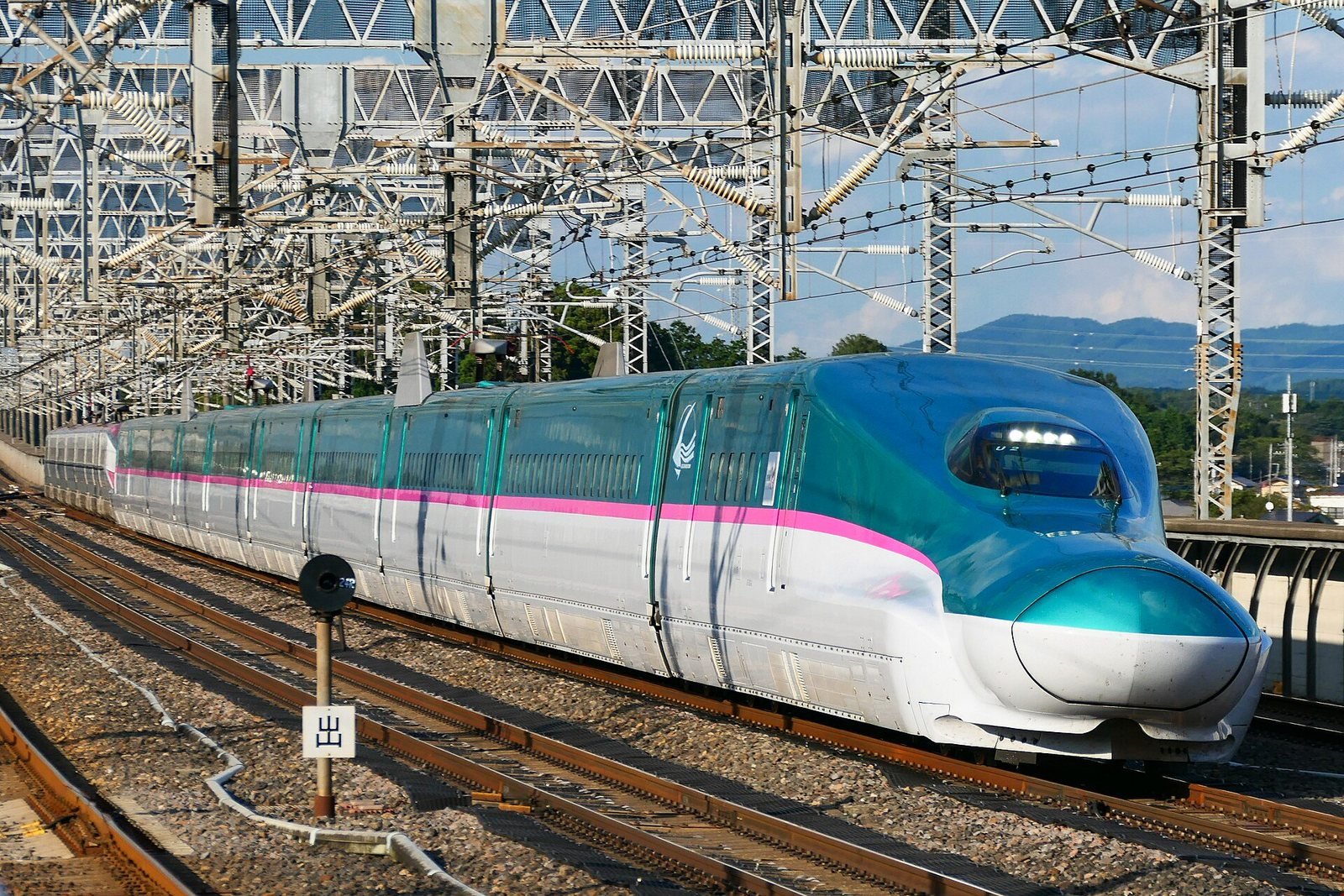
Quick answer: The fastest Shinkansen in passenger service runs at up to 320 km/h (about 199 mph) on the Tohoku Shinkansen, according to JR East’s E5 series page (it has run at that speed since March 2013). The Tokaido Shinkansen (Tokyo to Osaka) tops out at 285 km/h (177 mph), the Sanyo line at 300 km/h (186 mph), and the Hokuriku line at 260 km/h (162 mph). The fastest any train has gone is JR Central’s maglev, which reached 603 km/h (375 mph) on a test track in 2015. That maglev line, the Chuo Shinkansen, has no confirmed opening date as of Nov 2026.
Shinkansen top speeds by line (as of Nov 2026)
These are maximum operating speeds, not whole-trip averages. “Check JR site” marks cells not confirmed from an official page.
| Line | Main trains | Top operating speed (km/h / mph) | Where | Source note |
|---|---|---|---|---|
| Tohoku | E5 / H5 (Hayabusa) | 320 / 199 | Fastest stretch of the Tokyo to Shin-Aomori line | JR East E5 page; 320 km/h since 16 March 2013 |
| Hokkaido | H5 (Hayabusa) | 260 / 162 line maximum | Shin-Aomori to Shin-Hakodate-Hokuto | JR Hokkaido; 160 / 99 in Seikan Tunnel normally, 140 / 87 on shared track |
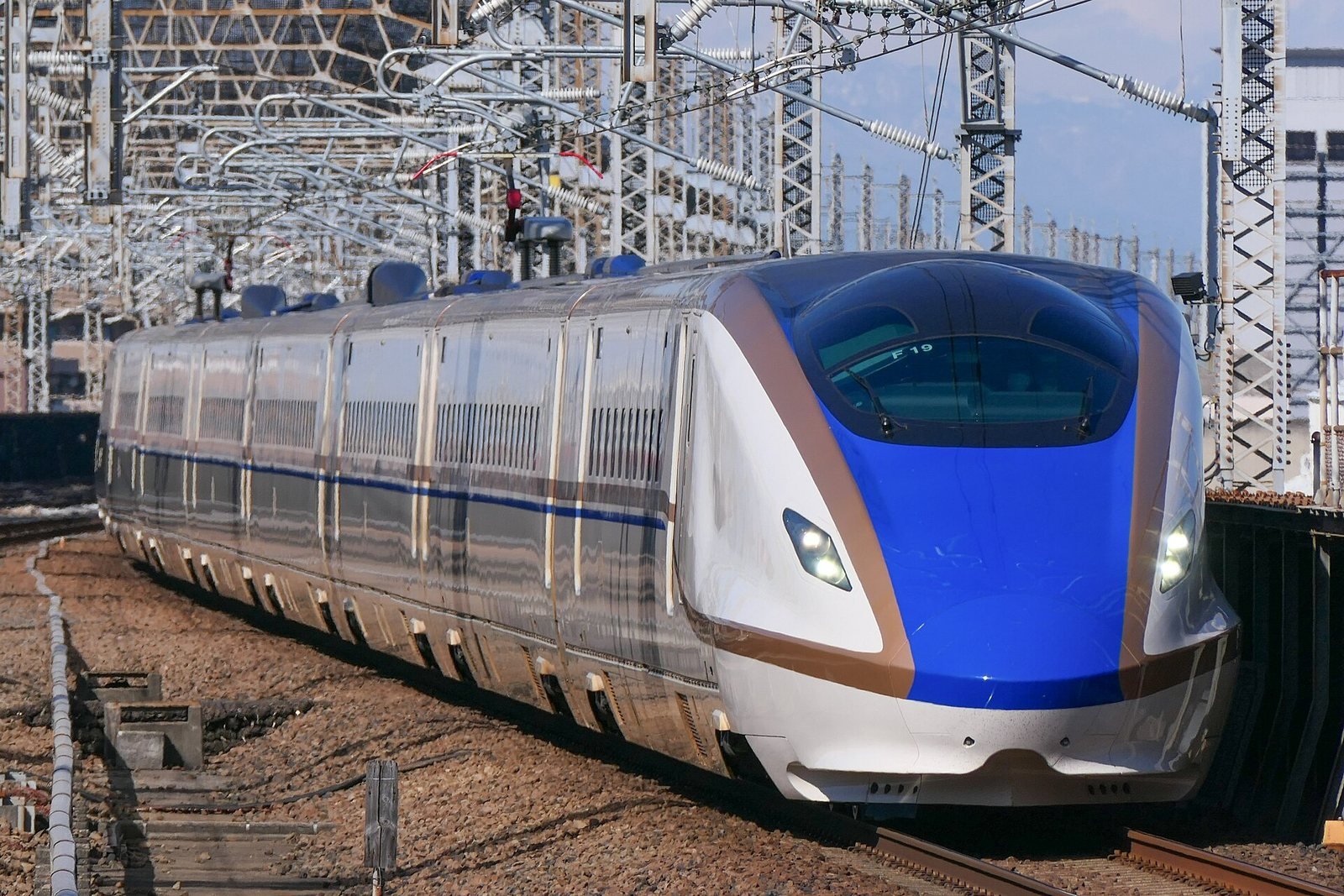
| Hokuriku | E7 / W7 (Kagayaki, Hakutaka) | 260 / 162 | Tokyo to Tsuruga | JR West Hokuriku page (line maximum) |
| Joetsu | E7 (Toki, Tanigawa) | up to 275 / 171 (E7 top speed) | Tokyo to Niigata | JR East E7 page lists 275 km/h; check JR East for line limits |
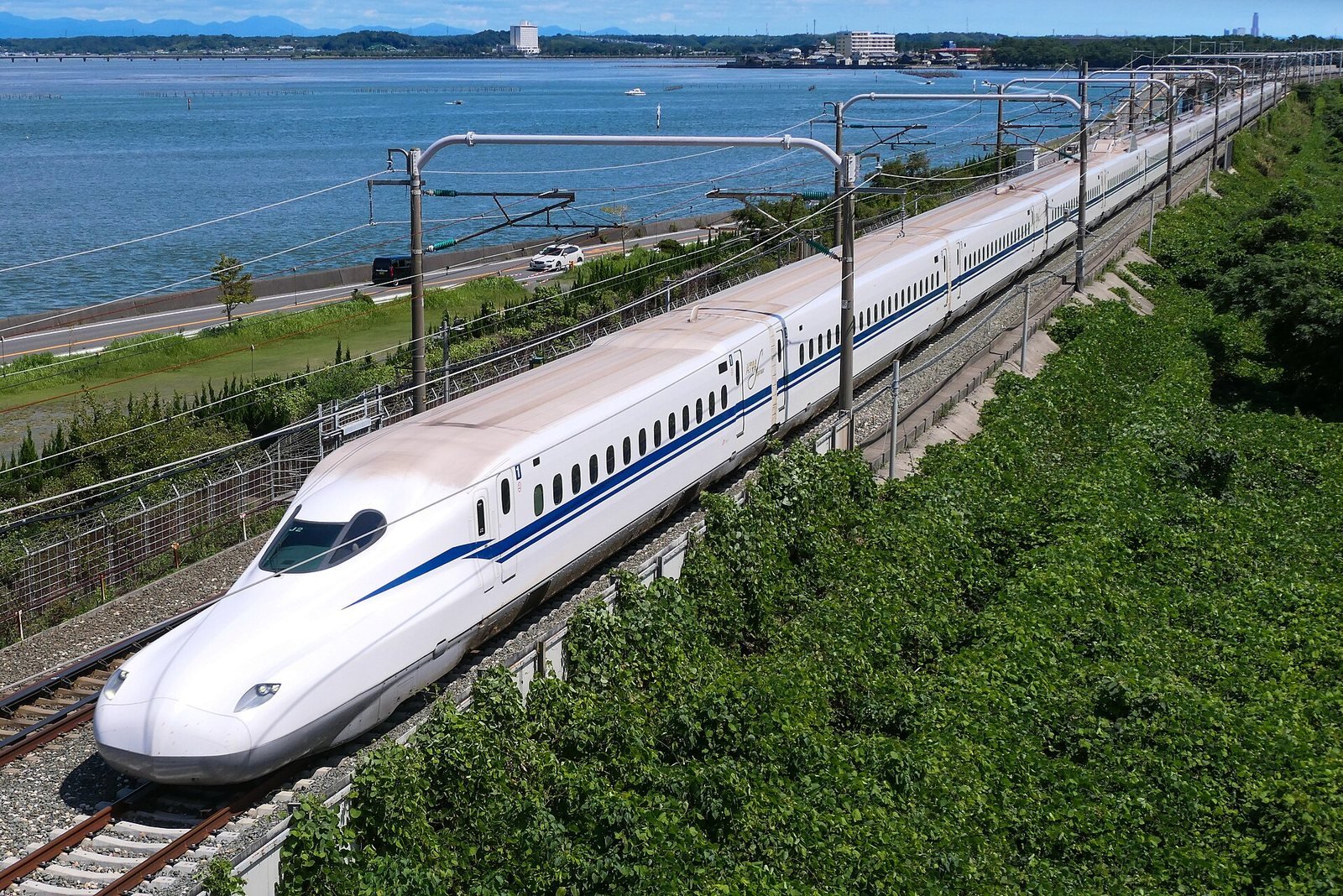
| Tokaido | N700S, N700A | 285 / 177 | Tokyo to Shin-Osaka | JR Central |
| Sanyo | N700 series | 300 / 186 | Shin-Osaka to Hakata | JR West Tokaido-Sanyo page |
| Kyushu | Sakura, Mizuho (800 / N700) | 260 / 162 | Hakata to Kagoshima-Chuo | JR Kyushu fact sheet (FY2017); up to 300 km/h on the Sanyo line |
| Nishi-Kyushu | Kamome | check JR site | Takeo-onsen to Nagasaki | Not confirmed from an official page |
mph is converted from km/h and rounded to the nearest whole number.
Map: where to see Japan’s fastest trains up close
- Tokyo Station – Tokaido Shinkansen terminus; fastest Tokyo-Shin-Osaka 2h21 (JR Central, 2023 timetable) Directions
- The Railway Museum – Large railway museum in Omiya, Saitama; check official site for exhibits and hours Directions
- Yamanashi Prefectural Maglev Exhibition Center – Has maglev test vehicle MLX01-2; test runs not held daily, check schedule Directions
- SCMAGLEV and Railway Park – 39 vehicles incl. MLX01-1 maglev and Series 0; closed Tuesdays (official site) Directions
- Kyoto Railway Museum – Large railway museum in Kyoto; check official site for exhibits and hours Directions
Tokyo Station is where the Tokaido Shinkansen starts, and three museums let you get close to historic Shinkansen cars and maglev test vehicles. The Railway Museum in Omiya and the Kyoto Railway Museum are large railway museums; check each official site for current exhibits, opening days and prices before you go.
SCMAGLEV and Railway Park in Nagoya lists 39 vehicles on display, including a Series 0, Series 100, Series 300, Series 700 and N700 Shinkansen, plus the MLX01-1 superconducting maglev. Its site gives hours of 10:00 to 17:30 and Tuesday closing, with calendars that can change (seen Nov 2026). The Yamanashi Prefectural Maglev Exhibition Center in Tsuru has the test vehicle MLX01-2 and lets you watch the maglev test line, but a Yamanashi tourism page says test runs are not held every day, so check the center’s schedule first.
Why the lines have different top speeds
A train’s top speed is only partly about the train. Track design, curves, gradients, noise limits near homes and the signalling system all set the ceiling. The Tokaido line is a 1960s route with many curves and heavy traffic, and JR Central lists 285 km/h as its maximum, reached in March 2015 and standardised for all trains by March 2020.
Newer lines are built straighter, which helps the Tohoku line allow 320 km/h, while the hilly Hokuriku line is set at 260 km/h even though JR East rates its E7 trains for 275 km/h. The Hokkaido Shinkansen shows another limit. JR Hokkaido says the line is run at a maximum of 260 km/h, but trains are held to 160 km/h inside the Seikan Tunnel so they can pass freight trains safely, and to 140 km/h where they share track with conventional lines. Since Golden Week 2024, the company has run 260 km/h in the tunnel during set periods (Golden Week, Obon and New Year) using time bands that keep freight out.
Mini-shinkansen services such as the Akita and Yamagata trains also leave the dedicated high-speed track and run on conventional lines, so they are much slower there. Their figures are not confirmed from an official page, so none are given here.
What that speed means for your trip
JR Central’s page on the Tokaido Shinkansen lists Tokyo to Shin-Osaka in 2 hours 21 minutes on the fastest trains, based on the March 2023 timetable. JR West’s Hokuriku page lists Kanazawa to Tokyo in 2 hours 28 minutes. Treat both as best-case times; your train may stop more often and take longer.
Top speed matters less than stops, so the fastest services often skip small stations. For seat classes, luggage and etiquette, see our guide to riding the Shinkansen. For reservations, see how to buy Shinkansen tickets online, and check whether the Japan Rail Pass suits your route. Heading north? See our Hokkaido itinerary or the Kanazawa guide.
From 210 km/h in 1964 to today
The Tokaido Shinkansen opened in 1964 with Series 0 trains, which JR Central’s museum describes as the first in the world to run in passenger service at 210 km/h (about 130 mph). According to JR Central, the fastest Tokyo to Shin-Osaka trip took 4 hours at opening and 3 hours 10 minutes from 1965. Today the fastest trains do it in 2 hours 21 minutes.
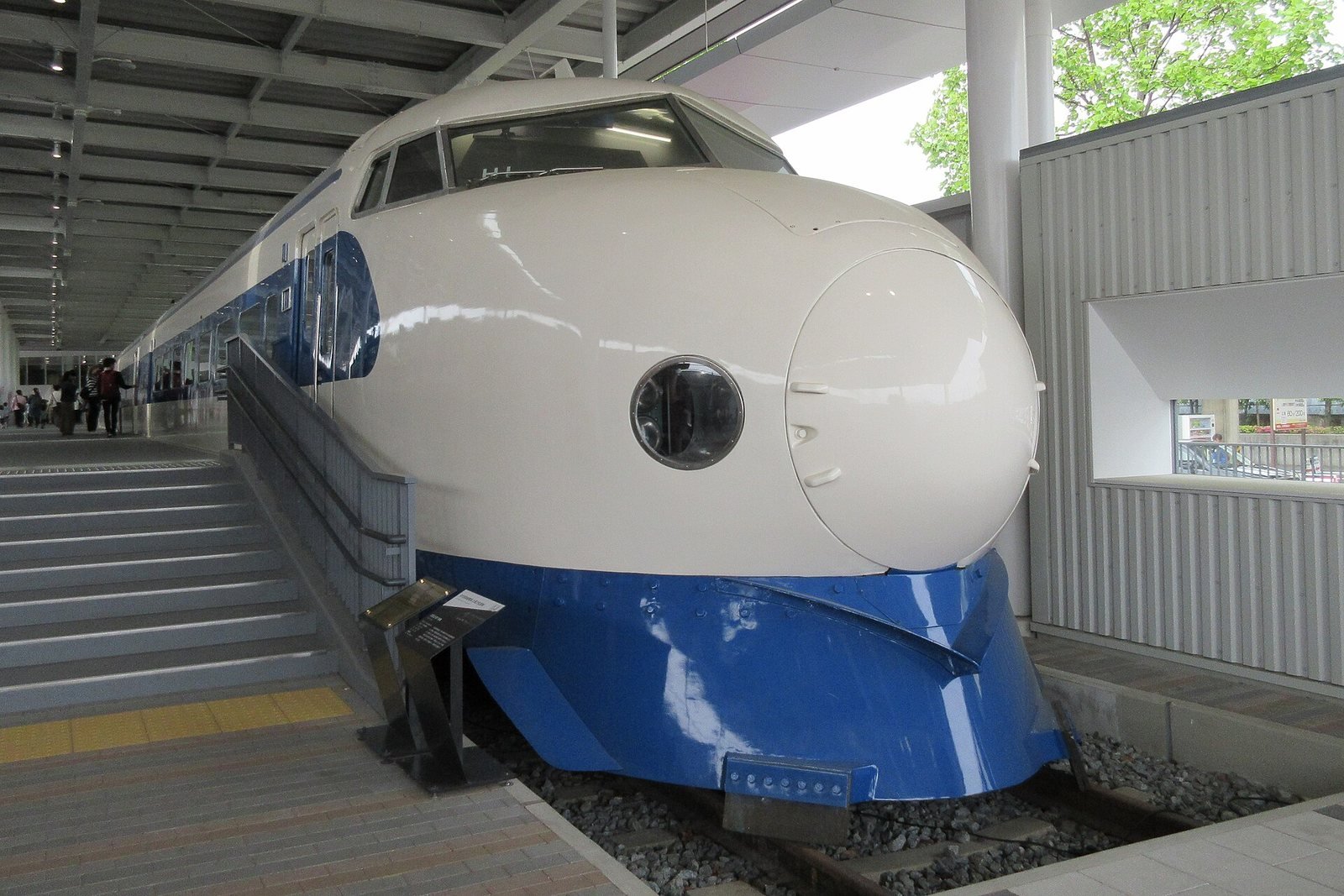
JR Central lists the later steps: 270 km/h with the 300 series Nozomi in 1992, every Tokaido train running at up to 270 km/h from October 2003, and 285 km/h from March 2015. You can see a Series 0 car up close at the Kyoto Railway Museum and at SCMAGLEV and Railway Park in Nagoya.
Records and what’s next: the 603 km/h maglev and the E10
Guinness World Records lists the fastest maglev at 603 km/h (374.68 mph), set by JR Central’s Series L0 on the Yamanashi Maglev Line on 21 April 2015, and notes that the line is a test line. JR Central’s Nagoya museum notes that the earlier MLX01 test vehicle set the world record of the time, 581 km/h, on the same test line in 2003.
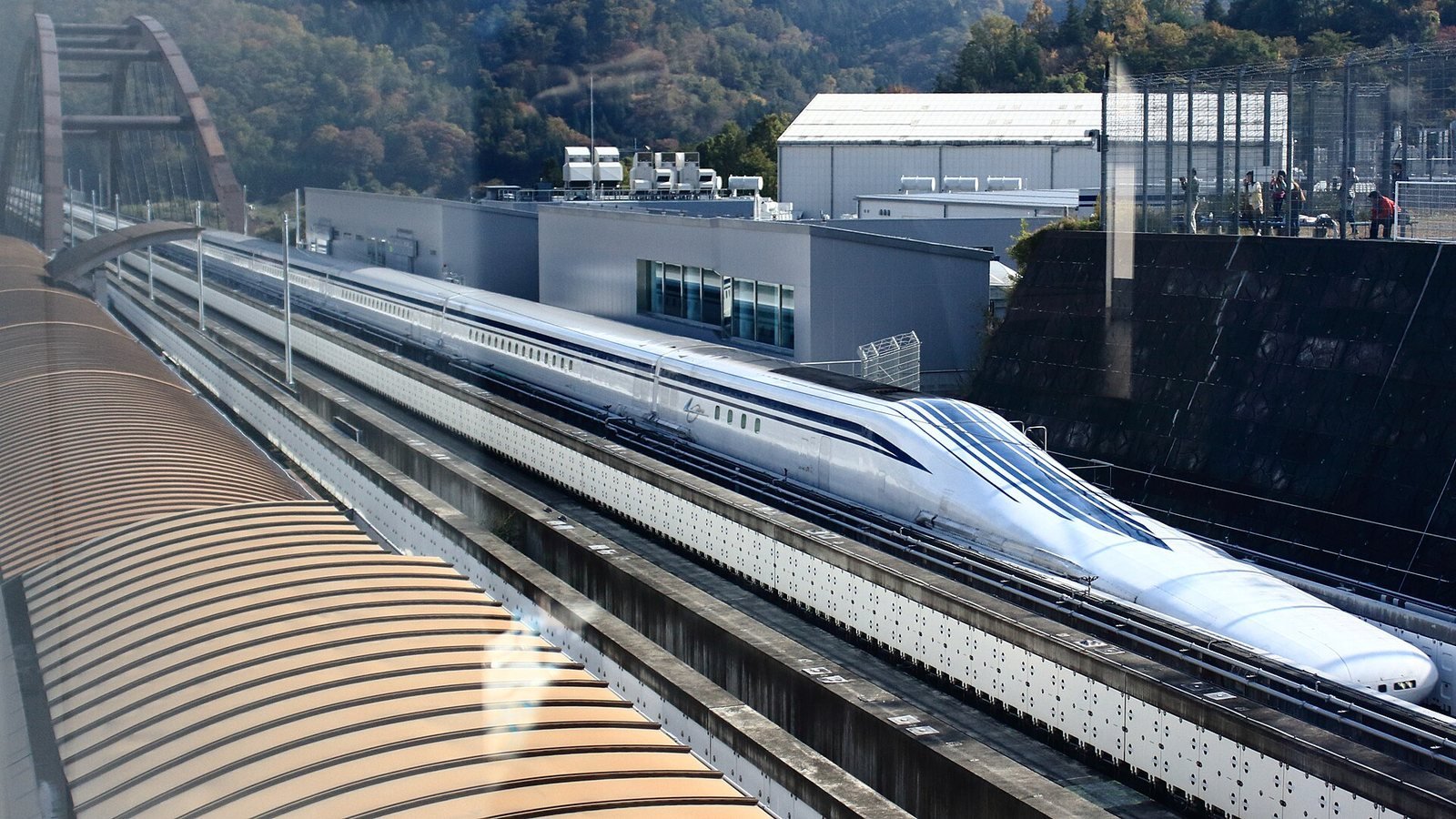
| Train / test | Speed | Year | Status |
|---|---|---|---|
| SCMaglev L0 (Yamanashi test line) | 603 km/h (375 mph) | 2015 | Guinness-listed record; test line only |
| MLX01 maglev | 581 km/h (361 mph) | 2003 | Earlier record; MLX01-1 is on display in Nagoya |
| E10 series (JR East) | 320 km/h planned (199 mph) | Service targeted in FY2030 (April 2030 to March 2031) | Planned, not in service |
Plans come with dates. On 4 March 2025 JR East announced the E10 series to replace its E2 and E5 trains on the Tohoku Shinkansen. Its press release gives a maximum operating speed of 320 km/h and 10 cars, with the first trains due to be completed from autumn 2027 and passenger service targeted within FY2030. The E10 uses technology tested on JR East’s ALFA-X test train, including shorter braking distances and earthquake measures. These are targets, and schedules can change.
The Chuo Shinkansen is the maglev line JR Central is building between Shinagawa (Tokyo) and Nagoya. At its investor meeting on 31 July 2026, JR Central said an environmental agreement signed with Shizuoka Prefecture on 18 July 2026 made it possible to begin tunnel construction in the Shizuoka section, and that it hoped to give an outlook on the opening of the Shinagawa to Nagoya section by the end of 2026. JR Central materials give a planned 500 km/h operating speed and about 40 minutes from Shinagawa to Nagoya. As of 12 Nov 2026, we have not seen an official opening date, so treat any year you read elsewhere as a guess.
Does it feel fast? Is it safe?
On a modern train the ride is smooth, so the speed is easier to see through the window than to feel. For safety, JR Central’s Shinkansen page gives an average delay of 1.6 minutes across 372 daily services (FY2023). Japan’s transport ministry also has an English Shinkansen page covering safety and earthquake detection. For broader travel questions, see is it safe to travel to Japan right now.
Research-based picks for train fans
We have not tested these. They are search links for gift ideas for Shinkansen fans, so check the details yourself.
A Takara Tomy Plarail Shinkansen set is a simple way for children to run their own bullet train.
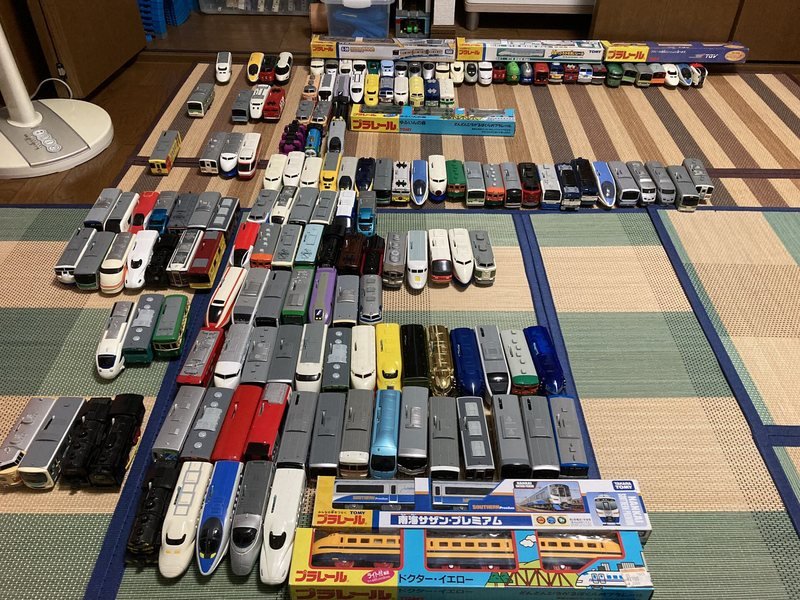
Plarail toy trains (item type, not the exact product). Photo: プラプラレール, CC BY-SA 4.0, via Wikimedia Commons
Plarail Shinkansen toy train
Takara Tomy toy Shinkansen trains and track for young train fans; check the set contents on the listing.
Search on AmazonAn N-scale starter set, such as those from KATO, suits older fans who want a small model layout.
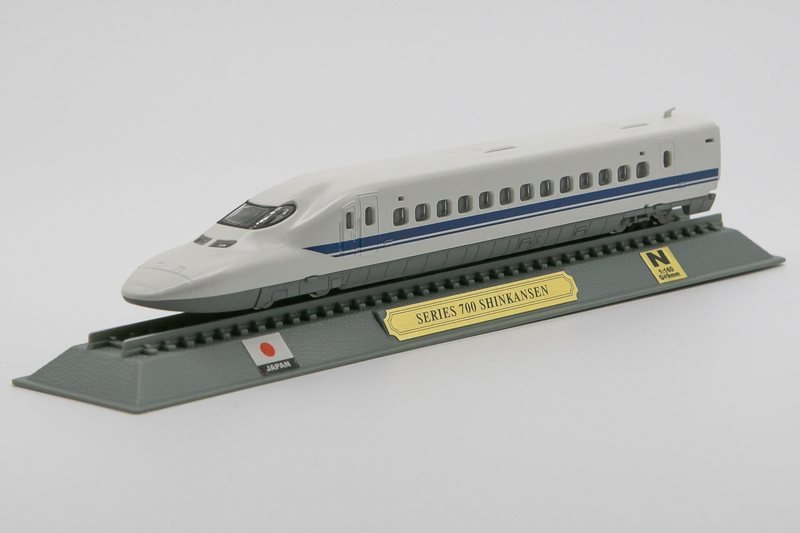
N-scale Shinkansen model (item type, not the exact product). Photo: Poudou99, CC BY 4.0, via Wikimedia Commons
N-scale Shinkansen starter set
Small-scale model set for building a first layout; check what track and controller are included.
Search on AmazonA book about Japan’s bullet trains or railways is an easy gift for readers of any age.

Books (item type, not the exact product). Photo: Alexander Grey, public domain, via Wikimedia Commons
Shinkansen bullet train book
Picture books and histories of Japan's bullet trains for children and adult rail fans.
Search on AmazonFAQ
How fast is the Shinkansen in mph?
It depends on the line. The fastest passenger section is 320 km/h (about 199 mph) on the Tohoku Shinkansen, the Sanyo line is 300 km/h (186 mph), the Tokaido line is 285 km/h (177 mph) and Hokuriku is 260 km/h (162 mph).
What is the fastest bullet train in Japan?
In regular service, JR East’s E5 series on the Tohoku line at 320 km/h. The E10 series is planned to match that speed.
Is the Shinkansen faster than flying from Tokyo to Osaka?
The train covers Tokyo to Shin-Osaka in 2 hours 21 minutes on the fastest services (JR Central, March 2023 timetable). A flight is quicker in the air, but airport time changes the comparison. Compare door to door for your own trip.
How fast was the first bullet train in 1964?
210 km/h (about 130 mph). JR Central says the Series 0 trains that opened the Tokaido Shinkansen in 1964 were the first in the world to run in passenger service at that speed, with a fastest Tokyo to Osaka time of 4 hours.
What is the fastest a Japanese train has ever gone?
603 km/h (375 mph), by JR Central’s L0 maglev on the Yamanashi test line on 21 April 2015, as listed by Guinness World Records.
When will the maglev open?
No official date is confirmed as of 12 Nov 2026. JR Central said in July 2026 that it hoped to give an outlook on the Shinagawa to Nagoya opening by the end of 2026, so check JR Central for updates.
Can you feel the speed on board?
Not much. Modern Shinkansen cars ride smoothly, so you notice speed mostly through the window and in tunnels.
Sources
These are the official pages we relied on. Figures can change with each timetable revision, so check the operator before you plan around a time.
- JR East: E5 series (Japanese) (seen Nov 2026)
- JR East: E7 series (Japanese) (seen Nov 2026)
- JR East: E10 series press release, 4 March 2025 (Japanese PDF) (seen Nov 2026)
- JR Central: About the Shinkansen (seen Nov 2026)
- JR Central: company history (seen Nov 2026)
- JR West: Tokaido-Sanyo Shinkansen (seen Nov 2026)
- JR West: Hokuriku Shinkansen (seen Nov 2026)
- JR Hokkaido: Hokkaido Shinkansen speeds (Japanese) (seen Nov 2026)
- Guinness World Records: fastest maglev train (seen Nov 2026)
- SCMAGLEV and Railway Park and its vehicle list (Japanese) (seen Nov 2026)
- JR Central: 1st quarter investor meeting, 31 July 2026 (PDF) (seen Nov 2026)
- JR Kyushu: fact sheet (PDF) (seen Nov 2026)
- Yamanashi tourism: Maglev Visitor Center (Japanese) (seen Nov 2026)
Bottom line
The fastest Shinkansen you can ride today runs at 320 km/h (about 199 mph) on the Tohoku line, and most other lines top out between 260 and 300 km/h. The 603 km/h maglev is a test-line record, and its opening date is still unconfirmed. For your trip, stops and timetable matter more than top speed, so plan around the fastest services on your route.
Top photo: an E5 series Hayabusa on the Tohoku Shinkansen at Nasushiobara. Photo: MaedaAkihiko, CC BY-SA 4.0, via Wikimedia Commons.