
As an Amazon Associate, Chasing Cherry Blossoms earns from qualifying purchases. We may also earn from other affiliate links on this page at no extra cost to you.
The bullet train from Tokyo to Hiroshima is one of Japan’s simplest long rides: a single direct train, no change, and a city that rewards the effort. This guide covers which train to pick, how tickets and the JR Pass work on this route, and how to add a Miyajima day trip.
Quick answer: The fastest option is the direct Nozomi from Tokyo Station, which takes roughly 4 hours with no change. Hikari and Sakura trains are slower and usually mean changing at Shin-Osaka or Okayama. The JR Pass does not cover Nozomi on its own; you need a separate supplement ticket (6,500 yen for Tokyo-Hiroshima, about USD 42). Reserve a seat, and reserve early if you carry a big suitcase. For Miyajima, take the JR Sanyo Line from Hiroshima Station (about 28 minutes) and the ferry (about 10 minutes).
| Option | Change? | Approx. time | JR Pass | Best for |
|---|---|---|---|---|
| Nozomi, direct | No | Roughly 4h | Not covered; 6,500 yen supplement ticket | Most travelers; fastest |
| Hikari or Sakura | Usually at Shin-Osaka or Okayama (reported) | Longer; check the timetable | Covered; seat reservations free | Pass holders who want to avoid the supplement |
| Nozomi to Shin-Osaka, then Sanyo Shinkansen | Yes, Shin-Osaka | Longer than direct | Kansai-Hiroshima Area Pass covers only Shin-Osaka to Hiroshima (17,000 yen) | Trips that start with Osaka or Kyoto |
| Kodama | Not practical | Much slower | Covered | Not recommended for this route |
Map: Tokyo to Hiroshima stops in this guide
- Tokyo Station – Departure point for the direct Nozomi to Hiroshima. Directions
- Shin-Osaka Station – Common change point on Hikari trips; Tokaido and Sanyo lines meet here. Directions
- Okayama Station – Change point on some Hikari or Sakura journeys. Directions
- Hiroshima Station – Shinkansen arrival; streetcars enter the new station building. Directions
- Hiroshima Peace Memorial Park – Site of the Peace Memorial Museum; streetcar from the station. Directions
- Atomic Bomb Dome – Genbaku Dome-mae streetcar stop; about 15 min from the station. Directions
- Miyajimaguchi Station – JR Sanyo Line stop, about 28 min from Hiroshima Station. Directions
- Itsukushima Shrine – On Miyajima, about 10 min by ferry from Miyajimaguchi. Directions
Which train should you take?
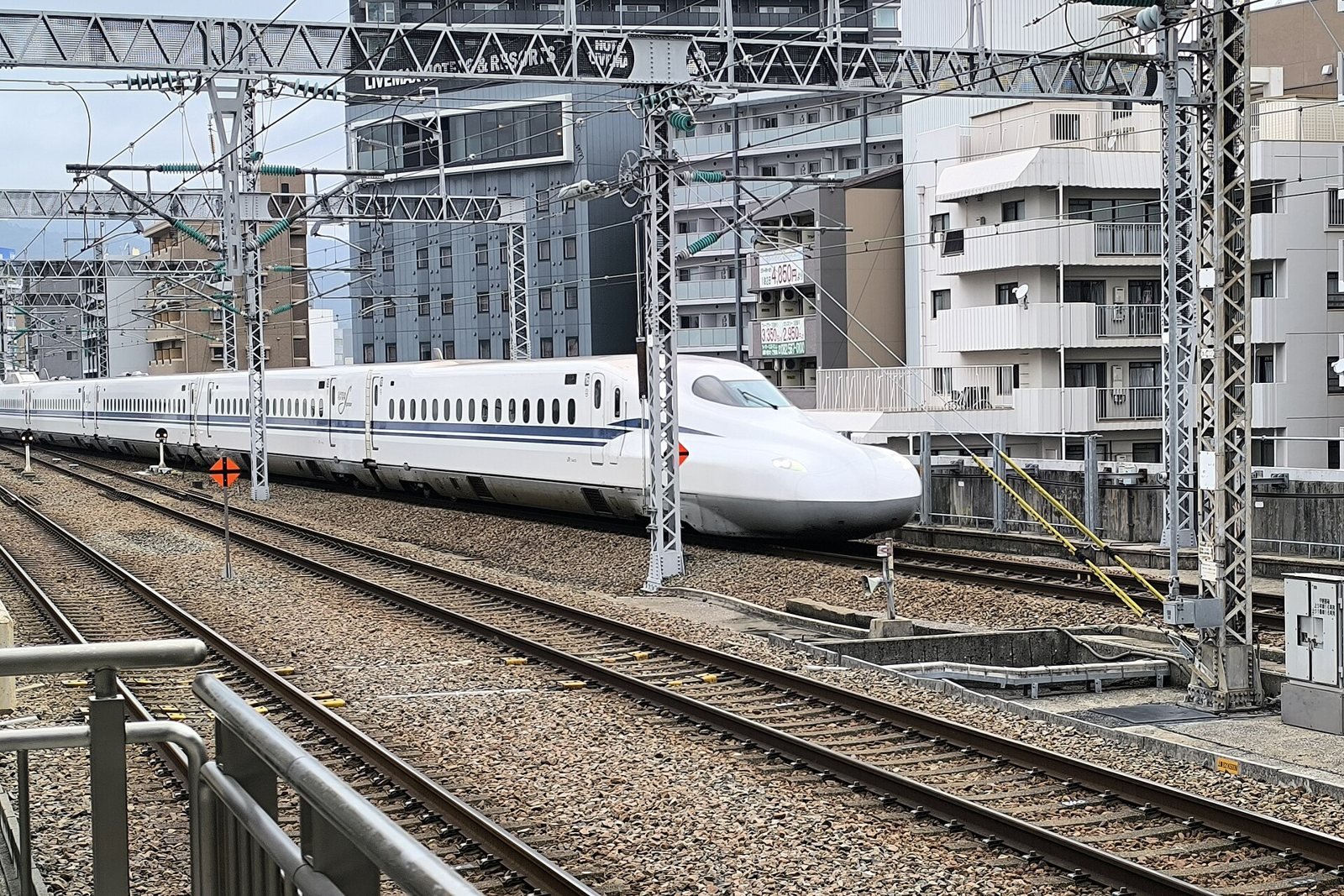
For nearly everyone, the answer is the Nozomi. JR Central says Nozomi, Hikari, Kodama, Mizuho, Sakura and Tsubame all run on the Tokaido and Sanyo Shinkansen lines. The Nozomi is the fast one and runs straight through.
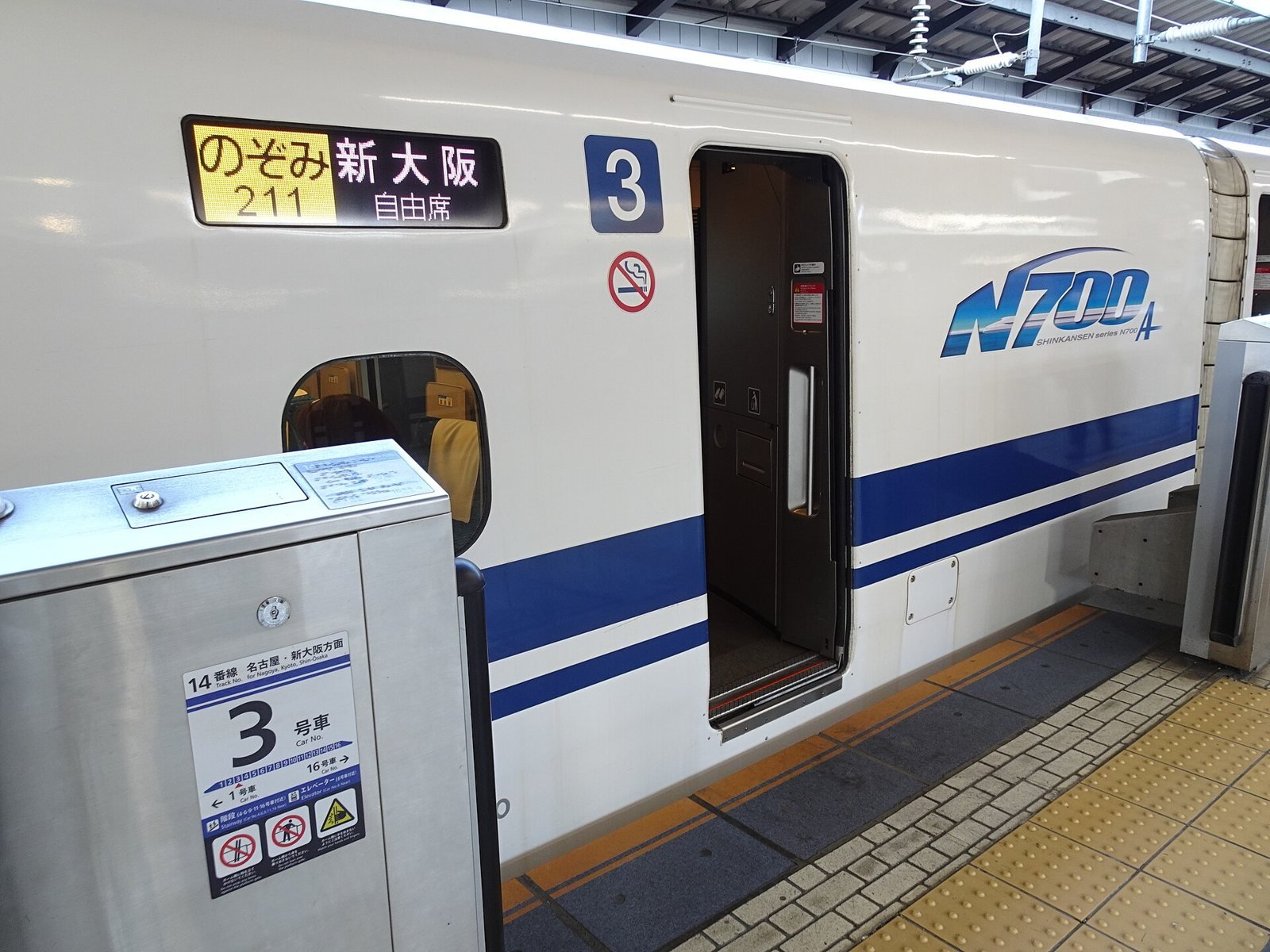
Hikari and Sakura are alternatives, mostly for JR Pass holders. A Hikari-based trip usually means a change at Shin-Osaka or Okayama. Mizuho and Sakura are better thought of as Shin-Osaka to Kyushu trains, and Kodama stops everywhere.
Journey times vary a little by train, so check the timetable for your travel date before you book.
Tickets, fares and booking
The Smart EX fare table for Nozomi (reserved ordinary seat, normal season, dated 1 April 2025) lists Tokyo to Hiroshima at 19,560 yen, about USD 126 at roughly 155 yen to the dollar. The same table for Hikari, Kodama and Sakura lists 18,710 yen, about USD 121. Treat these as approximate: they are the latest official figures we found, not a confirmed price for your date. Smart EX adjusts Nozomi fares by about 200 yen down or up by season, and up to 400 yen up at the busiest times. Smart EX has also posted a notice of upcoming price revisions, so check the live fare when you book.
On Nozomi, JR Central says that during peak periods all seats become reserved. Outside those dates there are non-reserved cars, but a reserved seat is the sensible choice on a four-hour ride. For the booking steps, see our guide to buying Shinkansen tickets online, and for the basics of boarding, how to ride the Shinkansen. Our Japan travel money guide helps with the yen side.
Using the JR Pass on this route
The JR Pass official site states that Nozomi and Mizuho are not covered, including non-reserved seats. You can still ride them by buying an “only with Japan Rail Pass” Nozomi Mizuho Ticket before boarding. The listed price for Tokyo-Hiroshima is 6,500 yen. The page gives no effective date, so check it when you buy. It is valid for one day and one section.
The alternative is Hikari or Sakura, where the pass works and seat reservations carry no extra charge. Whether the pass is worth it depends on your wider route; see our Japan Rail Pass guide.
If you are starting from Osaka or Kyoto, JR West’s Kansai-Hiroshima Area Pass covers reserved seats on the Sanyo Shinkansen between Shin-Osaka and Hiroshima, plus the Miyajima ferry. The listed price is 17,000 yen for five days (about USD 110), on a page marked current as of August 2024, so confirm it. It does not cover Tokyo to Shin-Osaka.
Seats and luggage
On the Tokaido-Sanyo-Kyushu Shinkansen, JR Central says baggage with total dimensions (the three sides added together) of 160 cm or less needs no reservation. Between 161 and 250 cm, you must reserve a seat with an oversized baggage area. There is no extra charge for that seat. Without a reservation you pay a 1,000 yen baggage fee, and over 250 cm it cannot come aboard.
For fewer bags on the train, see luggage forwarding and train etiquette. For seat choice and the Mt Fuji side, read our Shinkansen seat guide.
Arriving at Hiroshima Station
JR West’s project page reports the new Hiroshima Station building opened on 24 March 2025, and Hiroshima city reports that the Ekimae-Ohashi route, bringing Hiroden streetcars into the building, opened on 3 August 2025.
The streetcar is the easiest way into the city. Hiroden’s page gives an adult fare of 240 yen for Hiroshima Station to Genbaku Dome-mae, paid as you get off. Hiroshima’s tourism site gives about 15 minutes by streetcar to the Genbaku Dome and about 25 minutes to the Peace Memorial Museum. The Meipuru-pu loop bus is listed at about 16 minutes to the Peace Park.
| Destination | How | Approx. time | JR Pass? |
|---|---|---|---|
| Genbaku Dome | Hiroden streetcar | About 15 min | No (240 yen) |
| Peace Memorial Museum | Hiroden streetcar | About 25 min | No |
| Peace Park | Meipuru-pu loop bus | About 16 min | Not verified |
| Miyajimaguchi | JR Sanyo Line | About 28 min | Yes (JR line) |
| Miyajima | JR ferry | About 10 min | Yes (JR ferry only) |
Peace Memorial Park and Museum
The Peace Memorial Park and Museum are a place of remembrance for the atomic bombing of 1945, and most visitors are quiet and unhurried here. Allow a few hours.
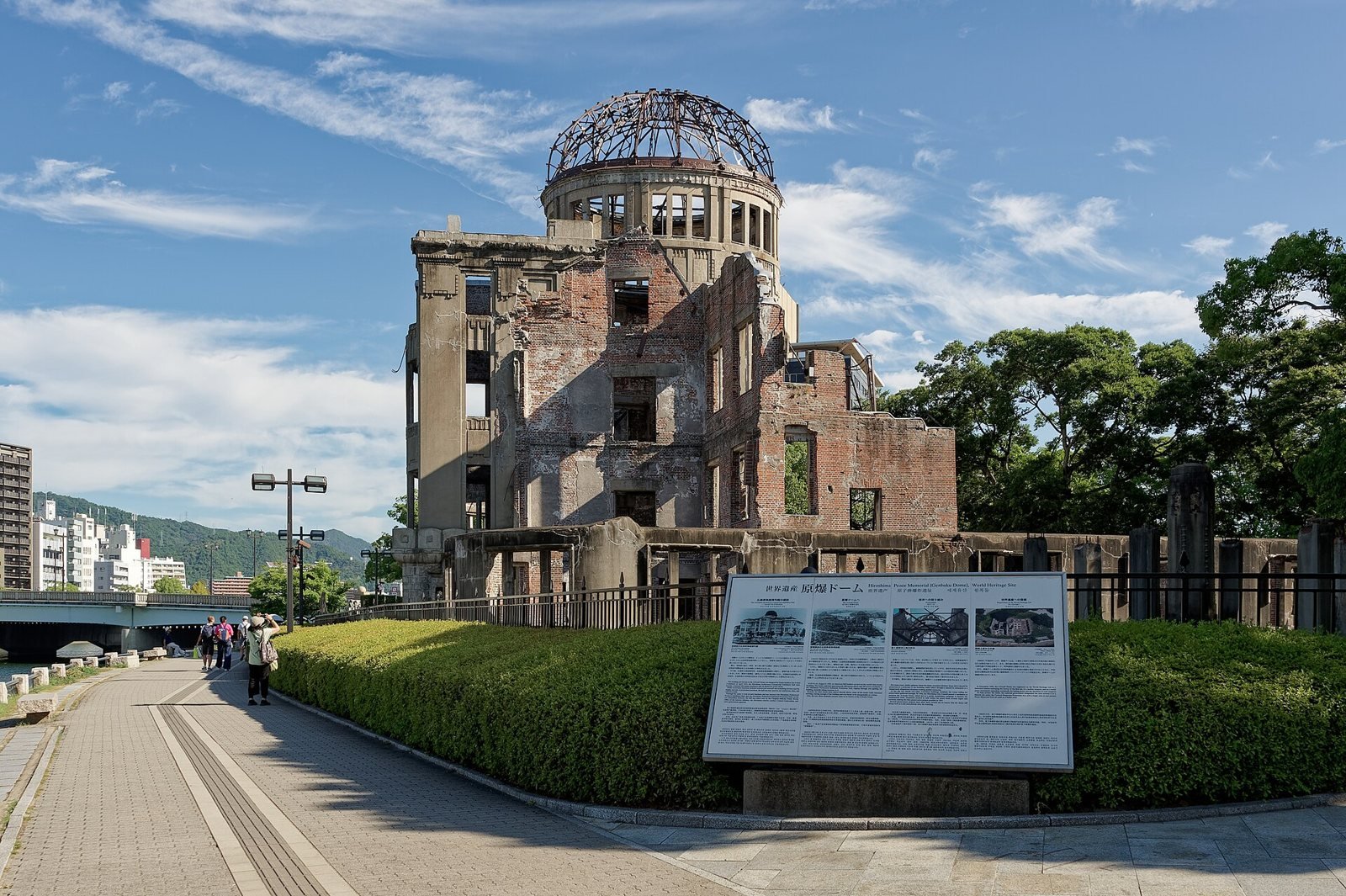
The museum’s website lists opening hours of 7:30am to 7:00pm from September to November and 7:30am to 6:00pm from December to February, with last entry 30 minutes before closing. Adult admission is 200 yen. The museum is closed on 30-31 December, and the site lists a temporary closure on 15-20 February 2027. Check the site before you go. For wider context, read the resilience of Hiroshima. And for lunch, see our Hiroshima okonomiyaki guide.
Adding Miyajima
From Hiroshima Station, take the JR Sanyo Line toward Iwakuni to Miyajimaguchi. The JR West ferry page says this takes about 28 minutes. From the station, you walk through an underpass to the ferry terminal.
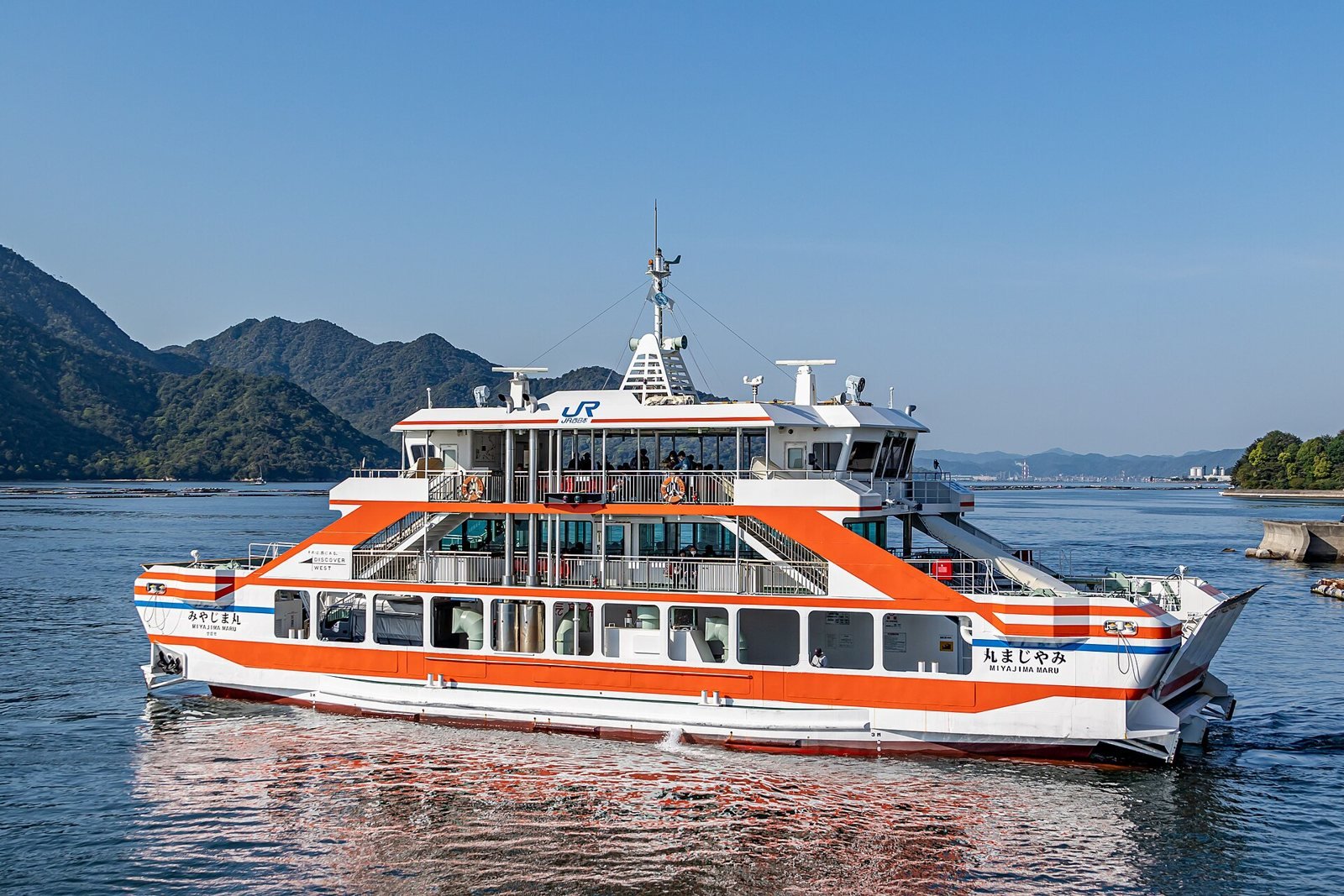
The JR ferry crosses in about 10 minutes, and between roughly 8:00 and 18:00 it runs four times an hour. The adult fare is a couple of hundred yen each way; check the ferry’s fare page for the current amount. The JR Pass and the JR West Rail Pass are valid on this ferry. A second operator, Miyajima Matsudai Kisen, also crosses, but rail passes are not valid on it.
Miyajima charges a visitor tax of 100 yen per entry. Hatsukaichi city’s official page confirms it began on 1 October 2023, and the JR ferry page says it is charged separately from the fare. Pre-school children are exempt.
The Itsukushima torii is best planned around the tide. At high tide the shrine appears to float, and at low tide you can walk to the torii. The Miyajima Tourist Association tide page lists both windows for each date. Check the shrine’s own site for hours before you go.
Day trip or overnight? Two sample plans
A same-day round trip from Tokyo is possible but tiring, so stay a night if you can. From Osaka or Kyoto, a day trip is far more realistic.
One day (from Osaka or Kyoto): take an early Shinkansen to Hiroshima; ride the streetcar to the Peace Memorial Park and Museum; eat okonomiyaki; return in the evening. Skip Miyajima unless you start very early.
Two days (from Tokyo): Day 1, arrive by Nozomi, visit the Peace Park and Museum, and eat dinner in the city. Day 2, go to Miyajima in the morning, timed to the tide, then return to Hiroshima Station and continue by train.
For where to stay, three areas make sense: near Hiroshima Station for easy trains, the Hondori and Peace Park area for sightseeing on foot, or a night on Miyajima for quiet evenings.
Research-based picks
We have not tested these research-based picks for a long train day.
A compact carry-on or underseat travel backpack keeps you under the 160 cm luggage threshold.
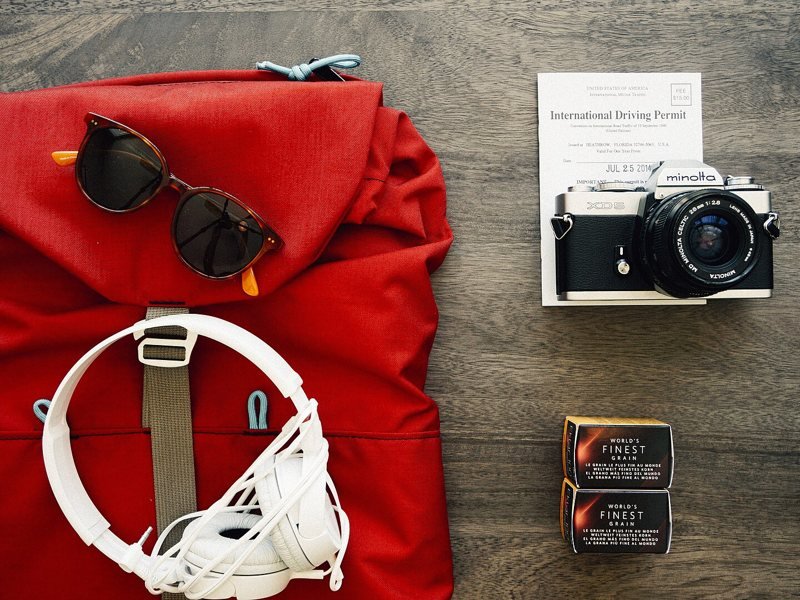
Travel backpack (item type, not the exact product). Photo: www.Pixel.la Free Stock Photos, public domain, via Wikimedia Commons
Compact travel backpack
Keeps a day bag small and well under the oversized-baggage threshold on the Shinkansen.
Search on AmazonA portable power bank keeps your phone and ticket app alive over four hours.
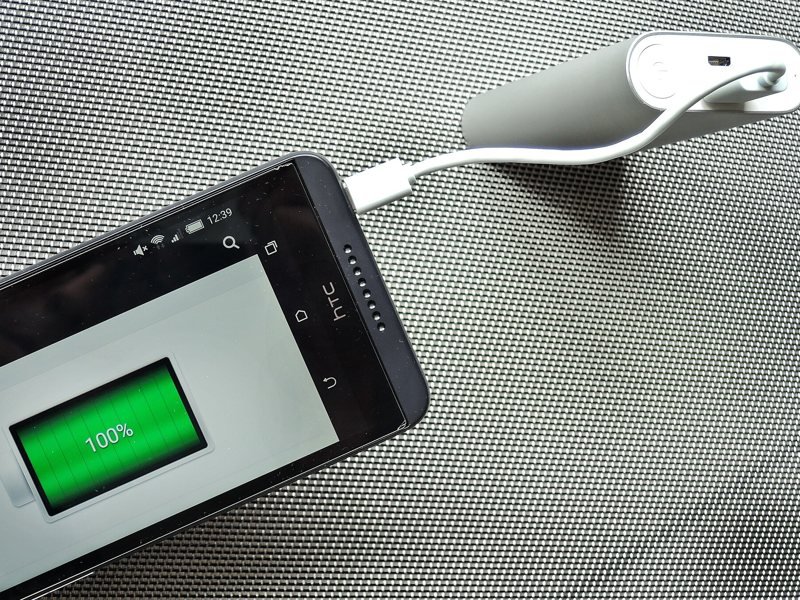
USB power bank (item type, not the exact product). Photo: Mk2010, CC BY-SA 4.0, via Wikimedia Commons
Portable power bank
Backup power for your phone, maps and ticket app on a four-hour ride.
Search on AmazonNoise-cancelling earbuds help take the edge off a long ride.
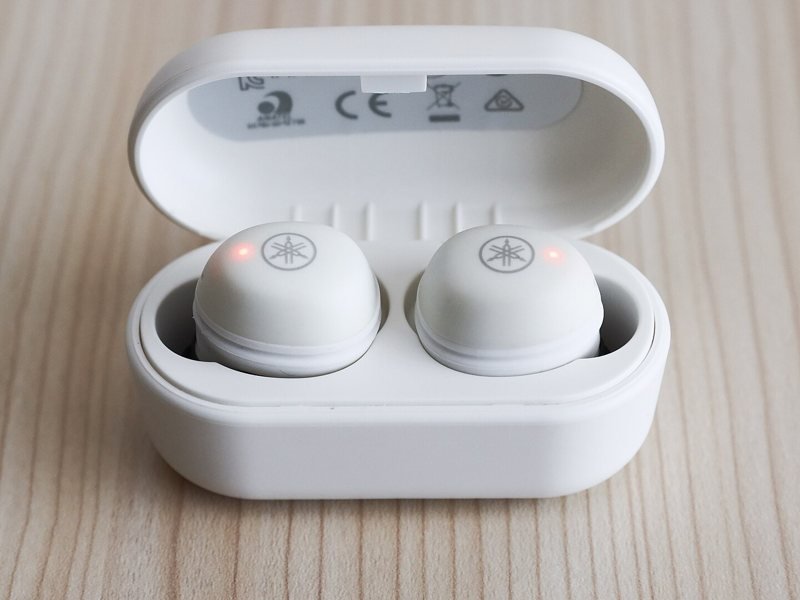
Wireless earbuds (item type, not the exact product). Photo: MIKI Yoshihito. (#mikiyoshihito), CC BY 2.0, via Wikimedia Commons
Noise-cancelling earbuds
Quieter time on a long train day; check the fit and battery life before you buy.
Search on AmazonFAQ
How long is the Shinkansen from Tokyo to Hiroshima?
The direct Nozomi takes roughly 4 hours. Exact times vary by train, so check the timetable for your date.
Is there a direct train from Tokyo to Hiroshima?
Yes. The Nozomi runs direct with no change. Hikari and Sakura trips usually involve changing at Shin-Osaka or Okayama.
Can I use the JR Pass on the Nozomi to Hiroshima?
Not on its own. The official JR Pass site says Nozomi and Mizuho are not covered, but you can buy a Nozomi Mizuho Ticket, listed at 6,500 yen for Tokyo-Hiroshima, before boarding.
Do I need to reserve seats?
Not always, but it is wise. Nozomi has non-reserved cars outside peak periods, and all seats become reserved at peak times. You must reserve if your bag is over 160 cm in total dimensions.
Can I do Hiroshima as a day trip from Tokyo?
Technically yes, but it means roughly eight hours on trains. One night in Hiroshima is a better use of the trip.
How do I get from Hiroshima to Miyajima?
Take the JR Sanyo Line from Hiroshima Station to Miyajimaguchi (about 28 minutes), then the JR ferry (about 10 minutes). Pay the 100 yen visitor tax, charged separately from the ferry fare.
Is the bullet train or flying better from Tokyo to Hiroshima?
For most travelers the train is simpler, since it runs from city center to city center. Flying can suit some schedules, but compare airport transfer times first.
Sources
These are the official pages relied on for this guide.
- JR Central: Luggage information (seen Nov 2026)
- JR Central: Nozomi (seen Nov 2026)
- Japan Rail Pass: Nozomi Mizuho Ticket (seen Nov 2026)
- Smart EX: reserved seat fare table (seen Nov 2026)
- JR West: Kansai-Hiroshima Area Pass (seen Nov 2026)
- JR West Miyajima Ferry: fares (seen Nov 2026)
- JR West Miyajima Ferry: access (seen Nov 2026)
- Hiroden: fares (seen Nov 2026)
- Hiroshima Peace Memorial Museum (seen Nov 2026)
- Hatsukaichi city: Miyajima visitor tax (seen Nov 2026)
- Miyajima Tourist Association: tide table (seen Nov 2026)
Bottom line
Take the direct Nozomi, reserve your seat, and budget the 6,500 yen supplement if you hold a JR Pass. Give Hiroshima a night if you can, and add Miyajima on the second morning, timed to the tide.
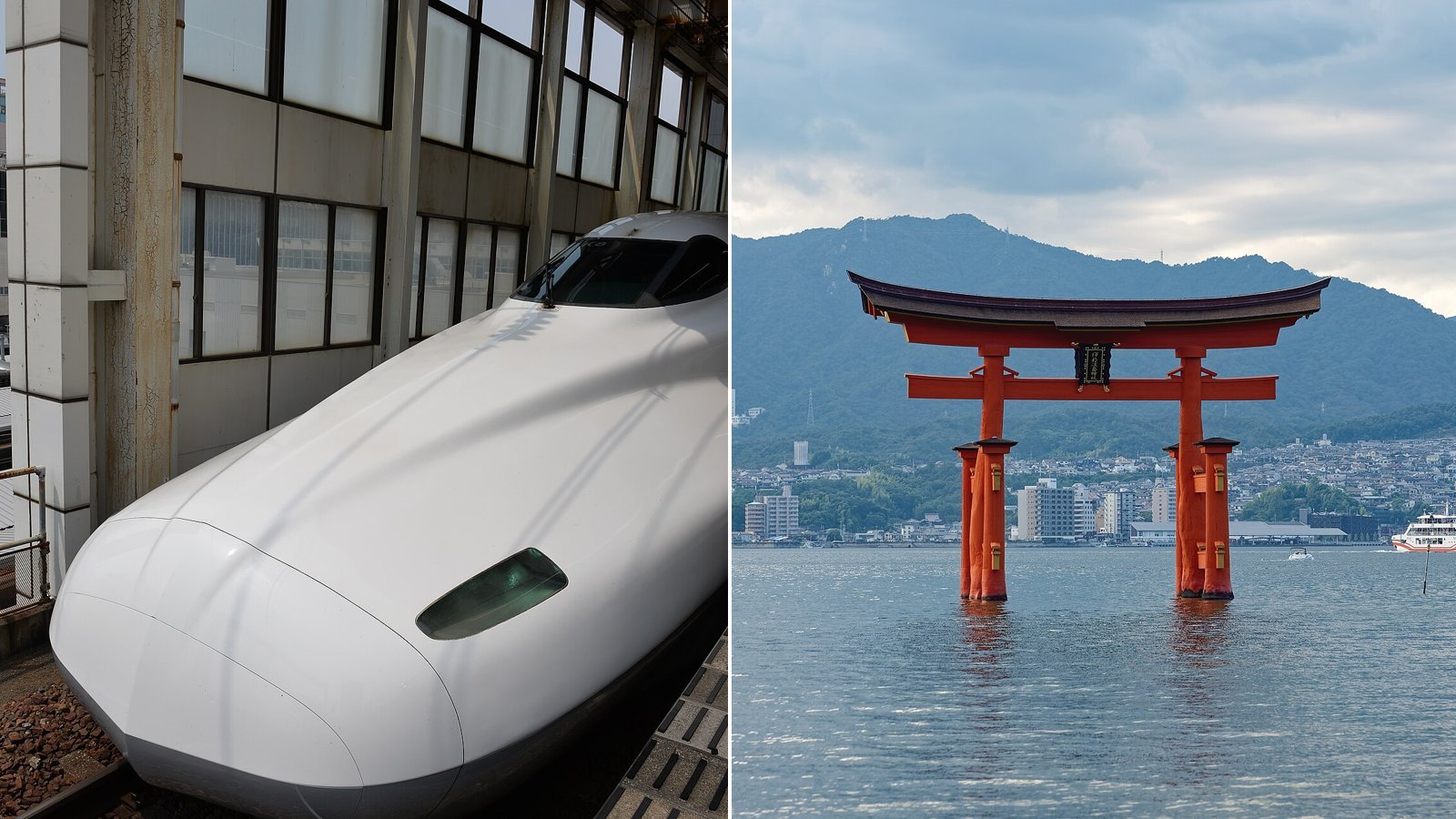
Top photo: an N700 series Shinkansen at Hiroshima Station and the Great Torii of Itsukushima Shrine, Miyajima. Photo: shankar s. from Poona (pune), India, India, CC BY 2.0, via Wikimedia Commons; Photo: Jakub Hałun, CC BY 4.0, via Wikimedia Commons.