As an Amazon Associate, Chasing Cherry Blossoms earns from qualifying purchases. We may also earn from other affiliate links on this page at no extra cost to you.
Cherry blossoms in Japan don’t open on one date. They start in Okinawa in January, sweep through Kyushu, Tokyo and Kyoto in late March, and finish in Hokkaido in May. Pick the right city for your travel week and you can almost always find trees in flower somewhere.
This bloom calendar gives typical dates by city from the Japan Meteorological Agency (JMA), what happened in 2025 and 2026, how the dates are measured, and how to time a spring 2027 trip before forecasts are out. Once you know when, our guide to the 10 best places to see cherry blossoms in Japan covers where to go.
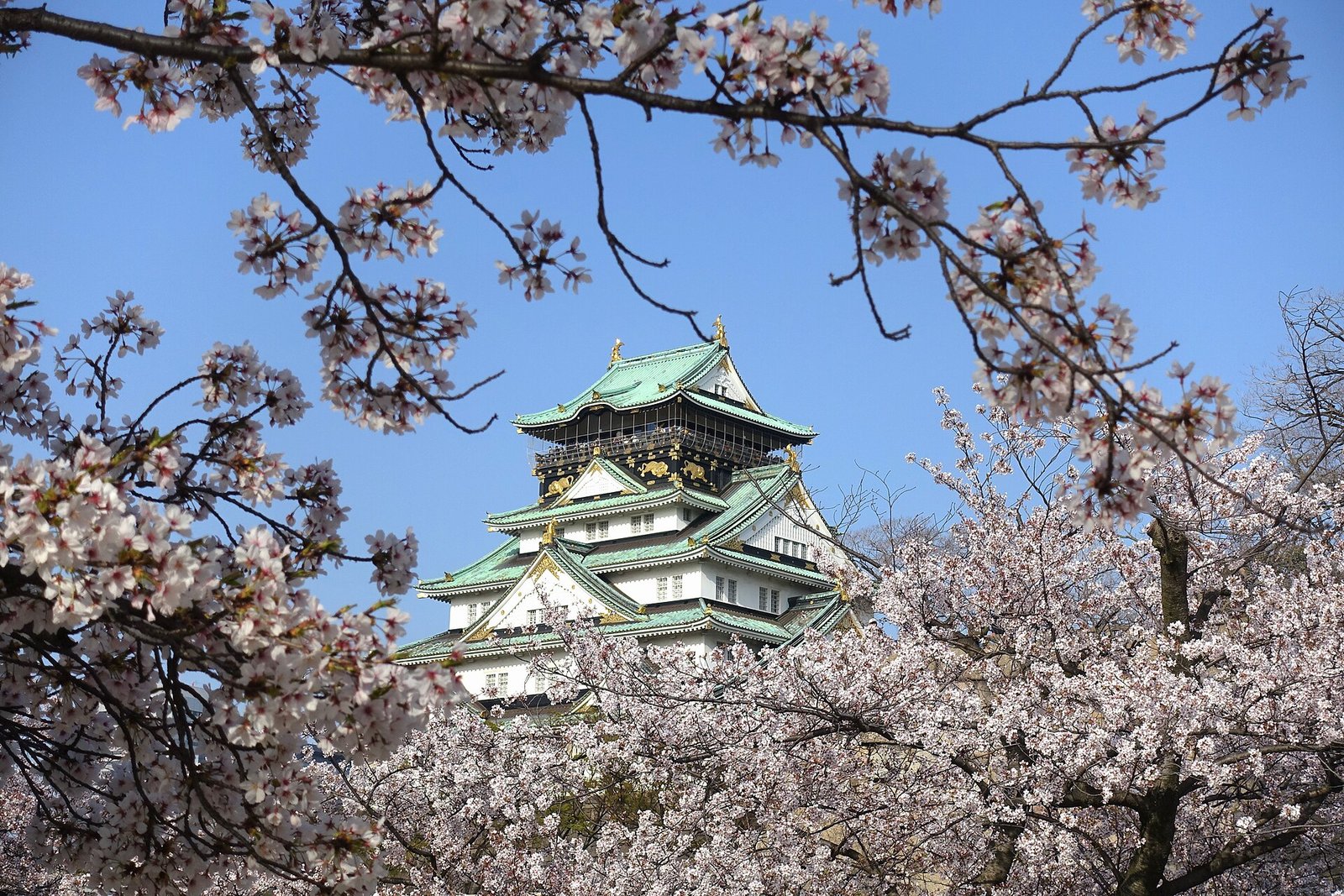
Quick answer: Japan’s main cherry, the Somei Yoshino, usually starts blooming between about 20 and 27 March in Kyushu, Shikoku, Tokyo, Kyoto and Osaka, then reaches full bloom roughly a week later. The blossom front moves north through April: Sendai in early to mid April, then Hirosaki and Hakodate in late April. It reaches Sapporo in early May. Okinawa runs on a different calendar, with its deep-pink hikan-zakura flowering in January and February. For a first trip to Tokyo and Kyoto, late March to early April gives the best odds. No 2027 forecasts exist yet, so keep your dates flexible and start checking forecasts from late January, once the first estimates have had their early updates.
Typical cherry blossom dates by city (Somei Yoshino unless noted)
| City | Region | Typical first bloom | Typical full bloom | 2026 first bloom | Where to see it |
|---|---|---|---|---|---|
| Naha (hikan-zakura)* | Okinawa | Jan 16 | Feb 4 | Jan 18 | Yaedake Sakura no Mori Park |
| Fukuoka | Kyushu | Mar 22 | Mar 31 | Mar 24 | Maizuru Park |
| Hiroshima | Chugoku | Mar 25 | Apr 3 | Mar 19 | Shukkeien |
| Osaka | Kansai | Mar 27 | Apr 4 | Mar 26 | Osaka Castle Park |
| Kyoto | Kansai | Mar 26 | Apr 4 | Mar 23 | Maruyama Park |
| Nagoya | Tokai | Mar 24 | Apr 2 | Mar 17 | Tsuruma Park |
| Tokyo | Kanto | Mar 24 | Mar 31 | Mar 19 | Yasukuni Shrine |
| Kanazawa | Hokuriku | Apr 3 | Apr 8 | Mar 29 | Kenrokuen |
| Sendai | Tohoku | Apr 8 | Apr 13 | Mar 31 | Nishi Park |
| Hirosaki (Aomori city data)** | Tohoku | Apr 22 | Apr 26 | Apr 13 | Hirosaki Park |
| Hakodate | Hokkaido | Apr 28 | May 2 | Apr 18 | Goryokaku Park |
| Sapporo | Hokkaido | May 1 | May 6 | Apr 18 | Hokkaido Shrine |
Normals = JMA 1991-2020 average; 2027 dates depend on the weather. *Naha’s JMA sample tree is a hikan-zakura, not a Somei Yoshino, and the pin sits at Mt Yaedake in northern Okinawa, where the season starts. **Hirosaki has no JMA observing station, so the figures are for nearby Aomori city. Hirosaki Park’s own dates can differ by a few days. Source: JMA 2026 bloom table.
Map: cherry blossom timing spots, south to north
- Yaedake Sakura no Mori Park (Okinawa) – Hikan-zakura from mid to late January; Naha's normal first bloom is Jan 16. Directions
- Kawazu Station (Kawazu River cherry walk) – Early Kawazu-zakura, usually February to early March. Directions
- Maizuru Park, Fukuoka – Typical first bloom Mar 22, full bloom Mar 31 (JMA normals). Directions
- Shukkeien, Hiroshima – Typical first bloom Mar 25, full bloom Apr 3. Directions
- Osaka Castle Park – Typical first bloom Mar 27, full bloom Apr 4. Directions
- Maruyama Park, Kyoto – Typical first bloom Mar 26, full bloom Apr 4; famous weeping cherry. Directions
- Tsuruma Park, Nagoya – Typical first bloom Mar 24, full bloom Apr 2. Directions
- Yasukuni Shrine, Tokyo – Home of Tokyo's JMA sample tree; normal first bloom Mar 24, full bloom Mar 31. Directions
- Kenrokuen, Kanazawa – Typical first bloom Apr 3, full bloom Apr 8. Directions
- Nishi Park, Sendai – Typical first bloom Apr 8, full bloom Apr 13. Directions
- Hirosaki Park – About 2,600 trees; usually peaks in the last week of April. Directions
- Goryokaku Park, Hakodate – Typical first bloom Apr 28, full bloom May 2. Directions
- Hokkaido Shrine, Sapporo – Next to Maruyama Park; Sapporo's normal first bloom May 1, full bloom May 6. Directions
How Japan measures “first bloom” and “full bloom”
The official dates come from JMA staff watching designated sample trees (hyohonboku, 標本木) at 58 weather stations. A city’s first bloom (kaika, 開花) is declared on the first day that five or six or more flowers are open on its sample tree. Full bloom (mankai, 満開) is the first day that about 80% or more of the buds are open.
Tokyo’s sample tree stands in the grounds of Yasukuni Shrine. On 19 March 2026, JMA officials counted 61 open flowers there, far above the threshold, and Tokyo’s full bloom followed on 28 March. Most stations watch Somei Yoshino. The Okinawa and Amami stations watch hikan-zakura, and several northern and eastern Hokkaido stations (Asahikawa, Obihiro, Kushiro, Abashiri, Wakkanai) watch the native Ezo-yamazakura.
One tree is not a whole city: sunny spots can run ahead and shaded or hilltop spots behind. And full bloom starts the best stretch rather than ending it. Petals commonly hold for about a week in calm weather, less with rain or wind. See how long cherry blossoms last for the stages.
The cherry blossom front, region by region
Japanese weather reports track the sakura zensen (桜前線), the line of first-bloom dates moving north, which in the normals takes about six weeks to get from Kyushu to Sapporo. In the north, full bloom follows first bloom faster (four or five days in Sendai, Aomori and Sapporo, against about nine in Fukuoka and Kyoto). So northern windows are short and easy to miss.
Okinawa
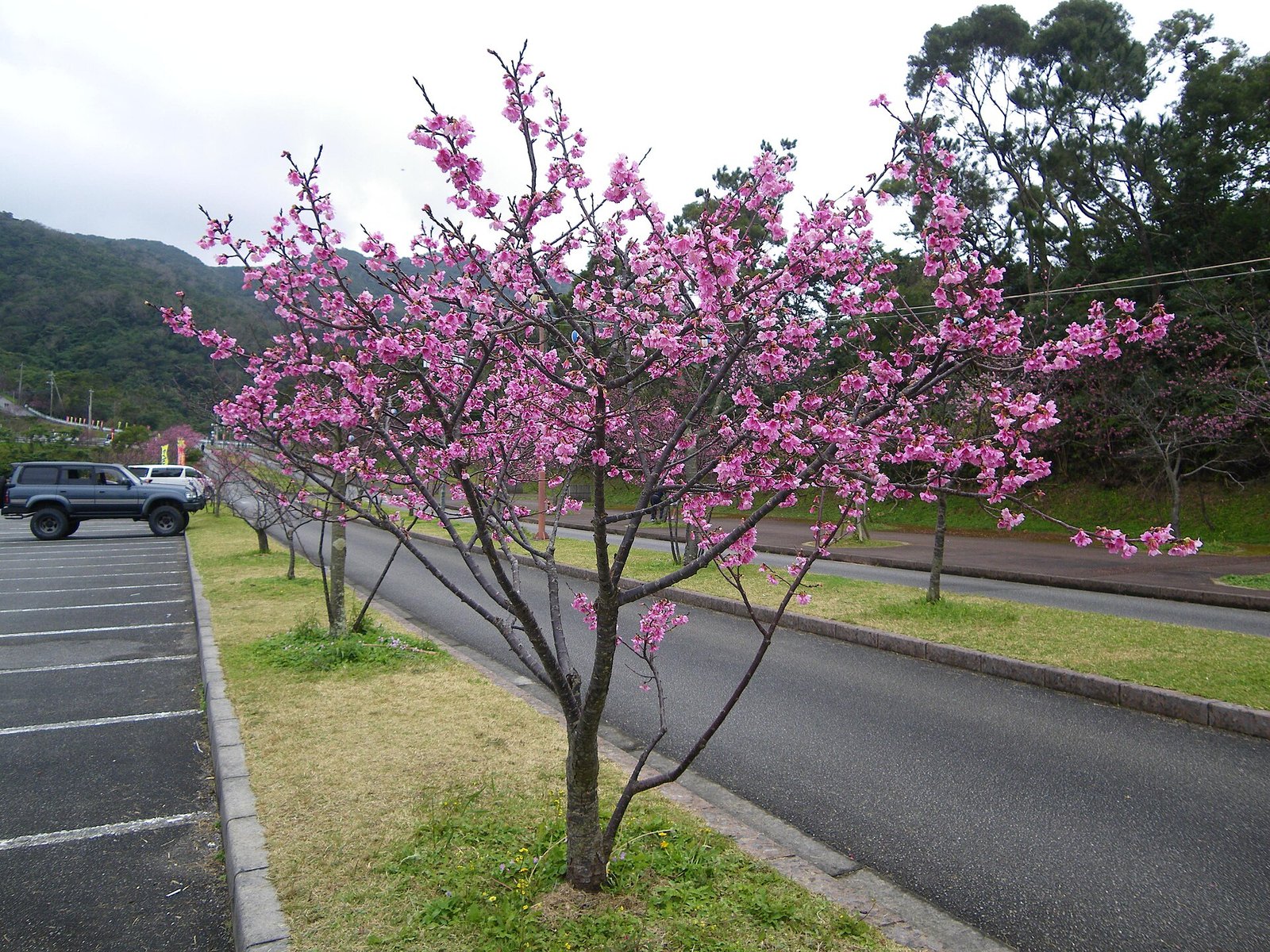
Okinawa’s deep-pink hikan-zakura (locally kanhi-zakura) blooms from north to south. Mt Yaedake and Nago come first, usually in mid to late January, and the south follows into February. Naha’s normals are 16 January for first bloom and 4 February for full bloom; in 2026 the dates were 18 January and 3 February. See Japan in January for the rest of that month.
Kyushu and Shikoku
Mainland Kyushu does not bloom in January or February; that is Okinawa. Its Somei Yoshino open in late March, the same as Tokyo: the normals are 22 March in Fukuoka and Kochi and 26 March in Kagoshima. Kagoshima’s later normal is partly put down to its very mild winters (see below).
Kansai
Kyoto’s normals are 26 March for first bloom and 4 April for full bloom, and Osaka’s are 27 March and 4 April. In 2026 Kyoto opened on 23 March and reached full bloom on 30 March. Mt Yoshino in Nara blooms uphill: the lower slopes usually peak in early April and Oku Senbon, at the top, in mid to late April. Our Yoshino guide explains how to time it.
Tokyo and Kanto
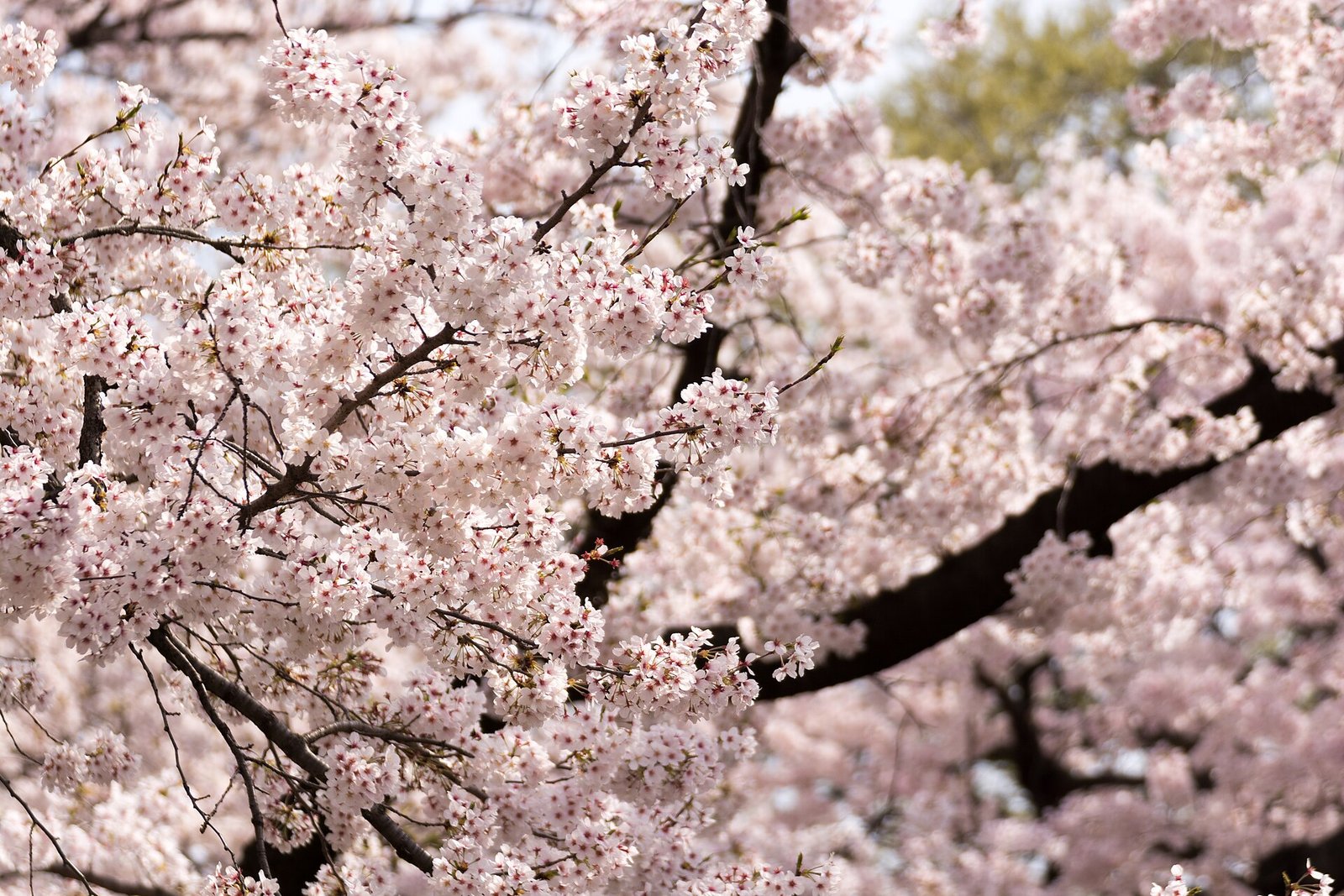
Tokyo’s normals are 24 March for first bloom and 31 March for full bloom. In 2025 the first bloom landed exactly on the normal, 24 March. In 2026 it came five days early, on 19 March, with full bloom on 28 March. For the best parks and river walks, see our Tokyo cherry blossom spots.
Chubu and Hokuriku (Nagoya, Kanazawa, Takayama)
Nagoya matches Tokyo, with a normal first bloom on 24 March. On the Sea of Japan side, Kanazawa normally opens on 3 April and reaches full bloom on 8 April, which suits a first-week-of-April visit to Kenrokuen. Takayama usually peaks in mid April, and Takato Castle Park in Nagano in early to mid April. In 2026 adult entry there was 600 yen (roughly $4, at about $1 = 155 yen), rising to 1,000 yen on peak weekends.
Tohoku
Sendai’s normals are 8 April for first bloom and 13 April for full bloom. Morioka and Akita follow around 17-18 April, and Aomori around 22 April. Hirosaki Park, with about 2,600 trees around its castle, usually peaks in the last week of April, and Kakunodate around late April and Golden Week. In 2026 Aomori opened nine days early, on 13 April, and Kyodo reported Hirosaki Park at its best by mid April, its second-earliest on record.
Hokkaido
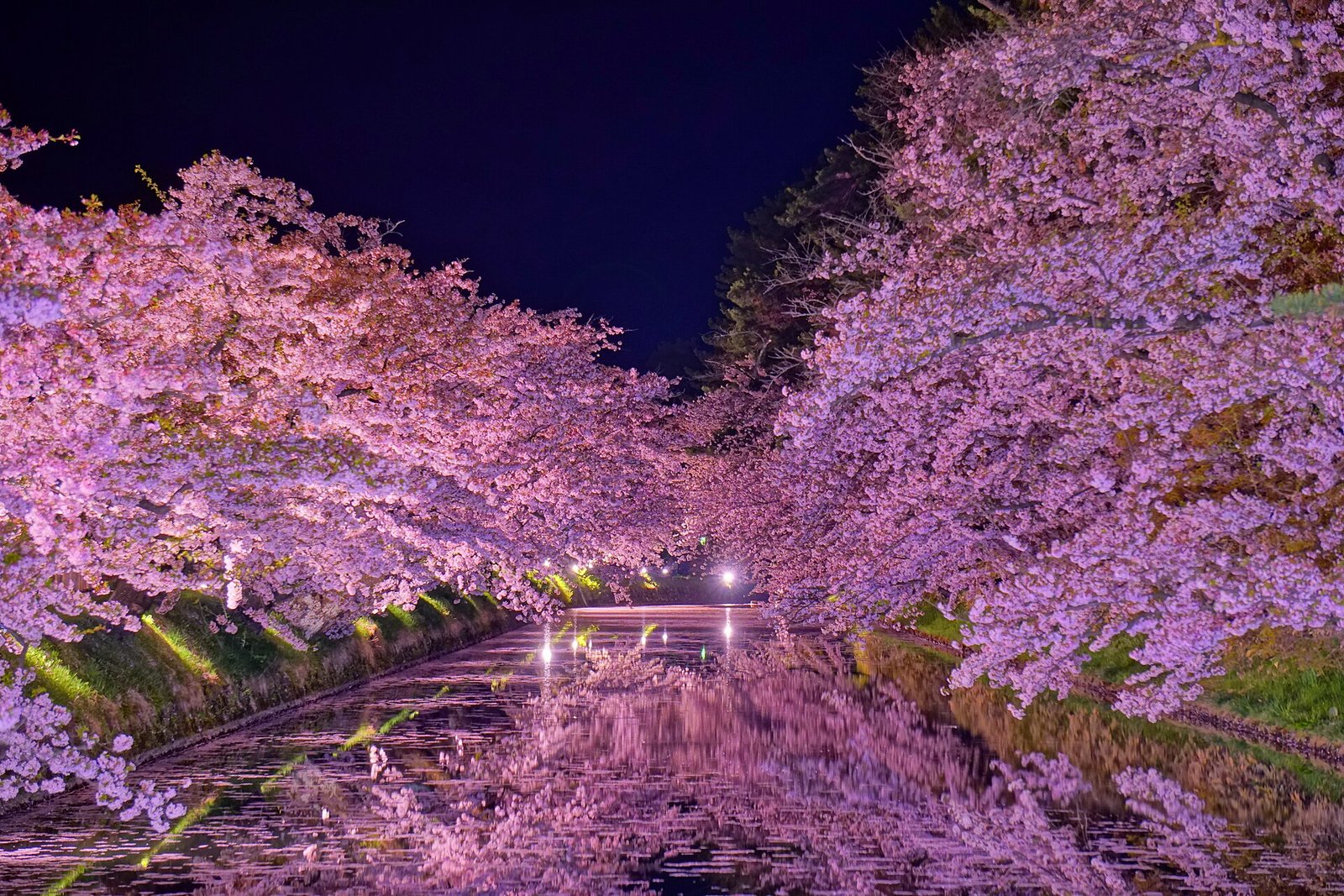
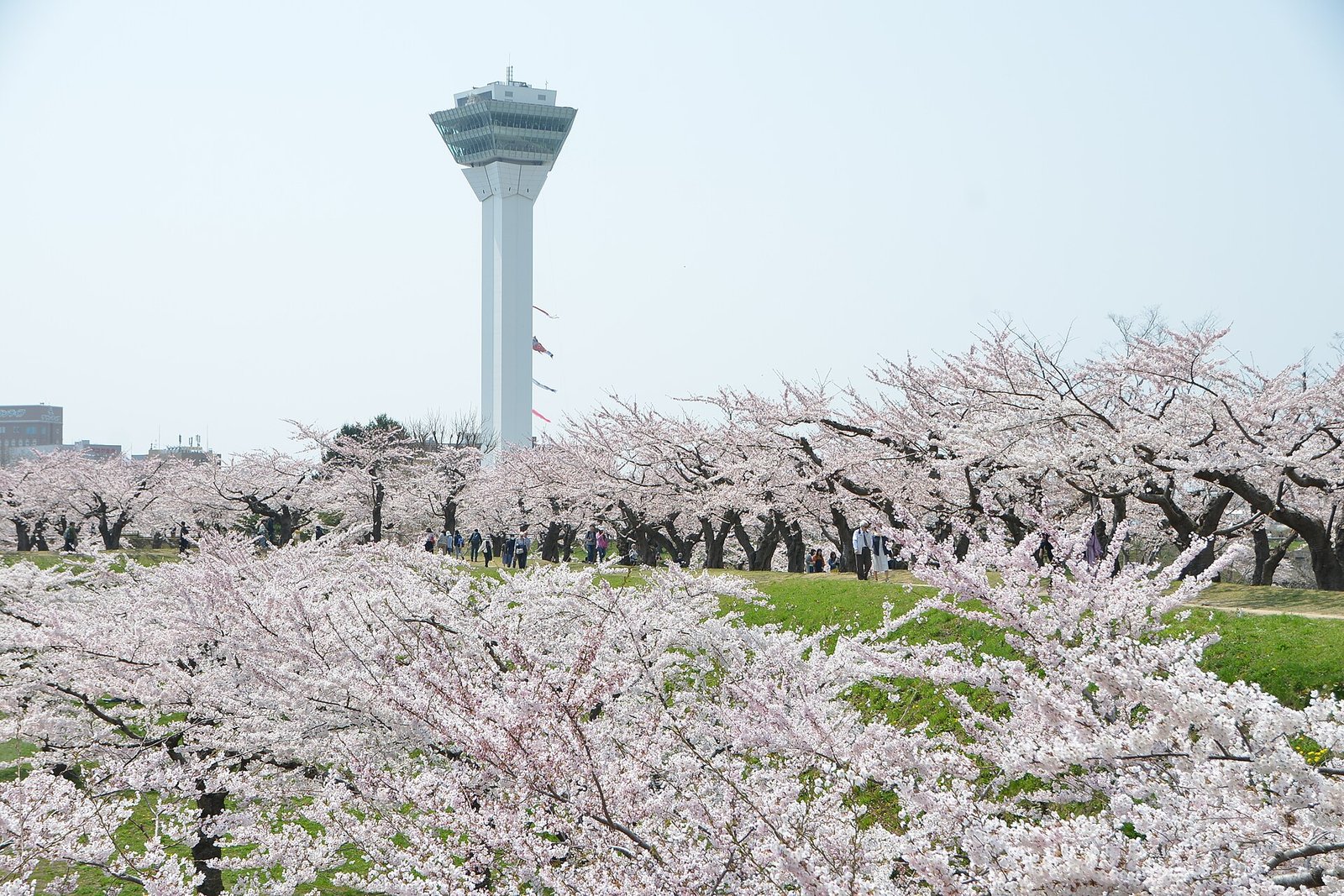
Hokkaido closes the season. Hakodate’s normals are 28 April and 2 May, so Goryokaku Park is a late-April to early-May stop. Sapporo follows on 1 and 6 May. Further east, the Ezo-yamazakura in Kushiro has a normal first bloom of 16 May. In 2026 Sapporo and Hakodate both opened on 18 April, 13 and 10 days ahead of normal, so warm springs can pull the north well forward.
Early and late cherries
Somei Yoshino is not a wild native species. It is a cultivated hybrid, believed to be Edohigan x Oshima-zakura, that arose in the Edo period, and every tree is a grafted clone. That makes it a consistent benchmark. Hanami began with plum (ume) viewing among Nara-period aristocrats, and cherries became the flower of hanami during the Heian period. Our 18 cherry blossom facts cover the history and science.
- Hikan-zakura: Okinawa and Amami, January to early February.
- Kawazu-zakura: a pink, early variety from Kawazu on the Izu Peninsula. The town’s festival ran from 7 February to 8 March in 2026, and it makes an easy trip from Tokyo by train.
- Weeping cherries (shidarezakura): these keep their own schedule, so a famous weeping tree may peak on different days from the Somei Yoshino around it. Check spot-level reports.
- Yaezakura (double-flowered cherries): these usually open about one to two weeks after Somei Yoshino. Shinjuku Gyoen’s double cherries, for example, typically peak in mid April, which gives a late-arriving visitor a second chance in Tokyo and Kyoto.
Why the dates change every year
Temperature drives it. Buds need a spell of winter cold to break dormancy, then open faster the warmer February and March are. A warm spring brings bloom forward and a cold March holds it back, so a city can swing a week or more either way. In 2026, Tohoku and Hokkaido opened about 8-13 days early while much of Kyushu was near normal. In the far south, a very mild winter can even delay bloom: Weathernews has flagged weak winter chill as a risk for southern Kyushu in several seasons.
The long-term trend is clear. JMA’s climate change monitoring report finds that, averaged across Japan, first-bloom dates have moved earlier by about 1.2 days per decade since 1953, consistent with rising temperatures. The current normals (平年値) are the 1991-2020 average, and recent springs have often come in ahead of them.
When 2027 forecasts come out, and which to trust
JMA still observes the sample trees, but it stopped issuing bloom forecasts around 2010 and left that job to private companies. The main ones are:
- Japan Meteorological Corporation (JMC, n-tenki.jp): for 2026 it moved its first forecast forward to mid-December 2025, using AI-based long-range methods. A first 2027 estimate could therefore appear in December 2026, but that isn’t confirmed.
- Weathernews: published its first 2026 forecast on 8 January 2026 and updated it roughly every two to three weeks into March. Its spot pages say 2027 information is planned for February 2027.
- tenki.jp (Japan Weather Association): publishes its own city and spot forecasts during the season.
All three forecast JMA sample-tree dates and often differ by a few days. Early estimates depend on weather that hasn’t happened yet, so use them to choose a region and a rough week. Fine-tune from mid February, and check live spot reports just before you go.
Which week fits your trip
| Travel window | Where blooms are likely | Arrive via | Notes |
|---|---|---|---|
| Late Jan – Feb | Okinawa hikan-zakura (Jan to early Feb); Kawazu-zakura on Izu (Feb to early Mar) | HND/NRT, then a domestic flight to Naha; train from Tokyo to Kawazu | Somei Yoshino season not started |
| Mid-March (about 10-20 Mar) | Kawazu mostly over; in early years first bloom in Tokyo, Nagoya, Hiroshima, Kochi | HND/NRT | A gamble: in a normal year you mostly see buds |
| Late March (about 21-31 Mar) | First bloom to full bloom in Tokyo, Kyoto, Osaka, Fukuoka, Hiroshima, Nagoya | Into HND/NRT, out of KIX (or the reverse) | Best odds for first-timers; busiest and priciest week |
| First week of April | Full bloom and petal fall in Kyoto/Osaka; Kanazawa opening; Yoshino lower slopes and Takato starting | KIX or HND/NRT | Strong for Kansai; Tokyo may be past peak in an early year |
| Mid-April | Kanazawa, Takayama, Nagano, Yoshino upper slopes, Sendai and southern Tohoku; yaezakura in Tokyo and Kyoto | HND/NRT, then shinkansen north | The best second chance if you miss late March |
| Late April – Golden Week | Hirosaki, Kakunodate, Morioka, Hakodate | HND/NRT, then Tohoku/Hokkaido shinkansen, or fly to Hakodate | Golden Week 2027: holidays on 29 Apr and 3-5 May; expect domestic crowds |
| Early-mid May | Sapporo; Ezo-yamazakura in eastern Hokkaido (Kushiro around mid May) | New Chitose (CTS), usually via Tokyo | The last of the season; it can end earlier in a warm spring |
How to time it
- Aim for the middle. Pick cities whose normal full bloom falls mid-trip, not on day one.
- Build in a northern fallback. If the south peaks early, a day or two in Kanazawa or Tohoku keeps you on the front; see our Japan Rail Pass guide.
- Book early, refine later. You have to commit before forecasts exist. Our cherry blossom season planning guide covers the booking timeline and hanami etiquette. For crowds and holiday dates, see the best time to visit Japan.
Planning from the United States
Most US nonstops land at Haneda (HND) or Narita (NRT). Kansai (KIX) has fewer: United from San Francisco, JAL from Los Angeles, and a United Los Angeles route announced from 27 March 2027. Check schedules before booking. For late March, fly into Tokyo and out of Osaka to catch Tokyo’s bloom first and Kyoto’s a few days later. Arriving at Narita? See our Narita arrival guide.
For late April, fly into Tokyo and take the Tohoku Shinkansen toward Hirosaki and Kakunodate, or on to Hakodate. For Sapporo in early May, connect through Tokyo to New Chitose (CTS).
Spring break is the catch. A mid-March break usually lands a week or so before Tokyo’s Somei Yoshino open, unless it’s an early year like 2026. Breaks around Easter (28 March 2027) line up far better. Dates vary by school district.
Planning from Singapore, Australia, the UK and Canada
Singapore
MOE’s 2027 March holidays (13-21 March) fall just before most cities’ normal first bloom, so you’d be betting on an early year. Tokyo opened on 19 March in 2026. The Good Friday long weekend (26 March 2027) sits in the late-March sweet spot for Tokyo, Kyoto and Fukuoka.
Australia
Easter falls on 28 March 2027, so the 26-29 March long weekend lands on the Tokyo and Kyoto normals. NSW autumn school holidays (12-23 April 2027) suit Sendai, Kanazawa, Takayama and early Hirosaki. Other states set their own dates.
United Kingdom
Easter holidays usually span late March and early April, which is good timing for Kyoto and Osaka; schools set exact dates. British Airways, JAL and ANA fly nonstop between Heathrow and Haneda.
Canada
March break is usually mid March (expected 15-19 March 2027 in Ontario; BC districts vary into late March), which is early for Somei Yoshino. Air Canada flies nonstop to Tokyo from Toronto and Vancouver; check current schedules.
What to pack
These three picks come from research, not hands-on testing.
Spring showers can strip the petals and soak an afternoon picnic, and a compact windproof umbrella is the one item worth carrying every day.
Compact folding umbrellas (item type, not the exact product). Photo: Kritzolina, CC BY-SA 4.0, via Wikimedia Commons
Repel Windproof Travel Umbrella
Compact auto-open windproof umbrella for spring showers during hanami season.
Check price on AmazonIf you’re planning a route that follows the front north, the newest Lonely Planet Japan (19th edition, 2026) covers Tohoku and Hokkaido as well as Tokyo and Kyoto.
Travel guidebooks (item type, not the exact edition). Photo: Vyacheslav Argenberg, CC BY 4.0, via Wikimedia Commons
Lonely Planet Japan (19th edition)
The newest Lonely Planet Japan, covering Tohoku and Hokkaido as well as Tokyo and Kyoto.
Check price on AmazonFor the flight, Naoko Abe’s The Sakura Obsession tells how Collingwood Ingram helped preserve Japan’s cherry varieties, and why the Somei Yoshino came to dominate.

Paperback books (item type, not the exact book). Photo: Ginny from USA, CC BY-SA 2.0, via Wikimedia Commons
The Sakura Obsession by Naoko Abe
The story of Collingwood Ingram and Japan's cherry varieties, a good read for the flight.
Check price on AmazonFAQ
What month do cherry blossoms bloom in Japan?
Mostly late March and April: late March from Kyushu to Tokyo and Kyoto, April in Tohoku, and late April to early May in Hokkaido. Okinawa’s cherries flower in January and February.
When is peak cherry blossom season in Tokyo and Kyoto?
Normal full bloom is 31 March in Tokyo and 4 April in Kyoto. In 2026 both were early, on 28 March and 30 March.
Can I see cherry blossoms in Japan in February or May?
Yes. In February, go to Okinawa (early in the month) or Kawazu on the Izu Peninsula. In May, try Sapporo and eastern Hokkaido, though a warm spring can move them into April, as in 2026.
How long does full bloom last?
Commonly about a week, less with rain or wind. See how long cherry blossoms last.
When will the 2027 cherry blossom forecast be released?
Not yet. Based on 2026, a JMC estimate may appear in December and Weathernews in early January, with updates through March.
Is early April too late for Tokyo?
Not in a normal year, when petals usually hold into the first days of April. In an early year it can be: in 2026 the first week of April brought falling petals. Kanazawa, Tohoku or Tokyo’s yaezakura make good fallbacks.
Do all cherry trees bloom at the same time?
No. Dates move north and uphill, and each variety has its own timing: Kawazu-zakura in February, Somei Yoshino in late March, and yaezakura one to two weeks later.